

Incandescent light bulbs are officially banned in the U.S.
Incandescent light bulbs are officially banned in the U.S.::America’s ban on incandescent light bulbs, 16 years in the making, is finally a reality. Well, mostly.
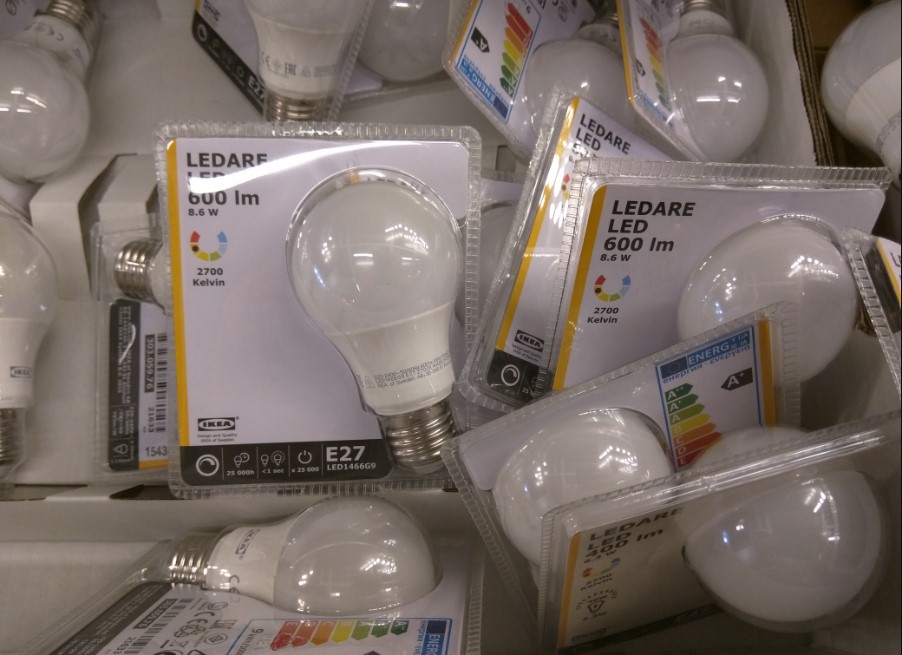 https://www.digitaljournal.com/business/incandescent-light-bulbs-are-officially-banned-in-the-u-s/articleOpen linkView original on lemmy.world
319 replies
Nobody's talking about the real casualty of this shift. What's going to happen to all the jokes about "how many (insert category of person here) does it take to change a light bulb?" now that people don't have to regularly change light bulbs anymore?
No single LED lightbulb I've ever purchased lasts as long as they claim. infact, many have been outlasted by existing incandescent bulbs in my house. your joke fodder is safe.
I don’t know what kind of shit LEDs you’ve been buying but I’ve yet to ever have to replace one. Been using them for many years already.
LED's produce a lot of heat at higher "wattages". IE: the 75w+ equivalents can throw out some heat. And if its recessed in a can or upside down on a chandelier but with a decorative covering, they will often go out due to heat. Hell I have seen some with giant heatsinks on them to try and compensate.
I had a series of 150w LED's i was burning through. Eventually I moved to just replace the bulb and fixture with a ceiling light like this
LED's are also sensitive to dirty power, probably more-so than Incandescents. I have run through some because of surges and brownouts as well.
I generally use Phillips brand LED bulbs if it helps, but do have some others.
Finally, the lower wattage bulbs (ie: 10-15w equivalent) will sometimes have a "pulse" to it. Dimmer LED's also tend to do this, and you often have to tune the dimmer switch to a higher brightness for "low" to compensate.
All that said, they are still leaps and bounds better.
I have 9W LEDs which are about 80-90W equivalent. They are barely warmer than room temperature after hours of working.
I have a DIY LED light for my herbs running at 45W (400W equivalent?) and it's like 40° after 12 hours. I run it 12 hours 365 days a year with zero issues.
There can only be two reasons for overheating: issues with your power supply or your LED bulbs have electrical issues from the factory.
Quite literally the less heat they emit per unit of power they consume the more efficient they are, so this is very much an area were getting the more efficient LED light bulbs (which in the consumer space are the filament ones) will both reduce heat waste AND save you power per unit of light emitted.
(In fact you should select these things on light emited - i.e. lumens - rather than on wattage and even for the same lumens aim for the fewer watts as possible since that means they consume less for the same results, which, as pointed above, also mean heat emission as that's literally power being wasted)
Wut?
Funny you mention Phillips because that’s the brand I like, too. Just recommended it to someone here in fact.
I’m not sure what wattage my ceiling fixtures are; I’ll check.
Yeah. they are generally my favorite as well.
These were the ones I was running through like crazy in my kitchen. Storms often meant they would fail. I edited my original comment and posted a pic of the design i moved to since the can they sat in didnt evacuate heat well at all.
https://www.amazon.com/gp/product/B08667M3BR/ref=ppx_yo_dt_b_search_asin_title?ie=UTF8&th=1
Frankly i tend to stick with one brand in general because it provides a consisten light color (ie: 5000k or 3500k warm yellow etc). Rando brands say 5000k daylight but are slightly off and it drives me nuts.
I have some in warm yellow on certain fixtures and others in daylight for other fixtures. The warm yellow ones we will use at night. (i have a large number of light fixtures in my house for some reason to, which makes this easier)
They generate lots less heat that an equivalent incandescent bulb. It's most likely the dirty power problem you've described.
They do. But incandescent bulbs don’t have circuitry prone to heating failures. It’s just a filament.
So it’s not an equivalency thing.
You have to give the industry some time to circle the wagons and enshittify led bulbs so that they only last 10,000 hours
You're going to want to replace them when they stop getting security updates...
I've had one or two LED bulbs die, which is why I switched to buying "energy star" rated bulbs. As part of the accreditation process, they need to certify the lifespan
I started switching to LEDs 8 years ago. Every single one of them is still working. It used to be that bulbs should be changed every year or two.
My mom buys these cheap LED bulbs from Amazon and about half burn out quickly (probably 10% are DOA).
We have 100% LEDs throughout our fifth wheel (about 30 of them), and they are all still going strong (all installed in 2015, and used daily since then).
I think there's a serious difference in quality available and it certainly shows.
Honestly as somebody who's been watching big clive's channel I would never recommend anybody to buy those cheap LEDs from Amazon because there's a non-insignificant risk that they may burn your house down.
Don't just buy cheap shit. And get your wire/vakuum/kitchen appliance checked for spikes.
And here I am imagining walking down the street one day and there’s a crazy hobo wandering around waving a vacuum cleaner in everyone’s face screaming “CAN YOU SEE THE SPIKES? ARE THEY THERE?”
you assume much.
I've been using LED bulbs for a good number of years, I've only had one or two die on me. The longevity alone makes them much better than incandescent, but then they use a tenth the power.
My favorite is the A15 Edison style. That's the appliance size, smaller than the standard A19. The A15 fits in everything so I only need to stock one size.
That's really dependent on local regulation, and wether or not you bought products licensed to be sold where you live or random imports from AliExpress.
My smart LED lights were bought in 2017, they are still working perfectly and have zero signs of issues - same brightness, same connection strength, same white point. The only exception was precisely the cheapo desk lamp one I bought from an online reseller, that one lasted a year and the control board fried itself.
I buy all my stuff at Target, Walmart, or Home Depot. I have to replace my LED bulbs just as much if not more than I ever had to with Incandescents. In my last house I had incandescents that lasted the entire 8 years I was there, while I replaced other leds multiple times.
I can tell you from having looked into becoming an importer of those things maybe a decade ago that the very EU rules for the CE mark (a requirement for them to be allowed to be imported for sale into the EU) cover things like failure rates (max 5% in the first year), minimum hours without failure (10,000 and models must actually be tested on it in order to be certified), loss of brightness with age, minimum CRI and so on.
So yeah, buy them from chinese sellers on Amazon or Aliexpress and you're importing them yourself for personal use in which case no such rules need apply (if doing that I recommend purchasing only from those sellers that mention their product has a CE mark).
In the US, were "consumer right" tend to be this wierd thing that only wimpy eutopean worry about, I suspect there are nowhere the same level of rules (probably the bare minimum for mains wired devices which is pretty much "won't just randomly kill users"), which would mean the stuff carried by the local sellers is China-quality-at-American-prices, so basically the Aliexpress quality but with extra cost to pay the fat bonus of the CEO of the large retail surface.
PS: As a side note to anybody interested in using the CE mark as the minimum standard for their own LED light bulb purchases, look at the packaging: there are very specific rules for the packaging itself, so for example it has to list the brightness (in lumen) with more proeminence than the wattage and also has the energy rating (including a standard design with a graph of horizontal bars) so these things are pretty easy to spot from the packaging of the light bulb.
Just fucking yesterday out of 12 Nisko high CRI bulbs around the house one just stopped working. All of them are mere one year old.
And those high cri ones are the most expensive ones. Lets see how much time the others survive… ill keep you posted.
I still have some I bought 15 years ago at Ikea, still working. Most I exchanged because of the rapid technical development in the one and a half decade not because they stopped working.
My LED bulbs have hilariously short lives. I suspect the wiring in my apartment is just not that great because lights do flicker from time to time. But that didn't seem to hurt incandescent bulbs. I'm lucky if my LEDs last even one year, never mind the 10 or 20 some of them claim.
What am I supposed to do, but my overhead light fixtures on a UPS?!
You are right that local electricity might be in play. I've lived in the same house for 6 years and I've not had a single light fail. We replaced most bulbs when we moved in because they were mostly CFLs. It's been great. But I wouldn't put it past LED manufacturers, even name brand ones, from cheaping out on the bad power protections.
I think one of my 1st gen philips hue color bulbs just went out a couple weeks ago. Of course I've yet to open up the fixture and confirm it since the other one in there is still plenty bright.
The only LED bulbs I've bought that haven't blown within a year are my Philips hue bulbs. They are expensive but they are all I'll buy now, and my girlfriend and I love setting them to relaxing colors in the evening while we relax together on the couch
I’ve also had very different results, depending on brand. Definitely avoid the cheap stuff
Now I have the opposite problem: brands and styles change too much. What do you do when one bulb of a multi-bulb fixture burns out, but they’ve all outlasted the brand or style? I do already have a drawer full of LED bulbs that I replaced so the fixture would match, and can’t always find a fixture with fewer bulbs
I have a bunch I bought in 2016 that are still going strong. Only stopped using them because we wanted cooler lighting and they're all pretty warm. We've had like 4 or 5 out of the original 50 or so that stopped working though.
I don't remember the last time I changed a light bulb at home
Don't worry, many have shitty drivers that will fail and poor cooling that will kill the diodes.
There's a tradeoff with CFL bulbs between longevity and instant action. The normal expectation for a light bulb is to have it at full brightness the moment you flip the switch, but the first CFL bulbs to market often took minutes to reach peak output. Longer if they were cold.
So to meet consumer expectations, manufacturers began designing bulbs that would, on ignition, damage themselves in order to reach peak output faster.
It's no wonder the CFL bulb failed as a product, you would either get a bulb that would never be bright enough when you needed it, or you got a bulb that would burn itself out just as quickly as any incandescent for twice the price.
In 2008(ish) we rewired our house (built in the '20s) and replaced every fixture. We probably had 25 CFL bulbs (most in ceiling fans), and had no losses for the several years that we owned the house after that. But I remember paying way more for bulbs in years before that and having them all fail fairly quickly.
Or the old riddle of having to match 3 lights to 3 switches with only one guess, since the solution relied on the bulb getting hot and LEDs barely get warm.
Wait what is this riddle
I think it's along the lines of "you're in a room with three lightswitches. They control three lightbulbs in a different room (so you can't see them from the room with the switches). You get some time to use the switches, and then you go to the other room and have to guess what switch controls what lightbulb. You aren't allowed to go back and flip the switches again once you leave." The solution generally is to flip one switch, leave one off, and flip the last one on for awhile but then turn it off just before you leave to go to the other room. The lightbulb that's lit obviously goes with the switch you flipped on, and the other two are off. One of these two will be warm though, because it was recently turned on, and that one goes to the switch you flipped on and then off.
“A windowless room contains three identical light fixtures, each containing an identical light bulb or light globe. Each light is connected to one of three switches outside of the room. Each bulb is switched off at present. You are outside the room, and the door is closed. Before opening the door you may play around with the light switches as many times as you like. But once you've opened the door, you may no longer touch a switch. After this, you go into the room and examine the lights. How can you tell which switch goes to which light?”
The solution is:
Now, when you enter the room, you’ll have one lit bulb, one warm unlit bulb, and one cold unlit bulb, letting you solve the riddle.
It’s an old riddle where a room has three lights and outside the room is the panel with three switches. They’re not labeled and you don’t know which switch controls which bulb. You’re allowed to switch any two, then you get to open the door and you have to determine which switches control which lights.
The solution is, that you flip switch #1, wait five minutes and then flip switch #2. Then you immediately go into the room.
Two lights will be on, meaning the bulb that’s off is the third switch. Then you feel the bulbs that are on: the one that’s warm already is the #1 and the other that’s on but still cool is #2.
LEDs don’t heat up like that so this technique is broken.
Mine heat up. Not hot, but definitely warm at the base. LED bulbs convert 25-50% of the electrical energy to light. The rest is heat. So a 9W LED bulb is a 4-6 watt heater.
As someone living in the EU where incandescent bulbs have been banned for over a decade, I can assure you that changing lightbulbs is still a thing. Not as frequently, but it happens, especially if you buy cheaper brands LED bulbs. They definitely does not have the longevity that they advertise.
Tell that to the bar I was at last night in Palermo. They had a string of festoon lights going down the laneway and every one of them was incandescent. I noticed the same in Taormina. In fact, Italy seems pretty far behind the rest of the EU when it comes to environmental concerns.....but that's for another thread.
Are you sure they were incandescent bulbs and not just LED bulbs copying the incandescent style? They make a lot of decorative LED bulbs now with straight sections of LEDs to imitate the glowing wire of an incandescent.
Are you talking about an Edison bulb?
Having grown up in the era of incandescent bulbs I remember the fancy white bulbs made with frosted glass being more expensive than the totally transparent ones you could see the glowing filament inside, because the filament was irritating to look at and the frosted ones smoothed out the light for you.
I'm very amused that we're now jumping through hoops to make skinny LEDs that can fake the look of the old filaments nobody wanted to look at back then, and those are now the fancy expensive ones.
This is one example of the LED bulbs I was describing, but there's plenty of different styles of these being made
Definitely. I'm an electrician, so my eyes are usually drawn to these type of things. Light fittings, outlets, switches, etc.
They are not sold anymore, but whatever is left and working can still be used. Many people also bought a ton of incandescents before the selling stopped (tHe lIgHt is sO mUcH bEtTeR!!!)
narrator voice: "but it was not"
It can be. Cheap LED lights with low quality AC rectifiers are awful. If those are your point of comparison then yes, incandescent light is better (more steady).
Of course that difference goes away if you just get a better LED light.
Even the "cheap" LED bulbs are still many times more expensive than incandescent, and incandescent will give much better light than poor quality LED.
The LED bulbs have a higher up front cost, but ive not come across a single instance where an incandescent was cheaper when factoring electricity costs.
Some also have terrible CRI. Nothing like giving everything a subtle green or purple tint.
yeah, i was referring to current tech. First LED or those mercury vapor bulbs were basically useless.
You can definitely get "current" LED bulbs with bad hardware inside still today. See: Everything made by NOMA.
You could also get ultra cheap crappy incendescant bulbs in the past.
It generally is though. The look of incandescent and halogen is only rivaled by high end LEDs.
nah. in my experience, even cheaper LED bulbs from discounters can nicely replace old bulbs.
It's true that what "el-cheapo product" once was done by simply reducing lifetime is currently done with looks.
I'm sitting inside a house where, presently, all lights turned on at the same time will require 30w. Before we went through all the lights, a single lightbulb would use 45w.
Just by replacing the old light bulbs, we reduced energy consumption and the number of lights required to light a room.
I think to update the string of lights you’d need to change transformer. Household bulbs have a driver in the bulb that converts the 230V to the ~12V the bulb uses. But for that string of lights, they’d need to get an electrician (or someone who knows what they’re doing)
While you may need to replace the whole strand, and can't just swap in individual bulbs, the strand itself has the resistors needed to let the LEDs function, instead of the individual bulbs.
Specialty lights are still being sold. Plenty of British pubs have special incandescent lights. They are usually quite dim.
This applies to all the things, unfortunately. It must be nice to have a functional union. Even though I'm sure it's not perfect, progress is made at a decent pace. Our country is hijacked by a cruel/angry/illiterate cult every 1-2 elections, it's not ideal.
Well... only 11 yrs after EU... That's not so bad.
https://ec.europa.eu/commission/presscorner/detail/en/IP_08_1909
for real though.. as an American I would love if we were 11 years behind the EU in lots of other areas
Yep. Even Canada banned most common incandescent bulbs in 2014 and 2015.
You're 11 years behind us in energy prices as well, so make the most of it.
I've been in the industry for over a decade and I find it fascinating how much lighting has changed in that time. When LEDs were first available, they were $60+ per bulb. Now you can get multipacks for under $10. Also, CFL bulbs were almost universally hated by everyone (and for good reason) now we no longer sell them. We strictly sell LEDs for regular lighting and we still sell incandescent specialty bulbs. Also, when LEDs first arrived there was a lot of distain for them, especially by the elderly. They wanted their energy wasting incandescent bulbs dammit! It seems the majority of them have come around because they've learned that LEDs are better.
I think the main issue with initial Led bulbs was their color was wrong. Incandescent bulbs emit light at 2700K, a nice warm white. Early LEDs emitted light at more like 5000K or there abouts, which is a really white light. Same with CFLs. Elderly people didn't like that at all. Honestly it wasn't just them, lots of people hated them for their too white of light.
Today you can get LEDs that are 2700K and/or are adjustable to what ever color you want.
Any recommendations? I've struggle with LED light color temp off and on over the years. I haven't looked into it in a while though. It always seems like if you want a low color temp it has to be an edison bulb which is really dim.
On a separate note I've also had reliability issues with LED bulbs where they will blow out and emit smoke.
Look for colour names like "soft white" or "warm". The 2700K is a dead give away for the colour you're looking for.
Also, separate note: check your appliances or fixtures for power spikes. cheaper LEDs are notoriously sensitive to voltage fluctuations
how would you check for that exactly?
Look closely at packaging. If you're in North America, Phillips is the most common for bulbs. They have packages marked 2700K, 5000K, and 6500K.
The colours are as follows: 2700- soft white (yellow hue), 5000- bright white (white hue, almost no colour), and 6500- day light (blue-ish hue, similar to fluorescent).
If you end up not being able to distinguish... ask an employee and they should be able to help
i meant checking for power spikes lol
Lol im dumb... forgot it was a 2 pt question.
Cheap way is to buy a surge protector/ power strip with surge protector.
Plug in appliances/lights that burn out faster than others. Periodically check surge protector to see if the internal breaker has been tripped.
Fancy way is to buy a multimeter and monitor voltage when large appliances turn on/off. That's usually the most likely culprit for voltage spikes (as your home grid has to compensate for sudden increase in usage, which in turn causes voltage to fluctuate slightly)
Also it became a political issue as all things should be somehow
Yes. Many of the people that objected also wore MAGA hats. I think the whole idea was that it was better for the environment and you know what that means.
I specifically remember trump saying something about bringing back yellow light 😮💨
Yellow street lights are actually very good.
For sure, but if an entire city switches over to LED, that is a lot of electricity saved. Imagine the impact an entire country would have.
No. High pressure sodium lights produce more light for the same wattage. HPS produces 80-140 lumens per watt, LED produces 30-90 (https://ledlightinginfo.com/why-are-street-lights-yellow-and-not-white). They also tend to run slightly warmer which means they are less likely to be covered by snow. That's why Europe is still using them everywhere.
I've heard the LEDs offer much less light pollution, but perhaps that is not unique to technology difference and just the difference in lumens?
Also, I'm surprised there aren't equal lumen led lights.
The most amazing thing to me - I’ve been using leds for 10+ years, and I think I’ve had to replace one or two of them. It is a wonder that prices can come down with demand dwindling so much.
Man, I remember as a kid we had a box of bulbs for when inevitably one burnt out each month or so. Now, I have a drawer with a bunch of led bulbs I'll never use because they don't burn out!
Seriously, I have whichever ones were remaining in the boxes when we finished populating all our fixtures. Haven’t replaced one ever.
I remember when I was a kid, it seemed like we had to change the light bulbs every other month. Now I'm annoyed because these things last so long I don't keep any spares and I have to leave my house to buy one when it expires!
I can't remember ever having to replace a dead LED bulb. And only a few CFLs. But I remember replacing incandescents all the time when I was a kid.
In my old apartment I lived in for 6 years I must have had a faulty kitchen light that did something to the bulbs because I changed LEDs in that like more than once a year, but none of the other lights I changed. Granted I also turned on that light way more than the overhead bedroom light so idk. But I definitely killed quite a few LEDs.
Pretty much the worst wear and tear on most electronics comes from power cycling.
This... Doesn't seem right? Dimmable LEDs are switched hundreds of times a second as would the resistors and other components in series with them. Computers turn on and off transistors (mosfets) millions of times per second. Dude flipping a switch a few times isn't close to that.
Heat is the worst enemy of most electronics. Many LEDs are put in places where heat is not dissipated well which can shorten life span.
Excessive heat perhaps, and yeah, bulbs with bad thermal design, or bulbs installed in tight enclosures do die a lot faster.
It's also temperature changes that cause problems. A current that flickers 50-60 times a second is not going to fluctuate it's temperature. Turn it on or off every 10 minutes and the components will shrink or expand each time, and the components will eventually start to fail.
Yeah that occurred to me like in the middle of the thought process and I just rolled with it. 😅 That apartment kitchen was so dark I turned the lights on a lot.
My LED burn outs were almost certainly defective, not normal wear.
Had my current place for four years now, one of my first tasks was to replace all the bulbs with LEDs. Exactly two have burnt out; amusingly, neither were among the most heavily used bulbs; one I suspect took water damage, since it was in the bathroom.
I had to replace an LED bulb a few months ago and I remember being annoyed because they did only lasted five years.
As energy and maintenance go down, the popularity of lighting goes up—so maybe the decrease in sales of replacement bulbs has been offset by an increase in the total number of bulbs in use.
Is there a brand that's better for LED? I get migraines and the stroking effect of LED bulbs can be a trigger.
LED christmas bulbs particularly bad. It felt like walking into a rave at the Christmas store.
Regular brand LED bulbs don't strobe at all, only the very cheap ones from AliExpress and the resellers of Chinese crapware (like Walmart) do. IKEA has some nice and cheap bulbs, for example.
Yeah, many of those christmas lights use pulse width modulation to control brightness and it is very noticeable. I hope that gets changed over for an analog voltage dimmer soon.
Also, cheap ones run directly on AC, so they flicker at 60 Hz (50 in Europe) because the current is only flowing for half the cycle.
How do high-end home LEDs get around this? Do they have a battery that caches the current between cycles?
When my wife and I bought our place, we renovated and made all lights LED. The overheads in the living room and kitchen are quite bright and steady, so they must avoid this somehow.
A bridge rectifier flips the negative current to positive, so instead of a sine wave you get a series of humps. Then a capacitor acts as a battery like you describe to smooth out the dip between humps.
There are half wave rectifiers and full wave rectifiers. The former only converts the positive AC to DC and shuts off for the negative half (causing flickering). The latter will convert both positive and negative halves to DC and don't flicker.
Well, LED lights are half-wave rectifiers that light up, so you wouldn’t add one. I don’t think I’ve ever heard of a half wave rectifier referred to as a bridge rectifier.
Ok, I get the gist. Thanks!
FULL BRIDGE RECTIFIER!!!11
I’ve never been disappointed with Philips. However, I have no doubt there are tons of exceptionally good quality products out there from various brands.
There are LEDs with CCD power converter. I got one 10 years ago and tested it with a 240 fps camera, no flicker at all. I will not recommend a brand because it's been years,but search for "ccd led bulb".
Also there's a number called CRI, indicating how well it represents colors. This also may contribute to your headaches. 85 or higher is good, 90 is great. Just don't trust these numbers on Amazon, the cheapest of cheap crap is marketed as " cri 90+" there.
Or scratch what I just said and find a small store that specializes in lighting and ask the clerk (or email them).
I honestly couldn't tell you. Its been so long since I purchased LEDs and the ones I bought were from the company I work for. They have worked well for me but I don't know if any brand is better than another.
I wonder if multi-element bulbs offset the phase of each element so the flickering cancels out.
died
they died
I'm sure some of them have
That, but also change happens one funeral at a time.
Now you can go into pretty much any thrift store and get a whole box of them for like $5-10.
One problem is that CFL bulbs is that they contain small amounts of mercury (about 4mg per bulb). Because of that, disposing of them responsibly requires going through big hassles rather than just throwing them in the trash. Also, because of that mercury, accidentally breaking one means contamination of the environment around the break.
Flickering - always was a big problem for these things.
Longevity: They were very sensitive to heat, which meant that they loved to burn themselves up in a lot of applications.
Dimming: CFLs were NEVER good at being dimmable.
CFL was just a very poor technology detour on the way to the vastly superior LED lights.
CFLs aren't good at dimming because they are not dimmable. Trash light bulb tech, don't get me wrong, but you cannot even dim them to begin with. I've tried dimming them back when I didn't know any better and had one of the fuckers literally explode in front of my very eyes.
Some were produced that were claimed to be dimmable - and I wasted my money on a few and was still unhappy with them. The other problem I forgot to mention earlier was the startup time: the earlier bulbs (and the cheaper ones) wouldn't just 'turn on' when the power was turned on...they took some time to start making light, and the colder it was the longer it took - this is an aspect where LEDs are amazing - maximum brightness within milliseconds of getting energized.
The 3 biggest issues CFLs had were their warm up time, especially in cold weather, the flicker some people are sensitive too, and they contain murcury as all florescent bulbs do. That means it is absolutely necessary to properly dispose of them so mercury doesn't get into the ground water.
This is why I don't support overreach in regulation.
Put a tax on it or something, but a full ban seems excessive. Now that most people understand that LEDs are superior, they are cheaper, and there are more options, most people will make the switch.
No really. A lot of people, even when shown proof, out of simple spite just double down on their position.
When energy saving and early LED bulbs started to be deployed in my country, while the fade out of incandescent bulbs was put in place, we had runs for buying every single incandescent bulb available. The change was not welcome. Even if changing meant real, objective, tangible savings.
People would put in large orders for bulbs, arguing they wanted to "have proper lighting as long has they lived". Luckily, the stocks quickly ran out and some distributors simply refused to pass the stocks to the market.
A government cutting off a product is not overreach: it's forcing change that otherwise would not happen, for the better.
But is it enough to really matter? Especially after the market for incandescent shrivels?
I'm sorry, I'm not following your reasoning. Can you elaborate, please?
People will bitch about the one guy buying all the incandescent bulbs but ignore the fact that everyone else isn't.
1 old dude isn't enough to make a difference.
This wasn't one or two isolated cases: it was a race to the stores.
I was a kid then and my grandparents got caught in the wave and bought more lamps that they required to light the entire house. Which later proved to be of bad quality and aided me in making their transition to energy saving bulbs.
People would line up in front of stores to get the precious, precious bulbs, making the exact same sort of conversation and observations we can read throughout this thread, criticizing government and politics in general.
The store owners would chime in and add fuel to the fire, stating a lot of people would lose their jobs, as the factories would close (cute fact: there was precisely zero factories for those products in the entire country).
People are stubborn and will not change ways unless no other option is available and even then grudgingly, while companies only shift practices if forced, be it by force of law or by cash flow and profit goals.
Governments enforcing positive laws and regulations, even if unpopular, are necessary measures to move things forward in a modern society.
Most people willingly migrated to LEDs when the circumstances shifted in their favor. There was absolutely no law required. The fact that most people are using LEDs before this was even enforced kinda proves my point. The number of holdouts is small enough to be ignored.
No really. A lot of people, even when shown proof, out of simple spite just double down on their position.
When energy saving and early LED bulbs started to be deployed in my country, while the fade out of incandescent bulbs was put in place, we had runs for buying every single incandescent bulb available. The change was not welcome. Even if changing meant real, objective, tangible savings.
People would put in large orders for bulbs, arguing they wanted to "have proper lighting as long has they lived". Luckily, the stocks quickly ran out and some distributors simply refused to pass the stocks to the market.
A government cutting off a product is not overreach: it's forcing change that otherwise would not happen, for the better.
Wondering if incandescents can still be sold as heat bulbs because that's what they are
Yes they can. Also your fridge and oven will still have incandescent bulbs because more efficient lights aren't great at operating in extreme temperatures.
We have an LED light bar in our deep freezer and also our mini fridge. LEDs seem to work absolutely fine in the cold actually.
Yeah, LEDs are pretty ideal in the cold as long as they're properly sealed from humidity. They don't heat up your fridge extra every time you open the door. Oven lights definitely wouldn't work unless you want a nice plastic glaze on top of the cake you're baking.
You are correct about everything but I feel I should point out that the amount of heat produced by an incandescent bulb in your fridge is miniscule compared to the heat energy of the warm air that enters your fridge as soon as you open the door. Cold air sinks due to its density and so when you open the door it all falls out and your fridge must work it's ass off to cool all the new air back down to the set temperature. The heat added by an incandescent bulb for a few seconds is basically irrelevant.
This is also why chest freezers are so tremendously efficient. When you open the lid, the cold air stays inside. Very little mixing occurs with the rest of the environment.
Yeah, it's not a lot of heat, but it starts making a bigger difference once you've got the fridge packed full of stuff (less air loss, also makes it take longer to find stuff, so the light stays on longer). I've had items at the back near the bulb get extra freezer burned because of the constant heating/cooling. That was quite an old fridge/freezer though, so not the most efficient to start with, and the temperature control could have been better.
I do love chest freezers. They're way more efficient and I find a lot easier to organize too. There's some fridge/freezer combos that have a freezer drawer, but I've yet to find one that's fully enclosed so all the cold air stays in. Most I've seen have wire baskets or something for the drawer... Having space for a separate chest freezer is not a luxury everyone has.
We call them "space heaters"...
I mean, good for the effort, but that's still a lot of exceptions.
If you still have a fridge or oven that takes incandescent bulbs, isn't it better to replace the bulb than the fridge? If the point is minimal environmental impact then I think that makes sense.
That's true, but that's also still a lot of incandescent light bulbs. I guess you have to compromise somewhere, for now at least.
Well sure but you could just replace it with an LED bulb...
Edit: missed the word oven. My question is just for fridges
I don't think you can put an LED bulb in an oven, well I mean I guess you could try but good luck with that, I don't imagine it would last very long at all.
You can put an LED bulb in a fridge though, I put LEDs in mine. I don't really need to worry that much about my oven though because it's a small oven and doesn't have a light in there to begin with.
I mean why would you force LEDs for ovens in the first place. The place they are in is supposed to get hot. And that's what the ineffeciency in incandescent light bulbs normally is. They get hot. Doesn't seam like an issue that they make the place that's supposed to get hot hot.
The enefficiency is that they take up nearly a magnitude more power and last a fraction of the time, meaning you have to manufacture 20x more of them.
Having said that, I'm not sure if I support this change. People are already switching light bulbs naturally. It saves energy, doesn't heat up, and lasts longer. You don't really need much more incentive than that. I wonder if this will have any meaningful impact whatsoever. And if it doesn't, why are we banning items for no societal benefit?
Apparently they do have a long list of exemptions, at least. I think legislative focus would be better spent on increasing renewable energy production. Solar, hydro, wind, nuclear.
I hate to break it to you, but the heating element in the oven uses a magnitude more energy than that little old incandescent light. And the energy otherwise lost from an incandescent light is lost to heat, which just so happens to be the entire purpose of an oven. So in the case of an oven, there's actually no more energy lost than the heat it's already designed to generate.
Besides, have you ever tried putting electronics in an oven? LED's don't exactly like heat ya know...
I don't know about the energy efficiency, but the life time of the bulb is a variable that they intentionally designed that way. They know how to make an incandescent light bulb that will last indefinitely. The industry colluded with each other to manufacture bulbs that have to be replaced frequently.
...Why not both? It makes sense for it to be illegal to sell a device that consumes more than 6x the power of the equivalent and dies significantly more frequently. I searched for statistics and it seems like 20-30% of bulbs sold are incandescent. That means well over half the energy consumption of light bulbs still comes from them. It's low hanging fruit that can have an almost immediate impact, even if it's not enough on its own.
Those 20~30% are likely either a) appliances like people are mentioning. Stoves, fridges, etc. Which have reasons for being incandescent for which the law gives exemptions and b) old bulbs that would have inevitably been changed to incandescent anyway
I really think this law isn't going to make a significant difference in the % of incandescent bulbs over the next few decades. We're essentially going to transition at the same rate to a fully LED, whether the law existed or not.
So my question is - what's the point? We waste political capital and time that could be better spent doing meaningful things. And we can do things that don't arbitrarily restrict the choices of our citizens.
It's paying lip service without actually doing anything. Theatre.
Make our energy production 100% renewable and it doesn't matter in terms of carbon emissions if your bulb uses 4x more energy (of course ignoring production emissions, but just for the sake of rhetoric)
This article is dogshit, and those are not the current exemptions. DOE revised the definition of a general service lamp on 2022 to include the majority of reflectors. The rest have miniscule sales and have technical limitations that make LED replacements difficult. It's not a lot of exemptions. When was the last time you bought a left hand thread or a colored incandescent lamp?
Seems like it's a theft deterrent since they won't work in "normal" sockets?
You need a history expert for this one. I want to say theft deterrent, and possibly different voltages for niche applications. Also Need Flanders Leftorium.
I don’t get the exception for colored incandescent. LEDs come in whatever color you want, or get a smart bulb to change it at will
Some of these bulbs might be difficult to find in LED and there might be other considerations like shape, heat, dimmer compatibility, etc.. Replacing fixtures could represent a significant burden in these cases and thought there are many exceptions listed they likely represent a small percentage of overall usage.
I've seen dimmer compatible LEDs and, even better, LED bulbs that have built in control of light intensity and even color. I've even seen bulbs capable of playing music through bluetooth!
Shape I don't really see as a concern, as any shape an incandescent bulb can be produced in, a LED bulb can also be. And then some, as the LEDs can be set up, twisted and bent into some very imaginative shapes and angles.
And heat is not ready a concern. You can touch most LED bulbs with your bare hands with no risk of severe burn. Unless very high wattage is in play, at most, a LED bulb will be warm to the touch.
Try not to dismiss everything so quickly. I came up with those in 5 minutes but a committee of experts could find many more. When the exceptions were written they had a reason. A few examples:
In a traffic fixture, the heat that the incandescent bulb generates often serves to melt ice, and early traffic fixtures with LEDs did have icing problems. Replacing the fixtures would represent a significant burden.
An LED wouldn't survive in an oven and oven lights aren't on for very long either so what would it matter?
A bulb in a refrigerator could be exposed to condensation.
Dimmer compatible LEDs require pulse width modulated dimmers. Incandescent dimmers are often resistance dimmers.
The exception are there to make sure that a $1 part doesn't render a $1000 appliance inoperable. Replacing the appliance would undoubtedly generate a ton more carbon than using an incandescent and the rule doesn't say that LED bulbs are prohibited just that incandescent bulbs for those uses are not yet banned.
I'll also point out that LEDs are made of plastic and essentially become ewaste at the end of their life so there is a trade off to consider too.
LED refrigerator bulbs are already a thing; bought one recently by accident, when looking for a very low power/low brightness for a bed side table.
Those, apparently, are no longer a concern.
Screw in LED bulbs with built in brightness and color control, that you can command from a phone application or through a conventional remote control, are already common, thus rendering conventional dimmers obsolete.
Why keep those? To my very limited knowledge, dimmers can require expensive and extensive installation.
I have seen LED traffic lights with built in anti frost measures and the expenditure to have those replaced is not a good argument to keep that particular use of incandescent lamps around.
LED low power requirements, paired with their long service life, enables traffic lights to be independent from the power grid, through the use of solar panels and batteries, keeping it working even when severe weather disrupts energy distribution. LEDs are also brighter and easier to see from afar.
There may be very particular cases where incandescent bulbs still do not have an alternative but to say they are irreplaceable is a disservice.
I'm not trying to be dismissive, I'm trying to be demanding.
I have a garage door opener and I guess it's just not shielded well enough because LED light bulbs interfere with the signal from my remote, just one example. I would much rather buy new incandescent bulbs every few years than replace the opener outright.
This very clearly indicates that you haven't seriously considered this issue at all, and are just supporting your political faction with no reflection on what the unintended consequences might be.
A common application of incandescent bulbs is to produce heat, for a variety of use cases. The typical example is an improvised chicken incubator.
Consider very carefully why there's an exception for traffic signals.
This is exactly what I was getting at. There are so many considerations and they clearly put some thought into the exception list even though the reasons may not be readily apparent. The order is not a small step in the right direction it's a significant step in the right direction and the impact on actual electricity usage is going to be massive.
Is it?
How many people are still installing new incandescent bulbs in 2023?
Is there an actual study showing the expected costs and benefits of this rule, or is it purely political posturing?
The article had an estimate from the DoE. Idk, be mad about it if you want. LED bulbs aren't perfect but what is.
"As the rules reinforce existing market changes, the Energy Department believes that U.S. consumers can save almost $3 billion annually on their utility bills. Similarly, it projects that the rules could cut carbon emissions by 222 million metric tons over the next 30 years."
I can't find such a study, and it seems extremely unlikely to me that any such study was performed recently. The original law was passed in 2007, and then the regulations were in political limbo for more than a decade.
My base hypotheses here, subject to easy refutation by any real evidence, are that:
Several of these exceptions are unexpected. Oven light, sure: LEDs can’t survive the heat. That makes sense. Plant lights because you probably need full spectrum. And traffic signals because they’re odd shape and fixtures probably last decades, but the rest?
Bug lights? A regular LED attracts fewer bugs than an incandescent bug light …. Unless they mean an attractant like fora bug zapper
Flood lights? Reflector lights? Fridge lights? Colored lights? Why aren’t these all LED?
OPs list is wrong, that's why. DOE revised the definition of a general service lamp in 2022 to include the vast majority of reflector lamps. Bug/appliance/left hand thread/etc are all sold im tiny numbers and therefore exempt.
I was just quoting the article. ¯_(ツ)_/¯ I assumed, perhaps wrongly, that the writer knew what they were talking about, which I guess was wrong of me.
That's totally fair. I happen to know a lot about this topic and didn't read the article at first, and I also meant OP as in whoever posted the article, not you. I could have been more helpful here, sorry.
Plants don't need much, if any, green light (they reflect it). LEDs can be made to be full spectrum. I can think of no reason why anyone would want incandescent lights for plants. Even before cheap high power LEDs were a thing, people usually used high pressure sodium lights.
Nice.
They're lights that emit in the ultraviolet part of the spectrum for the purpose of making fluorescent materials light up. To the human eye they don't look quite black, but more like a darkish purple.
But yeah, I too always found the name deliciously ironic.
can we ban standard time and permanently switch to DST now too?
DST is the best thing ever. Who doesn't want more daylight after work?
Oh yay it's bright at 4am in the morning when I'm asleep.
What about 4am in the evening?
Just pick a time and stick with it
i thought we did?
oh fuck me we didn't
WTF? Why the heck would those people have wanted it to fail and why would they vote for it if they did?
And since it got unanimous consent in the Senate, why the heck didn't it go to the house? It's the rare case of a bill that I think everyone likes.
To appease voters
Tell me your government is fundamentally broken without telling me...
Ha, do you live in Arizona?
I took a look at the article and I came out with two points:
finally! Congratulations! Join the rest of the world where changing a freaking lightbulb costs you no mental pain.
left handed light bulbs? Are these a thing? Are these purpose built for specific applications, like counter clock wise screws?
Light bulb stealing whores
Never crossed my mind to look for such kind of bulb but I'd risk I won't be able to find it in the local market.
If safety/security is a concern, lights are simply placed at hard to reach locations or are bought with safety housings, which are fairly cheap. In extremis, instead of common voltage bulbs, high voltage are used, thus incompatible with household voltage.
And specific purpose lamps... I may be the odd one but there are other sockets available in the market. Why opt for the basis threaded one?
Wrap it up boys, we've solved climate change.
Is your point we should not be taking steps to decrease electricity usage because this step by itself doesn't fix the entire problem?
People will complain about climate change than complain about LITERALLY EVERY SINGLE ATTEMPT to improve it. Isnt this what people are always saying needs to happen?? That individual action isnt the way but we need legislature to fix everything? What did people think would happen if governments try to fight climate change? That our lives would in no way shape or form be affected?
The answer is everyone else has to fix climate change. Everyone but me
When you have billionares shooting off joy ride rocket ships to space putting out more pollutants than 1000 regular people do in a lifetime per trip, yeah, my recycling everything and switching to oat milk is a pretty futile effort. Individual actions are fine, but there are some things that need the force of law to make a difference.
Agreed, both are completely required.
You're only one person, you don't have to take full responsibility for all of climate change. But you can take responsibility for your slice of climate change
This line of discussion needs hard numbers.
https://ideas.ted.com/environmental-impact-carbon-emissions-of-space-tourism/
https://gizmodo.com/jeff-bezos-space-joyride-emitted-a-lifetime-s-worth-of-1848196182
Like many things there is a lot of back and forth depending on what numbers you throw into the calculation. Raw carbon from the rocket fuel may be low, but taking in indirect sources raises the totals dramatically. I prefer to look ilat the totality of things since things like flying private jets to the launch site wouldn't happen if there where no launch to attend.
75 to 1000 tons of CO2?
That's, what, 5-62 years of an average American lifestyle?
Honestly, that's not so bad lol
Well, sure, space tourism emissions are gonna be relatively enormous compared to other forms of travel, but I was thinking of stuff like that, versus typical individual emissions, emissions by industry, etc., as % of total global emissions.
It's just a joke, we need to do much more
The EU introduced a limitation to how much power electric devices can consume in off or standby mode.
0.5 watt normally, 1 watt if they have a status display and 2-8 watts if they're connected to a network.
On a yearly basis this saves as much electricity as one of the member states (Romania) used in a year.
My point is that small things add up to huge numbers.
LED bulbs aren't really even a small thing.
going from a 100W bulb to a 15W bulb, or a 60W bulb to a 2.5W bulb (that's the actual conversion for the bulbs i've actually bought on amazon and am currently using, not hypothetical guesses) across 20-30 bulbs in a single house is a real actual big difference in energy savings.
Exactly. From this particular article/policy:
So don't buy non-replaceable fixtures?
How is removing incandescent bulbs from the marketplace going to increase the installation of fixtures with non-replaceable components, when such fixtures never used incandescent bulbs in the first place?
It can be difficult. I started asking around about getting recessed lighting installed in my kitchen and they all wanted to install disk lights.
These seem even worse since not only do you have to replace the fixture when it burns out, but you risk having to replace all the fixtures when it varies by color temperature or trim
They should charge you less for using cheaper material, reduce labor costs etc and charge the regular rate (like they fucking die before) to install a recessed fixture.
Overall, capitalism and rampant, irresponsible consumerism is to blame for all these quick fix solutions and lack of repairable devices. There is not one person to blame but ourselves for continuing to buy into this bs (literally)
For what it's worth I've had one of those integrated overhead fixtures in my kitchen for about 6 years. It hasn't failed yet. The overall shape of the fixture which we like also wouldn't be possible if the bulbs were replaceable.
The light fixture in my apartment started flickering and not turning on all the way, and it was only a few years old (On a dimmer switch, the dimmer-compatible driver in the fixture died). I couldn't even fix it myself because it's hardwired and my landlord wouldn't be happy with me playing electrician. So I was stuck with no light in that room for weeks until the landlord got it replaced.
Not to mention I couldn't change the color temperature to match the rest of my lights, which drove me nuts.
OK, and? LEDs typically last way longer than 6 years, but it's still going to be a pain to replace when it does fail.
Your sample size of one is useless
Well actually I've got one in my laundry room too and that one hasn't failed either so it's really a sample size of two. But either way if you don't like it that's why I said for what it's worth.
Still useless
This has everything to do with implementation and complications from late-stage capitalism and not the actual technology
Im going to replace a two year old light because of this non replaceable light crap.
how long until there's a right wing black market for incandescent bulbs like gas stoves prob..
My right wing dad already stocked up
"F*ck efficiency!"
Actually very on brand. hmm..
Cure rage in certain circles
Can’t wait for this to be the hot button issue in certain presidential campaigns this cycle.
There are other uses of incandescent bulb beyond lighting. We use them to heat small enclosures in the winter and we have light to work in the space if that needss to happen. To use heat tape or space heaters is far more likely to catch fire.
Makes sense. Nonetheless, reminds me of modern washing machines. Yeah they make sense and save water but it stinks that it's a compromise and it takes twice as long to wash. With Led bulbs it's always a say a prayer situation to see if a particular bulb works with a particular dimmer and isn't a flickering mess.
Typically that’s only a problem if you buy non-dimmable bulbs. There are LEDs made specifically for dimmer switches.
Disagree. Many allegedly dimmable bulbs still have flicker issues, lifespan issues, and in my experience even some dimmers that claim to work with Led dimmable bulbs have different success rates with different dimmable leds.
The other thing I think worth mentioning is that for non standard bulb shapes and sizes it is difficult to find high quality name brand LED replacements. You end up with low quality Chinese small brands in these cases. I have had higher costs and more difficulty with these types of bulbs than convential incandescent options. I'm not being luddite here, all for the change, but currently it's not without some sacrifice. I currently don't believe I own any remaining incandescent bulbs. Outlawing incandescent options seems premature IMO.
I don’t have a strong opinion on dimmers as I don’t have any in my house. I personally feel that cutting electricity to the bulb to control brightness is a bit outdated: I think smart bulbs are the better technology to par with LED (though I concede they’re still pretty expensive.)
Per the article, nonstandard incandescents are still allowed to be manufactured.
Led bulbs won't even work with my garage door opener for some reason. I have to use incandescent or halogen bulbs.
I wonder if this will have any effect on the film industry...
I had always used incandescent bulbs in practicals but now there are LED bulbs made specifically for film sets. Household LED bulbs are usually a mess on camera with ugly color spikes and/or flickering.
I've been lighting almost exclusively with LED these days aside from some HMI's, but even those are starting to get LED competition, at least for smaller ones.
Look at the Power Factor (PF) and Colot Reproduction Index (CRI) of the LED light bulb.
If the former is something like 50% then it means it has a cheap power rectifier inside (little more than a bunch of diodes) which doesn't at all filter the power fluctuating nature of AC (basically all it does is make the negative side of the sinusoidal wave that's AC become positve and leaves the whole voltage variance from 0 to max and back untouched) hence the flickering.
The latter quite literally tells you how good the colors look under that lighting. You want at least 90%, with more being better.
Mind you, nowadays CRI is usually not a problem, but the whole cheap power rectification inside the bulb generally is (because a basic power rectifier can cut 10% or more of the manufacturing price of a lightbulb).
Cri is a common specification I see, even if I suspect lots of lying. Where do you find PF information? I don't remember ever seeing it on any bulb packaging before.
Yeah, that's the problem: PF is not mandatory to be in the packaging so it's not usually there.
If you buy online, sometimes you can find it in the product information section.
I've noticed that the "usual chinese sellers" will mention it if it's good (say, 80%) but not when it's the cheap-converter one (50%).
Alternativelly when looking for the bulbs not likely to flicker you might also look for the "dimmable" ones, as the abiloty for a light lamp to support an external dimmer requirex a better power converter inside the bulb.
Thanks for your response! If you light events with broadcast cameras, I am the annoying video engineer behind the camera controls asking about flicker and color balance. I hope they keep making y'all's specialty bulbs. Looks like there's a big list of exceptions!
I would think they'll be mostly over to LED by now.
electric companies started subsidizing LEDs 10 years ago at box stores. electricity use went down and the bills went up as usual. all the while still burning coal. 🤔 incentives? probably part of the same mandates taxes get spent on
Once they got the white light spectrum figured out I was fine with switching to leds. Less power, don't get hot, last longer.
Why are Republicans mad about it?!
Because they're driven entirely by emotion, not rationality. They were told to be angry about it, so they are. Plus, Biden or something.
When are they aren't mad? LOL they can die mad for all I care.
Something about limiting consumer choice, but everyone purchased LED bulbs to begin with anyways...
Tradition
https://www.forbes.com/sites/michaelkanellos/2013/08/27/glenn-beck-vows-to-fire-employees-for-buying-fluorescent-bulbs-recyclables/?sh=68c843195181
because they think we should be burning whale oil
I wish the LEDs weren't such crap. They don't even last as long as a 60W incandescent a lot of times. The old CFLs last years, I have a few over ten years old.
I'm curious about what fixtures your led light bulbs were in.
Old incandescent lights worked great at high heat levels, so a typical boob light fixture that kept the heat in would be fine for an incandescent. Put an LED light in there, and it can still heat up beyond design capacity and might not get enough ventilation and age prematurely.
The only leds that failed for me were inside a fixture meant for incandescent lights. All our open bulbs or specially designed for led fixtures have been going strong for half a decade or more.
Planned obsolescence is a thing here. The LEDs don't fail, it's the power circuitry. Unfortunately the fixture theory doesn't pan out, as fixtures meant for incandescent bulbs need to be able to dissipate much more heat (about 6 times as much). I've been using LED bulbs for 7 years in all sorts of different fixtures and have never had even one burn out on me. Why? I don't really know. Maybe I turn the lights on less often than other people?
I have a 10+ year old LED bulb of corn type, made by a local manufacturer. Works great to this day. It outlived a few generations of store-bought crap like Philips and Emos in the rest of the house.
Stoned me read boob light and was like, 'oh ya'. But I gotta make sure, we mean like
(image of a dome light cover with a protruding "nipple" at it's highest point-- making it breast-like in appearance.)
Exactly 😆
I can't think of another term for them.
Getting rid of them made our place look a lot less like 1997
can confirm, these are boob lights. even my wife uses the term. ripped every one out shortly after we moved in.
My apartment has one of those light fixtures in the living room and it uses a dimmer dial. I once tried to replace the incandescent bulbs with what seemed to be the LED equivalent that could be used with a dimmer, but it just didn't work right. Lots of flickering. I hope this will convince my landlord to replace the fixture so I can finish changing everything to LED.
For dimmers, you either need smart bulbs that do it themselves or a dimmer switch that you know is guaranteed to work with that bulb, it's tricky. Also, LED lights that get warmer (change colour tone to a more orange colour) as they dim are far more pleasing than just dimming since they emulate what incandescent bulbs do. Sometimes if the power supply to your unit or building is choppy leds are the first to show it, so hope it's not that.
Good luck with your landlord, let's hope they're a good one.
Thanks for the advice!
There are different types of dimmers to work with different types of bulbs. You may get better results with a summer rated for LEDs
This hasn't been my experience at all, I replaced most of the bulbs in my house with LEDs a couple years ago and I don't think I've had to replace a single one since. When they were all incandescent, I was regularly replacing burned out bulbs. Check which brand you're buying, you're probably buying crap which is why you're getting crap. I've found Phillips bulbs work great and are long lasting, I have some that've been in a fixture for 5 years now with no issue
I don't know what kind of crap LED light bulbs you get in the US but here in Europe to to get a CE mark (required to be able to import them into the EU) a model has to have less than 5% failure rate within (if I remember it correctly) the first year, last 10,000h at least (and have been tested for it, which is quite funny because the test requires having the thing always on for months), turn on within a second, lose (due to burn-in) less than a few percent (forgot the number) brightness within the first 6 months and a bunch of other requirements including stuff like color fidelity.
About a decade ago I actually looked into starting a business importing those things from China and still tody have several samples from back then still working fine (and that's also why I know the CE mark requirements for LED light bulbs).
More in general I've been using LED lamps for even longer and even back in the day when they were more expensive those things paid for themselves in lower power costs, and often do so quite fast (a couple of months) when used to replace incandescents, plus the rate of failures is now pretty low.
(When I first replaced all my lightbulbs with LEDs, way back when they weren't even as efficient as now, the fall in the electricity bill was very noticeable)
Oh, and the price of those things at the factory has been less than $1 for ages, so stores trying to sell those for more than $2 have huge markups and you're better of avoiding those places and getting them from hardware stores and similar (or just buy online).
I haven't had a filament LED fail on me yet. The cheapest LEDs you can find aren't worth it; best to get a name brand.
Name brand like Philips don't die quickly (mostly) but they lose its brightness pretty fast. I have few 12w MyCare™, it's going strong for like 3 years but it's now only as bright as my new 6w LED.
We need more systems where we can just replace the power supplies on these bulbs.
I've been running pure led for 10 years. The only failures I've had were in heat prone fixtures not designed for leds
Mostly capacitor plague or heat. I've only lost 2 / 50 in Open fixtures with good airflow over the last three years.
I have one outdoor that pops every spring the fixture is damn near sealed and in direct sunlight, but the HOA demands the fixture.
I had CFLs burn out all the time.
My LEDs have all been rock solid. Even the cheap ones.
This sucks. I’m gonna have to compete with boomers for dim bulb tester refills.
people started hoarding them, lol
Doors anyone have a recommendation for LEDs that don't constantly flicker and can dim without going out whenever my AC kicks on?
Yikes. Put a brand new LED bulb in my basement on Sunday. It was dead on Wednesday. Incandescent seems to be the only bulbs that last down there. I better stock up before the stores run dry...
Let's be real here, people have switched to LEDs a long time before this ban happened. But that's a good thing, and kind of the whole point of the timeline of this ban.
You want the market to decide on its own that LEDs are superior and then give it time to slowly switch over. Setting a ban and then forcing people to switch in 3 months to some new lighting technology is only going to build resentment from certain groups. Setting a ban that is 5, 10, 15 years out is the smart way of doing it. The thinking is that by then, the superior product will have already taken over the older tech and people won't be up-in-arms over the big bag gob'ment telling them what to do.
Every chunk of positive social progress has "built resentment from certain groups." Those people eventually either get over themselves and join modern society in doing the thing properly, or die mad. The rest of us are fine either way.
ban isn't needed or good
Found the fuck who thinks others will blindly believe statements made by random strangers on the internet with 0 credible sources or proof just like they do lmfao
I'm not sure what you're trying to say here, I just think that if the technology is good enough, people will adopt it anyway so it's not needed, and bans can be bad like idk if you support banning drugs but it can create unintended harms (maybe there is a legit use for the old bulbs in some places, and by no means have people used up the supply we already have)
These aren’t really sound points, although they’re logical on paper.
This is namely because you’re over simplifying matters. People don’t just adopt things because they’re “good”
Look at Betamax, that shit was definitely better than DVD technically but people still bought in. As much as I’d love to believe in simple, traditional economic ideals - they’re just sugar water and it’s sure to cause vision problems if you continue to consume it so recklessly
True, but most of the US already did buy into LEDs.
LEDS are not the the problem, it’s the soldering them that inconveniences most people.
There’s plenty of startups that are pushing for more modular (think Lego brick) technologies to help us be more sustainable and replaceable in the digital age
It’s the same reason lightbulbs aren’t hard wired to the house and are instead fastened
Where do we get light bulbs now for our ovens and other specialty locations that require the old incandescent light bulb?
RTFA. There are a whole list of exceptions, and appliance bulbs are the first bullet point.
I live in the UK where they've been banned as part of the EU directive since 2016. What I can tell you is that you can still get incandescent light bulbs for an oven. I bought one probably a year ago for mine.
There is likely an exception in the law for this.
Incandescent bulbs were banned in the eu loooong time ago, I simply go to store and buy a new oven bulb when it pops. Yes they are still incandescent, because there are exceptions in the law.
Specialty bulbs are still produced but even those are shrinking.
I recently bought a very low power/low lumen LED light bulb and it was rated for refrigerator and other low temperature use.
Hoven lamps will eventually suffer the same fate.
Incandescent oven bulbs will probably not be replaced, simply because there is no reason for it. The "wasted" energy from an incandescent bulb is expelled as heat, and extra heat in an oven is not a problem. You can describe the bulb in an oven as a tiny heater that just happens to give off a bit of light.
In fact, I use my oven as a proofing chamber for bread making in the winter. Turn on the oven light and leave your dough in there to proof, keeps it at a nice ~25 C.
I would recommend you to buy a dedicated proofer. It provides not only accurate temperature control, but also humidity control. It's the best investment if you're serious about bread making.
I tend not to collect single purpose devices as they take up too much space in my limited storage, and a warm cabinet made by my oven light is good enough for some homemade sourdough which we make about once a week.
Well, my proofer is not a single use device. It allows me to ferment multitude of foods, slow cook things and also works as a sous vide. But yeah, if you bake just for fun and not very serious about it, then you don't need it.
Is it just like a temp controlled cabinet?
There are exceptions, like in the European Union.
Specialty bulbs are still produced but even those are shrinking.
I recently bought a very low power/low lumen LED light bulb and it was rated for refrigerator and other low temperature use.
Hoven lamps will eventually suffer the same fate.
LED bulbs for refrigerators and freezers are pretty easy to design since the lower temperatures will let the LEDs run more efficiently. Oven lamps might never get LEDs because normal solder starts to melt around 350F and will soften around 200F so unless they start making the bulbs with exotic and expensive solder we will never see LEDs in the oven.
They don't need to put the light inside the oven. Light pipes are a thing. It's obvious that it would cost less to put the fixture inside the oven, so that's probably why we have to put up with incandescent bulbs inside the oven, instead of a better solution that would probably last the life of the oven.
You mean appliance bulbs? They're a different thing all together
...please don't tell me you've been putting regular incandescent bulbs in places that need appliance bulbs
This was my first thought.