
Posts

$64 billion of data center projects have been blocked or delayed amid local opposition
TL;DR: $64 billion in U.S. data center projects have been blocked or delayed by a growing wave of local, bipartisan opposition. What was once quiet infrastructure is now a national flashpoint — and communities are pushing back.
 https://www.datacenterwatch.org/reportOpen linkView original on lemmy.world
Merriam-Webster's Word of the Year is "Slop"
Merriam-Webster’s human editors have chosen slop as the 2025 Word of the Year. We define slop as “digital content of low quality that is produced usually in quantity by means of artificial intelligence.” All that stuff dumped on our screens, captured in just four letters: the English language came through again.
 https://www.merriam-webster.com/wordplay/word-of-the-yearOpen linkView original on lemmy.world
Ryugu asteroid sample rapidly colonized by terrestrial life despite strict contamination control
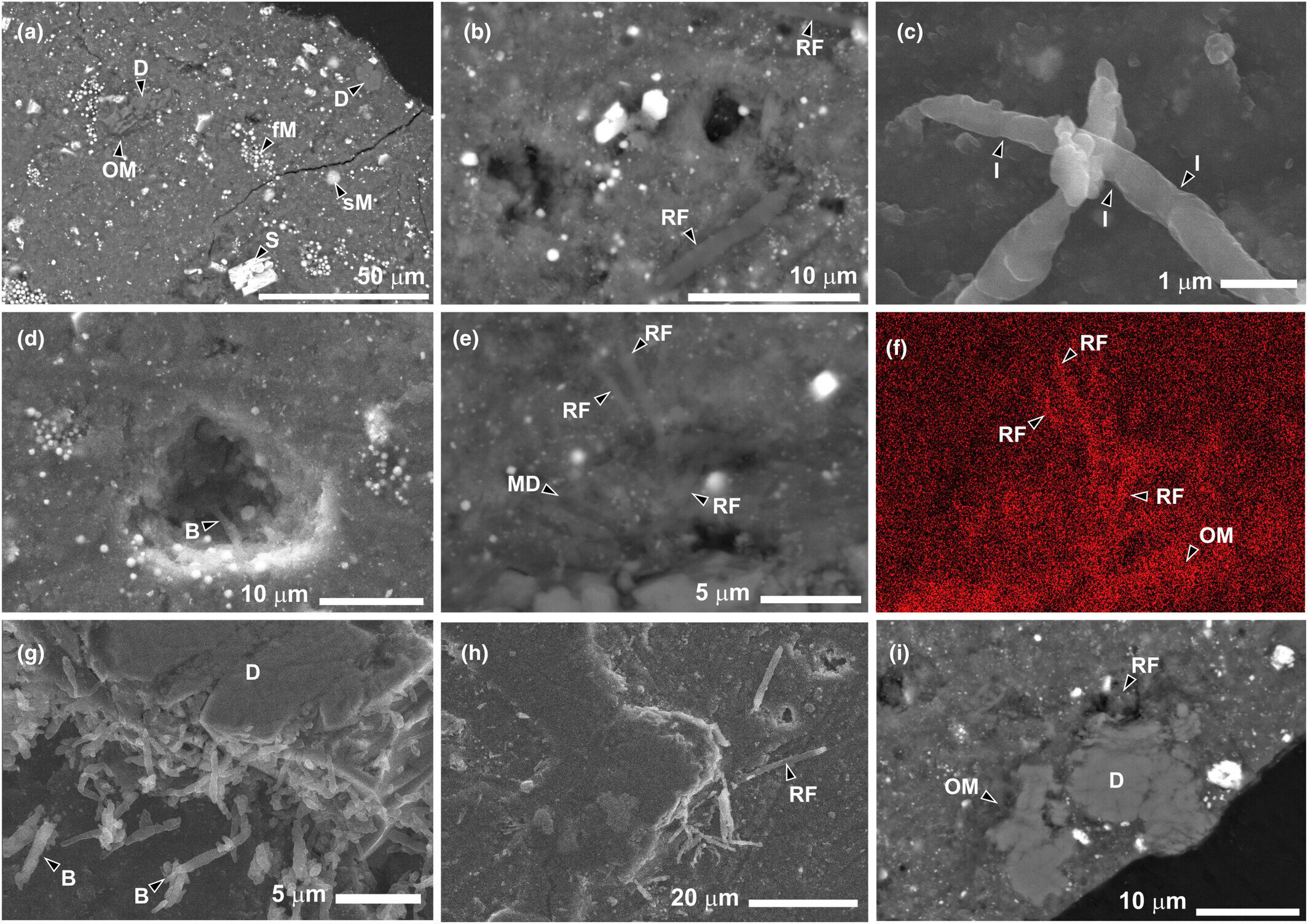
Rods and filaments of organic matter, interpreted as filamentous microorganisms, were observed on the sample's surface. Variations in size and morphology of these structures resembled known terrestrial microbes. Observations showed that the abundance of these filaments changed over time, suggesting the growth and decline of a prokaryote population with a generation time of 5.2 days.
Population statistics indicate that the microorganisms originated from terrestrial contamination during the sample preparation stage rather than being indigenous to the asteroid.
Results of the study determined that terrestrial biota had rapidly colonized the extraterrestrial material, even under strict contamination control. Researchers recommend enhanced contamination control procedures for future sample-return missions to prevent microbial colonization and ensure the integrity of extraterrestrial samples.
 https://phys.org/news/2024-11-ryugu-asteroid-sample-rapidly-colonized.htmlOpen linkView original on lemmy.world
Webb Discovers Methane, Carbon Dioxide in Atmosphere of K2-18 b
A new investigation with NASA’s James Webb Space Telescope into K2-18 b, an exoplanet 8.6 times as massive as Earth, has revealed the presence of carbon-bearing molecules including methane and carbon dioxide. Webb’s discovery adds to recent studies suggesting that K2-18 b could be a Hycean exoplanet, one which has the potential to possess a hydrogen-rich atmosphere and a water ocean-covered surface.
 https://www.nasa.gov/goddard/2023/webb-discovers-methane-carbon-dioxide-in-atmosphere-of-k2-18bOpen linkView original on lemmy.world
Non-gas giant has 73 times Earth’s mass, bewildering its discoverers
Scientists have been working on models of planet formation since before we knew exoplanets existed. Originally guided by the properties of the planets in our Solar System, these models turned out to be remarkably good at also accounting for exoplanets without an equivalent in our Solar System, like super Earths and hot Neptunes. Add in the ability of planets to move around thanks to gravitational interactions, and the properties of exoplanets could usually be accounted for.
Today, a large international team of researchers is announcing the discovery of something our models can't explain. It's roughly Neptune's size but four times more massive. Its density—well above that of iron—is compatible with either the entire planet being almost entirely solid or it having an ocean deep enough to drown entire planets. While the people who discovered it offer a couple of theories for its formation, neither is especially likely.
 https://arstechnica.com/science/2023/08/we-dont-understand-how-a-freakishly-heavy-exoplanet-could-have-formed/Open linkView original on lemmy.world
Quaking Giants Might Solve the Mysteries of Stellar Magnetism
In their jiggles and shakes, red giant stars encode a record of the magnetic fields near their cores.
Icy Moonquakes: Surface Shaking Could Trigger Landslides on Moons of Jupiter and Saturn
A new NASA study offers an explanation of how quakes could be the source of the mysteriously smooth terrain on moons circling Jupiter and Saturn.
 https://www.nasa.gov/feature/jpl/icy-moonquakes-surface-shaking-could-trigger-landslidesOpen linkView original on lemmy.world
Neptune's Disappearing Clouds Linked to the Solar Cycle
Astronomers have uncovered a link between Neptune's shifting cloud abundance and the 11-year solar cycle, in which the waxing and waning of the Sun's entangled magnetic fields drives solar activity.
 https://www.nasa.gov/feature/goddard/2023/hubble-neptunes-disappearing-clouds-linked-to-the-solar-cycleOpen linkView original on lemmy.world
JWST Spots Giant Black Holes All Over the Early Universe
Giant black holes were supposed to be bit players in the early cosmic story. But recent James Webb Space Telescope observations are finding an unexpected abundance of the beasts.
 https://www.quantamagazine.org/jwst-spots-giant-black-holes-all-over-the-early-universe-20230814/Open linkView original on lemmy.world
Heavy, highly magnetic star may be first magnetar precursor we’ve seen
Magnetars are some of the most extreme objects we know about, with magnetic fields so strong that chemistry becomes impossible in their vicinity. They're neutron stars with a superfluid interior that includes charged particles, so it's easy to understand how a magnetic dynamo is maintained to support that magnetic field. But it's a little harder to fully understand what starts the dynamo off in the first place.
The leading idea, which benefits from its simplicity, is that the magnetar inherits its magnetic field from the star that exploded in a supernova to create it. The original magnetic field, when crushed down to match the tiny size of the resulting neutron star, would provide a massive kick to start the magnetar off. There's just one problem with this idea: we haven't spotted any of the highly magnetized precursor stars that this hypothesis requires.
It turns out that we have been observing one for years. It just looked like something completely different, and it took a more careful analysis, published today in Science, to understand what we've been observing.
 https://arstechnica.com/science/2023/08/heavy-highly-magnetic-star-may-be-first-magnetar-precursor-weve-seen/Open linkView original on lemmy.world
Exoplanets Could Help Us Learn How Planets Make Magnetism
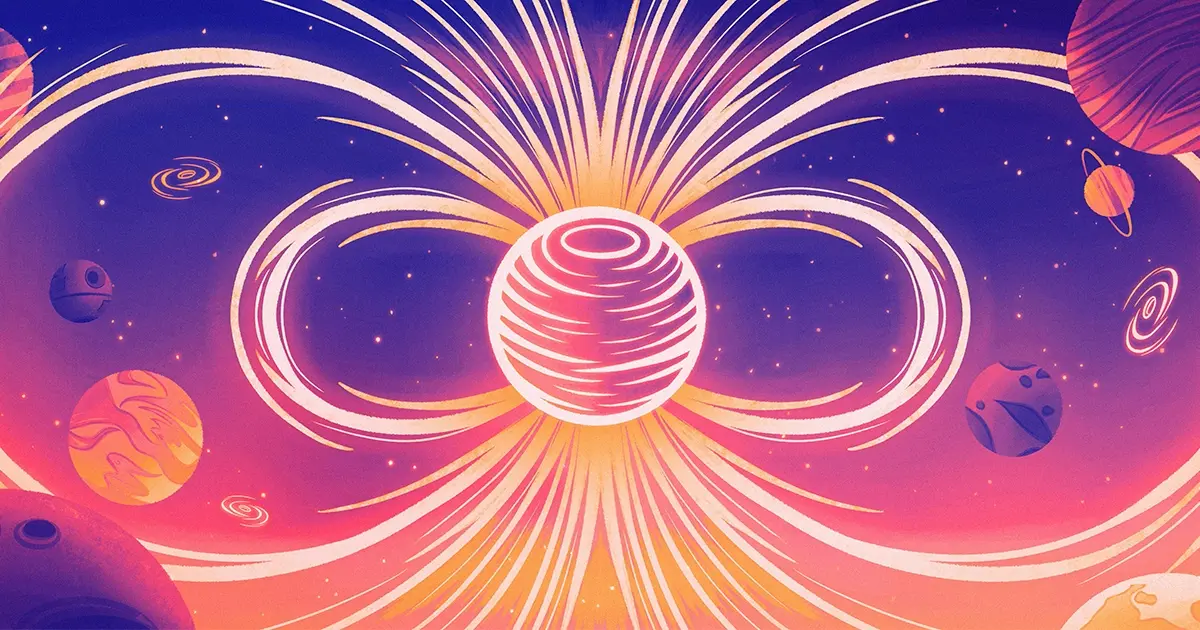
New observations of a faraway rocky world that might have its own magnetic field could help astronomers understand the seemingly haphazard magnetic fields swaddling our solar system’s planets.
 https://www.quantamagazine.org/exoplanets-could-help-us-learn-how-planets-make-magnetism-20230807/Open linkView original on lemmy.world
Ryugu asteroid samples reveal traces of rock from before the Sun existed
When JAXA’s Hayabusa-1 spacecraft delivered samples from asteroid Ryugu to Earth in late 2020, anticipation was high. What could the space rock possibly be waiting to tell us?
Asteroids are time capsules of the Solar System, containing material from early in its history. As a 2021 study found, the Ryugu samples contained carbon, nitrogen, and oxygen, all necessary ingredients for life, and a 2022 study discovered evidence of water (and possibly a subsurface lake) that had long since dried up. Ryugu and its parent body were also revealed to carry some of the most ancient rocks in the Solar System. However, the pieces of this asteroid still had more to say.
It turned out that two of the Ryugu samples each had a shard of something that visually stood out. Researchers discovered they were seeing fragments, or clasts, of rock with a chemical composition that differed from the rest of Ryugu. These clasts were higher in sulfur and iron, but lower in oxygen, magnesium, and silicon. That meant they could not have possibly formed with Ryugu, so they had to have been acquired through a later impact; but the asteroid still had more to say.
 https://arstechnica.com/science/2023/08/ryugu-samples-reveal-traces-of-rock-from-before-the-sun-existed/Open linkView original on lemmy.world
How (Nearly) Nothing Might Solve Cosmology’s Biggest Questions
By measuring the universe’s emptiest spaces, scientists can study how matter clumps together and how fast it flies apart.
 https://www.quantamagazine.org/how-nearly-nothing-might-solve-cosmologys-biggest-questions-20230725/Open linkView original on lemmy.world
The US government is taking a serious step toward space-based nuclear propulsion
Four years from now, if all goes well, a nuclear-powered rocket engine will launch into space for the first time. The rocket itself will be conventional, but the payload boosted into orbit will be a different matter.
NASA announced Wednesday that it is partnering with the US Department of Defense to launch a nuclear-powered rocket engine into space as early as 2027. The US space agency will invest about $300 million in the project to develop a next-generation propulsion system for in-space transportation.
 https://arstechnica.com/space/2023/07/nasa-seeks-to-launch-a-nuclear-powered-rocket-engine-in-four-years/Open linkView original on lemmy.world
New legged robots designed to explore planets as a team
While rovers have made incredible discoveries, their wheels can hold them back, and erratic terrain can mean damage. There is no replacing something like Perseverance, but sometimes rovers could use a leg up, and they could get that from a small swarm of four-legged robots.
 https://arstechnica.com/science/2023/07/new-legged-robots-designed-to-explore-planets-as-a-team/Open linkView original on lemmy.world
Something in space has been lighting up every 20 minutes since 1988
On Wednesday, researchers announced the discovery of a new astronomical enigma. The new object, GPM J1839–10, behaves a bit like a pulsar, sending out regular bursts of radio energy. But the physics that drives pulsars means that they'd stop emitting if they slowed down too much, and almost every pulsar we know of blinks at least once per minute.
GPM J1839–10 takes 22 minutes between pulses. We have no idea what kind of physics or what kind of objects can power that.
 https://arstechnica.com/science/2023/07/new-slow-repeating-radio-source-we-have-no-idea-what-it-is/Open linkView original on lemmy.world