Spyke

Replies

Comment on

How Times Change...

Linux was not muscled like that in 1991 - it's first, barebones kernel was released in September of that year.

I remember installing Linux on a 90MHz 486 in the mid 90s and it barely ran X server with a simple window manager. And if the machine was turned off while Linux was running, you might not be able to boot again.

Linux now, however, is unrecognizeably better.

Comment on

Tesla Cybertruck prevented rescue of 3 victims in crash, authorities say – NBC Bay Area

Reply in thread

Well that and the fact the people inside and outside have tremendous difficulty opening a door or window if power fails.

In situations where emergency responders can't open a door, they try:

  1. To smash a window. Which is difficult if the window is designed to stop 9mm parabellum.

  2. Cut the door posts with the 'jaws of life'. Which is difficult if they can't smash the windows, and even more difficult to cut stainless steel bulletproof panels.

Basically the Cybertruck is the only commercial vehicle designed not to be opened.

I acknowledge there are manual ways to do this inside the car, but they are hidden and drivers (let alone occasional passengers) don't practice this, and so don't remember at times of stress.

These are specific points in UK road safety regulations and those are just 2 of the reasons why the UK banned the CT.

Comment on

Very clever...

Reply in thread

My god that brought back memories. The first commands when sitting at a new terminal was always, always:

stty sane

stty erase '^H'

It was well into the 2000s before Unix had useable defaults.

Comment on

The first GPT-4-class AI model anyone can download has arrived: Llama 405B

Reply in thread

Typically you need about 1GB graphics RAM for each billion parameters (i.e. one byte per parameter). This is a 405B parameter model. Ouch.

Edit: you can try quantizing it. This reduces the amount of memory required per parameter to 4 bits, 2 bits or even 1 bit. As you reduce the size, the performance of the model can suffer. So in the extreme case you might be able to run this in under 64GB of graphics RAM.

Comment on

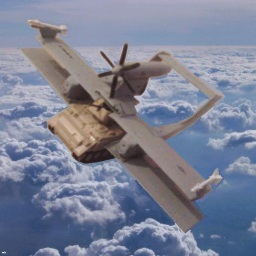
why don't airforces put backwards missiles on their planes? that way they can easily take down anyone who's behind them.

Reply in thread

Ackshually they do this, not with cars but, with WW2 era prop planes.

The Spitfire for example:

The Merlin consumed an enormous volume of air at full power (equivalent to the volume of a single-decker bus per minute), and with the exhaust gases exiting at 1,300 mph (2,100 km/h) it was realised that useful thrust could be gained simply by angling the gases backwards instead of venting sideways.

During tests, 70 pounds-force (310 N; 32 kgf) thrust at 300 mph (480 km/h), or roughly 70 hp (52 kW) was obtained, which increased the level maximum speed of the Spitfire by 10 mph (16 km/h) to 360 mph (580 km/h). The first versions of the ejector exhausts featured round outlets, while subsequent versions of the system used "fishtail" style outlets, which marginally increased thrust and reduced exhaust glare for night flying.

From Wikipedia

world

Comment on

*Permanently Deleted*

Reply in thread

I agree with your logic and analysis.

However the non-tangibles here are pretty staggering - Russia is hugely dependent on China and India for exports (basically oil and gas) to raise cash and foreign currency. It also needs high tech goods from China - China provides drones, cars, bikes, clothes and more to support the invasion. And critically a lot of electronics, including those under sanctions being smuggled from the West.

Placing tariffs on China sends a strong negative message to China - it's a real slap in the face that will invite a pretty nasty punch back again.

What on earth motivated this?

Comment on

Anon is a fighter

Reply in thread

You see those fin-like bones that rise up from the skull? All of that is filled with the muscle that closes the jaw - technically the purpose of these bones is for the muscle to attach to. One bite will slice and crush anything of you that is in his mouth.

Oh, and humans lack a type of fast-twitch muscle fibre that gorillas (and pretty much all non-human mammals) have. This makes their muscles a lot more powerful than ours, no matter what training you do. They will tire faster, but thats probably only during the stomp-on-your-bloody-remains part of the fight.

Oh, and their reaction speed is also faster.

Basically, you have zero chance going mano a mano with a gorilla.

Comment on

puts hair on your chest

Reply in thread

Exactly!

While the continents might look like they fit together, and the rock types and ages and fossils match at key points all down the coasts from Canada/Scotland all the way down to South America and South Africa, how on earth (sorry) would you explain how the continents are thousands of miles apart?

One theory posited the earth spinning so fast centrifugal forces ripped ehat would become the moon out of the Pacific, sucking Eurasia and America into the void.

That's a Randall Monroe WhatIf if ever I saw one. Think of the energy involved! All life on earth would be extinct.

So these theories were laughed out of scientific court. Until Vine and Matthew's seminal paper on magnetic stripes being mirrored over the mid ocean ridge showed there had to be something forcing the plates apart.

canada

Comment on

Has International Travel to the U.S. Really Collapsed?

Reply in thread

Absolutely!

Right now there's a non-zero chance of being detained, stripped searched, probed and held in a prison cell without access to safe food and water for an unknown length of time before being deported. Hopefully not to a death in a Columbian hellhole.

I don't know about you, but even if that is a tiny chance, I'm not risking myself or my family unless it's really important.

Comment on

Colorblindness check!

Reply in thread

This is true for only red and green loght detecting proteins (opsins) - the blue opsin gene is on chromosome 7.

The red and green detecting proteins have an interesting history in humans.

Fish, amphibians, lizards and birds have 4 different opsins: for red, green, yellow and blue colours. And the blue opsin sees up into the ultra-violet. Most animals can see waaaay more colours in the world than we (or any mammal) can. So what happened that makes mammal vision so poor?

It's thought that all mammals descend from one or a few species of nocturnal mammal that survived the catastrophe that wiped out the dinosaurs at the end of the Cretaceous. The colour detecting cells (the cones) need a lot of light compared to ones that see in black-and-white (the rods) and therefore nocturnal animals frequently lose cones in favour of the more sensitive rods for better night vision. The mammals that survived the Cretaceous extinction had also lost the green and yellow opsins while keeping red and blue - basically the two different ends of the light spectrum.

Consequently today most mammals still have only 2 opsins so your cat or dog is red-green colourblind.

Why do humans see green? Probably because our monkey forebears, who lived in trees and ate leaves, needed to distinguish red leaves and red fruit (visible to birds) from the green background.

But how did we bring back the green opsin? A whole section of the X chromosome (where the red opsin is coded) got duplicated in a dna copying mistake and then there were two genes for red opsins. As there are different alleles (versions), they could be selected for independently and so one red opsin drifted up the spectrum to be specific for green. So our green opsin is a completely different gene to the green opsin in fish, birds, etc. This kind of evolution happens a lot which is why, for example, there are many families of similar hormones like testosterone and estrogen. And steroids too.

Comment on

average day in NPM land

Reply in thread

All junior devs should read OCs comment and really think about this.

The issue is whether is_number() is performing a semantic language matter or checking whether the text input can be converted by the program to a number type.

The former case - the semantic language test - is useful for chat based interactions, analysis of text (and ancient text - I love the cuneiform btw) and similar. In this mode, some applications don't even have to be able to convert the text into eg binary (a 'gazillion' of something is quantifying it, but vaguely)

The latter case (validating input) is useful where the input is controlled and users are supposed to enter numbers using a limited part of a standard keyboard. Clay tablets and triangular sticks are strictly excluded from this interface.

Another example might be is_address(). Which of these are addresses? '10 Downing Street, London', '193.168.1.1', 'Gettysberg', 'Sir/Madam'.

To me this highlights that code is a lot less reusable between different projects/apps than it at first appears.

Comment on

The Project 2025 Presidency: The blueprint for Trump 2.0 predicted much of what we’ve seen so far—and much of what’s to come.

Reply in thread

Ah yes, but you forgot when, during the campaign, Trump said "Fake news! I don't know anything about Project 2025" which then allowed all the press to ignore it.

This changes everything life hack: Whenever you're caught in a lie, just say "fake news" and go on as if nothing has happened. Works for rape, bribery, theft, corruption and some say even murder.

Comment on

Since we have CRISPR and all the other cool stuff with gene splicing, might we be able to give ourselves gills one day?

In short, we could, but the cost would be incredible.

All vertebrates are animals that develop from a series of segments, with a vertebra at the core. In our time from eel-like fish, we've specialised these segments so, for example, we have ribs on the vertebra corresponding to the rib cage.

To support arms and legs, specific vertebra have become highly specialised in the form of hips and shoulders.

Gills are composed of a series of gill arches, one on each vertebra in the neck area. These structures have (in eels) a lot of blood vessels to carry the blood that needs reoxygenation.

An interesting thing happened as the eel-like creatures differentiated, evolved jaws and ultimately ended up as mammals and humans: nature co-opted the specific vertebra that had these gill features and turned them into jaws and ears and a variety of other features in the head and neck. For example the tiny bones in your ear were once fish jawbones which were previously one (or more) gill arches.

The stupendously complex anatomy in this area comes from all the short-term 'decisions' evolution took to make all the magnificent creatures that inhabit the earth.

For example the nerve that connects the brain to the larynx (the recurrent laryngeal nerve) emerges from a vertebra high up in the neck, decends down under the aorta in the chest and then back up into the neck to the larynx. In the giraffe, the nerve is many meters long, even as it's direct path could be a few centimeters. The reason is that the heart used to be close to the gills in fish and sharks. As the heart moved in land animals, the nerve was caught in a loop around the critical aorta and it was 'pulled' along for the evolutionary ride.

So, in order to turn your gills back on, you need to unprogram 450m years of evolution of the structures you call your head, face and neck.

I'd recommend 'Your inner fish' by Shubin - it's a wonderful read and explains this in far more detail that I can manage.