
Posts
Carrera [Leica M3 | 50mm Summicron DR | Kodak 500T]
an image of the interior of an ambiguous antique blue sportscar. through the driver-side window, the glossy blue and chrome exterior contrasts the darker shades of browns and blacks that accent the interior of the car.

[Help] Determining whether to return a lens
I recently purchased an M. Zuiko 17mm f1.2 lens after reading it's the sharpest lens in the micro four thirds system. I have the 25mm f1.2, and it's been wonderful -- even wide open -- but all the technical lens tests say it is a step below the 17mm f1.2 and the 45mm f1.2 in terms of sharpness.
Ive been testing this new 17mm lens and I immediately noticed it is almost unusably sharp wide open -- not something I'm used to since I can use the 25mm wide open and achieve very good sharpness. The 17mm wide open leaves quite a bit more to be desired, which is not what I expected based on the reviews online.
Stopping down to 2.0 the 17mm does get very sharp and far more useable, but I'm a bit disappointed by its performance wide open so far.
Maybe someone can take a look at these test shots of a wall, tell me if theyre worth anything at all in terms of being able to tell why this is happening (ie, maybe it could be due to the focal length being wider, or the field curvature being more curved or something? I was thinking, maybe it's that with closeups at 17mm the DOF is so shallow that there isn't much there to be in focus l, but I don't think that's it)
((Also I'm not asking whether either of these shots are usable, really only using them to compare the sharpness wide open of these two lenses))
Feeling like maybe I should just return the 17mm and use the 12-40 f2.8 I have on the shelf if I ever need to go wider than 25mm.
[First pic is 17mm, second is 25mm, distance from wall is ~1m]
[Critique Wanted (sorta)] Help editing images in darktable
Hello all
I was hoping to get some advice on editing these two photos I took with my OM-1 in hi-res mode. I have pretty limited experience editing in darktable (or editing digital files, at all. in fact, I pretty much suck lol) , and find myself getting burnt out during editing sessions where ill think my image looks good, ill step away, come back and think its not great.
In this case, I'm having trouble getting my edited raw images to look as good (here, in this case, I'm mostly talking sharpness) as the OOC jpeg. I guess Olympus does quite a bit of sharpening? I'm a bit more confident in my colorgrading/saturation/exposure adjustments but for these particular images I feel like I could work on them forever and never be satisfied.
Was wondering if I could get some advice on these images. I've included the raw files, the OOC jpegs, and my lightly edited images in this album. I was hoping to see if anyone would be willing to do a quick edit themselves to see if they are able to make a good image out of these rawfiles, but that's quite a bit of work, so any advice would be greatly appreciated. Thanks!
Edit: whoops, i lied. the landscape shot PA172635 is not hi-res, its regular 20MP. I've added two more OOC jpegs and their rawfiles (both hi res) that I selected and thought looked best out of all the photos i took today.
Azorean sunset [ Rollei 35 | 40mm Tessar f3.5 | Portra 400]
São Miguel, Azores, Portugal
Caloura [Leica M3| 50mm Summicron f/2 | Kodak 500T]
Água de Pau, São Miguel Island, Portugal
Edit: I have swapped in the picture with a different edit. this one has less noise and is a bit darker. I definitely under exposed this image, somehow. there is a lot of noise. im not sure how, since it was so sunny i usually am using one stop more light than sunny 16, so this was likely around f11 250....
What emulated games hold up in 2025?
Hey all, I'm interested in playing some emulated games on my steamdeck, but I'm not sure where to start.
I've been having fun with Super Mario World, but a good chunk of that is because I played it a lot as a kid, so much of my enjoyment is from nostalgia.
Problem is, I didn't play many too many games when I was a kid...
What older games out there would you say hold up in 2025? So that regardless of the nostalgia factor, they can be enjoyed by someone like me
Anyone have Rocket League running smoothly on Gnome?
I primarily use Gnome desktop (x11) with Ubuntu because I'm pretty comfortable with it, I like the minimalist, modern style, I enjoy the smoothness, and I don't feel like I need to customize everything. Plus, having familiarity with the desktop, out-of-box experience helps me when installing and reinstalling, which I do often because of work.
The issue with it, however, is I can't really play games smoothly on it, specifically Rocket League. On Plasma, I was able to achieve smoothness (not just high framerate, but also input -- erm, latency? lag? not sure the term here) by installing the liquorix kernel, using the proprietary nvidia drivers, and -- here is the key -- hitting Shift+Alt+F12 to disable with the compositor. After that, I get a nice smooth experience in Rocket League, which is essential since it's a game that is dependent on quick reactions and physics.
But with Gnome, there is no disabling the compositor this way. Supposedly Gnome handles this by allowing apps to bypass the compositor if they're in fullscreen mode, but it does not seem that Rocket League does this. I did set it to full screen, turned off the second monitor, but it still felt like there was a delay between when I pressed a button on the controller and when the car reacted. The framerate is still at 144, but its not playable with this amount of input lag. Honestly, feels kinda like if vsync were on. I did read that mutter forces vsync on, but not sure how reliable that is.
I don't mind logging out and switching my desktop to Plasma, but it would be nice if I could just stick with Gnome. I very much like how it handles workspaces, and yeah, I know I could probably configure Plasma to do somewhat of the same thing, but it just doesn't feel the same to me.
Anyone have RL running smoothly on Gnome?
Edit: whoops, yes, running through proton. I forget what version at the moment...
Beginner question about turntable+preamp+speakers
Edit: Read this first. The solution was to not try to do everything online and go to a local music/record/vintage audio equipment shop and chat with the folks there. They were super nice, showed me the gear they recommended, and now I've got a nice sounding vintage setup that may not be audiophile worthy but is super awesome to me.
Hi there all, beginner audiophile here. Trying to build out my first turntable setup.
I decided on a Fluance RT82 and Douk X1 for a preamp. Now, when selecting speakers, I decided I'd just buy a second pair of the studio monitors I was using on my computer, Kali LP-6.
Now I'm a bit confused on the connections. The RT82 comes with an RCA cable and ground cable I'll connect to the Douk preamp, so that is covered. But the preamp has 4 speaker outputs that are binding posts. There is only a single RCA input on each monitor, so I'm not sure how to connect the preamp to the monitors.
I did see someone online say "why would you connect a preamp to LP-6? They already have amplifiers in them" But I also saw another person who had a TT setup with the LP-6es, which included a pre amp.
Any advice would be appreciated!! Or reading materials. The douk manual isn't much help.
NIH abruptly terminates millions in research grants, defying court orders
FULL TEXT:
In an unprecedented move, the National Institutes of Health is abruptly terminating millions of dollars in research awards to scientists in Massachusetts and around the country, citing the Trump administration’s new restrictions on funding anything related to diversity, equity, and inclusion, transgender issues, or research that could potentially benefit universities in China.
The sweeping actions would appear to violate court rulings from federal judges in Rhode Island and Washington, D.C., that block the Trump administration from freezing or ending billions of dollars in government spending, said David Super, a constitutional law expert at Georgetown Law, who reviewed some of the termination letters at the Globe’s request.
In a related case brought by an association of higher education officials that specifically challenged Trump’s various DEI executive orders, a federal judge in Maryland twice over the past month blocked the administration from terminating funding, saying in his most recent decision the restrictions “punish, or threaten to punish, individuals and institutions based on the content of their speech, and in doing so they specifically target viewpoints the government seems to disfavor.”
Super added that the termination letters are also “unlawful” because the NIH is imposing conditions on funding that did not exist at the time the grants were awarded.
The NIH did not respond to a request for comment.
Scientists say the letters began arriving last Friday and earlier this week, notifying them their funding was being canceled because it involved subjects that are “unscientific,” do “nothing to enhance the health of many Americans,” or do “not enhance health, lengthen life, or reduce illness.”
Exactly how many NIH grants have been terminated is unclear.
With an annual budget of more than $45 billion, the NIH is the largest single public funder of biomedical research in the world, and Massachusetts is the nation’s top recipient on a per capita basis. Massachusetts researchers in the past fiscal year received more than $3.3 billion from the NIH.
Among those whose research funding was terminated is Nancy Krieger, a professor of social epidemiology at the Harvard T.H. Chan School of Public Health. Her letter said she would not be receiving the last installment, roughly $650,000, of a five-year, $4 million award for honing time-efficient ways of asking patients about the discrimination they experience, including racism, sexism, sexual orientation, and age or weight discrimination.
“These are really important groups of people to study to understand how their life experiences are affecting their health,” Krieger said.
The letter she received said her work ran afoul of the administration’s anti-DEI rules, although Krieger said the research itself was not related to DEI.
“This is an assault not on just one little group of researchers. This is saying certain knowledge is not to be supported by the government,” Krieger said. “It’s the proverbial, ‘If there’s no data, there’s no problem.’ It means one can’t document the harms.”
The letters sent to scientists said they had 30 days to appeal to the agency for reconsideration, which Krieger said she intends to do.
Krieger’s research enrolled roughly 700 patients at three Boston community health centers including Fenway Health.
Dr. Kenneth Mayer, who heads the study arm at Fenway Health and is a professor at Harvard Medical School, said the cancellation of the grant would not immediately harm patients participating in the study. But, “it could have an impact on patient health in the future,” he said. “The whole point is to learn about biases. Some people avoid health care because they think they are going to be judged.”
He said it’s possible the four years’ worth of data already collected may be used, such as to develop training programs for doctors or educational materials for patients. “This is just such an important kind of work,” he said.
An NIH official told the Globe that administrators who oversee grants were given barely an hour’s notice of the terminations late last Friday before the notifications were sent out.
The official, who declined to be identified because they are not authorized to speak publicly, said they were aware of 24 such notices from four NIH institutes and centers, but said there are likely to be hundreds more.
This official shared a spreadsheet that showed 76 notices of funding opportunities over the past two years that the agency “unpublished,” meaning they were effectively scrubbed from public databases, potentially eliminating the funding for them.
Brittany Charlton, associate professor and founding director of the LGBTQ Health Center of Excellence at Harvard T.H. Chan School of Public Health, has not had any research funding terminated but has heard directly from several scientists who did lose their funding. She said many will appeal.
Charlton said researchers are also working to partner with civil rights organizations as they challenge the legality of these executive orders.
“This goes beyond research on LGBTQ health and includes studies seeking to understand and address health issues affecting a wide range of other vulnerable communities,” Charlton said in a statement. “Scientific inquiry is under siege and the public’s health hangs in the balance as crucial studies vanish.”
Sean Arayasirikul, a medical sociologist and an associate professor in-residence in the department of Health, Society, and Behavior at University of California Irvine, received a termination letter last Friday that stopped funding halfway through a five-year study involving roughly 900 participants.
Arayasirikul’s research studies how racism and discrimination affect people of color who are gay or transgender and need help with HIV prevention, substance use disorder, or mental health.
“That is one of the biggest priorities for HIV prevention today and not having these data and not having this knowledge hearkens back to a time when denialism around HIV was prevalent,” Arayasirikul said.
“I am starting to think now that I may lose my job and not exist in this field anymore and that’s one thing,” said Arayasirikul. “But to erase an entire generation of scholars who come from these communities, doing this work, the impact of that is immense.”
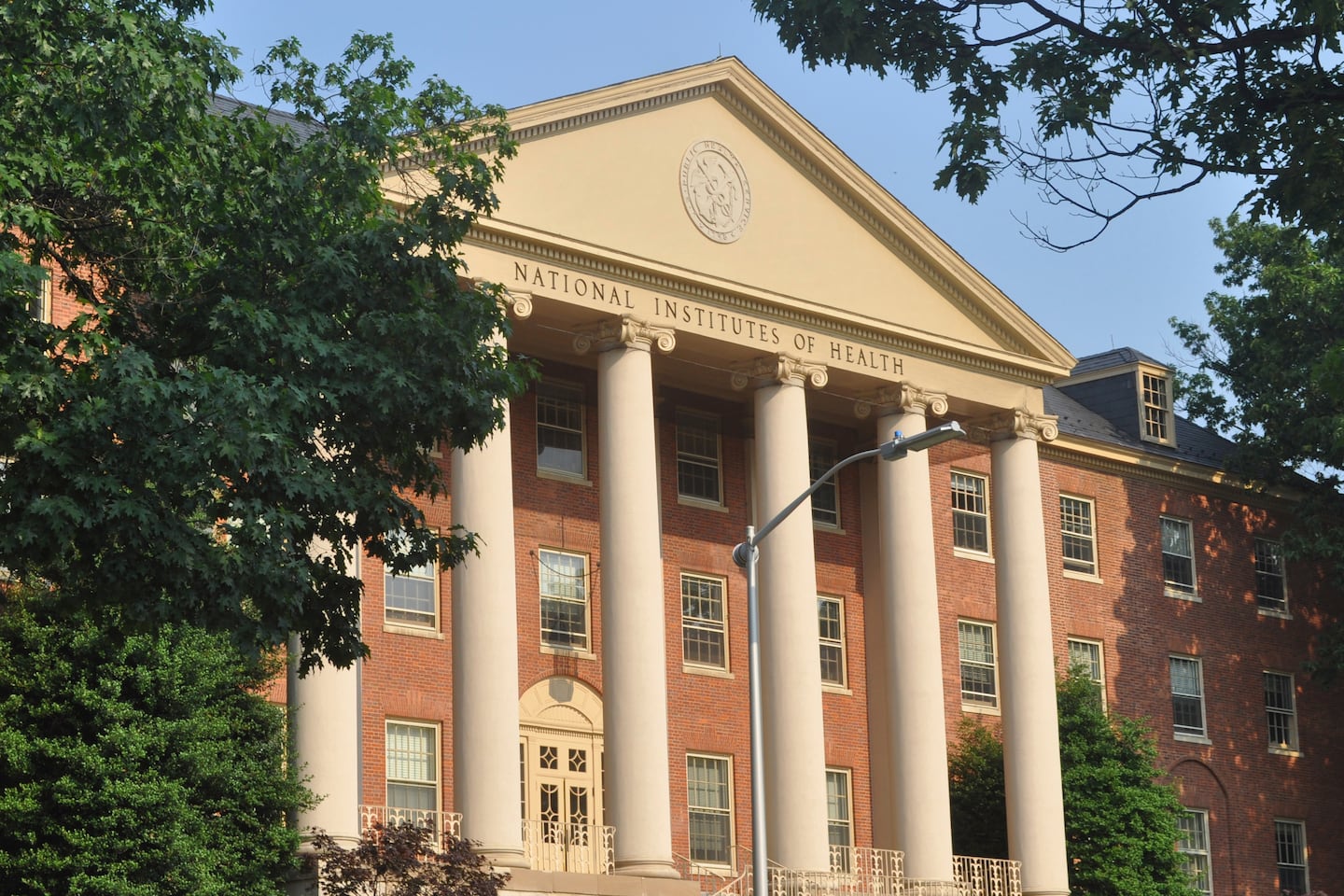 https://www.bostonglobe.com/2025/03/06/metro/trump-kills-science-funding-dei/Open linkView original on sh.itjust.works
NIH abruptly terminates millions in research grants, defying court orders
FULL TEXT:
In an unprecedented move, the National Institutes of Health is abruptly terminating millions of dollars in research awards to scientists in Massachusetts and around the country, citing the Trump administration’s new restrictions on funding anything related to diversity, equity, and inclusion, transgender issues, or research that could potentially benefit universities in China.
The sweeping actions would appear to violate court rulings from federal judges in Rhode Island and Washington, D.C., that block the Trump administration from freezing or ending billions of dollars in government spending, said David Super, a constitutional law expert at Georgetown Law, who reviewed some of the termination letters at the Globe’s request.
In a related case brought by an association of higher education officials that specifically challenged Trump’s various DEI executive orders, a federal judge in Maryland twice over the past month blocked the administration from terminating funding, saying in his most recent decision the restrictions “punish, or threaten to punish, individuals and institutions based on the content of their speech, and in doing so they specifically target viewpoints the government seems to disfavor.”
Super added that the termination letters are also “unlawful” because the NIH is imposing conditions on funding that did not exist at the time the grants were awarded.
The NIH did not respond to a request for comment.
Scientists say the letters began arriving last Friday and earlier this week, notifying them their funding was being canceled because it involved subjects that are “unscientific,” do “nothing to enhance the health of many Americans,” or do “not enhance health, lengthen life, or reduce illness.”
Exactly how many NIH grants have been terminated is unclear.
With an annual budget of more than $45 billion, the NIH is the largest single public funder of biomedical research in the world, and Massachusetts is the nation’s top recipient on a per capita basis. Massachusetts researchers in the past fiscal year received more than $3.3 billion from the NIH.
Among those whose research funding was terminated is Nancy Krieger, a professor of social epidemiology at the Harvard T.H. Chan School of Public Health. Her letter said she would not be receiving the last installment, roughly $650,000, of a five-year, $4 million award for honing time-efficient ways of asking patients about the discrimination they experience, including racism, sexism, sexual orientation, and age or weight discrimination.
“These are really important groups of people to study to understand how their life experiences are affecting their health,” Krieger said.
The letter she received said her work ran afoul of the administration’s anti-DEI rules, although Krieger said the research itself was not related to DEI.
“This is an assault not on just one little group of researchers. This is saying certain knowledge is not to be supported by the government,” Krieger said. “It’s the proverbial, ‘If there’s no data, there’s no problem.’ It means one can’t document the harms.”
The letters sent to scientists said they had 30 days to appeal to the agency for reconsideration, which Krieger said she intends to do.
Krieger’s research enrolled roughly 700 patients at three Boston community health centers including Fenway Health.
Dr. Kenneth Mayer, who heads the study arm at Fenway Health and is a professor at Harvard Medical School, said the cancellation of the grant would not immediately harm patients participating in the study. But, “it could have an impact on patient health in the future,” he said. “The whole point is to learn about biases. Some people avoid health care because they think they are going to be judged.”
He said it’s possible the four years’ worth of data already collected may be used, such as to develop training programs for doctors or educational materials for patients. “This is just such an important kind of work,” he said.
An NIH official told the Globe that administrators who oversee grants were given barely an hour’s notice of the terminations late last Friday before the notifications were sent out.
The official, who declined to be identified because they are not authorized to speak publicly, said they were aware of 24 such notices from four NIH institutes and centers, but said there are likely to be hundreds more.
This official shared a spreadsheet that showed 76 notices of funding opportunities over the past two years that the agency “unpublished,” meaning they were effectively scrubbed from public databases, potentially eliminating the funding for them.
Brittany Charlton, associate professor and founding director of the LGBTQ Health Center of Excellence at Harvard T.H. Chan School of Public Health, has not had any research funding terminated but has heard directly from several scientists who did lose their funding. She said many will appeal.
Charlton said researchers are also working to partner with civil rights organizations as they challenge the legality of these executive orders.
“This goes beyond research on LGBTQ health and includes studies seeking to understand and address health issues affecting a wide range of other vulnerable communities,” Charlton said in a statement. “Scientific inquiry is under siege and the public’s health hangs in the balance as crucial studies vanish.”
Sean Arayasirikul, a medical sociologist and an associate professor in-residence in the department of Health, Society, and Behavior at University of California Irvine, received a termination letter last Friday that stopped funding halfway through a five-year study involving roughly 900 participants.
Arayasirikul’s research studies how racism and discrimination affect people of color who are gay or transgender and need help with HIV prevention, substance use disorder, or mental health.
“That is one of the biggest priorities for HIV prevention today and not having these data and not having this knowledge hearkens back to a time when denialism around HIV was prevalent,” Arayasirikul said.
“I am starting to think now that I may lose my job and not exist in this field anymore and that’s one thing,” said Arayasirikul. “But to erase an entire generation of scholars who come from these communities, doing this work, the impact of that is immense.”
 https://www.bostonglobe.com/2025/03/06/metro/trump-kills-science-funding-dei/Open linkView original on sh.itjust.works