

TIL going "balls to the walls" originates from aviation lingo
I never knew and got curious and looked it up. I guess it makes more sense than slamming your testicals against the wall.
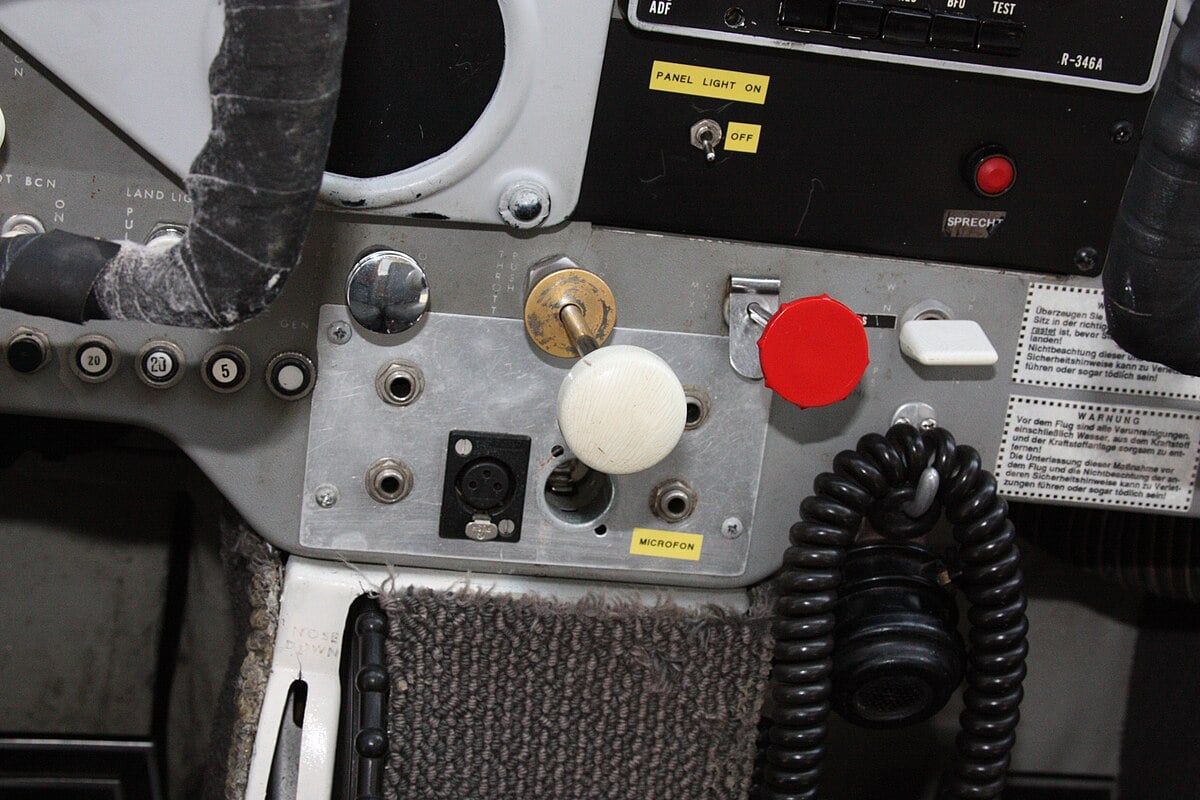 https://en.m.wiktionary.org/wiki/balls_to_the_wallOpen linkView original on lemmy.world
384
Comments80
Another fun phrase with similar etymology is "pulling out all the stops". It comes from church organs, where the stops are all of the levers that can change the timbre
Ohhhh this makes sense too! I actually have a pipe organ in my garage so I know exactly what you’re talking about!
I want a pipe organ in my garage.
I wish I owned a garage. Or a house. Or a fucking shed. Need to start smaller. Maybe food first. We'll work our way into it
*our way
Yeah i didn't catch that, thanks
That's what she said
I want a garage in my pipe organ.
comedy genius. really useful.
( ͡° ͜ʖ ͡°)
Found Dewey!
Going "balls out" refers to governors on steam engines which used centrifugal force on a pair of balls to regulate the speed of the engine. At full speed the balls were out at the maximum.
Now i wonder what the origin of "tripping balls" is?
That refers to noted hippie Mad Jack McMadd, whose balls were so big he used to trip on them when he got high.
If course, how didnt i think of that
Have you ever accidentally stood on a ball (football/dodgeball) and tripped? If you have you may have an idea where the expression comes from. You trip really hard.
So is the term "grounded" and I genuinely wonder what parents used to say to their misbehaved children before airplane terminology was commonplace.
They just beat them.
Pounded.
Wait...
Not to be confused of course with "balls deep", which is exactly what it sounds like
It's when your shaft is so damn deep that you can only barely make out your ball amidst the shaggy rough entanglement. Courses like Oakmont Country Club, Ko'olau, and Pinehurst are some examples that can challenge even top golfers.
This thread is a doozy, can't tell whats real and what isnt anymore
Dunking from basketball, right? right?
No, dunking your balls is a little different
Silly. It's from hitting a baseball so far that the balls deep in the bushes
Of course we still don't have an agreed upon standard for how deep balls deep actually is.
Yeah, I hear it varys from person to person.
It used to be relative but the French have an underground chamber that has very precisely controlled environmental conditions to avoid shrinkage, ensuring exact depth of balls. It’s actually quite scientific.
The bottom of the ball pit!
Mounting yourself on those balls at the wall?
"Just under the wire" has a similar aviation lineage. According to my dad some WWII fighter planes had a wire attached across the throttle lever slot to mark the point that was considered "full throttle". The wire was breakable, so a pilot in a desperate situation could push the throttle farther forward if necessary, but I think there was a danger of blowing up the engine. So being just under the wire meant not quite past that point.
Cool story, but not where that comes from and not how that phrase is used.
"Just under the wire" means "just in time", "at the last second", etc.
It comes from horse racing and the wire they would strong across the finish line. Same as "down to the wire"
https://www.dictionary.com/browse/under--the--wire
Interesting - I know about the horse-racing wire, it was to trip the photo-finish camera.
WEP, war emergency power. Depends on the aircraft how long you could use it.
https://en.m.wikipedia.org/wiki/War_emergency_power
TIL you can increase engine power by mixing water into the fuel.
You can also increase speed by not using any propellers or moving parts. At supersonic speeds you capture the air, compress it into a chamber than hit it with a spark and blow the fucker up. That's how a ramjet engine works. China just made one that uses pulse like combustions in a engine that's only about a foot wide, and maybe 13 feet long. Speeds up to mach 4.. or 5000km/h (3100mph) at about 65,000 feet.
It needs to be injected into the air charge with the best atomization you can manage for best results.
The Corsair had water injection as a WEP, I forget by what mechanism it worked but it could make that big ol' Pratt & Whitney eat its own guts for more horsepower.
Water methanol injection, cools the air charge which makes it denser, more air you can cram in the more fuel you can cram in with it.
https://ww2aircraft.net/forum/threads/the-f4u-1-and-water-injection.40598/?amp=1
Thanks for the read, that sent me down an interesting rabbit hole
Thanks, that's a lot more than my sketchy memory of what my dad told me (WWII pilot). Might not be where "under the wire" came from but it's fascinating.
You will hear Apollo astronauts occasionally say "all balls" or "five balls." After performing maneuvers, they would check their trajectory by taking fixes on stars using the telescope/sextant, this data would be fed into the guidance computer, which would compute their deviation from their intended course. If they were perfectly on their intended course, it would display a variation of 00000. "All balls." Perfectly accurate.
Kind of like 'having one's balls in a vice'. It actually refers to the old days when ball bearings were made by hand. It was tedious work and the pressure to make ball bearings for the burgeoning industrial revolution was intense. They were cut out of metal and then polished smooth, secured in a vice. Hence, 'having your balls in a vice' meant being under intense pressure.
10/10 shitpost
Now I'm confused. Was OP just kidding about the balls in a vice saying?
Nowadays I just keep my dick in a vice, as AvE recommends
I've never understood "Peddle to the meddle." What am I peddling and who's meddling in my peddling? ^/s^
Pedal to the metal.
To expand, it is referring to pushing the gas pedal to the (metal) floor when racing.
\m/
Petal to the mettle.
aka competitive gardening
English is so stupid.
No, your.
I think it may be peddling bullshit to meddle with the integrity of the English language
I'm offended by them calling testicles "vulgar"
Little Known Fact: In Texas they don't have testicles, they have texicles.
Heh nice
Some people told me that school book authors in Texas actually have Texticles.
Vulgar in linguistics refers to street usage instead of formal. See also Classic Latin vs Vulgar Latin.
Interesting. Similarly, balls out has nothing to do with testicles
Another fun one is that in the phrase "three sheets to the wind" Sheets do not refer to the sails as many believe, they actually refer to the ropes that tie down the sales. So you lose a sheet, the sail becomes less predictable. If you lost 3 sails I think you'd just be dead in the water most times, not stumbling about
Patrick O'Brian has a bunch of opinions about these. "The devil to pay" was spreading pitch on, or paying, the hard-to-reach seam between deck and hull called the devil. At loggerheads means fighting with the long poles with a hot iron ball on the end , or loggerheads, used to heat pitch.
I can Accept that
Based on the video for that song, the band was unaware of this.
Yeah probably. I like their interpretation though
I'm pretty sure it was from trains first
You may be thinking of "balls out" which refers to centrifugal regulators that are usually used on steam engines.
I just assumed it was an exaggeration. Putting the balls to the wall meant having them wide open
Trains used levers for the throttle.
As do many airplanes, in fact Cessna-style plunger throttle controls are relatively unusual.
The knobs on airplane throttles or thrust levers are also seldom spherical; it has happened but most are cylindrical. There's a whole section in FAR 23 that talks about how they have to be oriented in the cockpit, the shape and color of the knobs/handles etc. so pilots can tell them apart at a glance/by feel. For instance, when you first climb into a Cessna Skyhawk the position of the flap lever in front of the copilot's left knee feels kind of strange, almost everything is conveniently placed for the pilot, but the flaps are way over there. law requires the flap control to be to the right of the cockpit centerline, the gear lever must be to the left, but a Skyhawk has fixed gear.
You often hear steam engineers say "put the throttle on the ceiling" meaning apply full power. Diesel engineers will refer to "notch 8" as the highest power setting.
My mom worked for the railroad - she was the first trains woman to become a superconductor.
Probably had a lot of folks railing against her for being a trainsetter
I heard that too
Wow I never knew this either. This is a good one
Oh shit sam o nella was right
Who?
Sam O'nella is a comedy education YouTuber
In a way relating to human anatomy that has caused me to remove this phrase from my usage in recent years (because I worried how others would take it) the balls=testicles actually always made sense to me, but I'm not going to explain it.
However, now that I know what the most literal interpretation of the phrase actually is, I can feel safe using it again!
Thank you, thank you, sir or madam