

Posts
Tailscale MagicDNS issues since 1.84.1 mac?
Has anyone seen a drop in magic DNS performance in the last month?
I'm having this in situations where the DNS would be getting hammered - for example my apt updates ansible script, or Uptime Kuma checks. If I switch to IP addresses it works fine.
Good experience with neko remote browser
I recovered from a small disaster today using the neko dockerised web-browser.
I set up a remote backup with Proxmox running on a HP mini and a Synology a month ago at a friend's house 3000 km away. I thought I'd reserved all the IP addresses, but last night the Synology IP address changed, so the NFS shares to Proxmox and Jellyfin broke. That wasn't to hard to fix remotely, but I don't want it to happen every time the DHCP lease expires.
So now I need to log into their router and reserve the IP addresses...
I can get on the local network there by ssh-ing into one of my entities (via Tailscale), but how do I get to the web interface of the router?
Enter neko. It spins up a browser in a Docker container that can be accessed over a web address. So I created an LXC, installed docker and spun it up, then was able to use that to open the local-only web interface to the router.
neko is intended for watch parties, so multiple people can be logged in to the same browser window at a time - there's a toggle to take control of the window for clicks and typing, but apart from that it's all pretty straight forward. There's a very noticeable lag, but it got the job done.
Perhaps there was an easier lighter-weight way of doing this? In the old old days there was a text browser called Lynx - so perhaps there's some modern iteration that could have done this job?
Edit: There is an easier lighter-weight way of doing this!
Thanks to @[email protected], @[email protected] and others who mentioned 'ssh tunneling' - TIL I could just connect a local port (8080 in my case) to port 80 on the router (192.168.1.1:80 in my case) via the VM I have ssh access to over tailscale ([email protected]) with:
ssh -L 8080:192.168.1.1:80 [email protected]
ssh -L <local port to use>:<remote machine to access with port> <ssh address of jump machine>
When executed, that looks like I've just ssh'ed into that machine, but until I log out of that connection I can open up 127.0.0.1:8080 in my browser and I'm in the router's web interface - still a tiny bit of lag, but way smoother experience with less carry on.
Amazeballs.
Gamers go offline in retro console revival | The Guardian
Rosenau is part of a growing community who are ditching contemporary video games and picking up the consoles from their childhood, or even before their time. And gen Z gamers are following suit, with 24% owning a retro console, according to research by Pringles.
 https://www.theguardian.com/games/2025/feb/15/theres-no-stress-gamers-go-offline-in-retro-console-revivalOpen linkView original on lemmy.world
You might need to rename bios files for your emulator
A bit of a YSK for noobs (like me).
I was setting up the RG35XX-SP with Knulli last night. They have an excellent little tool in the menus for checking for any missing bios files for the emulators. A few of the files I couldn't find anywhere, but I had similar (but not exactly) named files. For example, a DS emulation bios I was missing was dsi_bios7.bin but I had biosdsi7.bin.
Amazingly, the (I guess Batocera) developers include an 'MD5' hash of the required files in the message with each file name, so I was able to confirm these are actually the same files. eg for the file dsi_bios7.bin the MD5 was given as 559dae4ea78eb9d67702c56c1d791e81.
If you're not a software developer, you might not be familiar with hashes. They are basically a big number computed from every byte in a file such that if two files have the same hash, for practical purposes, the files are exactly the same.
To find the MD5 of a file in mac or Linux you just type md5 <filename> in the terminal (ed: md5sum <filename> on Linux - thanks @[email protected] ), or for little files like these, just drop them in an online MD5 calculator.
Bathroom scale options?
I've had a fitbit wifi bathroom scale for a while. Getting the data out got suddenly more difficult when Google bought them, and I didn't love giving that data to google. It's finally died, and I'm looking at replacement options.
In a perfect world, I could just go to a store and buy a "HomeAssistant Ready" scale. If I can't have that, I'd like a scale that is on my local network and exposes the last x weigh-ins as an API on the device, then I could write something to poll it.
I haven't seen anything like those, but have turned up:
- a project to decode the bluetooth transmissions of a number of scales (after you build an ESP32 device for it)
- the Withings cloud based scale, but with a well documented API
Any other good options?
ModRetro Chromatic: Better Than the Game Boy Color it Emulates
Today, we took apart the ModRetro Chromatic: a new entry in the handheld gaming market that might remind you a bit of something from the past. The ModRetro Chromatic really does hit us hard in the nostalgias, bringing home that Christmas morning feeling. - ifixit
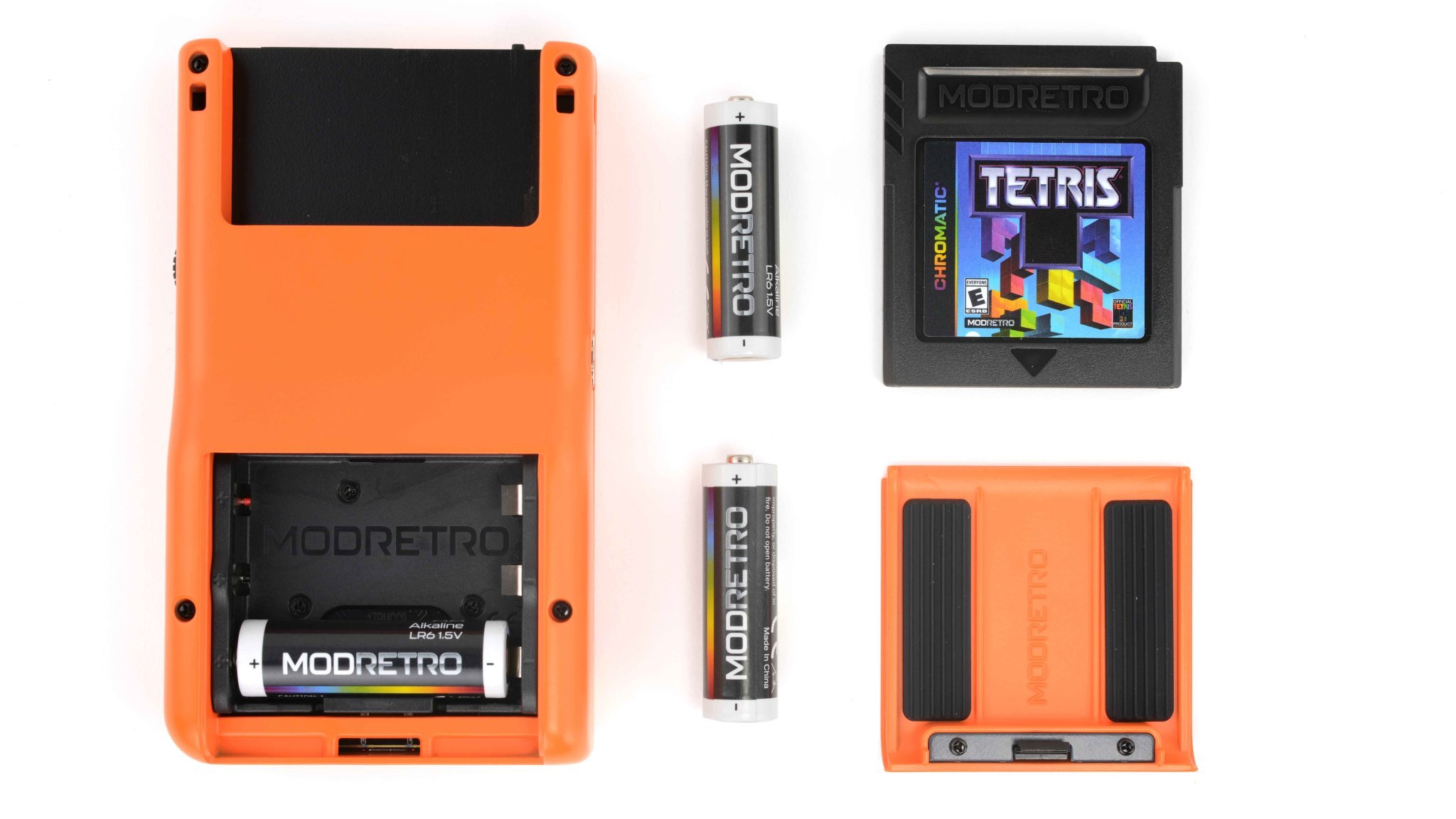 https://www.ifixit.com/News/106916/modretro-chromatic-better-than-the-game-boy-color-it-emulatesOpen linkView original on lemmy.world
Powkiddy RGB10 Max 3 - first impressions
For context, I'm new to retro-gaming & emulation.
How I got here:
The Steamdeck became available in my country, and I instantly desired one, but since I have a considerable Steam library that doesn't get played on my laptop and an Xbox S that hasn't been turned on for a year, I had to question if I really could justify something that expensive that might not get played much after a couple of months.
I've heard of Pico-8 games on an unrelated tech podcast, and that interested me. So I googled what handhelds I could play those on, and a few rabbit holes later I was here - a sub $100 handheld that can play retro roms, "up to" PSP - which I own a shoe box of UMDs for. I know my way around Vice City and would like to go back some day.
Screen Format:
The idea of playing PSP games was what tipped me towards a 16:9 screen rather than a squarer format. Perhaps that will turn out to be right for me, but right now I'm regretting it since I'm in a deep nostalgia dive of squarish format games.
Physical:
A lot of youtubers recommending the RGB10 Max3 point to the bulbous back as making it nicer than some others to hold for a while. It's fine - no where near as comfortable as a stock Xbox controller. A lot lighter than my distant memory of the original PSP and the buttons feel cheaper.
I got the transparent black one - I can't read the labels on the "start" and "select" buttons, but that's already staring to not matter at all after a couple of hours of on and off use. The power LED (which I understand can be turned off) is blinding in bed.
System:
I took the common advice to buy better quality SD cards and copy stuff over. In the process I flashed the system card with RockNix. I believe it comes stock with JELOS, but I never booted it with the supplied card so can't confirm. Even though this system is a collection of things from diverse developers, it's very manageable.
My only previous brush with emulation was helping some kids building an arcade machine around a raspberry pie (a while ago) and I remembering it being a lot clunkier to move between emulators etc and getting games going properly. Rocknix/Retroarch is pretty great. A few key-combos to learn but that doesn't take to long. I haven't been getting into tweaking emulator settings, but the out of the box experience for just playing some games is good.
Screen:
Is really good. It's been a long long time since I saw my PSP so it's probably not fair to compare, but I would say the RGB10Max3 is better. Certainly better for viewing angle (which hardly matters for a handheld device).
Controls:
Nearly every review (I've obsessively consumed waiting for this unit to arrive) mentions the poor D-Pad. In some games I don't notice any problem at all, in others I get repeatedly squashed by barrels or eaten by ghosts because of it. Sometimes, swapping to the left joystick solves the problem.
So far:
I'm having a lot of fun. If I am still picking this up and playing with it in a year, that's probably an indication I should have gotten a Steam Deck, but if I've lost interest and passed it on to someone else I probably would have already gotten good value out of it. A third possible outcome is that if it turns out I keep playing 4:3 and similar format games (and especially if I have a go at developing some PICO-8), I might look at one of the DMG shaped devices instead - and possibly in the more pocket-able size since those less story-based games are consumable on the go.
Experience of the HiBREW G5?
Does any one have any experience of this low cost conical burr grinder? I'm getting sick of my (rather good Timemore C2) hand grinder.
Beware Hollywood’s digital demolition: it’s as if your favourite films and TV shows never existed
Last June, fans of Comedy Central – the long-running channel behind beloved programmes such as The Daily Show and South Park – received an unwelcome surprise. Paramount Global, Comedy Central’s parent company, unceremoniously purged the vast repository of video content on the channel’s website, which dated back to the late 1990s.
 https://www.theguardian.com/commentisfree/2024/oct/01/hollywood-digital-demolition-films-tv-shows-wipedOpen linkView original on lemmy.world
Selfhosted S3 compatible recommendations?
Has anyone got some experience/advice for choosing between the options? It seems like they are:
My usecase is just to have a local single instance for testing apps against. I prefer to spin stuff up in Docker on the homelab.
Australian Flag
{ "id": 707212476, "name": "Australian Flag", "description": "", "links": { "lemmy": [ "[email protected]" ] }, "path": { "0": [ [ 200, 99 ], [ 200, 0 ], [ 0, 0 ], [ 0, 100 ], [ 0, 99 ], [ 0, 99 ], [ 0, 99 ] ] }, "center": { "0": [ 99, 50 ] } }
Solid introduction to LLMs from Andrej Karpathy
This is a pretty great 1 hour introduction to AI from Andrej Karpathy. It includes an interesting idea of considering LLMs as a sort of operating system, and runs through some examples of jailbreaks.
View original on lemmy.world
Value of "encrypted at rest" data
I'm writing a specification for a web app that will store sensitive user data, and the stakeholder asked that I consider a number of fairly standard security practices, but also including that the data be "encrypted at rest", i.e. so that if someone gains physical access to the hard disk at some later date the user data can't be retrieved.
The app is to be Node/Express on a VPS (probably against sqlite3), so since I would be doing that using an environmental variable stored in a file on that same computing instance, is that really providing any extra security?
I guess cloud big boys would be using key management systems to move the key off the local instance, and I could replicate that by using (Hashicorp Vault?) or building a service to keep the key elsewhere, but then I'd need secure access to that service, which once again would involve a key being stored locally.
What's your thoughts, experience, or usual practice around this?
Noob espresso experience (longish post)
I asked for some advice here a couple of months ago about transitioning to espresso from Aeropress, and have since done that, and thought my journey my have some lessons for others, or y'all might have some ideas for my remaining issues.
Journey
Instant -> Nespresso pods -> Aeropress -> multiple daily espresso
Machine
After a bit of research, I was quite keen on the Sage/Breville Dual Boiler, but it was well out of my price range. I ended up purchasing "The Infuser" which is like their bean to cup Barista Express without the built in grinder. I had been planning on getting the Bambino, but the Infuser was less money (AUD350 - perhaps this model is being retired) and seemed more like a 'real' espresso machine.
The Infuser is a 54mm portafilter, PID, three way valve machine. The water heats quickly (although not as quickly as the Bambino) although I tend to turn it on and let it sit for a while to let the group head warm through anyway.
It's supposed to have volumetric dosing, but the volume output changes with the grind, so perhaps this is just setting how many pumps of the little piston pump or something. It's not time either. In any case, it does allow you to make repeatable shots once you've dialed in and set it. The setting is very simple to change.
The water tank is plenty big enough for me, and the drip tray might be on the small side - I generally empty it every coffee but you could probably do two.
Accessories
I have a personal failing wherein I buy too many gadgets when I'm excited about a new hobby. I'd originally started with a Rhinowares hand grinder with my Aeropress, but had found a 2021 Timemore C2 on eBay which is nicer to hold, and grinds the same amount of beans with a lot less turns. Perhaps it is visibly more consistent particle size, or perhaps I'm imagining that to justify this purchase.
I'm very happy with the eBay puck screen I purchased. I don't know that it's making the coffee any better, but it's keeping the group head clean enough that I don't bother scrubbing it after each shot, and the pucks I tip out of the portafilter have gone from 6.5 to a 3.5 on the Bristol stool chart.
I also got the cheapest ring that goes over the portafilter I could get for charging the basket, and that plus reducing to around 16gm of beans (I only use the double unpressurised basket) means I don't up with tiny specks of coffee all over the kitchen which was a constant issue when I started.
I also have a $2 eBay needle distribution tool, a couple of swirls with that means that when I bang the portafilter on the bench a twice I have a pretty flat, clump free looking bed of grounds that I've just been tamping with the supplied plastic tamp. I've never used anything different, so this seems fine to me although I wish it was a tiny bit bigger as there's a visible ridge left around the outside after tamping. This is probably a future upgrade.
I bought a couple of 220mlish ceramic cups, which I love the look and experience of. If you popped in to see me, that's what I'd serve you, but for daily use I use Duralex 220ml latte glasses since I'm still getting used to the milk frothing process and it's easier to see how that's gone in a glass.
The Experience
My main concern going to espresso was that it would be more mucking on than the Aeropress and that I'd give up and go back to that. Actually, it's probably a similar amount of carry on - just more bench space. They are both more time consuming than the Nespresso machine, but in my opinion worth it for the better coffee experience.
Dialing in has been a bit of a challenge - I'm chasing 16 in, 32 out in 30 seconds, but the click steps on the Timemore seem too big. For example on the medium roast I'm drinking this week that recipe goes from 22 seconds to 50 seconds with a single click. I'm not sure if I'm doing something wrong - I don't think so. In any case, I've just been choosing whatever is closest, and altering the dose and tamp pressure tiny bits to try and improve it a little as I work though that lot of beans. This seems fine for milk drinks.
Fussing on frothing the milk seemed like an optional thing to me, and I wasn't sure I was going to bother (with the Aeropress I just microwaved my milk) but that silkiness of the milk coffee when this is done correctly turns out to very worth. My latte art is highly variable, tending to mostly rubbish @[email protected] knows what I'm talking about. I think my frothing is fine, but other people seem to be able to decide when the white blob appears on top, whereas mine randomly appears when it feels like it - often too close to the end of the pour when the cup is full. I'm sure this is to do with distance and speed of the pour and I'm missing something important. Feel free to offer suggestions.
The steam wand on this Breville is quite slow (which is probably a plus for me while I'm learning to steam milk), and makes a horrid squealing noise that no one would want to hear in the morning. I don't know if that's all steam wands in the world, just this model, or just my machine or my technique, but the cure seems to be to lower the jug and make half a second of stupidly large bubbles then put the tip back in.
Stopping steaming when I was burning my hand on the jug (which seems to be the standard advice) produced coffee that wasn't hot enough, so I purchased a milk temperature gauge, and highly recommend this. I've started counting how many seconds after the jug is too hot for my hand before the temperature gauge is just touching the red zone, so I could probably ditch it now.
Conclusions
Basically - no regrets. I'm enjoying lovely coffees that feel like a treat every day. I think a grinder with finer steps might be in my (distant) future, and I'd like to solve my latte art issues, but overall the experience has been a source of joy.
‘My whole library is wiped out’: what it means to own movies and TV in the age of streaming services
*What rights do you have to the digital movies, TV shows and music you buy online? That question was on the minds of Telstra TV Box Office customers this month after the company announced it would shut down the service in June. Customers were told that unless they moved over to another service, Fetch, they would no longer be able to access the films and TV shows they had bought. *
 https://www.theguardian.com/media/article/2024/may/14/my-whole-library-is-wiped-out-what-it-means-to-own-movies-and-tv-in-the-age-of-streaming-servicesOpen linkView original on lemmy.world
Confused about image digests
I've been thinking about writing a script that would alert me if there was an updated version of an image I was running.
DockerHub shows an image digest on the page for that tag:
And I can extract the digest for an image I am running with:
docker inspect --format='{{index .RepoDigests 0}}' jc21/nginx-proxy-manager:latest
This matches the one from the DockerHub screenshot. But I can't see a CLI way to get the image digest from a registry. It seems like:
docker manifest inspect jc21/nginx-proxy-manager:latest
should do it, but it pulls out the digest of each of the architecture builds for that tag instead of the one shown in dockerhub.
Is there a way to compare the current local image with one in a registry from the command line? Or perhaps there's a more sensible way to do this?
Are you getting good use out of your espresso machine?
I'm currently brewing in an Aeropress, and considering one of the lower end espresso machines.
But based on a few comments from James Hoffmann about him drinking filter coffee at home, I'm wondering if an espresso machine is something that people end up using every day, or if people are brewing with simpler methods and just making espressos when they've got time on the weekend or people over?
What's your experience, did you buy a machine and it mostly just takes up counter space, or is it a daily source of joy?