I got an automatic Voyager update from F-droid and now it complains of an out of date Webview version and tells me to update Webview from the Play store. But I don't use the Play store and don't want to enroll an account there. I get all my apps from F-droid. Is there a fix or workaround from this? thanks. Android 14 on Motorola Stylus 5g 2023 if that matters.
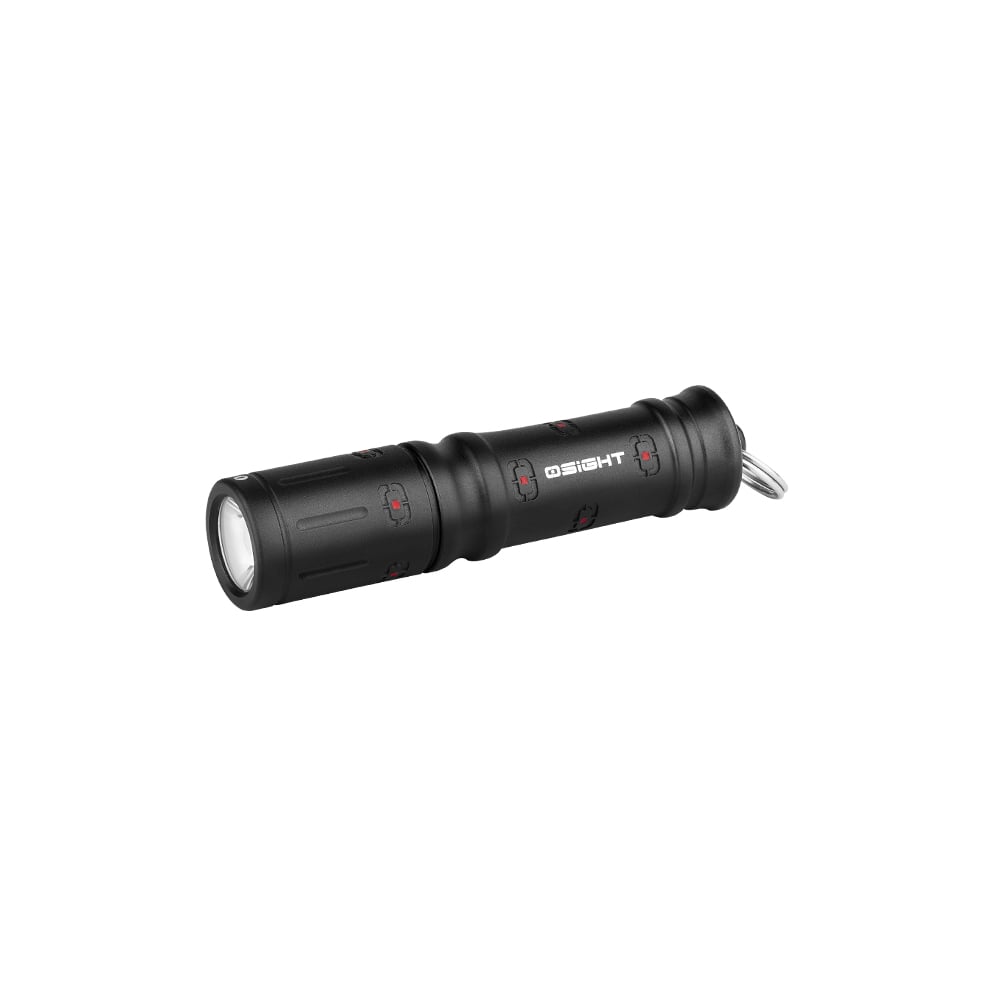
I stuck one of them into a mesh pouch where I carry stuff like toothpaste, and more than a year ago (IDK exactly when) it turned on by accident. I left it on to see what would happen. It has stayed lit ever since, though by now the glow level is completely useless for illumination and barely viable as a locator. As someone in Bored Of The Rings said of the parody version of Gandalf's staff lighting up in Khazad-dûm, it's about half as bright as a dead firefly. But I can report that with some dark adaptation, I can see it from 5+ feet away (and probably further) in a darkened room. I finally just got around to replacing the battery with one of a pack that I got on ebay (link in the original post).
I also notice that the light itself is discontinued now, oh well. It does seem to me that it turns on by accident too easily. I might stick down the on-off flange with a bit of tape to prevent this.
The original vendor blurb just said 24 hours of light so I might use up a battery to test that, or maybe for a week. It might be ok as a short term alternative to a tritium marker for that much time. I would say in its current state it's way dimmer than a tritium marker whose tritium isn't nearly depleted.
It also seems to me that at under 3 grams, this is maybe the most extreme ultralight headlamp out there, if you stick it to your forehead with a piece of tape. It DOES put out enough light to be useful in that setup, for limited notions of "useful". You can navigate a dark room without bumping into stuff, you can see near-distances enough to change the battery in your main light without having to fumble around by feel, and so on.
Since the light is just a direct drive SMT led and a CR927 cell, it could be that something similar with a CR1616 and a resistor (or go big and use a CR2032) could be used as an H3 substitute that would last for months.
TLDR: I like it. Write-up will discuss a few nuances. Order link.
Photo, left-right: Wurkkos TS10v2, Emisar D4v2, Wurkkos TS11. So you can see the TS11 is kind of a chonker, but it's ok. If you're not familiar, the TS10v2 is a 14500 light (roughly same energy capacity as the 18350 in the TS11) and the D4v2 is an 18650 light that is considered kind of chunky for that format.
Note: all three lights in the photo are TURNED OFF. Only the standby (locator) leds are on. More about this below.
I've never been into throwers and have never really had one before, unless you count the big incans of bygone years. I ordered the TS11 because there have been a few times recently when I wanted something with throw (trying to look down a hillside at night, or read house numbers from a car) and also, Wurkkos and Sofirn both seem to be giving up on making Anduril lights, so I figured now was the time to get one. They ship the TS11 from a US warehouse and there is an 18650 battery tube available from the China warehouse. I ordered both at the same time (plus another item or two) and IIRC i got free shipping for everything. The TS11 arrived today and the other stuff is not here yet. I think everything has encountered some delays due to the winter holidays but it's no big deal. The orange color is very nice and was one of the attractions.
As you can see, the standby leds for both the pushbutton switch and the front are ridiculously bright, like 5x brigher than the D4v2 switch light, which is already too bright. Come on guys, they are locator lights to help find your light in the dark, not illumination lights. They are distracting if you like to keep the light next to your bed. I think Anduril now has a way to adjust the standby brightness, so I'll see if I can make it dimmer, but if not I might just shut it off since this isn't really a bedside light anyway. A piece of GITD tape is enough of a locator. I do very much appreciate the standby led feature (genius idea that I first saw in Anduril, as alternative to a tritium marker) but this is way overdone.
The light has a reflector (large by EDC standards) and an optic on the front and makes a small, sharp edged circular hotspot without much spill. This is slightly not ideal compared to traditional throwers with deep parabolic reflectors, which had more spill. But it's ok, at least it's not a LEP. It's raining out right now so I haven't taken it outside yet.
I tried to charge it up through an Adafruit USB-C power display but found that the USB charging port was too deeply recessed for the display plug to connect firmly. I was able to interpose a USB-C right angle adapter and charge that way with the display. The light reported 3.8V battery charge out of the box, and it started charging at about 1 amp. It stopped after 45 minutes with about 1.2WH delivered. That's from the USB plug at 5 volts, so I guess a little under 1WH to the battery. The battery is a Wurkkos branded 18350 that says "1100mAH" so I guess it came with about 75% charge.
It's a nice sized handful that makes no attempt at miniaturization, yet it's still EDC-able if you want to do that for some reason. I still see it as sort of a niche light. I will use it but probably not that often. My main current EDC is a TS10 SG which has quite good throw for a tiny pocket light, and is a fraction of the TS11's size and weight despite having about the same battery energy.
The TS11 came with Wurkkos's usual nice packaging, shiny cardboard box with magnetic closure, etc. Included were the battery (inside the light), a USB A-to-C cable and one of those cheap wrist lanyards that you thread through the radiused lanyard hole, plus some spare O-rings. Between the packaging, the light's nice appearance, and the included accessories, it would be a good gift for someone who can use a thrower for outdoors. I definitely think the orange version looks nicer than the black. The 18650 battery tube is not really needed and will probably make the light seem awkward, but I ordered it anyway since I have several other 18650 lights and cross-compatibility is always nice.
I'm sad about Anduril losing popularity with manufacturers, apparently due to UI complexity leading to customer dissatisfaction. Hank is the main holdout but IMHO his designs are too lumen obsessed, leading to technical tradeoffs that I don't really like. I think Anduril 3 will need some redesign to make it easier to customize the UI. I had a brief chat with Toykeeper about this and she seemed open to it, but it's conceptual only so far. If it happens I hope it can bring Wurkkos and others back to the fold. There are some nice Wurkkos lights that I've avoided on principle just because they're not Anduril.
Anyway, that's my NLD for today and I'm happy. Any day with a new light is good.
Fwiw Molicel INR 21700's are rated for discharge down to -40C (pdf) though charging only down to 0C. I don't see a need for a sodium ion flashlight just yet, but I'm posting anyway since I guess it's news despite being stupid.
Content warning: this is something of a marketing pitch, but it is worth reading. It's about using CT scans to find safety flaws in 18650 cell manufacturing. It's put out by the manufacturer of the CT equipment, i.e. not trying to sell anything to most flashlight users.
Basically want something with decent performance and durability. Cost matters, but I'm not trying to hit rock bottom. I'm particularly wondering, is an HMB-type PCIe SSD ok combined with a SATA adapter? I think HMB is supported if your machine can use a PCIe or NVMe disk directly, but I'd be using an older Thinkpad with a 2.5" SATA slot at least for now. So I'm wondering if I'd lose a lot of performance if the SSD combo doesn't have its own RAM buffer.
I see good deals by today's standards for PCIe SSD's at of all places, Office Depot.
Apparently Android apps (even in current Android versions) can check for the presence of other Android apps by listing the apps they want to check for in their manifest file. Nothing stops them from listing dozens or hundreds of other apps, and some do exactly that. Up til Android 11 they didn't even have to list the other apps in the manifest. Then Google "tightened" things to be almost as bad. Dumb move, Android.
Question is how to do these in Rust. An example might be a browser DOM: each node has a parent pointer, a list of child pointers, left and right sibling pointers, maybe a CSS node pointer, etc. Inserting or deleting nodes has to repair the pointers to and from the neighboring nodes as needed.
I know this is doable since obviously Servo (Rust's initial driving application) has to do it. I hope the answer doesn't involve the word "unsafe". But I am quite unclear about how to create such a structure under Rust's rules of pointer ownership, and also how to reliably reclaim storage when nodes and trees/subtrees are deleted. Plus there will be thread safety rules that should be statically enforced if possible.
I've heard that doubly linked lists in Rust are handled by an unsafe library, yet this seems even worse. Thanks.
Now I have a use for my Sofirn C01R and that H25LR headlamp with 670nm LED's. Cool. 3 minute exposure to 670nm light in the morning apparently improves color perception for the rest of the week. I'll read more closely to find the right intensity and so on.
A while back, people here kindly explained how typical commercial Android apps get push notifications. Quick version: notifiications are sent through Firebase Cloud Messaging (FCM), which communicates with Google Message Services (GMS), an always-on Android client app preinstalled on most Android phones. There's a FOSS alternative to GMS called MicroG but it's still an FCM client, and FCM is an evil Google service that client apps that use it have to enroll with even if you escape GMS on the client side.
Right now I'm interested in sending myself push notifications from a self-hosted service that I run on a VPS. Of course I don't want to deal with FCM. I also prefer to not have to develop an Android app as opposed to running something like an XMPP client.
It looks like there are some alternatives like Iris and Unified Push (unifiedpush.org). It looks to me that UP becoming the preferred solution, is that right? UP has its own always-on client that can receive messages from a UP server that you can self-host. This sounds ok to me in principle.
My main question is whether UP is somehow worse than GMS, in terms of being a background app that keeps a network connection open. Is GMS anything special in that regard, besides being preinstalled by Google? Would GMS use less battery power or anything like that?
I may also have to look into how XMPP works, if my server program is going to send messages through it. I actually have an unrelated reason to be interested in XMPP. But does that approach sound reasonable? Are there XMPP clients that are non-bloaty, don't eat battery energy in the background, etc.? I'd like a loud audio alert if I get one of these notifications from my server. Can I usually easily set up XMPP clients to allow that only from my own service, while not making sounds for anything else? I'm luddite enough that I still use IRC for online chat, but maybe I have to catch up with the 20th21st century about this. Is there a good community to discuss XMPP development and self-hosting? I.e. I'd want to self-host the XMPP server and use it to send messages to my phone from my own (also self-hosted) server app.
The simplest alternative I can think of is for my server program to just sometimes send me SMS messages through Twilio or similar. The alerts will be infrequent enough that I don't mind going this route. Does that sound easier? It's less in the self-hosted spirit but it gets rid of a lot of software on both the server and the phone, I guess.
8 games, 60 minutes + 30 second increment for Benjamin, i.e. classical TC though a bit quicker than some. Benjamin gets N odds in all games. Leela will play at bullet speed. The hardware is not specified in the thread I linked. Leela will apparently be running a network specially trained to play with knight odds. Match will be livestreamed on Youtube with GM Matthew Sadler commentating. It will take place over 3 days, January 25 through 27th.
For those not familiar, Leela is a neural net chess engine inspired by Alpha Chess Zero. GM Sadler is a co-author of "Game Changer", a book analyzing a bunch of games of Alpha Chess Zero, so he's just about an ideal commentator for this event. It should be interesting.
Results of first 5 rounds: 0-1, 0-1, .5-.5, .5-.5, 1-0. Leela has white in all games so this means Benjamin won the first two, drew the next two, then lost one (game 6 now in progress). Maybe he is getting tired. He said after the first day that he was "knackered".
They apparently do this every year. You have to make an account on their site which subscribes you to an email newsletter (you can unsubscribe) and deal with some popups and upsell attempts, but it's a decent basic 1AAA light from everything I've heard. 90 lumens, 1 level, 60mm long, maybe not great LED tint, i.e. sort of a less nice version of the Skilhunt E3A but still fine.
Users supposedly get free shipping on their first order and someone on reddit claims to have actually received this, but I didn't, and had to pay the $5.
It's 1 per person and there are apparently a lot of people trying to scam the site, so my payment got flagged as possible fraud (card declined). I called the card company and they fixed it, so my order went through.
I'm not a huge fan of Olight for various reasons, but hey, a free light, I'll take it.
It's an old "Soshine" branded NiMH AAA cell claiming 900mah. I'm not about to test it but I did use it for a while. I've standardized on Eneloops since then. Anyway this is FYI so you know that NiMH leaking is a thing.
Basically I've acquired a burner Android 8 phone and am running the target.com app which is the only way they let you get parking lot delivery at the store. I assume the Target app is spyware. I keep the phone powered off almost all the time which should limit the spying. The thing is, if I power up the phone and order something, then close the app, I still get an alert when the status of the order changes (e.g. it's ready for pickup). So the app is still listening for network traffic from Target.
Can anyone explain what is happening in Android and whether there is a way to make an app really stop? Does the app stay in a running state even after I've closed the UI part of it? Is there somethng like an inetd in Android that listens for network alerts and re-launches the destination app? Are there Android app permissions associated with this, that I can revoke?
I don't want to run this type of app on my main phone, but I had at first liked the idea of using a burner for such things. Now, though, I wonder if I need a separate burner for each suspicious app. Thanks.
I needed another headlamp and was familiar with an earlier, micro-USB, white-led-only version of this light. Build quality of both is fine, I'd say not fantastic but perfectly usable for not too demanding purposes, and a terrific value for the price. Claimed water resistance level is IPX6. Headband is comfortable given that this is not a tiny light. I think it is still small enough to not need an over-the-head strap. Weight is about 108g including battery and strap.
Wurkkos and Sofirn both sell these lights and I think I heard somewhere that the actual manufacturer is Boruit. There are various models with different configurations. The H25LR has one white led, one 660nm (deep red) led, and USB-C charging.
Order date: Nov 22 2024. Got shipping notice on Nov 24. Package delivered December 5, so about 10 days transit from China to California, not bad. Cost was $19.99 including an 18650 battery. Shipping was free due to order being above $19. This is hard to beat.
The included battery is labelled with Wurkkos branding and says 3000 mah. It is an 18650 button top. I didn't test the capacity or charge current, but I measured the length at around 66.5mm not including the button, with the button adding another 2mm or so. So maybe it's a protected cell, I don't know. The springs in the light are pretty stiff. If you loosen the "tail" cap by 1/4 turn or so, the light breaks contact with the battery, giving you a lockout from accidental turn-on and also from parastic drain. I tried swapping in an unprotected flat top battery and that worked fine including the lockout.
The UI is fairly sane given that it's a 1-button light with multiple colors and levels that doesn't run Anduril. Short click to activate white led at the same level as last time, long click for red, also at same level as before. Once either led is on, hold down button to cycle through 4 levels. I didn't attempt brightness or runtime measurements.
My general comment about the beam is that it's more directional that I'd prefer, particularly for close-up usage. This is for both the white and red leds. It's not terrible, it's just that I like floody beams for reading and fixing stuff.
The lowest levels of both leds are ok, not super low. Some people appreciate ultra low levels and I can understand that. These are just regular low. I find that level 2 of the white led is about right for reading, walking indoors in the dark, etc. The higher levels are there when you need them.
The red led goes from low to quite powerful, like several watts. I don't quite understand the purpose of a powerful red led. Does anyone really want long distance outdoor illumunation in deep red? I would have been fine with just the low level, or a redesigned light with two full sized white leds, plus an auxiliary small red led. The red led for me is for minimal disturbance to your own night vision and that of others around you. So it should be just bright enough to maneuver in the dark or see an object (telescope, say) well enough to reach and turn a knob. I don't remember ever wanting a bright red light.
There is a handy featue of an RGB led under the on-off switch. When you first turn on the light, that led acts as a battery level indicator (green=charged, etc.) and it stays on for a few seconds. Also, when you plug in a USB charger, it lights red during charging and green afterwards.
The instruction pamphlet says charging takes 4-5 hours, suggesting a 500 ma charge rate similar to the micro-USB version. I.e. it's likely to be the same charging circuit except with a USB-C connector. That is ok with me. The instruction pamphlet also amusingly says that questions and problems should be emailed to [email protected], heh.
A slightly more "premium" approach would be to include faster charging (3 amps) and maybe powerbank output. I do like lights with built-in chargers, as opposed to the kind where you have to remove the battery and charge it outside the light. Sorry about that, Hank ;).
Wurkkos now has the interesting HD10 Mini which is a 14500 powered anglehead flashlight / headlamp with Anduril, sort of like the Emisar DW4 but smaller. I don't really care for the 14500 battery type but it would be nice to have a lightweight 18650/18350 version of this light (the DW4 is too heavy). Or it would be of more interest if it could run on 1.5 volt AA cells in addition to 14500. As it was, I went for the 18650 version instead. For a lightweight headlamp I have a Nitecore HA11 and might get or concoct something ultralight at some point.
Anyway that's my new light day for now and it has been a good one.
Addendum (December 26): I noticed something interesting about the front of the light, center, above and below the main leds (see circled green areas in the pic). There are two milled slots that look like they were designed to hold tritium markers. I guess I'm off to mixglo.com to get some. I'll have to measure the slots but basically 2x5mm or thereabouts.
Update: Mixglo situation is that 1.5x6mm vials are $6.50 so two vials plus a $6 tube of Norland adhesive (1 ml) would total $19. BUT, Mixglo offers untracked shipping for $6 only if the order value is $15 or less. Otherwise you need tracked shipping which costs $22. It's cheaper to make two separate orders. I think I'll order one vial plus the adhesive, try to install the vial, and then order a second vial if the first one goes in ok. I'll update if and when there's a new development. Fwiw, tritiumworkshop.com (in the UK) is another well regarded source of tritium but it ends up costing a little more, depending.
Update 2: more careful examination convinces me that those little holes weren't intended for tritium but were just part of the heat sink-like styling. But, it should still be possible to do something there or nearby between the "fins", possibly with a bit of Dremel-ing. I want to take some caliper measurements before ordering vials.
Addendum 2 (2025-01-12): I just checked and a protected Fenix flat top cell (67.8mm long) works fine in tihs light.