Spyke

Replies

Comment on

Bluecode as European mobile payment alternative

The problem in Europe is exactly the fragmentation of payment systems. For most you can only use them if you are a resident and have a bank account on that country.

•	Wero: Germany, France, Belgium, Luxembourg, Netherlands
•	MB WAY: Portugal
•	Twint: Switzerland
•	Swish: Sweden
•	MobilePay: Denmark, Finland
•	iDEAL: Netherlands
•	Bancontact: Belgium
•	BLIK: Poland
•	Satispay: Italy
•	Vipps: Norway
•	Giropay: Germany
•	Sofort: Germany
•	Cartes Bancaires: France
   -     Etc....

Comment on

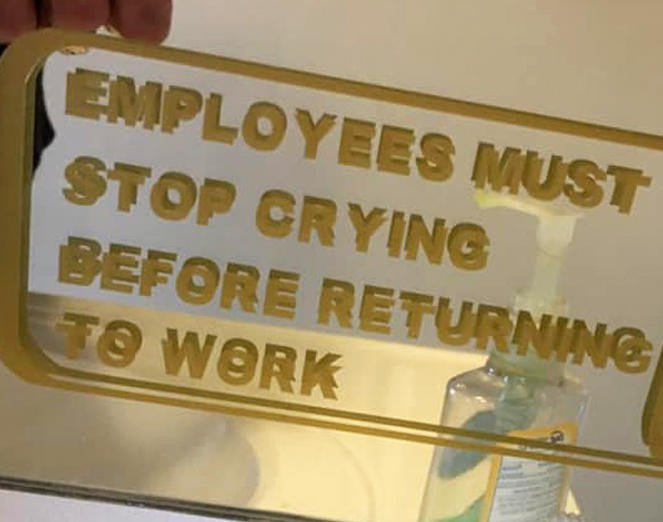
Fuck this village

Reply in thread

Honestly, the village is everything that was listed here. Including the workplace finding a way to be child friendly. Even a restaurant.

It is currently too hard to have kids, and you can see that less people are doing it because everyone is so insensitive to it.

europe

Comment on

We’re all living longer, but Mediterraneans live longest in EU, says Eurostat

https://ec.europa.eu/eurostat/en/web/products-eurostat-news/w/ddn-20250314-3

The Eurostat page looks much better in terms of the information it provides.

Even better: Eurostat | Statistics Explained | Mortality and life expectancy statistics. It has life expectancy at birth and at 65.

Life expectancy at birth has risen rapidly during the past century due to a number of factors. These include a reduction in infant mortality, rising living standards, improved lifestyles and better education, as well as advances in healthcare and medicine. Official statistics reveal that life expectancy has risen, on average, by more than two years per decade since the 1960s. In 2020, however, after the outbreak of the COVID-19 pandemic, this indicator declined in 25 EU countries compared to 2019, the exceptions being Denmark and Cyprus. In 2023, life expectancy at birth was equal to or higher than in 2019 in 21 EU countries. By contrast life expectancy fell in 6 EU countries: Finland (-0.5 years), the Netherlands (-0.3 years), Germany (-0.2 years) to Italy, Latvia and Austria (all -0.1 years).

There's also an entire book on "The imapct of Demographic change": https://commission.europa.eu/system/files/2023-01/Demography_report_2022_0.pdf

Comment on

Extreme poverty dropped from 44% of the global population in 1981 to just 9% in 2019.

I found this in the newsletter from Our World in Data and thought it was interesting to share here.

The researchers are from the University of San Diego. I shared the link above to the authors’ website because the university website is not opening for me.

The final version should be here, according to the newsletter and Google: https://econweb.ucsd.edu/~pniehaus/papers/how_poverty_fell.pdf

Comment on

EU Search engine incoming: Ecosia is teaming up with Qwant to build a European search index

Reply in thread

Yes. By default we don't want any government intervention. But the "government overreach" needs to be addressed on the specific cases where it happens.

I don't believe any government has the right to restrict which books and news sites I should be allowed to access. I think I am the best person to decide which knowledge I should have access to.

While this statement is true sometimes, it is also again an oversimplification. I don't think even you believe this. If a website contains illegal content, would you really prefer for the government to not intervene?

Classic examples would be the sale of hard drugs and child pictures.


We all agree more than we disagree. But communication is hard and most subjects, especially the hard ones, are not black and white.