Spyke

Posts

wikipedia·Wikipediabyimaqtpie

Bre-X Minerals Ltd

cross-posted from: https://sh.itjust.works/post/59506794

Bre-X was a group of companies in Canada. Bre-X Minerals Ltd., a major part of Bre-X based in Calgary, was involved in a major gold mining scandal when it reported it was sitting on an enormous gold deposit at Busang, East Kalimantan, Indonesia. Bre-X bought the Busang site in March 1993 and in October 1995 announced significant amounts of gold had been discovered, sending its stock price soaring. Originally a penny stock, its stock price reached a peak at CAD$286.50 (split adjusted) in May 1996 on the Toronto Stock Exchange (TSE), with a total capitalization of over CAD $6 billion. Bre-X Minerals collapsed in 1997 after the gold samples were found to be fraudulent.

Some other mineral companies, including Placer Dome, organized failed takeovers, but the Indonesian government of President Suharto also got involved. Stating that a small company like Bre-X could not exploit the site by itself, the Indonesians initially suggested that Bre-X share the site with the large Canadian mining firm Barrick Gold, in association with Suharto's daughter Siti Hardiyanti Rukmana. Bre-X hired Suharto's son Sigit Hardjojudanto to handle their side of the affair. Bob Hasan, another Suharto acquaintance, negotiated a deal whereby Bre-X would have a 45% share, Freeport-McMoRan Copper & Gold would run the mine, and Hasan would get a cut as well. Bre-X would have the land rights for 30 years. The deal was announced February 17, 1997 and Freeport-McMoRan began their initial due diligence evaluation of the site.

The fraud began to unravel rapidly beginning on March 19, 1997, when Bre-X geologist Michael de Guzman reportedly died of suicide by jumping from a helicopter in Indonesia. A body was found four days later in the jungle, missing the hands and feet, "surgically removed". In addition, the body was reportedly mostly eaten by animals. According to journalist John McBeth, a body had gone missing from the morgue of the town from which the helicopter flew. The remains of "de Guzman" were found only 400 metres from a logging road. No one saw the body except another Filipino geologist who claimed it was de Guzman. One of the five women who considered themselves to be his wife was receiving monetary payments from somebody long after the supposed death of de Guzman.

A week later, on March 26, 1997, the American firm Freeport-McMoRan, a prospective partner in developing Busang, announced that its own due-diligence core samples, led by Australian geologist Colin Jones, showed "insignificant amounts of gold". A frenzied sell-off of shares ensued and Suharto postponed signing the mining deal. Bre-X demanded more reviews and commissioned a review of the test drilling. Results were not favorable to them, and on April 1, 1997, Bre-X refused to comment. An independent company, Strathcona Minerals, was brought in to make its own analysis. They published their results on May 4, 1997: the Busang ore samples had been salted with gold dust. The lab's tests showed that gold in one hole had been shaved off gold jewellery though it has never been proved at what stage it had been added to those samples. This gold also occurred in quantities that did not support the original assays. Trading in Bre-X was soon suspended on the TSE and NASDAQ, and the company filed for bankruptcy protection.

By May, Bre-X faced a number of lawsuits and angry investors who had lost billions. Among the major losers were three Canadian public sector organizations: The Ontario Municipal Employees Retirement Board (loss of $45 million), the Caisse de dépôt et placement du Québec, the Quebec Public Sector Pension fund ($70 million), and the Ontario Teachers' Pension Plan ($100 million). There was fallout in the Canadian financial sector also; the fraud proved a major embarrassment for Peter Munk, the head of Barrick Gold, as well as for the then-head of the Toronto Stock Exchange (resulting in his ousting by 1999), and began a tumultuous realignment of the Canadian stock exchanges.

Walsh moved to the Bahamas in 1998, still professing his innocence. Two masked gunmen broke into his home in Nassau, tying him up, and threatened to shoot him unless he turned over all his money. The incident ended peacefully but three weeks later, on June 4, 1998, Walsh died of a brain aneurysm.

View original on sh.itjust.works

Bre-X Minerals Ltd

Bre-X was a group of companies in Canada. Bre-X Minerals Ltd., a major part of Bre-X based in Calgary, was involved in a major gold mining scandal when it reported it was sitting on an enormous gold deposit at Busang, East Kalimantan, Indonesia. Bre-X bought the Busang site in March 1993 and in October 1995 announced significant amounts of gold had been discovered, sending its stock price soaring. Originally a penny stock, its stock price reached a peak at CAD$286.50 (split adjusted) in May 1996 on the Toronto Stock Exchange (TSE), with a total capitalization of over CAD $6 billion. Bre-X Minerals collapsed in 1997 after the gold samples were found to be fraudulent.

Some other mineral companies, including Placer Dome, organized failed takeovers, but the Indonesian government of President Suharto also got involved. Stating that a small company like Bre-X could not exploit the site by itself, the Indonesians initially suggested that Bre-X share the site with the large Canadian mining firm Barrick Gold, in association with Suharto's daughter Siti Hardiyanti Rukmana. Bre-X hired Suharto's son Sigit Hardjojudanto to handle their side of the affair. Bob Hasan, another Suharto acquaintance, negotiated a deal whereby Bre-X would have a 45% share, Freeport-McMoRan Copper & Gold would run the mine, and Hasan would get a cut as well. Bre-X would have the land rights for 30 years. The deal was announced February 17, 1997 and Freeport-McMoRan began their initial due diligence evaluation of the site.

The fraud began to unravel rapidly beginning on March 19, 1997, when Bre-X geologist Michael de Guzman reportedly died of suicide by jumping from a helicopter in Indonesia. A body was found four days later in the jungle, missing the hands and feet, "surgically removed". In addition, the body was reportedly mostly eaten by animals. According to journalist John McBeth, a body had gone missing from the morgue of the town from which the helicopter flew. The remains of "de Guzman" were found only 400 metres from a logging road. No one saw the body except another Filipino geologist who claimed it was de Guzman. One of the five women who considered themselves to be his wife was receiving monetary payments from somebody long after the supposed death of de Guzman.

A week later, on March 26, 1997, the American firm Freeport-McMoRan, a prospective partner in developing Busang, announced that its own due-diligence core samples, led by Australian geologist Colin Jones, showed "insignificant amounts of gold". A frenzied sell-off of shares ensued and Suharto postponed signing the mining deal. Bre-X demanded more reviews and commissioned a review of the test drilling. Results were not favorable to them, and on April 1, 1997, Bre-X refused to comment. An independent company, Strathcona Minerals, was brought in to make its own analysis. They published their results on May 4, 1997: the Busang ore samples had been salted with gold dust. The lab's tests showed that gold in one hole had been shaved off gold jewellery though it has never been proved at what stage it had been added to those samples. This gold also occurred in quantities that did not support the original assays. Trading in Bre-X was soon suspended on the TSE and NASDAQ, and the company filed for bankruptcy protection.

By May, Bre-X faced a number of lawsuits and angry investors who had lost billions. Among the major losers were three Canadian public sector organizations: The Ontario Municipal Employees Retirement Board (loss of $45 million), the Caisse de dépôt et placement du Québec, the Quebec Public Sector Pension fund ($70 million), and the Ontario Teachers' Pension Plan ($100 million). There was fallout in the Canadian financial sector also; the fraud proved a major embarrassment for Peter Munk, the head of Barrick Gold, as well as for the then-head of the Toronto Stock Exchange (resulting in his ousting by 1999), and began a tumultuous realignment of the Canadian stock exchanges.

Walsh moved to the Bahamas in 1998, still professing his innocence. Two masked gunmen broke into his home in Nassau, tying him up, and threatened to shoot him unless he turned over all his money. The incident ended peacefully but three weeks later, on June 4, 1998, Walsh died of a brain aneurysm.

View original on sh.itjust.works
fediverse·Fediversebyimaqtpie

Questions about Matrix Chat

I have been using Matrix since I've been on Lemmy. It's an open source encrypted chat application, and obviously Lemmy DMs are not encrypted so it's kinda necessary for private communication. I have a few questions though.

Is there a community about Matrix on Lemmy?

Is Matrix technically part of the fediverse? I noticed it does not appear on fedidb.com. On a related note, what is the active userbase size?

Who is the developer/team and do they have an active presence on the fediverse?

Thank you for anyone who can answer my questions and also to the Matrix devs, I greatly appreciate you. But I am just curious about some of the details about Matrix which I already know about for Lemmy, Piefed, Mbin, etc. Matrix is an essential component of the fediverse ecosystem, so I think it would be prudent to have a greater understanding of it and potentially seek more cross-pollination and/or collaboration between the threadiverse and Matrix.

View original on sh.itjust.works
wikipedia·Wikipediabyimaqtpie

Ventromedial Prefrontal Cortex

cross-posted from: https://sh.itjust.works/post/58094036

The ventromedial prefrontal cortex (vmPFC) is a part of the prefrontal cortex in the mammalian brain. The ventral medial prefrontal is located in the frontal lobe at the bottom of the cerebral hemispheres and is implicated in the processing of risk and fear, as it is critical in the regulation of amygdala activity in humans. It also plays a role in the inhibition of emotional responses, and in the process of decision-making and self-control. It is also involved in the cognitive evaluation of morality.

The vmPFC is connected to and receives input from the ventral tegmental area, amygdala, the temporal lobe, the olfactory system, and the dorsomedial thalamus. It, in turn, sends signals to many different brain regions including; The temporal lobe, amygdala, the lateral hypothalamus, the hippocampal formation, the cingulate cortex, and certain other regions of the prefrontal cortex. This huge network of connections affords the vmPFC the ability to receive and monitor large amounts of sensory data and to affect and influence a plethora of other brain regions, particularly the amygdala.

Patients with bilateral lesions of the vmPFC develop severe impairments in personal and social decision-making even though most of their intellectual ability is preserved. For instance, they have difficulties in choosing between options with uncertain outcomes, whether the uncertainty is in the form of a risk or of an ambiguity. After their lesion, these patients have an impaired capacity to learn from their mistakes, making the same decisions again and again even though they lead to negative consequences. These patients choose alternatives that give immediate rewards, but seem to be blind to the future consequences of their actions. However, the underlying mechanisms of this behavior are not yet fully understood.

Emotions and an understanding of social norms are used to provide reasoning of the moral nature on our behaviors, beliefs, and the people around us. The vmPFC works as the neural basis in allowing emotion to influence moral judgement. In functional imaging studies, increased activity in the vmPFC is associated with thinking of these personal moral situations, while making harmless decisions does not. Patients with vmPFC lesions made the same decision in impersonal and personal dilemmas. Dysfunction of the vmPFC causes failure in using correct moral emotion, which explains why these patients showed less emotional responses when facing these dilemmas.

The vmPFC plays an important role in regulating and inhibiting our response to emotions. VmPFC seems to use our emotional reactions to model our behavior and control emotional reactions in certain social situations. The inputs of the vmPFC provide it with information from the environment and the plans of the frontal lobe, and its outputs allow the vmPFC to control different physiological responses and behaviors. The role of the vmPFC is especially highlighted in people with damage to this region. A damaged vmPFC causes impairments of behavioral control and decision making, consequences which are rooted in emotional dysregulation.

The first and most famous case of someone with defects to this region was Phineas Gage, a railroad construction foreman who had his vmPFC bilaterally destroyed in an accident in 1848. Before his accident, Gage was described as “serious, industrious and energetic. Afterward he became childish, irresponsible, and thoughtless of others.” Another patient with vmPFC damage wasted away his life savings on foolish investments and failed to make appropriate decisions in his personal life. In patients with vmPFC damage, evidence shows that there is a correlation between emotional disregulation and dysfunction in real world competencies.

Ventromedial Prefrontal Cortexhttps://en.wikipedia.org/wiki/Ventromedial_prefrontal_cortexOpen linkView original on sh.itjust.works

Ventromedial Prefrontal Cortex

The ventromedial prefrontal cortex (vmPFC) is a part of the prefrontal cortex in the mammalian brain. The ventral medial prefrontal is located in the frontal lobe at the bottom of the cerebral hemispheres and is implicated in the processing of risk and fear, as it is critical in the regulation of amygdala activity in humans. It also plays a role in the inhibition of emotional responses, and in the process of decision-making and self-control. It is also involved in the cognitive evaluation of morality.

The vmPFC is connected to and receives input from the ventral tegmental area, amygdala, the temporal lobe, the olfactory system, and the dorsomedial thalamus. It, in turn, sends signals to many different brain regions including; The temporal lobe, amygdala, the lateral hypothalamus, the hippocampal formation, the cingulate cortex, and certain other regions of the prefrontal cortex. This huge network of connections affords the vmPFC the ability to receive and monitor large amounts of sensory data and to affect and influence a plethora of other brain regions, particularly the amygdala.

Patients with bilateral lesions of the vmPFC develop severe impairments in personal and social decision-making even though most of their intellectual ability is preserved. For instance, they have difficulties in choosing between options with uncertain outcomes, whether the uncertainty is in the form of a risk or of an ambiguity. After their lesion, these patients have an impaired capacity to learn from their mistakes, making the same decisions again and again even though they lead to negative consequences. These patients choose alternatives that give immediate rewards, but seem to be blind to the future consequences of their actions. However, the underlying mechanisms of this behavior are not yet fully understood.

Emotions and an understanding of social norms are used to provide reasoning of the moral nature on our behaviors, beliefs, and the people around us. The vmPFC works as the neural basis in allowing emotion to influence moral judgement. In functional imaging studies, increased activity in the vmPFC is associated with thinking of these personal moral situations, while making harmless decisions does not. Patients with vmPFC lesions made the same decision in impersonal and personal dilemmas. Dysfunction of the vmPFC causes failure in using correct moral emotion, which explains why these patients showed less emotional responses when facing these dilemmas.

The vmPFC plays an important role in regulating and inhibiting our response to emotions. VmPFC seems to use our emotional reactions to model our behavior and control emotional reactions in certain social situations. The inputs of the vmPFC provide it with information from the environment and the plans of the frontal lobe, and its outputs allow the vmPFC to control different physiological responses and behaviors. The role of the vmPFC is especially highlighted in people with damage to this region. A damaged vmPFC causes impairments of behavioral control and decision making, consequences which are rooted in emotional dysregulation.

The first and most famous case of someone with defects to this region was Phineas Gage, a railroad construction foreman who had his vmPFC bilaterally destroyed in an accident in 1848. Before his accident, Gage was described as “serious, industrious and energetic. Afterward he became childish, irresponsible, and thoughtless of others.” Another patient with vmPFC damage wasted away his life savings on foolish investments and failed to make appropriate decisions in his personal life. In patients with vmPFC damage, evidence shows that there is a correlation between emotional disregulation and dysfunction in real world competencies.

Ventromedial Prefrontal Cortexhttps://en.wikipedia.org/wiki/Ventromedial_prefrontal_cortexOpen linkView original on sh.itjust.works
wikipedia·Wikipediabyimaqtpie

Sinhala Only Act

cross-posted from: https://sh.itjust.works/post/58090978

The Official Language Act (No. 33 of 1956), commonly referred to as the Sinhala Only Act, was an act passed in the Parliament of Ceylon in 1956. The act replaced English with Sinhala as the sole official language of Ceylon, with the exclusion of Tamil from the act.

At the time, Sinhala (also known as Sinhalese) was the language of Ceylon's majority Sinhalese people, who accounted for around 70% of the country's population. Tamil was the first language of Ceylon's three largest minority ethnic groups, the Indian Tamils, Sri Lankan Tamils and Moors, who together accounted for around 29% of the country's population.

The act was controversial as its supporters saw it as an attempt by a community that had just gained independence to distance themselves from their colonial masters, while its opponents viewed it as an attempt by the linguistic majority to oppress and assert dominance on minorities. The Act symbolizes the post-independent Sinhalese majority's determination to assert Ceylon's identity as a Sinhala Buddhist nation state, and for Tamils, it became a symbol of minority oppression and a justification for them to demand a separate nation-state, Tamil Eelam, which was a factor in the emergence of the decades-long Sri Lankan Civil War.

The policy turned out to be "severely discriminatory" and placed the Tamil-speaking population at a "serious disadvantage". As a Sinhalese academic A. M. Navaratna Bandara writes: "The Tamil-speaking people were given no option but to learn the language of the majority if they wanted to get public service employment. [...] A large number of Tamil public servants had to accept compulsory retirement because of their inability to prove proficiency in the official language [....]" It also entailed that a Sinhalese officer working in Tamil areas was exempted from learning Tamil, but a Tamil officer working in even Tamil areas had to learn Sinhala. The effects of these policies were dramatic as shown by the drastic drop of Tamil representation in public sector: "In 1956, 30 percent of the Ceylon administrative service, 50 percent of the clerical service, 60 percent of engineers and doctors, and 40 percent of the armed forces were Tamil. By 1970 those numbers had plummeted to 5 percent, 5 percent, 10 percent, and 1 percent, respectively." For much of the 1960s government forms and services were virtually unavailable to Tamils, and this situation only partly improved with later relaxations of the law.

https://en.wikipedia.org/wiki/Sinhala_Only_ActOpen linkView original on sh.itjust.works

Sinhala Only Act

The Official Language Act (No. 33 of 1956), commonly referred to as the Sinhala Only Act, was an act passed in the Parliament of Ceylon in 1956. The act replaced English with Sinhala as the sole official language of Ceylon, with the exclusion of Tamil from the act.

At the time, Sinhala (also known as Sinhalese) was the language of Ceylon's majority Sinhalese people, who accounted for around 70% of the country's population. Tamil was the first language of Ceylon's three largest minority ethnic groups, the Indian Tamils, Sri Lankan Tamils and Moors, who together accounted for around 29% of the country's population.

The act was controversial as its supporters saw it as an attempt by a community that had just gained independence to distance themselves from their colonial masters, while its opponents viewed it as an attempt by the linguistic majority to oppress and assert dominance on minorities. The Act symbolizes the post-independent Sinhalese majority's determination to assert Ceylon's identity as a Sinhala Buddhist nation state, and for Tamils, it became a symbol of minority oppression and a justification for them to demand a separate nation-state, Tamil Eelam, which was a factor in the emergence of the decades-long Sri Lankan Civil War.

The policy turned out to be "severely discriminatory" and placed the Tamil-speaking population at a "serious disadvantage". As a Sinhalese academic A. M. Navaratna Bandara writes: "The Tamil-speaking people were given no option but to learn the language of the majority if they wanted to get public service employment. [...] A large number of Tamil public servants had to accept compulsory retirement because of their inability to prove proficiency in the official language [....]" It also entailed that a Sinhalese officer working in Tamil areas was exempted from learning Tamil, but a Tamil officer working in even Tamil areas had to learn Sinhala. The effects of these policies were dramatic as shown by the drastic drop of Tamil representation in public sector: "In 1956, 30 percent of the Ceylon administrative service, 50 percent of the clerical service, 60 percent of engineers and doctors, and 40 percent of the armed forces were Tamil. By 1970 those numbers had plummeted to 5 percent, 5 percent, 10 percent, and 1 percent, respectively." For much of the 1960s government forms and services were virtually unavailable to Tamils, and this situation only partly improved with later relaxations of the law.

https://en.wikipedia.org/wiki/Sinhala_Only_ActOpen linkView original on sh.itjust.works
wikipedia·Wikipediabyimaqtpie

Dylan Thomas

cross-posted from: https://sh.itjust.works/post/58051858

Text of his most famous poem below

::: spoiler Do not go gentle into that good night

Do not go gentle into that good night,

Old age should burn and rave at close of day;

Rage, rage against the dying of the light.


Though wise men at their end know dark is right,

Because their words had forked no lightning they

Do not go gentle into that good night.


Good men, the last wave by, crying how bright

Their frail deeds might have danced in a green bay,

Rage, rage against the dying of the light.


Wild men who caught and sang the sun in flight,

And learn, too late, they grieved it on its way,

Do not go gentle into that good night.


Grave men, near death, who see with blinding sight

Blind eyes could blaze like meteors and be gay,

Rage, rage against the dying of the light.


And you, my father, there on the sad height,

Curse, bless, me now with your fierce tears, I pray.

Do not go gentle into that good night.

Rage, rage against the dying of the light. :::

Dylan Thomashttps://en.wikipedia.org/wiki/Dylan_ThomasOpen linkView original on sh.itjust.works

Dylan Thomas

Text of his most famous poem below

::: spoiler Do not go gentle into that good night

Do not go gentle into that good night,

Old age should burn and rave at close of day;

Rage, rage against the dying of the light.


Though wise men at their end know dark is right,

Because their words had forked no lightning they

Do not go gentle into that good night.


Good men, the last wave by, crying how bright

Their frail deeds might have danced in a green bay,

Rage, rage against the dying of the light.


Wild men who caught and sang the sun in flight,

And learn, too late, they grieved it on its way,

Do not go gentle into that good night.


Grave men, near death, who see with blinding sight

Blind eyes could blaze like meteors and be gay,

Rage, rage against the dying of the light.


And you, my father, there on the sad height,

Curse, bless, me now with your fierce tears, I pray.

Do not go gentle into that good night.

Rage, rage against the dying of the light. :::

Dylan Thomashttps://en.wikipedia.org/wiki/Dylan_ThomasOpen linkView original on sh.itjust.works
mlb·Major League Baseballbyimaqtpie

Jo Adell robs three home runs in one game to help the Angels close out a 1-0 victory

cross-posted from: https://sh.itjust.works/post/58018849

::: spoiler Text from ESPN You've done something special when Torii Hunter, a nine-time Gold Glove Award winner known for his acrobatic catches, calls what you just did "probably the greatest defensive game I've ever seen."

That was the praise Hunter heaped on the Los Angeles Angels' Jo Adell after the right fielder made three homer-robbing catches, the last a spectacular leaping grab while crashing into the seats near the right-field foul pole in the ninth inning of a 1-0 victory over the Seattle Mariners on Saturday night.

"I've never seen three home run robberies in one game, and I've never seen a guy on the third one fall into the stands, catch the ball and keep his feet in like he's a wide receiver," said Hunter, a special assistant to the general manager who watched the game from the bench. "I was jumping up and down. I almost passed out."

Adell, who struggled on defense for several years before transforming into a Gold Glove finalist in 2024, leaped high above the yellow line on the wall in straightaway right field to deny Cal Raleigh of a solo homer in the first inning and made a nearly identical catch to deny Josh Naylor in the eighth.

J.P. Crawford then led off the ninth with a drive toward the right-field corner, where Adell raced toward the ball, leaped to catch it, flipped over the low wall and fell into the first row of seats before holding up his glove to present the catch, which was upheld after a replay review.

"After the first one, I was pretty fired up," Adell said. "When I got to the second one, which looked identical to the first, I thought, 'Wow, my routes are on point tonight.' The third one was just grit. Top of the ninth, you have to get it done. It was crazy.

"You just get there, then it's decision-making. The ball was hit high enough to where I could get there. I watched it [into my glove], fell over and ended up in somebody's lap. I don't know who it was, but it was a softer landing than I expected. The fans were as fired up as me."

According to Inside Edge, Adell has 10 home run robberies since 2020, tied with Kyle Tucker of the Los Angeles Dodgers for the most in the big leagues. The outfielders with the most home run robberies in the 2025 season were Jacob Young of the Washington Nationals and Fernando Tatis Jr. of the San Diego Padres. Both had four.

This was believed to be the first time in baseball history that a player has robbed three homers in one game.

"It was like a movie scene," Hunter said about Adell's third catch. "It was like the music was playing, then he caught the ball, then he went down and we didn't see him anymore. The music paused, he came up and said, 'Yeah!' I started cheering and almost blacked out."

Hunter, the former Minnesota Twins, Angels and Detroit Tigers star, has worked extensively with Adell on defense during the past few years.

"His impact has been huge," Adell said. "It's mental when you're out there. It's a mindset of going to get the baseball, being aggressive. Early, I was caught in between on some plays, and sometimes, that happens.

"When you err on the side of being aggressive and trying to make the plays, you'd be surprised at how many plays you make. That's the mindset Torii had all those years, winning all those Gold Gloves." :::

https://imgur.com/a/6IbbJp1Open linkView original on sh.itjust.works
baseball·Baseballbyimaqtpie

Jo Adell robs three home runs in one game to help the Angels close out a 1-0 victory

::: spoiler Text from ESPN You've done something special when Torii Hunter, a nine-time Gold Glove Award winner known for his acrobatic catches, calls what you just did "probably the greatest defensive game I've ever seen."

That was the praise Hunter heaped on the Los Angeles Angels' Jo Adell after the right fielder made three homer-robbing catches, the last a spectacular leaping grab while crashing into the seats near the right-field foul pole in the ninth inning of a 1-0 victory over the Seattle Mariners on Saturday night.

"I've never seen three home run robberies in one game, and I've never seen a guy on the third one fall into the stands, catch the ball and keep his feet in like he's a wide receiver," said Hunter, a special assistant to the general manager who watched the game from the bench. "I was jumping up and down. I almost passed out."

Adell, who struggled on defense for several years before transforming into a Gold Glove finalist in 2024, leaped high above the yellow line on the wall in straightaway right field to deny Cal Raleigh of a solo homer in the first inning and made a nearly identical catch to deny Josh Naylor in the eighth.

J.P. Crawford then led off the ninth with a drive toward the right-field corner, where Adell raced toward the ball, leaped to catch it, flipped over the low wall and fell into the first row of seats before holding up his glove to present the catch, which was upheld after a replay review.

"After the first one, I was pretty fired up," Adell said. "When I got to the second one, which looked identical to the first, I thought, 'Wow, my routes are on point tonight.' The third one was just grit. Top of the ninth, you have to get it done. It was crazy.

"You just get there, then it's decision-making. The ball was hit high enough to where I could get there. I watched it [into my glove], fell over and ended up in somebody's lap. I don't know who it was, but it was a softer landing than I expected. The fans were as fired up as me."

According to Inside Edge, Adell has 10 home run robberies since 2020, tied with Kyle Tucker of the Los Angeles Dodgers for the most in the big leagues. The outfielders with the most home run robberies in the 2025 season were Jacob Young of the Washington Nationals and Fernando Tatis Jr. of the San Diego Padres. Both had four.

This was believed to be the first time in baseball history that a player has robbed three homers in one game.

"It was like a movie scene," Hunter said about Adell's third catch. "It was like the music was playing, then he caught the ball, then he went down and we didn't see him anymore. The music paused, he came up and said, 'Yeah!' I started cheering and almost blacked out."

Hunter, the former Minnesota Twins, Angels and Detroit Tigers star, has worked extensively with Adell on defense during the past few years.

"His impact has been huge," Adell said. "It's mental when you're out there. It's a mindset of going to get the baseball, being aggressive. Early, I was caught in between on some plays, and sometimes, that happens.

"When you err on the side of being aggressive and trying to make the plays, you'd be surprised at how many plays you make. That's the mindset Torii had all those years, winning all those Gold Gloves." :::

https://imgur.com/a/6IbbJp1Open linkView original on sh.itjust.works
asklemmy·Ask Lemmybyimaqtpie

Is there a Lemmy community for all time classic YouTube videos?

Obviously there's the most viewed of all time, which would count, but there's also thousands of absolute classics that are lesser known. I can only recall some because they made a specific impression on me. There should be a community to archive those and pseudo-rank them through upvotes.

If there isn't one, nobody steal my idea, I'll make one on sh.itjust.works.

Sneak peek

https://youtu.be/oYmqJl4MoNI

Also I would be remiss if I didn't mention lemmy.myserv.one here. I had never seen Streets 1:12 until I saw it referenced in one of the many entertaining taglines that u/Thief added to the server and I decided to check it out. What a rush!

Edit:

Ok I've finally been able to create the community. FYI if you're making a community, don't use capital letters in the URL name. You can use it in the display name though. I'll give some time for people to post their stuff.

@[email protected]

@[email protected]

@[email protected]

@[email protected]

@[email protected]

@[email protected]


Here is the community

[email protected]

View original on sh.itjust.works
wikipedia·Wikipediabyimaqtpie

Marble

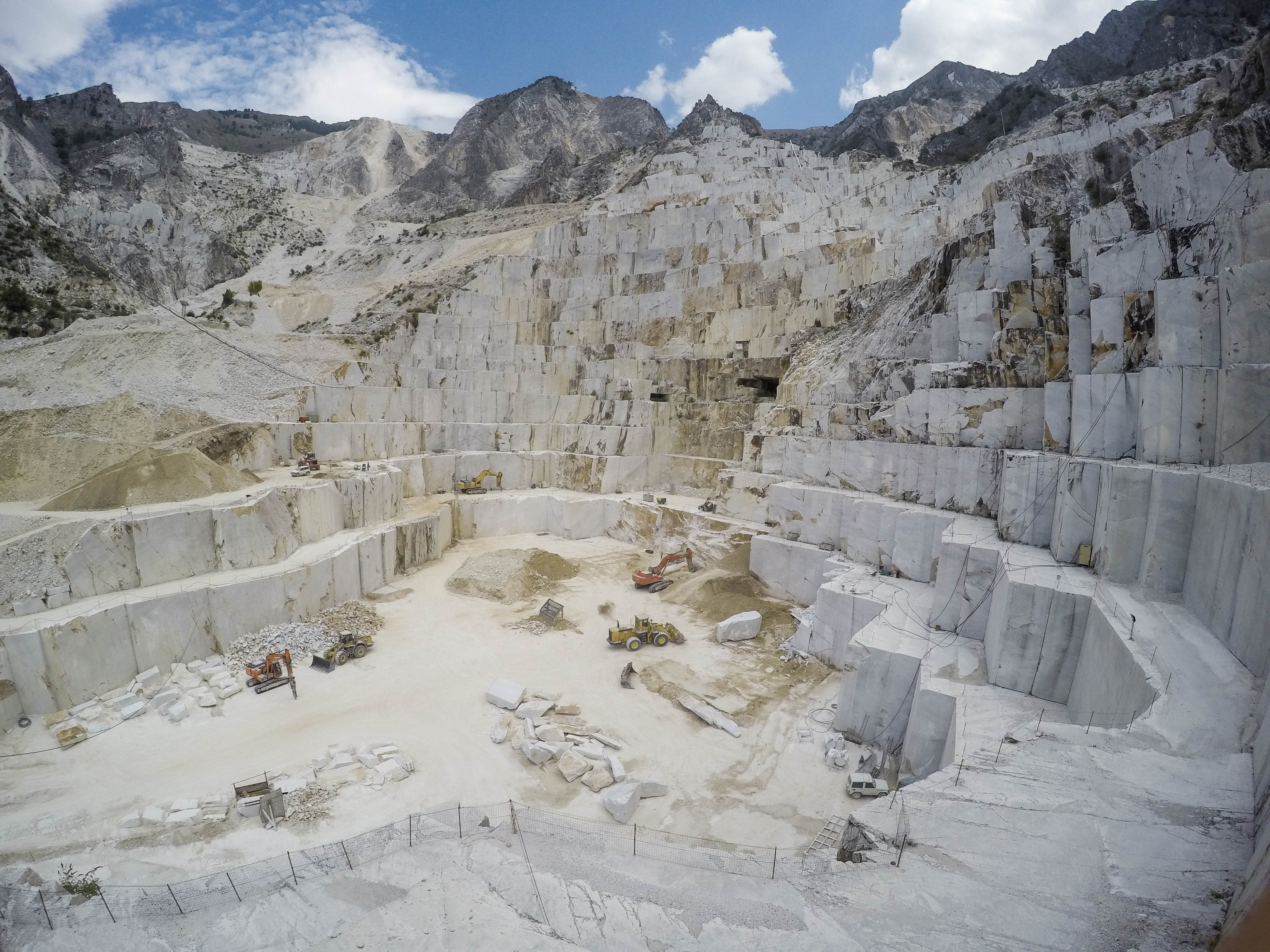
Decided to post this after seeing a photo of a marble quarry. I love how it's so rectangular.

This part was also interesting

White marble has been prized for its use in sculptures since classical times. This preference has to do with its softness, which made it easier to carve, relative isotropy and homogeneity, and a relative resistance to shattering. Also, the low index of refraction of calcite allows light to penetrate 12.7 to 38 millimeters into the stone before being scattered out, resulting in the characteristic waxy look which brings a lifelike luster to marble sculptures of any kind, which is why many sculptors preferred and still prefer marble for sculpting the human form.

Marblehttps://en.wikipedia.org/wiki/MarbleOpen linkView original on sh.itjust.works
main·sh.itjust.works Main Communitybyimaqtpie

The State of Lemmy (drama)

Hello all, it is with a heavy heart that I must admit that I have become the drama that I always sought to avoid for this server. In this case, I could easily let sleeping dogs lie, but I'm somewhat exhausted and I don't really see the point of continuing here if there isn't some semblance of justice or rational thought to be found. More to the point, if Lemmy continues to display outright hostility and toxicity towards Americans at every turn, there is virtually no chance that this platform will ever develop beyond its current fringe status.

Although this server is based in Canada, I think we probably have a good number of Americans, and also despite recent events I think Canadians and Americans are fairly similar and have historically gotten along quite well with one another. I'm curious if a more diverse array of people will find any value in my actions, or if I'm truly just shouting into the wind. Strap in, because this is gonna be a long one.

This all started yesterday when @[email protected] made a post to AskLemmy. The original post read as follows.

I responded here. I had indeed noticed the constant derisive comments regarding Americans, although I didn't agree with the assumption that such comments were made by Russian/Chinese agents, and stated as much.

In my view, the responses to both OP and myself in that thread constitute clear evidence that at least one of our assumptions was true. In response to being called out on their hateful behavior, a number of users proceeded to double down, attempting to gaslight myself and OP and even suggesting that we were actually the Russian spies 🕵️‍♂️

Several hours later, one of our users decided to make a post "exposing" my behavior on [email protected]. Despite the fact that I hadn't utilized any moderator powers during this saga, he found my words to be offensive enough to post on said community. The post was eventually removed because it was unsuitable for the community, but not before I had replied in defense of myself. This was unfortunate, although understandable, because I felt that my response was something that Lemmy users could benefit from hearing.

I made this post because I want my fellow sh.itjust.works users to judge whether my actions and thoughts were reasonable, and I also want to expose this individual for what they are. My first option was [email protected], but it's not allowed to post drama that you're involved in. Also, I'm not really looking for the opinions of people who subscribe to drama communities on Lemmy, but rather the opinions of the average sh.itjust.works user. So here's the screenshot of the removed post.

Here's my reply.

It'll probably be easier reading if you go to my profile and/or his profile. Although the post was deleted, the comments should still appear in our profiles.

To summarize, this user bullied a brand new user into deleting their account, responding to an innocent, highly upvoted meme with this comment

He let’s me freely hang out at his nice place full of amenities so I can’t badmouth him

Lmfao, no, you can, you just like the taste of boot, and the benefits he gives you (that he only has because he exploits people like you) too much to.

Also, those last two points in the meme, as well as this being your only post on a new account strongly suggest that this is a troll, or at the very least, a really sad LARP, rather than observations made by someone who has ever spent any time at all with any actual rich people.

Two days later, he decided to call me out for mod abuse, despite the fact that I hadn't removed a single comment of his. Now he's decided to move over to lemmy.dbzer0.com, thank goodness.

But overall, aside from the specifics of this drama, I also want y'all to render judgment on whether or not Lemmy tends to exhibit a toxic attitude towards Americans. Notice that I said Americans, not America. I don't give a shit if people criticize and blatantly shit on America for the decisions that our government makes. But it's far too often that Lemmy users go beyond that line and decide to hurl personal insults towards Americans, often in completely non-political communities. I've always had thick skin and an open mind, so if I'm getting annoyed by it, my assumption is that most other Americans will find it intolerable. And although we don't need to be a majority American site by any means, the sheer numbers dictate that if Americans find this site intolerable, it will never achieve mainstream success.

And if I hear one more fucking person say that America only joined World War 2 after it was already over, or that we were cowards for not joining sooner, I swear to God I'ma start criticizing the metric system again 😂

EDIT:

Thanks for the replies, I'll try to be less of an arrogant prick going forward and in return I'd like people to reflect on my words from time to time. My primary motivation is making Lemmy better and having more diverse viewpoints, I wouldn't have called anyone out if I didn't feel that some of you are creating an environment that is self-destructive towards our goals in that regard. But maybe I'm overreacting, I would just ask you to put yourself in other people's shoes before making comments, and remember that we're all on the same team here, even the North American Scum

View original on sh.itjust.works
traditional_art·Traditional Artbyimaqtpie

Las Meninas by Diego Velazquez (1656)

Las Meninas (Spanish for 'The Ladies-in-waiting') is a 1656 painting in the Museo del Prado in Madrid, by Diego Velázquez, the leading artist of the Spanish Baroque. It has become one of the most widely analyzed works in Western painting for the way its complex and enigmatic composition raises questions about reality and illusion, and for the uncertain relationship it creates between the viewer and the figures depicted.

The painting is believed by F. J. Sánchez Cantón to depict a room in the Royal Alcazar of Madrid during the reign of King Philip IV of Spain, and presents several figures, most identifiable from the Spanish court, captured in a particular moment as if in a snapshot. Some of the figures look out of the canvas towards the viewer, while others interact among themselves. The five-year-old Infanta Margaret Theresa is surrounded by her entourage of maids of honour, chaperone, bodyguard, two dwarfs and a dog. Just behind them, Velázquez portrays himself working at a large canvas. Velázquez looks outwards beyond the pictorial space to where a viewer of the painting would stand. In the background there is a mirror that reflects the upper bodies of the king and queen. They appear to be placed outside the picture space in a position similar to that of the viewer, although some scholars have speculated that their image is a reflection from the painting Velázquez is shown working on.

View original on sh.itjust.works