Spyke

Posts

jellyfin·Jellyfin: The Free Software Media SystembyUnknownUniverse

Tracking family Navidrome streams without account-hopping

Navidrome is great for streaming self-hosted FLACs, but checking what my kids are listening to meant constantly logging in and out of different accounts and since playback history lives entirely in client apps, past history vanishes into the void.

Instead of fighting third-party scrobblers or writing complicated webhooks, I just pointed a tiny Python script straight at the local SQLite DB. Now, a regular cron job drops a clean, zero-tracker static HTML dashboard into an Nginx container. No cloud services, no telemetry, just a local page to see family play counts.

Navidrome Dashboard can be found on my tools page here: 🔗 https://unknownuniverse.uk/tools

https://unknownuniverse.uk/toolsOpen linkView original on lemmy.ml
-7

Linux Gaming, It’s Just Getting Started

With the July Steam survey clearing the 4% desktop mark, corporate tech is finally starting to look our way. GOG, Epic, and NVIDIA are pushing native or Flatpak tools, and even EA is rumbling about Proton anti-cheat support.

It’s easy to get excited, but let’s be real, a few corporate launchers and job listings aren't a victory. Valve and the open-source community did all the heavy lifting to get us here; big tech is only showing up now because the numbers are too big to ignore. Still, it's a fascinating milestone.

Thoughts on whether we'll ever see real movement on the anti-cheat front, or are we always going to be locked out of the big multiplayer titles?

Linux Gaming, It’s Just Getting Startedhttps://unknownuniverse.uk/linux-foss/linux-gaming/Open linkView original on lemmy.ml
52

I built a basic Proxmox overhead calculator after nearly OOMing my cluster!

After coming close to running out of resources last week and having to re-purpose another device turning it into a 3rd Proxmox node, it got me thinking about how easily ZFS ARC cache and VM overhead sneak up on you.

So, I built a basic tool for rough guidance.

It calculates vCPU overcommit ratios and RAM allocation locally in your browser. Just pure client-side math so you don't accidentally OOM your hypervisor like I almost did. Inputs stay right in your browser and aren't saved anywhere.

Feedback or sanity checks on the math are welcome.

https://unknownuniverse.uk/tools/proxmox-calculator/

https://unknownuniverse.uk/tools/proxmox-calculator/Open linkView original on lemmy.ml
13

Self-hosted analytics and the infrastructure cost of privacy

My blog has been up and running for a few months now and I wanted to have a better idea of what sort of visitor numbers I was getting but as it is a blog about FOSS, self-hosting and privacy I wasn't just about to hand data to Google.

I managed to set up a self hosted instance of Rybbit but it was a bit heavier resource wise than other options I have looked at so I had to have a major overhaul in my Proxmox node layout!

Self-hosted analytics and the infrastructure cost of privacyhttps://unknownuniverse.uk/home-lab/privacy-analytics/Open linkView original on lemmy.ml
38

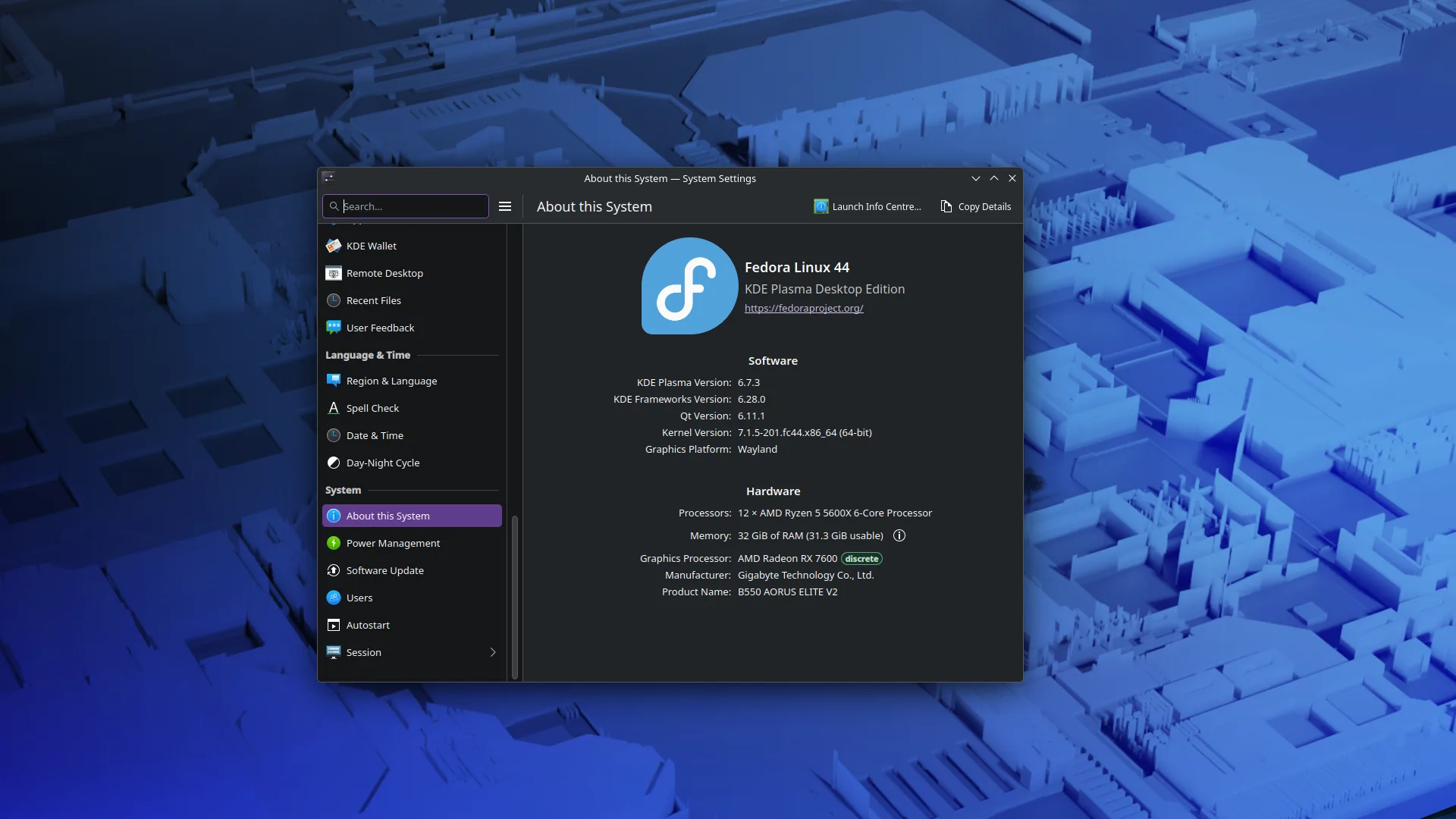
Finally done with the distro-hop: My return to Fedora

Two years into full-time Linux and I’m finally burning the distro-hopping cycle. I fell for the Arch/AUR trap for a while, but I got tired of spending my weekends debugging file manager crashes instead of maintaining my home lab.

Switched back to Fedora, and it’s boring in exactly the way I need it to be. It’s a stable launchpad for my projects, not the project itself.

Finally done with the distro-hop: My return to Fedorahttps://unknownuniverse.uk/linux-foss/back-to-fedora/Open linkView original on lemmy.ml
203
degoogle·DeGoogle YourselfbyUnknownUniverse

Why I moved from GrapheneOS to iodéOS on my Google Pixel

I’ve been using a de-Googled Android setup and found myself running into the same issue a lot of people probably do: the privacy-first option is great right up until the everyday stuff stops working properly.

In my case, banking apps and Android Auto were the sticking points. GrapheneOS was excellent in principle, but iodéOS ended up being the more practical fit for my actual use case.

I’d be interested to hear where other people draw that line between privacy, convenience, and reliability.

Why I moved from GrapheneOS to iodéOS on my Google Pixelhttps://the.unknown-universe.co.uk/tech-stories/grapheneos-to-iodeos/Open linkView original on lemmy.ml
21

Disabling Windows 11 Recall, AI "Click to Do", and Telemetry via Group Policy - 2026 Manual Guide

As a Linux user forced into a temporary truce with Windows for gaming handheld compatibility, I refuse to run the OS in its "out of the box" state. I’ve put together a manual optimisation guide that skips the "one-click" de-bloat scripts and focuses on permanent Group Policy (gpedit) and system-level tweaks to make the OS semi-tolerable.

The Guide Covers:

Killing AI Spyware: Disabling the "Recall" background service, snapshot recording, and "Click to Do" screen scraping.

Telemetry Lockdown: Redirecting "Allow Diagnostic Data" to the Security level (0).

Start Menu Surgery: Decoupling search from Bing to keep local file searches actually local.

Performance recovery: Disabling Virtualization-Based Security (VBS) and background hypervisors for bare-metal gaming speed.

Edge/Widget Removal: Stopping background "loitering" and accidental UI stutters.

This is a reproducible, manual workflow for those who want a clean(er) environment without relying on third-party scripts.

Disabling Windows 11 Recall, AI "Click to Do", and Telemetry via Group Policy - 2026 Manual Guidehttps://the.unknown-universe.co.uk/tech-stories/great-betrayal-windows-handheld/Open linkView original on lemmy.ml
47

Starmer is gone, but the "Vicious Circle" of surveillance remains.

Starmer might be packing his bags, but the "Online Safety Act" is staying exactly where it is.

This isn't about safety; it’s a government-mandated monopoly. Private firms help write the laws, then "win" the contracts to sell the solutions. While the PM resigns, the "vicious circle" of corporate surveillance just keeps grinding forward.

https://the.unknown-universe.co.uk/privacy-security/vicious-circle/Open linkView original on lemmy.ml
79

[Tool] Privacy-focused AUR Malware Audit Tool (Atomic Arch Incident)

The "Atomic Arch" campaign compromised over 1,500 AUR packages between June 10-12, targeting SSH keys and API tokens. If you updated via yay or paru during that window, you need to audit your local system.

I’ve built a client-side tool to help with this.

Local Processing: Your package list never leaves your browser. All comparisons are done client-side.

Live Data: It fetches the verified malicious list directly from the official Arch servers (md.archlinux.org) to ensure it's always current. Zero Bloat: No trackers, no ads, no cookies. How to use:

  1. Run pacman -Qm
  2. Paste the output into the tool
[Tool] Privacy-focused AUR Malware Audit Tool (Atomic Arch Incident)https://the.unknown-universe.co.uk/privacy-security/atomic-arch-audit-tool/Open linkView original on lemmy.ml
62

Replacing Tailscale with a 2-VPS WireGuard setup (No port forwarding)

I wanted to move away from Tailscale but found Headscale a bit too convoluted for what I actually needed.

Ended up with a simple WireGuard setup using two VPSes: one as a VPN hub, the other acting as a reverse proxy back into my home lab.

It lets me expose services publicly without any inbound port forwarding on my home connection.

Replacing Tailscale with a 2-VPS WireGuard setup (No port forwarding)https://the.unknown-universe.co.uk/home-lab/wireguard-vpn-two-vps/Open linkView original on lemmy.ml
133

Turns out I have been updating wrong all this time! 🤦🏼

I’ve been running my home lab since 2021 and honestly thought my update routine was solid: apt update && apt upgrade, reboot, job done.

Turns out I was wrong. I was checking CVE‑2026‑31431 (Copy Fail) this morning and realised that despite my “successful” updates, I was still running a vulnerable kernel from March.

I’ve had to rethink how I handle host updates. If you’re relying on a standard upgrade and a reboot to keep Proxmox or Debian hosts safe, you might want to check if yours is lying to you as well.

Turns out I have been updating wrong all this time! 🤦🏼https://the.unknown-universe.co.uk/tech-stories/update-conundrum/Open linkView original on lemmy.ml
138

Reclaiming the desktop: Why I’m still on Linux in 2026

I’ve been using Linux for years, but as the proprietary alternatives get more aggressive with telemetry and adverts, I wanted to document the choices that actually keep my desktop predictable.

This isn't a manual, but a practical overview of my setup. From why I’ve settled on CachyOS and KDE Plasma for my main rig, to the reality of dealing with proprietary software and app compatibility in 2026. It’s just an honest look at the transition and why I’m done with the corporate defaults.

Reclaiming the desktop: Why I’m still on Linux in 2026https://the.unknown-universe.co.uk/linux-foss/linux-migration-guide/Open linkView original on lemmy.ml
193

Is the "Year of Linux" actually a trap?

I’ve spent years championing Linux as the only escape from Big Tech, but I’m starting to get twitchy.

While we’re distracted by the Steam Deck making Linux "mainstream," the corporate players and politicians are busy building a digital cage. Between California’s AB-1043 mandates and Microsoft’s "Face Check" infrastructure, I’m worried we’re heading for a hard schism: "Sanitised Linux" vs the "Free Rebel" distros.

If the compliant, age-gated version becomes the industry standard, where does that leave the rest of us? Digital exile?

I’ve put some thoughts together on why the "Golden Cage" is closing in and why education, not mandates, is the only real fix.

Is the "Year of Linux" actually a trap?https://the.unknown-universe.co.uk/privacy-security/year-of-linux-trap/Open linkView original on lemmy.ml
99

BrowserGate: Technical breakdown of LinkedIn’s covert browser extension fingerprinting

LinkedIn is using hidden JS to scan your browser for over 6,000 specific extension IDs via a known Chromium vulnerability. By inventorying your local software, they can infer highly sensitive "Special Category" data like health status, religion, and political advocacy without consent.

I’ve joined the dots on why Chromium-based "Shields" fail here and how to harden your home lab/network to stop the leak.

https://the.unknown-universe.co.uk/privacy-security/linkedin-browsergate/Open linkView original on lemmy.ml
57