
Posts


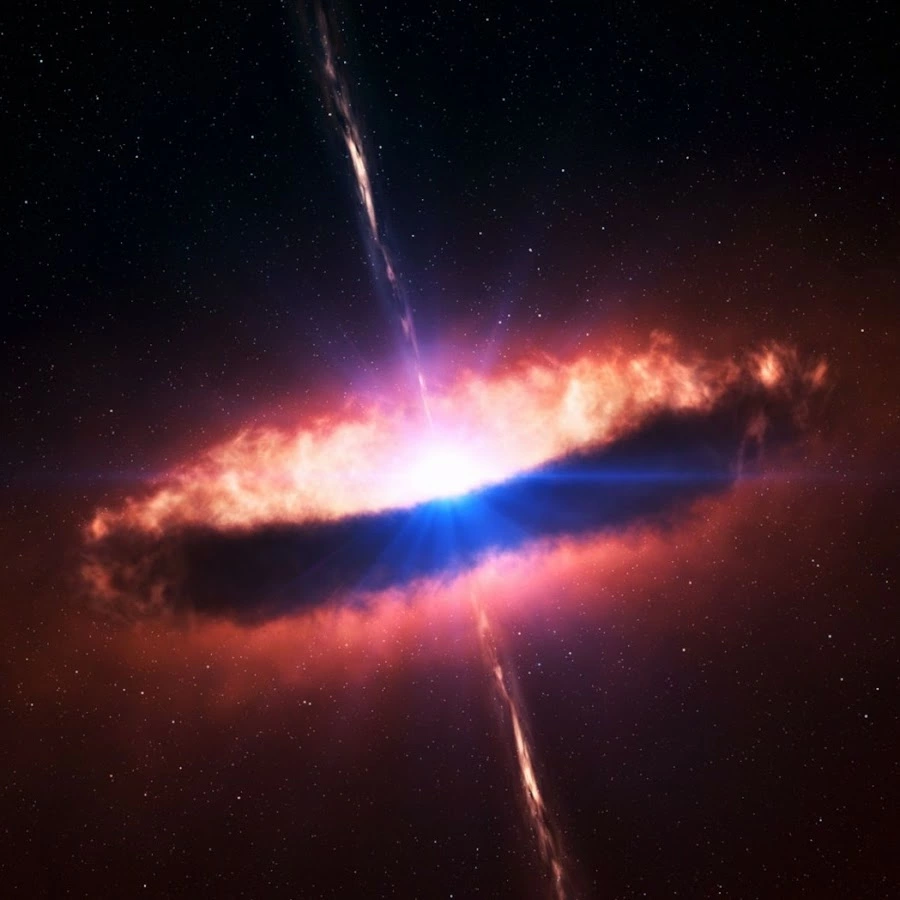
Astrophysical jet caught in a 'speed trap'
The video in this article brings me joy; it's just so good and fun to watch.
 https://phys.org/news/2024-01-astrophysical-jet-caught.htmlOpen linkView original on lemm.ee

Attempting to freeze matter under extreme pressure?
I tried finding some research and found lots about freezing matter or putting it under extreme pressure, but not trying both.
My thought experiment involved taking a small portion of ideal of matter (not sure what), artificially applying extreme pressure to it and than attempt to lower its temperature and if possible, apply even more pressure before trying to lower its temperature - taking it as low as possible under the highest pressure you could.
I assumed there's likely to be a conflict between pressure - thus increasing vibration/wave properties of the material - and how it would be possible to reduce those energetic wave properties.
Thanks for any insight.
Further evidence for quark-matter cores in massive neutron stars
cross-posted from: https://lemm.ee/post/19422551
"In a new article published in Nature Communications, a team centered at the University of Helsinki provided a first-ever quantitative estimate for the likelihood of quark-matter cores inside massive neutron stars. They showed that, based on current astrophysical observations, quark matter is almost inevitable in the most massive neutron stars: a quantitative estimate that the team extracted placed the likelihood in the range of 80–90%."
edit: found this research just today on nucleon liquid Vs quark liquid - very interesting and very much related to this original post.
 https://phys.org/news/2023-12-evidence-quark-matter-cores-massive-neutron.htmlOpen linkView original on lemm.ee
Potential energy created by same poles of magnets
Found this very useful Youtube video about How do Magnets & Magnetic Fields Work? and within it I finally found someone willing to explain greater details about how same poles repel in laymen terms. The link above takes you to the section where the Presenter explains how (as I understand him) potential energy forms between the same poles and that energy ultimately causes the repulsion. I like his thermodynamic(?) description and haven't ever come across a better laymen explanation. That said, I was hoping to get some opinions about them. I've also read about the exchange of virtual photons but even that wasn't intuitively explained.
Thank you for any additional insight.
Learning scientific nomenclature must be what it's like to process a foreign language into your native language...
Language of any kind has always been hard for me, as most languages aren't intuitive and require your brain to be forced into learning often odd and unnecessary rules. My brain hates math, the only language I actually respect and a lot of science is built on complex math and non-intuitive nomenclature. I've been increasingly frustrated by it lately and just need to get this off my chest.
I'm a non-professional and have been studying physics for a long time - Quantum Color Dynamics of late - and almost everything I read and listen to requires my brain to constantly process almost every bit of information from non-intuitive nomenclature to personal made ones. It's frustrating that the most challenging aspect of science (besides the complex math) isn't the concepts (I honestly don't find quantum mechanics to be weird) but rather the scientific community's self-imposed nomenclature made of scientist names or hodgepodge of words.
Worst of all, I've only been able to process science like this as an adult because as a younger student, the subject matter seemed too hard because it was weighed down by both non-intuitive nomenclature and often teachers who barely understood the concepts they were teaching to the extent that they could translate that nomenclature beyond a book's presentation (obviously my own learning experience).
Since I could remember I've loved science and wonder if I might have sought a career in physics, if not for frustrating hurdles like nomenclature, thrown on top of truly beautiful but complex subjects. At least I can enjoy it non-professionally - if only slowly, as I have to process its nomenclature.
Thank you. And with that, back to my particle zoo...
Emergent fields (theoretical physics)
Curious non-professional here.
Thought experiment that led me to the question: If we assume that at any given time there's an extreme level of EM and gravitational waves propagating through some point within a cosmic void (a seemingly homogeneous "vacuum"): do the transient emissions form any kind of emergent field?
I understand the ever-present zero-point energy but that should be in absence of all else. I'm contemplating an emergent field formed by EM/gravitational traffic. Obviously this field is only as present or strong as the transient fields passing through this point under consideration.
Thank you.
Zero-point Energy fields - reality Vs best description
According to quantum field theory, the universe can be thought of not as isolated particles but continuous fluctuating fields: matter fields, whose quanta are fermions (i.e., leptons and quarks), and force fields, whose quanta are bosons (e.g., photons and gluons). All these fields have zero-point energy.>
Is the quantum mechanical math just easier to calculate each having its own separate field, rather than an identical field of origin, but each unique excitation giving each their own identity/unique properties?
Sometimes QM systems seem true to reality and at other times just the best description we have at the moment - I find it more plausible for there to be a shared field of origin that diverges from unique excitations/properties. It's also very likely I'm studying QM fields incorrectly.
Thanks for any insight.
Is it possible that monozygotic twins are quantum entangled at conception?
Feels like a shower thought, but I seriously want to know if there are any implications, because it seems like identical twins are able to sense, understand, and almost be extensions of each other - finish each other's sentences/thoughts. Some even claim to be able to sense their twin when they're separate. Hard to believe, but at all possible?
Niche Gravity Theory?
There's a good many gravity theories, some that don't even try to explain the why, only the how and other's that involve some particle like the graviton. But anyone know if there's any based on the energetic vibrations of our known particles with mass (those within protons and neutrons)? In other words, gravity's space warp is a result of all the heavy work done by powerful particles; the more mass at work (density), the more space warps.
I found this one, and I recall someone trying to do a current version of it but can't seem to locate it (perhaps being developed outside of English language).
Thanks for any insight.
Gravity field scaling?
(To be clear, I'm more interested in the reach and scaling of gravity.)
If we were to suddenly double earth's mass, but not it's size, would it's field double in size (I assume strength as well), to the extent that if I were to measure this increased gravity at the same place I measured earth's normal gravity, it would simply be double? If so, the least measurable point of both gravitates should also be the same?
Just wondering if there's diminishing returns or if mass and density affects a gravity field the same regardless of whether it's an asteroid or a billion Solar Masses.
Feel free to share any views I'm not taking into account in regards to gravity fields.
Thanks
Could the fabric of space be the origin of baryon matter?
I've been doing a bit of searching for theories on the origin of baryon matter (including antimatter of course) and some seem to hint at quantum particles spawning from the fabric of space (but doesn't seem to theorize on how this happened) but not many focus on hypothesizing how all forms of baryon matter ether: was the default starting point (that is empty space wasn't the default origin, energy was) or that the fabric of space is the origin of baryon matter (something like: space has the blue print and energy supplies the material).
Thanks for any insight/links that focus on this question
Area of gravity at the center of large, dense celestial bodies...
I've read that at the center of large celestial bodies there's zero gravity (or close to). While confirmation would be nice, if true, I'm wondering how large that area can actually be and moreover, does it scale up with more mass and/or even size - that is, does the sun have a larger center area of low (zero?) gravity than the earth and so on with evermore mass. Or is that area the same regardless of mass' size?
Thank you
John Moffat: Modifying Gravity & The Dark Matter Myth
Been Studying alternatives to Dark Matter and the rabbit hole has led me to MOG/STVG by John Moffat. The video I'm sharing is a long and great interview by Curt Jaimungal with Moffat. There are plenty of MOND-like alternatives to Dark Matter and all may be proven wrong should science make further progress discovering Dark Matter. But I feel a great motivator is competition and I think MOG/STVG puts up some interesting competition.
View original on lemm.ee