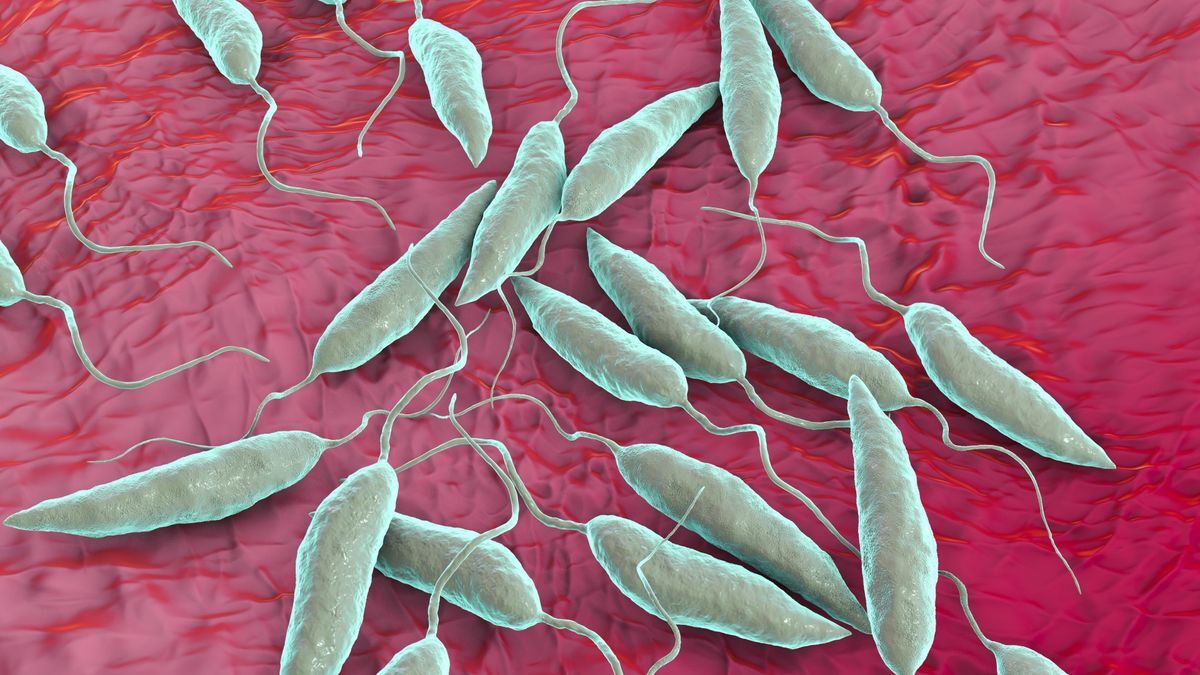
Scientists identified a new strain of a parasite that causes the disease leishmaniasis, and they mainly found it in people who had not recently traveled outside the U.S.
The parasitic disease leishmaniasis used to crop up in the U.S. mostly among people who had traveled to tropical regions. But now, a unique, local strain of the parasite may be gaining a foothold in the country, a new study suggests.
In addition, there are potential concerns that imported dogs may be driving the spread of another form of the disease, a second research group has cautioned.
Leishmaniasis is a neglected tropical disease caused by parasites; it spreads to humans through the bites of female sand flies (Phlebotomus), although in rare cases it can also spread via blood transfusions or through sharing contaminated needles. The most common form of the disease, called cutaneous leishmaniasis, causes skin sores and ulcers to erupt where someone is bitten, and if left untreated, these can become disfiguring scars.
Cutaneous leishmaniasis has been detected in the U.S. before, notably in Southern states, such as Texas. However, such cases have been sporadic and seen mainly in people who have returned to the U.S. from countries where it's endemic, meaning where it typically spreads, such as parts of Central and South America, the Middle East, the Mediterranean and Central Asia.
In the first of two presentations given Thursday (Oct. 19) at the Annual Meeting of the American Society of Tropical Medicine and Hygiene (ASTMH) in Chicago, researchers reported that they detected a genetically distinct strain of a Leishmania parasite that causes cutaneous leishmaniasis. The newfound strain belongs to the species Leishmania mexicana, and it's different from strains that typically cause imported leishmaniasis cases in the U.S.
That suggests that the new strain is being spread by U.S. sand flies, Vitaliano Cama, one of the study's leaders and a senior adviser with the Centers for Disease Control and Prevention's Division of Parasitic Diseases and Malaria, told Live Science.
To arrive at these findings, the researchers genetically sequenced more than 2,000 tissue samples from patients with suspected cutaneous leishmaniasis across 50 U.S. states, Puerto Rico and the U.S. Virgin Islands between 2005 and 2019. As of 2018, more than 80 cases of locally-caught human leishmaniasis have been reported in the U.S., but it's difficult to accurately estimate the case numbers.
That's because, while cutaneous leishmaniasis is a reportable condition in Texas, meaning diagnoses must be reported to local public health officials, this isn't the case nationally. The new analysis therefore acted almost as a proxy for surveillance, allowing researchers to get a sense of how often the disease occurs, Cama said.
Leishmania parasites were identified in 1,222 of the more than 2,000 tissue samples; more than 1,100 of the samples were from people who had traveled internationally, while 86 were from nontravelers. Of these 1,222 samples, 164 were L. mexicana, of which 52 cases, or 32%, occurred in Texas. L. mexicana was the most common species found among nontravelers, with more than 60% testing positive for it.
The team detected two distinct strains of L. mexicana: ACT and CCC. The first appeared dramatically more prevalent in travelers, while the latter was much more common in nontravelers, especially those in Texas.
"These findings offer evidence that leishmaniasis may be endemic in the United States," the authors wrote in their abstract.
It is still unknown what pressures caused the CCC strain to evolve or whether it can spread between sand flies and humans more easily than other strains, Cama said. But the team hopes that their analysis will make it easier to detect locally-acquired cutaneous leishmaniasis cases if they crop up in additional regions of the U.S.
There are also concerns that a different, deadlier form of the disease, called visceral leishmaniasis, may start spreading in the U.S., a second research group said at the ASTMH meeting.
Visceral leishmaniasis is usually caused by the species L. donovani and L. infantum. The disease can cause fever, weight loss, anemia, and spleen and liver enlargement, and it's fatal in more than 95% of cases that aren't treated. In their presentation, the researchers cautioned that U.S. sand fly populations could be picking up L. infantum by feeding on imported dogs that carry the parasite.
"There's been a slow trickle of [infected] dogs being imported into the U.S.," specifically from countries where L. infantum is endemic, such as Turkey, Christine Peterson, director of the Center for Emerging Infectious Diseases at the University of Iowa, told Live Science. Indeed, there have been past reports of L. infantum-carrying dogs being imported to the U.S. and Canada, and it's known that at least some breeds can pass the parasite to their puppies during pregnancy.
"It turns out, because of where they came from, and exposures that usually their mom had, [these dogs] have had Leishmania infantum," Peterson said.
Peterson suspects that this issue could come to a climax due to several factors, including an uptick in people rescuing dogs from endemic countries, a lack of screening for these imported dogs, and a warming climate that could allow sand flies to expand their range. For these reasons, Peterson and her colleagues proposed a new risk assessment tool that could be used by veterinarians and public health officials to screen imported dogs and help control infection.
The new tool has yet to be tested, but Peterson said that her team will be providing it to state veterinarians and agencies for immediate use.
In the meantime, "the most straightforward way to control this disease, because dogs really are the reservoir, is to put the basic flea- and tick-insecticide impregnated collars on them or use some of the topical or oral ones," Peterson said.
This article is for informational purposes only and is not meant to offer medical advice.