Until such time that Lemmy's user growth is at a point that it can support some of the smaller, niche cooking communities, these communities will be locked. We are asking that users sub to ![email protected] until such time that these communities can be reopened. Thank you!
For recipes, questions, and all other general culinary discussion, please sub to ![email protected].
Hello everyone,
We're calling it. The vote posts in Cooking, AskCulinary, Food, and Recipes are all overwhelmingly in support of OPTION 1 so we're moving forward with that decision.
!Cooking will be the place to be for all general cooking discussion, questions about cooking, and sharing recipes, so we are asking users of the other communities to sub if they aren't already.
Mods will stay assigned to the other communities and we will periodically revisit to discuss reopening them. We are confident Lemmy as a whole will continue growing and we will be able to see every niche community thriving.
The more niche communities such as BBQ, FoodPorn, SousVide, and KoreanFood will continue as they are, but we encourage posting in them as well as Cooking whenever relevant.
The sidebar to !Cooking will be updated to reflect the changes as well as new rules for posting to help organize the different types of posts.
Thank you everyone for voting and taking part in this change. Any questions, please comment below and we will do our best to answer. Also, if you have any additional feedback, please let us know below as well.
After getting some feedback on what we should do to help our culinary communities growth in the form of a potential "merger", we have some options and would like each community to vote on the next step. This ballot will be posted and pinned on !recipes, !food, !cooking, and !askculinary, as those are the communities we're looking to combine. Below are comments corresponding to each vote decision.
Please vote by upvoting one of the comments below. Downvotes will be ignored. This post will be left up for a week or until consensus is decided.
Additional info:
If option 1 or 2 get picked, ![email protected] will be a catch-all so to help organize, we will be implementing tagging posts. Since Lemmy does not have built in tagging yet, we will be requiring posts to be tagged in the title. For example a post title could be:
[RECIPE] Beef Stroganoff
or
[QUESTION] If you had to eat only one culture's cuisine for the rest of your life, what would you choose?
The community sidebar will have a list of all approved tags and we will be tweaking this as we go along. Tagging may be implemented on some communities regardless of merging or not.
No matter which direction we go, the other more niche communities such as !bbq, !sousvide, and !koreanfood will be left as they are, though we encourage users to post in both !cooking as well as the more niche communities. (We are looking into possible automating this, but there are some obstacles to think about. If this becomes a possibility, we will pin a post to discuss this further) This should limit the amount of duplicate posts and if users still feel there are too many duplicates in their feeds, they can unsub from the niche community and still see the same content, that is if everyone takes part in posting to all relevant communities.
!FoodPorn will remain it's own thing as a showcase of food photos. The mods of that community will have final say on what gets posted there. Food photos are still encouraged in all other communities, but additional information may be needed depending on what community it is. See sidebars of each for content rules.
1 1/4 cups (300ml) water

2 teaspoons (5g) Premium or Gold CTC black tea leaves

2 teaspoons (10g) granulated sugar

Any one or two of the following spices/flavorings: one lightly crushed 1-inch knob fresh ginger (about 1/2 ounce; 14g); 2 lightly crushed cardamom pods; 2 lightly crushed cloves; one lightly crushed 2-inch stick cinnamon (see notes)

1 cup (240ml) whole milk
Directions
In a 2-quart saucepan, bring the 1 1/4 cups water to a simmer over medium-high heat. Add tea, sugar, and the spices/flavorings you have selected from the list. For a light chai, allow the mix to boil until the extract is reddish brown and lightly aromatic, about 2 minutes. For a stronger chai, allow the mixture to boil until the extract is darker, thicker, and more aromatic, about 5 minutes.

Add milk to chai mixture, return to a boil, then set a timer for 5 minutes. While the timer is counting down, allow the chai to rise up in the saucepan until it almost boils over, then reduce heat and allow it to fall back down into the pot. Increase the heat and repeat this process of almost boiling over 3 more times. Finally, reduce heat to a gentle simmer for the remainder of the 5-minute timer.

Remove chai from heat, cover with a lid, and allow it to stand for 5 minutes. Strain through a fine-mesh strainer and serve immediately.
Special Equipment
2-quart saucepan, fine-mesh strainer
Notes
Do not add too many spices all at once. They will overpower the chai. It is more enjoyable to add just 1 or 2 spices to round out the chai flavor. I recommend starting with cardamom, if you like this spice. If you want to add saffron, the method is slightly different: A pinch of saffron should be added after the boil during the resting step.
Make-Ahead and Storage
Chai reheats very well the next day. You can make a double batch, strain it, and refrigerate it without any problem.
I can't remember where I first learned this, but it's called a Thai Omelete and I've been making eggs like this for years now:
Take 2 eggs and crack them into a glass. Add a teaspoon of fish sauce, a teaspoon of lime juice, a tablespoon of corn starch, and a little squirt of water.
Scramble it up with a fork until it's nice and uniform with no lumps from the corn starch.
Put 1 cup of oil in a wok or other large pan. Get it nice and hot to where a drop of water spits at you. Shimmering, not smoking.
Hold the glass about a foot over the pan and pour the egg in. It will flower out into this giant, fluffy, egg concoction that could easily fill a dinner plate.
It cooks FAST, FAST, FAST, so be ready to flip it after a minute or so so it doesn't burn.
So we, the food and cooking community mods, have been discussing merging a few of the communities together. We're pretty fractured at the moment and we don't really have the userbase to support so many niche communities so we're looking at merging some. We previously pinned a post asking users to cross-post to relevant communities and some of the feedback we received is some don't like this as it can clutter their feeds. Also there were many suggestions of merging until we get more growth and can support more nice communities.
So the plan would be to merge !askculinary, !bbq, !cooking, !food, and !recipes. This would combine a lot of the more general food communities into one and hopefully we reduce cross posting as well as grow users and content. Later, if we have a larger userbase that can support more niche communities, we can spin them off again. So, before moving forward with the merge, we wanted to make sure you all are aware of the plans as well as get some feedback on this decision. So please let us know what you think. We look forward to hearing your thoughts! Thanks!
EDIT: To explain how this would work, we have a couple options:
Lock all the niche communities and leave a pinned post pointing to the main Food community. Later we may reopen them once the userbase grows to support them.
Leave all communities open and cross post from the niche communities to the main one. So when you post a recipe to ![email protected], it would get crossposted to ![email protected]. ![email protected] would be a catch all if you wanted the "fire hose" approach. Or you can sub to the niche communities you want.
Came across this channel recently. Chris Young is the creator of the Joule Sous Vide stick as well as the Combustion thermometer line. He’s going some really interesting, science-based, cooking videos. This one in particular, don't let the title fool you. He goes more in depth on WHY steaks are juicy.
I actually really like parsley. I find a lot of people just think it has no flavor or is only used as a garnish. I put it in almost everything I make for a little color, and I like the taste. I think a lot of it is because I have the cilantro soap gene, so I have to substitute cilantro and I usually use parsley. Of course, I use rosemary, thyme, basil, etc, but for a garnish, and a finisher, parsley is my go to.
8 ounces fresh thin Hong-Kong-Style Pan-fried Noodles
1 tablespoon hot water
¼ teaspoon sugar
1 tablespoon light soy sauce
1 teaspoon dark soy sauce
½ teaspoon sesame oil
1 tablespoon oyster sauce
1 tablespoon Shaoxing wine (divided)
⅛ teaspoon white pepper
⅛ teaspoon salt
4 tablespoons neutral oil (such as vegetable, canola, or avocado oil)
2 teaspoons fresh ginger (finely julienned)
1 clove garlic (chopped)
½ small carrot (julienned)
⅔ cup fresh mushrooms (or dried Shiitake mushrooms, soaked for 2 hours in hot water and sliced)
1 cup snap peas (or snow peas)
1 cup mung bean sprouts
2 scallions (finely julienned)
Instructions
Velvet the Chicken:
Combine the sliced chicken with the water, oyster sauce, cornstarch, Shaoxing wine, and oil. Massage the chicken until it absorbs all the liquid and is uniformly coated.
Pre-boil the Chow Mein Noodles:
Bring 2 quarts of water to a boil in your wok or a large pot, and cook the noodles for 1 minute. Drain through a colander, rinse in cold water, and spread the noodles out to drain further.
Make the Sauce Mixture:
In a small bowl, mix the hot water and sugar until the sugar dissolves, then add the light soy sauce, dark soy sauce, sesame oil, oyster sauce, 2 teaspoons of Shaoxing wine, white pepper, and salt. Set aside.
Fry the Noodles:
Heat your wok over medium-high heat, and add 2 tablespoons of oil to coat. Spread the noodles in a thin, even layer, tilting the wok in a circular motion to distribute the oil and crisp the bottom layer of the noodles evenly. Let the noodles cook for about 2 minutes, and adjust the heat as needed—lower if the noodles start to scorch or higher to brown the noodles. The wok should not be smoking, or the noodles will burn.
Flip the noodles over, and add another tablespoon of oil around the perimeter of the wok to crisp the other side. Don’t stress if you can’t turn the noodles over in one shot. The goal here is just to get an even, light crispiness during this cooking stage. After 90 seconds, flip the noodles again and you should start to see a light browning of the noodles, with some areas where the noodles are crispier. Cook for another 2 minutes, and transfer them to a plate.
Sear the Chicken:
Heat wok over high heat until it’s just smoking, and spread the remaining 1 tablespoon of oil around the perimeter. Add chicken in one layer, and sear for 30 seconds on one side. Flip and sear for another 30 seconds. Stir-fry the chicken for another 20 seconds; it should be about 80% cooked. Remove the chicken from the wok, leaving behind any oil.
Finish the Dish:
Over medium heat, add the julienned ginger to the oil, and let it cook for about 15 seconds. Next, add the garlic, mushrooms, and carrots, and stir-fry for 1 minute.
Increase the heat to high, and add the noodles, snap peas, and chicken (along with any juices). Drizzle the sauce mixture over the top. Quickly stir-fry the noodles with a lifting motion until the sauce is well-incorporated—about 30-45 seconds.
Toss in the bean sprouts and scallions, and stir-fry everything for another minute. The wok should be at its hottest now to help you achieve that wok hei flavor. Cook just until the scallions wilt—the bean sprouts should still be somewhat fresh and crunchy. Serve!
Honestly for me, it's simply a matter of how it's cooked. If it's "stuffed" in the bird, it's stuffing. If it's in a dish on the side, it's dressing. But I do reserve that stuffing can be pulled out and served on the side. And you can also eat stuffing without ever "stuffing" it. Stove Top Cornbread Stuffing is my weakness and I use it as a quick and easy side often with a protein. Or when making crab cakes.
1 1/2 teaspoons black peppercorns

1/4 teaspoon cumin seeds

2 cloves

4 cups (945ml) homemade chicken stock or store-bought low-sodium chicken broth

2 plum (Roma) tomatoes (8 ounces; 225g)

2 tomatillos, husks removed (4 ounces; 85g)

3 guajillo chiles,stems removed

2 California chiles, stems removed

3 árbol chiles, stems removed

One 3.5-ounce pack achiote paste (100g) (see notes)

2 tablespoons gochujang (see notes)

5 medium cloves garlic

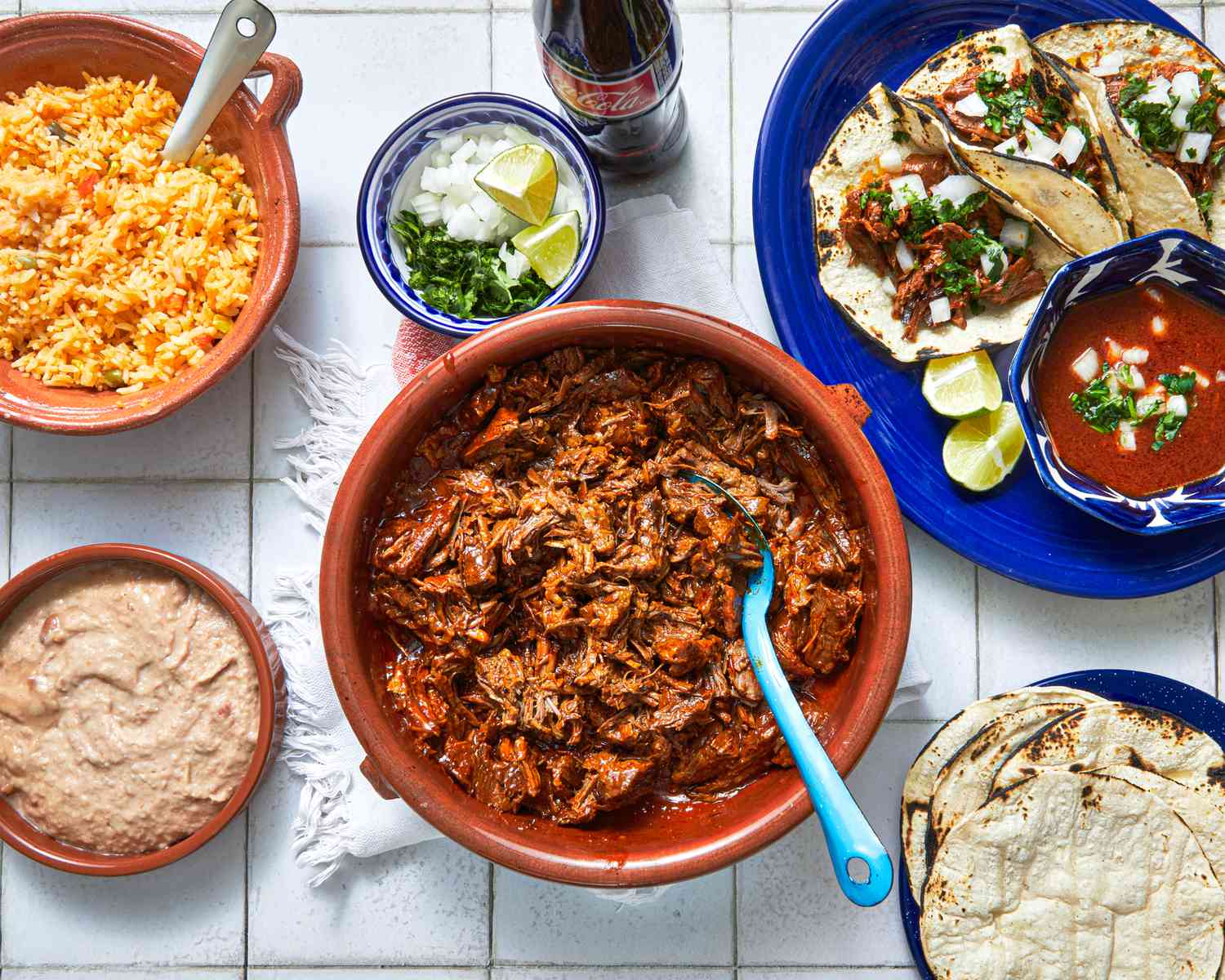
4 pounds (2kg) boneless beef chuck roast, trimmed of excess fat and cut into 2-inch cubes

Kosher salt and freshly ground black pepper

1 cup water

1 whole yellow onion, unpeeled, ends trimmed (8 ounces; 227g)

2 whole bay leaves
For Serving:
Diced white onion

Minced fresh cilantro leaves and tender stems

Warmed corn tortillas

Cooked rice (see notes)

Cooked beans

Lime wedges
Directions
In a large saucepan, toast peppercorns, cumin seeds, and cloves over medium heat until fragrant, about 30 seconds. Add chicken stock, tomatoes, tomatillos, guajillo, California, and árbol chiles. Bring to a boil over high heat, then turn off the heat, and let rest until tomato skins begin to shrivel and chiles soften, about 15 minutes.

Transfer chicken stock mixture to a blender. Crumble achiote paste into the blender by hand. (see notes) Add gochujang and garlic cloves and blend (in batches if needed) into a smooth puree. Set aside.

Generously season beef all over with salt and pepper. In a stock pot or large Dutch oven, add the beef, blended chile sauce, water, onion, and bay leaves and cook, covered, until just simmering.

Continue to cook, covered, adjusting heat as needed to maintain gentle simmer (about 180-190°F; 82-88°C), until beef is fork-tender, 3 to 4 hours. Discard onion and bay leaves and season with salt and pepper to taste. Hold warm until ready to serve.

For Serving: Using a slotted spoon, transfer beef to a cutting board. Using 2 forks, shred beef into bite-sized pieces or lightly chop. Ladle consomé into individual serving bowls and top consomé with diced onion and cilantro (this is for dunking and/or spooning over the meat). Serve shredded beef with prepared consomé, warm tortillas, rice, beans, and lime wedges. (see notes)
Kenji did a great video walking around Uwajimaya explaining the different varieties of common Japanese ingredients and what he recommends getting. I'd say anyone looking to dip their toes or season experts of Japanese cooking will find some good info here.
1/2 cup (120ml) warm water

1/4 cup (50g) sugar

2 1/2 to 3 tablespoons (38 to 45 ml) fish sauce, plus extra as needed to taste

1 tablespoon (15ml) fresh lime juice

3 medium cloves garlic (15g), minced

1 bird’s eye chile, stemmed and thinly sliced
For the Vermicelli Noodle Bowls:
12 ounces (345g) dried rice vermicelli noodles, such as Three Ladies Brand

6 cups (95g) picked Vietnamese fresh herbs (leaves and edible tender stems), such as Thai basil, Vietnamese coriander, Vietnamese perilla, peppermint, cilantro, fish mint, or a combination, torn into bite-sized pieces

1 small head baby butter lettuce or lettuce mix (little gem, green, and/or red leaf)(3 1/2 ounces; 100g), leaves cut into thin 1/8-inch-thick ribbons

2 Persian cucumbers, trimmed and cut into thin matchsticks (1/8 by 2 inches) or thin ribbons (1/2 by 5 inches)

1 cup (50g) mung bean sprouts

18 Imperial Rolls, cut into 3 pieces each (see note)

2/3 cup (125g) unsalted roasted peanuts, roughly chopped (optional)

Pickled daikon and carrot, for serving

Pickled leeks, for serving (see note)
Directions
For the Nước Chấm: In a medium bowl, combine water, sugar, fish sauce, and lime juice and mix until sugar has fully dissolved. Stir in garlic and chile; set aside.

For the Vermicelli Noodle Bowls: Bring a large pot of unsalted water to a boil over medium-high heat. Add noodles and boil until tender according to the package instructions (the cooking time depends on the noodle and the brand.) Check for doneness by pressing the noodles between your fingers: they should be soft and have some spring and not mushy. Drain in a colander, rinse with cold water, and set aside to cool.

For Serving: Divide herbs, lettuce, cucumbers, and bean sprouts between large individual noodle serving bowls. Top with noodles followed by imperial rolls. Garnish with roasted peanuts, if using, and pickled daikon and carrot, and leeks. Serve with nước chấm.
Notes
For vermicelli rice noodles, I recommend the Three Ladies brand, which is available at most Asian supermarkets and online.
The most time-consuming part of this recipe is making the imperial rolls themselves. While store-bought options exist, I unfortunately have yet to find a brand that comes close to what I would call a good-quality product. These really are best when made at home. If you're not up for that, you can also top the vermicelli noodles in this recipe with some of the meats commonly served with broken rice, including the grilled pork and the shredded pork (instructions for both those meats can be found in this broken rice recipe).
Pickled leeks, often labeled “pickled leeks in brine,” are available at most Asian supermarkets in the canned section. Their delicate aroma and sweet-and-sour finish make them a great pairing with these imperial rolls.
Make-Ahead and Storage
The vermicelli rice noodles can be prepared up to 4 hours ahead and held at room temperature before assembling the bowl.
Nước chấm can be refrigerated in an airtight container for up to 2 days ahead. It may thicken as it sits; dilute with water as needed.
I make Kimchi Jigae, or Kimchi Soup, pretty often and the only staple I use is kimchi, obviously, and tofu. It's traditionally made with pork and other spices, but I like to experiment. For this I didn't have any meat ready that would be good but I found a package of crawfish tails I had been trying to figure out what to do with so I figured I'd try it out and see how it goes and it turned out so good.
Ingredients (none of these are exact, I tend to season by taste but I'll try to put an estimate of what I used
About 5 cups of water
2 cups of cabbage kimchi
A bottle of [Ajumma Republic Korean Kimchi Seasoning](https://www.amazon.com/Ajumma-Republic-Korean-Kimchi-Sauce/dp/B01M68C6A6)
1 lb of cooked, peeled crawfish tails
however much tofu you like.  I like a lot so I used 3 packages
2 TBSP onion powder (you can used minced onions as well)
2 TBSP garlic powder (likewise can use minced garlic or whole cloves if you like)
1 can tuna (I like the fishy taste it brings to the broth but it's optional)
Directions
Heat a big pot and put some oil in and fry the kimchi a bit.  I find it brings out the flavor and gives it a nice crunchy texture

Pour in the water and however much of the kimchi seasoning you like to taste

add tofu sliced into cubes, tuna, garlic powder, onion powder, and crawfish

bring to boil and let simmer 15-20 minutes

taste and if it's good, serve
4¼ cups water (measure 4¼ cups and remove 4 tsp, to be precise)
4 large eggs (50 g each w/o shell) (refrigerated)
¾ cup tap water (¾ cup + 4 tsp, to be precise; colder than room temperature)
For the Sauce
¼ cup dashi (Japanese soup stock) (use standard Awase Dashi, dashi packet or powder, or Vegan Dashi)
½ Tbsp mirin
1½ Tbsp soy sauce
⅓ cup katsuobushi (dried bonito flakes) (skip for vegetarian)
For the Garnish
green onion/scallion
Instructions
Gather all the ingredients. You will need a small heavy-bottomed saucepan (I use 1.5 QT); you will need to cover the eggs completely with the water.
Onsen Tamago Ingredients
To the saucepan, add 4¼ cups water (measure 4¼ cups and remove 4 tsp, to be precise). Cover with a tight-fitting lid and bring it to a boil.
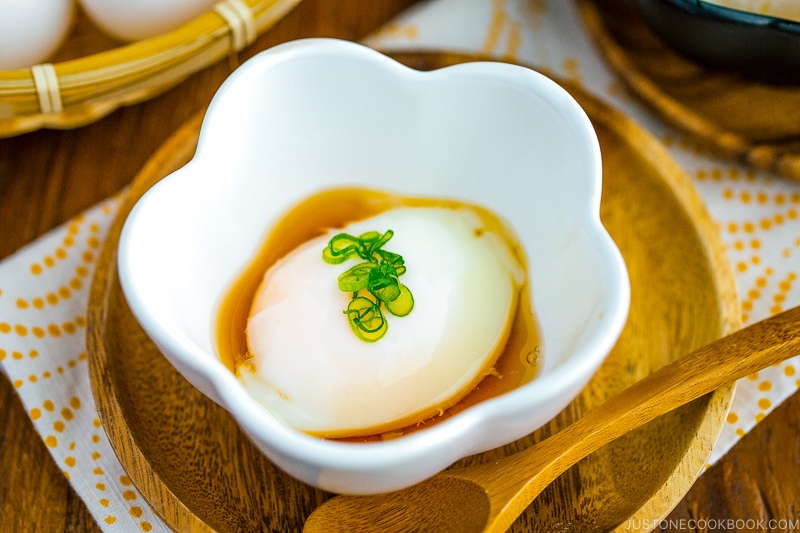
Once boiling, remove the pot from the heat. Remove 4 large eggs (50 g each w/o shell) from the refrigerator. To the pot of hot water, add ¾ cup tap water that‘s colder than room temperature (¾ cup + 4 tsp, to be precise). Gently submerge the cold eggs in the hot water. Immediately cover and set the timer for 17 minutes.
Meanwhile, make the sauce. Combine ¼ cup dashi (Japanese soup stock), ½ Tbsp mirin, and 1½ Tbsp soy sauce in a small saucepan and bring it to a boil. Add ⅓ cup katsuobushi (dried bonito flakes), turn off the heat, and let the katsuobushi sink to the bottom of the pan. After 30 seconds or so, strain through a sieve and set the sauce aside.
Cut the green onion/scallion into thin slices and set aside.
Once 17 minutes have passed, gently take the eggs out of the water and set them aside for 5 minutes.
To Serve
Enjoy the Onsen Tamago either warm or at room temperature. Crack the egg into a small bowl, pour the dashi-based sauce into the bowl, and garnish with the sliced scallion as a part of a Japanese breakfast. Try the egg on top of steamed rice with a splash of soy sauce. It‘s also delicious over Gyudon, Chicken Curry Rice, Soba Noodle Soup, and Cold Tanuki Udon.
To Store
You can keep the uncracked Onsen Tamago for 1–2 days in the refrigerator. To reheat, remove it from the refrigerator and bring it to room temperature. To warm it up further, place it in a bowl of 160ºF (70ºC) water for 10 minutes. Do not reheat higher than that; otherwise, the heat will cook the egg. Keep any leftover sauce in the refrigerator for 4–5 days.
I mostly used this recipe but I cooked the beef, which was cut from a huge hunk of top loin I found at Costco, in my sous vide (137 F for 3 hours from frozen. Salt and peppered and frozen before cooking) beforehand.
I bumped up the garlic to a whole bulb because garlic. Added mushrooms and subbed onion powder for onions (I don't like onions). Also added MSG because I put MSG in pretty much everything. Then instead of the 1hr 45m cook, I just added the beef in and simmered for about 20 min. I also scaled the whole recipe to have more gravy as well as I like mine to be a little soupy.

 https://lemmy.world/c/cookingOpen linkView original on lemmy.world