

Chat Control 2.0: EU governments set to approve the end of private messaging and secure encryption
cross-posted from: https://lemmy.ml/post/6469594
How to contact your MEP.
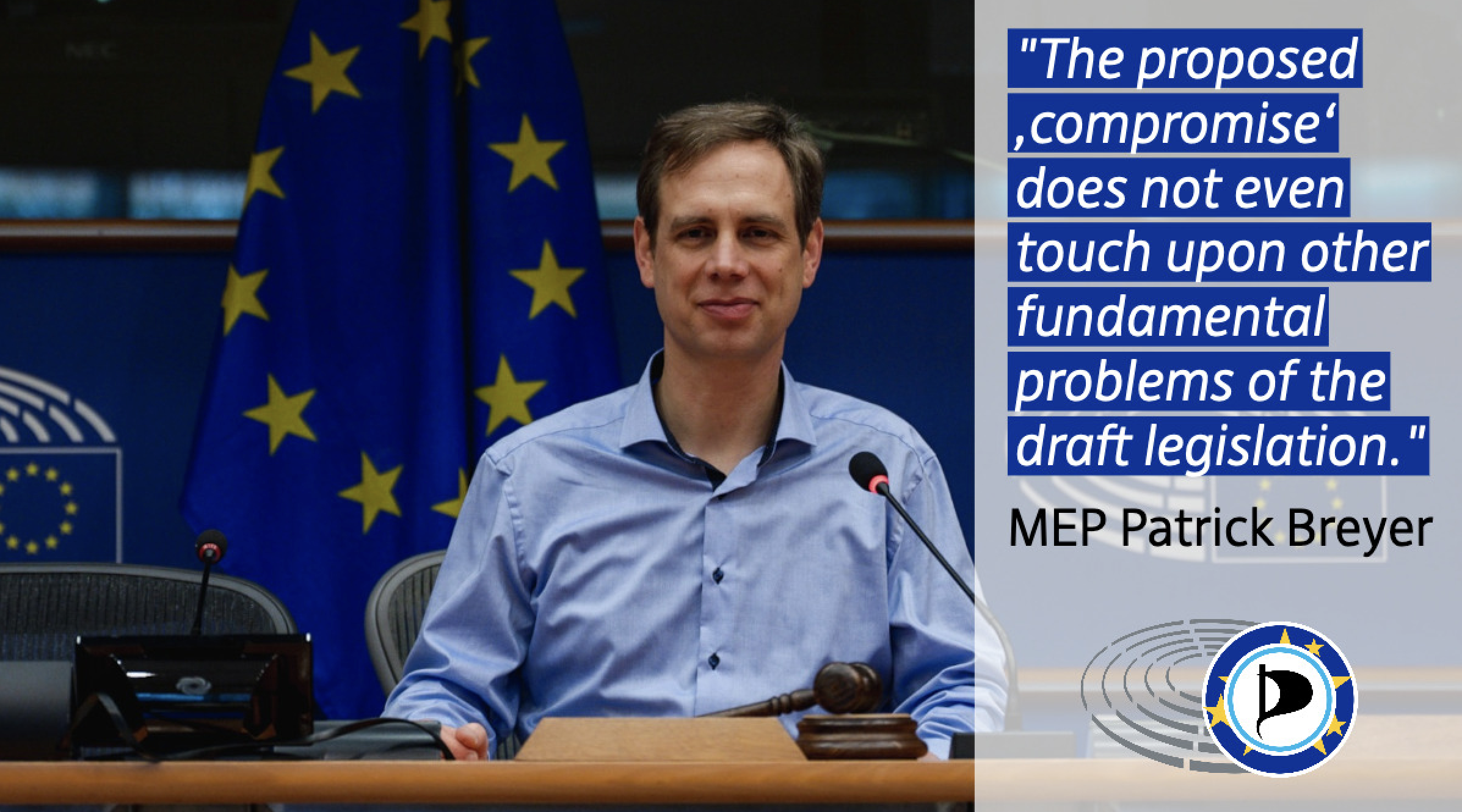 https://www.patrick-breyer.de/en/chat-control-2-0-eu-governments-set-to-approve-the-end-of-private-messaging-and-secure-encryption/Open linkView original on lemmy.ml
111 replies
Terrorists will have no problem writing their own encryption program, and more ordinary citizens will install malicious apps from unofficial app stores.
And everyone else will have their shit dumped out in the open when ai starts breaking through all the back doors and manipulating officials into clearing them
You'll never decode me and my brother's Pig Latin
Wait for the LLM’s based on pig Latin
GPT4 can already infer and translate pig latin
No need for a pig latin specific LLM
Well, that guys brother is already screwed
Writing your own is hard. They won't have a problem illegally using Signal
e2e is pretty simple. I agree with your second sentence, though.
Writing ur own is not hard i did it at 16 without chatgpt its piss easy.
I've done it at 15, now I'm 16 ;)
Gotta one up me u little shit.
Nar thats cool keep the passion make cool shit name ur variables sensibly try avoid cpp at all costs.
Ah... terrorist, the magic word. That's why you can't have a SIM card which is not tied to your ID or passport in EU since 2015. Terrorists actions allowing an state entity throwing 4000t of explosive on civils in a weekend.... yep yep...
more seriously (though I wasn't totally kidding), your non-tech relatives and friends are all on whatsapp/insta/messenger, good luck to move them.
I have helped a little with some ongoing research on the subject of client-side-scanning in a European research center. Only some low level stuff, but I possess a solid background in IT security and I can explain a little what the proposition made to the EU is. I am by no means condemning what is proposed here.I myself based on what experts have explained am against the whole idea because of the slippery slope it creates for authoritarian government and how easily it can be abused.
The idea is to use perceptual hashing to create a local or remote database of known abuse material (Basically creating an approximation of already known CP content and hashing it) and then comparing all images accessible to the messaging app against this database by using the same perceptual hashing process on them.
It's called Client-Side-Scanning because of the fact that it's simply circumventing the encryption process. Circumvention in this case means that the process happens outside of the communication protocol, either before or after the images, media, etc, are sent. It does not matter that you use end-to-end encryption if the scanning is happening on you data at rest on your device and not in transit. In this sense it wouldn't directly have an adverse effect on end-to-end encryption.
Some of the most obvious issues with this idea, outside of the blatant privacy violation are:
This is a really nice summary of the practical issues surrounding this.
There is one more that I would like to call out: how does this client scanning code end up running in your phone? i.e. who pushes it there and keeps it up to date (and by consequence the database).
I can think of a few options:
Each of these has its own problems/challenges. How to compel them to insert this (ahem "backdoor"), and the different risks with each of them.
Another problem: legislation like this cements the status quo. It's easy enough for large incumbents to add features like this, but to a handful of programmers trying to launch an app from their garage, this adds another hurdle into the process. Remember: Signal and Telegram are only about a decade old, we've seen new (and better) apps launch recently. Is that going to stop?
It's easy to say "this is just a simple hash lookup, it's not that big a deal!", but (1) it opens the door to client-side requirements in legislation, it's unlikely to stop here, (2) if other countries follow suit, devs will need to implement a bunch of geo-dependant (?) lookups, and (3) someone is going to have to monitor compliance, and make sure images are actually being verified--which also opens small companies up to difficult legal actions. How do you prove your client is complying? How can you monitor to make sure it's working without violating user privacy?
Also: doesn't this close the door on open software? How can you allow users to install open source message apps, or (if the lookup is OS-level) Linux or a free version of Android that they're able to build themselves? If they can, what's to stop pedophiles from just doing that--and disabling the checks?
If you don't ban user-modifiable software on phones, you've just added an extra hurdle for creeps: they just need to install a new version. If you do, you've handed total control of phones to corporations, and especially big established corporations.
I get the concept but this doesnt realy offer any advantages over just not encrypting anything at all. The database being checked againts can still just include a hash of somethibg the governemnt doesnt like and boom u have a complete tool for absolute cencoring of everything.
I’m deeply against this ridiculous proposal.
But scanning of messages already happens, tbf, for spell checking, emoji replacement, links to known infectious sites.
Photo copiers do client side scanning to prevent copying of money.
There are precedents.
I hate this proposal. But let’s be straight about the facts: The phone has full access to everything you send and receive already. This isn’t the same as having an encryption back door.
Thanks for the explanation. Do you know how they’re planning to implement this client side scanning? Take an iPhone for example— where Apple has already ditched their plans to do the same device-wide. Is it planned for WhatsApp, Signal etc. to be updated to force perpetual scanning of the iPhone’s photo album? Because that can be turned off quite easily at the OS level.
The only way I could see them doing it is by scanning any image that is selectively chosen to be sent before the actual message itself is sent—i.e. after it’s selected but before the send button is pressed. Otherwise it’s breaking the E2E encryption.
Is that the plan?
Client-Side-Scanning is going to be implemented by the messaging app vendor. This means that it's limited by OS or Browser sandboxing . Therefore it's definitely limited to what the messaging app has access to. However, I'm not sure what the actual scope would be, meaning if all accessible images are going to be scanned or only the one being transmitted to someone.
citizens have the right to private communication.
Not in places where constitutions are not the ultimate authority AND written such that they form negative rights by only limiting the governments power. That's in all those places whose immigrants to America get on TV and call America's constitution anachronistic.
You forget to mention, a constitution that is written (and properly commented) in such a way that it doesn't require any interpretation; and that will receive periodic review and updating according to cultural and historical development; and that holds actual punishment for lawmakers who violate the constitution. Not saying that i know of any such thing.
I sometimes wonder about this. I hugely value my private communication, and I grew up in a world with that ideal. But with the rise of more cleverly invasive apps and tracking, and ease of someone else putting a video of you online, and so on, I sometimes think about a world where non face-to-face communication isn't private any more.
I don't know what I think of that world.
After all, we haven't always had private, at-a-distance communication, especially for all people
We always had. Many people wrote personal notes/letters in cryptic ways to prevent unwanted readers from deciphering it.
Imagine a word where we would teach children not to make their own cypher because this is illegal. What a distopian society.
Kind of, but written communication for everyone hasn't even always been a thing. And cryptic letters perhaps aren't reliable secrecy for ordinary people against trained spying. And anonymity... not without other layers to your communication. And all of that not for your ordinary postcard home: it's something you do in special situations.
I don't think the new law would outlaw encrypting messages to your friend with PGP; nor having a second phone that you leave at the library for anonymity.
I think it's fair to say that secure ways to communicate have largely scaled with our social circles. Without writing you can't keep in touch at a distance anyway.
But what liberty is essential? Proveably secret postcards to people on the other side of the world?
That's also quite a harsh quote to bring in the context of the many hidden erosions of privacy - would you say the tick-tockers don't deserve privacy or safety because they chose that social ability over a privacy they little understand?
Yeah, I'm on board with that. Really what I was thinking about was imagining a world where internet presence is not a place where there's privacy - like if you meet a friend in public, and talk on a park bench, you can't assume no one will see you. You know that, and accept that, and adapt accordingly.
I want a world where internet communications are private and their metadata are also private, and my internet use is private... But I'm contemplating the what ifs of a different world, and how best to live in it, and how to help my children and children's children live in it. I do think fighting for better laws and protections is part of that and I'm incredibly grateful for people like the eff; but I think it's also worth thinking about how we can find ways to live in a new environment, understanding that society's rules around us don't always work in the best ways.
(On that note: you're quoting the US Constitution a matter of EU ruling...)
Just your quote, that says such people who give up some liberty don't deserve any. I suppose you didn't mean it that way but it seemed harsh.
Tangential, but Lemmy is filled with smart people so I'm going to ask: is it possible to legally make it impossible for wireless signals to work within your own home? That is, how would one dampen access to wireless networks? Would this require illegal use of signal jamming devices as I imagine a Faraday cage would be too difficult to make in a room.
Edit: where else on Lemmy could I ask this sort of question?
I imagine you could come up with something relatively easy to put on the walls/ceilings to block signals if you really felt like it.
Making it look like a sane person's house might be a little more difficult though
The FCC has a lot of regulations on it. From what I remember active jamming within the home is still wildly illegal. Depending on the size of your house/room, a far as at cage wouldn’t be too difficult, especially if you did it during construction. If you’re on a budget and don’t mind looking crazy you can line a closet with tinfoil and connect it to ground.
Yeah shielding. Totally passive.
mobsters did that in their houses, people who buy them often only learn about the previous owner after realizing that one or two rooms are faraday cages - zero wifi or cellular.
People in Reddit and sometimes here always praise the EU as some bastion of privacy, and I always got downvoted when I said that this isn't always true. And now here we are. I hope people don't forget this after a month, like they always do.
They will, and you're screaming into the wind sadly.
What you can do is never forget and base your voting decisions to include this as a priority going forward. Endorse and support companies that protect privacy.
It's a long uphill battle and every little thing can help no matter how small.
Maybe say this after this passes.
That's the attitude I was talking about 😄
Yeah, no. What's likely to happen is that you will remember this, completely miss the memo that the law didn't pass and then go on spreading misinformation about the EU.
What is wrong with the eu? Why do they need to always ban end to end encryption?
Lobbyists.
Lobbiests are probably the one reason they haven't passed such anti-privacy laws, actually.
There’s lobbying on both sides
As I remember at the moment partly Von Der Leyen, the current Commission president. She is a German Christian democrat and apparently bit with capital C. Meaning she has bit of a moral panic streak on her of the "won't you think of the children" variety. As I understand this current proposal is very much driven by her.
However her driving it doesn't mean it sail through to pass as legislation. Some whole memberstate governments are against the encryption busting idea.
And the fact that Ylva Johansson, being technologically illiterate as well as a close bed buddy with companies in the surveillance industry that stand to earn a crap load of money doesn't help...
Von Der Leyen is a swinger clubber
I'm sure they will tell you it's weighing the security (against terrorists, criminals, etc) of the many against the security (from seeing dick pics or messaging a mistress) of the few.
The thing that always kills me about that phrase is "the needs of the many" are "the needs of the few," because "the many" is just a gaggle of "fews."
5 eyes. Politicians are puppets.
Wait, you have a choice to vote for either puppet 1, puppet 2, or puppet 3. Your choice matters! .. as long as the politicians podiums are provided by the rich we don't have a real say.
So for, here is what I can tell from specific countries:
On board with privacy destroying law:
Spain, Hungary, Cyprus
Mostly on board: (support on device scanning but not weakening E2EE)
Ireland, Denmark
Against:
Finland, Germany
Feel free to update this if you know more.
Source: https://www.wired.com/story/europe-break-encryption-leaked-document-csa-law/
IIRC Netherlands change something in their laws that makes it impossible for them to support any proposals that go against end-to-end encryption technologies.
Very interesting. How likely is it to be approved though, given the opposition? Alao, what about the rest of the EU countries?
It will at minimum be a fight. It won't just sail through. Also whole governments being against means one of them might challenge the law in to European Court of Justice. Since as nation-states also often have, EU itself has charter of rights part in the fundamental EU treaties. It also has normal limit and share of powers. EU Council and Parliament aren't all powerfull. ECJ can rule a directive or regulation to be against the core treaties like Charter of Fundamental Rights of the European Union.
Said charter does include in it right to privacy (which explicitly mentions right to privacy in ones communications) and protection of personal data. Obviously none of these are absolute, but it means such wide tampering as making encryption illegal might very well be deemed to wide a breach of right to private communications.
Oh and those who might worry they wouldn't dare at ECJ.... ECJ has twice struck down the data protection agreement negotiated by EU with USA over "USA privacy laws are simply incompatible, no good enough assurances can be given by USA as long as USA has as powerful spying power laws as it has". Each time against great consternation and frankly humiliating black eye to the Commission at the time.
ECJ doesn't mess around and doesn't really care their ruling being mighty politically inconvenient and/or expensive to EU or it's memberstates. They are also known for their stance that privacy is a corner stone civil right (as stated in the charter and human rights conventions also, their legal basis) and take it very seriously as key part of democracy and protection of democracy. Without free and private communications and expression there can be no free political discussion, without free political discussion there can be no democracy.
And the EU is wondering why they're having an image problem
Let's wait after Polish and German elections. People are fed up with this.
Making it illegal only hampers those that follow the law.
Criminals, by definition, already don't follow the law.
Exactly. When privacy is criminal, only criminals will have privacy.
Thing is, there are a load of people who don't have the know how, time and/or care to use an alternative. That goes for scum bags sharing child porn, terrorists teaching how to make an easy pipe bomb, journalists reporting on local corruption, people sending flirty sexts to their spouses, activists trying to get a movement going, anti-vax groups, people trying to source dubiously legal and/or ethical drugs/medicines.... and so on.
Banning it in mainstream apps and legal stores makes it harder - and harder to know if you can trust an app (is this niche one I found through pirates-r-us forum really trustworthy) - and easier to spot and target those who use illegal/minority options.
So I think you would catch and block a load of CSAM, even though obviously not all.
This is almost definitely not going through the ECJ. If they pass this directive I'm gonna take my chances.
Thanks to the Matrix protocol there is no chance of getting rid of E2EE communication anyway. There is no feasible way to stop decentralized communication like that, no without killing the internet.
Also I would add, not like this is unanimously supported in EU among memberstates. So this isn't a done deal, this is a legislative proposal. Ofcourse everyone should activate and campaign on this, but its not like this is "Privacy activists vs all of EU and all the member state governments" situation. Some official government positions on this one are "this should not pass like it is, breaking the encryption is bad idea".
Wouldn't be first time EU commission proposal falls. Plus as you said ECJ would most likely rule it as being against the Charter of Rights of European Union as too wide breach of right to privacy.
They can prosecute you for any little thing though, including shit they make up because they assume you might be using encryption.
While this would be terrible if it passes, a part of me hopes a silver lining would be a massive surge in open source development focusing on privacy respecting software that does not follow or enable this disgusting behavior by the eu
Software which may be made illegal.
Ostensibly via TCPA.
Fuck thats terifying.
It wouldn't be, on Linux at least
Unless TCPA is implemented by manufacturers.
Gamers are here and coming in mass and don't care about FOSS or security, so I won't hold my breath.
How are many other similar bans enforceable? Like CSM itself. With a lot of difficulties.
What fucking fascists.
Fascism, authoritarianism, totalitarian dystopian thinking, it's all the same to me when it comes to the State overstepping and blatantly looking to pass laws that remove the right to privacy and autonomy from citizens. I'm no leftist ideologue, I skew libertarian right (although I couldn't describe all the nuance of my views within the context of a simple label), but if there's one thing we have in common, it's our hatred of government overreach and corporate control of the masses.
Fuck authoritarianism. Fuck collectivist bullshit. Never stand for the trampling of your rights.
If apps would turn off e2e encryption, how would it be? Would it affect bordering regions? Users of VPNs inside EU?
My country proposed a ban on VPN software (targeting appstores providibg them), it can also target messengers. If I get a EU version of this app, or if I use a european VPN to connect via it, would I be less safe sending political memes?
I wonder if openPGP will ever gain popularity.
The only ones I have seen that even publish a key for me to use are a few famous internet individuals (people like Richard stallman, (I don't know if he specifically uses it)), a few companies like mullvad, a few orgs like EFF, whistleblowers, and a few governmental organisations like the Financial Supervisory Authority in my country.
@lud @makeasnek With more government controls and intervention, its possible. I learned how to use PGP pretty efficiently but there is absolutely no one in my daily life that also uses it.
Manual encryption with personal keys may become the norm if less and less services are able to use it.
I wonder if projects like Signal could make a community run and certified hash database that could be included in Signal et al without threat of governments and self-interested actors putting malicious entries in. It definitely doesn't solve every problem with the client side scanning, but it does solve some.
But... an open, verifiable database of CSAM hashes has its own serious problems :-S Maybe an open, audited AI tool that in turn makes the database? Perhaps there's some clever trick to make it verifiable that all the hashes are for CSAM without requiring extra people to audit the CSAM itself.
You're unfortunately also handing people distributing csam a way to verify whether their content would be detected by checking it against the database
Yes, though doesn't client side scanning do that anyway? Or must the client side scan be completely secret and also only communicate to law enforcement/whatever secretly?
@makeasnek
Imagine a data leak in such a situation.
This is news to me, does anyone have any more detail?
Can this be circumvented somehow? And how would apps with end to end encryption work if a person in a non-EU state spoke to someone inside the EU?
Anything can be circumvented, VPNs, Tor, I2P, and some other more unknown apps like briar. The issue will become will using those services become illegal too, and the barrier of entry becoming too high for those outside of the technical world. Signal will definitely just pull support for the EU, so you'll have to trick it into thinking you're not in the EU. But now you're at risk of running a foul with the law.
I'm curious if only particular apps/software is going to be monitored this way? I mean, if I encrypt outside a messaging app like Signal or outside mail, using OTP, OpenPGP, AES-256or or something similar, or using a combination of VPN, Tor and Cryptpad för creating messages, meaning that when the message is entered into the monitored app, it is already encrypted?
That’s exactly why a law like this wouldn’t make sense, even if you don’t care about privacy.
To enforce a ban of encrypted messaging, any software capable of encryption would have to be banned. Next step almost every existing operating system would have to be banned as well.
Lrf. (Rot. 13)
If they can scan it, they can edit it.
Correct. Though signatures can help.
Would a way to legally bypass this be an app that can "encrypt" your text before your send it. The government would be able to see all of your messages but it would be scrambled in a way that they couldn't read it.
Something where both people would install the same text scrambling app and generate the same key to scramble all text (would need to do in person). They would then type all their text into the app and it would scramble it. The user would then copy The Scrambled text and send it over any messaging platform they want. The recipient would need to copy the text and put it back into the scrambling app to descramble it.
This is how PGP works and is pretty widely used. https://en.m.wikipedia.org/wiki/Pretty_Good_Privacy
Yeah... Because hampering legal encryption will totally hamper all those who just continue to use the methods we have today.
Assume any encrypted system can be decrypted at some point anyway. The best encryption is at the source- your language and the way you present the message you want to keep hidden.
Of course, this does not apply to people who just want their general conversation encrypted. To you, I say you're out of luck and I'm sorry.
I suspect you can easily relate to the frustration of being dragged into arguments on irrelevant details of a thing for which the actual concerns are fundamental in nature. That's not nothing.
yep, like a magician driving your sight to his left hand...
I like how patrick breyer makes a warning with all the logical points. Especially this: "Fourthly, scanning for known, thus old material does not help identify and rescue victims, or prevent child sexual abuse. It will actually make safeguarding victims more difficult by pushing criminals to secure, decentralised communication channels which are impossible to intercept even with a warrant."
I am not sure what the people over there think, but the criminals will not just continue using these services.
just in time.
connect the dots.
I would be wary of this messaging.
There were a number of other times when it was being reported that the EU was going to do some moustache twirling kind of manoeuvre, and so far it was always deeply misreported - it was going to be the end of privacy but if you read the actual proposal it was actually sensible and not remotely close to what news said about it.
I haven’t read this proposal yet, but I wouldn’t be surprised if this was the same as always.
So you're completely uninformed and yet chime in with your opinion? The danger is real and this isn't a reporting issue.
That’s not what I said. What I said is: until now similar headlines and articles were bullshit, so I’m skeptical of this one too, exercise caution
What is the problem if it’s client side though? Traffic is still not intercepted, communication is still private. Going from here to a full blown backdoor seems a bit far fetched…
"What's the problem if the government had one random inspection of your house per year. Nobody entering or leaving your house is getting searched, just the house itself and whatever you store in it. Your house is still private. Nobody else is getting let in, just the government." They'll only use this new search power to look for pedophiles. Promise.
The problem is you have a right to privacy. The government should have to prove a reasonable basis to suspect you of a crime to violate it, and at least in theory that authority is overseen by an independent judiciary. Owning a phone isn't a reasonable basis to suspect you of a crime and read all your text messages. Privacy and free speech are basic human rights, they are necessary for democracies to function properly and for us to advance as a civilization and share information and ideas and grow.
No ok that’s fine but if the check is client side, it happens offline and no data is sent to the servers unless a match is found, your privacy is still yours unless you’re sending CP no?
I'd be curious how sensible you'll find this proposal.
Well, they'll never be caught in a Google location dragnet and arrested, dontchaknow? That's all just fake news!! /s
People like that never think beyond the simplistic view of the moment.
They don't believe innocent people have been jailed on bad evidence, or that the government would lie and use this stuff against someone, despite it being in the news almost daily.
This could actually be a good thing, it might end up pushing people to serverless and more decentralized FOSS solutions
Such apps would become illegal in the EU. Imagine breaking the law by using Matrix to chat with your buddies.
No, they wouldn't. The law aims at making it compulsory for companies to add that backdoor, private individuals can still run whatever software they want, they can't stop you from running a not-for-profit app from some independent developer that doesn't relay on servers.
Good. Nothing to hide here.
Edit: Terrorists be downvoting
If supporting privacy is terrorism, I'm proud to be a terrorist.
Yikes. One thing is supporting privacy, and another to call oneself a proud terrorist. Imagine calling yourself a proud 9/11 plane crasher.
Shaming tactics don't work on intelligent individuals. Try harder.
Imagine calling yourself an "intelligent individual" lol