
Germany just switched on 124 nearly invisible turbines in the Rhine that keep generating after the sun sets and the wind dies — the one gap solar and wind never could close
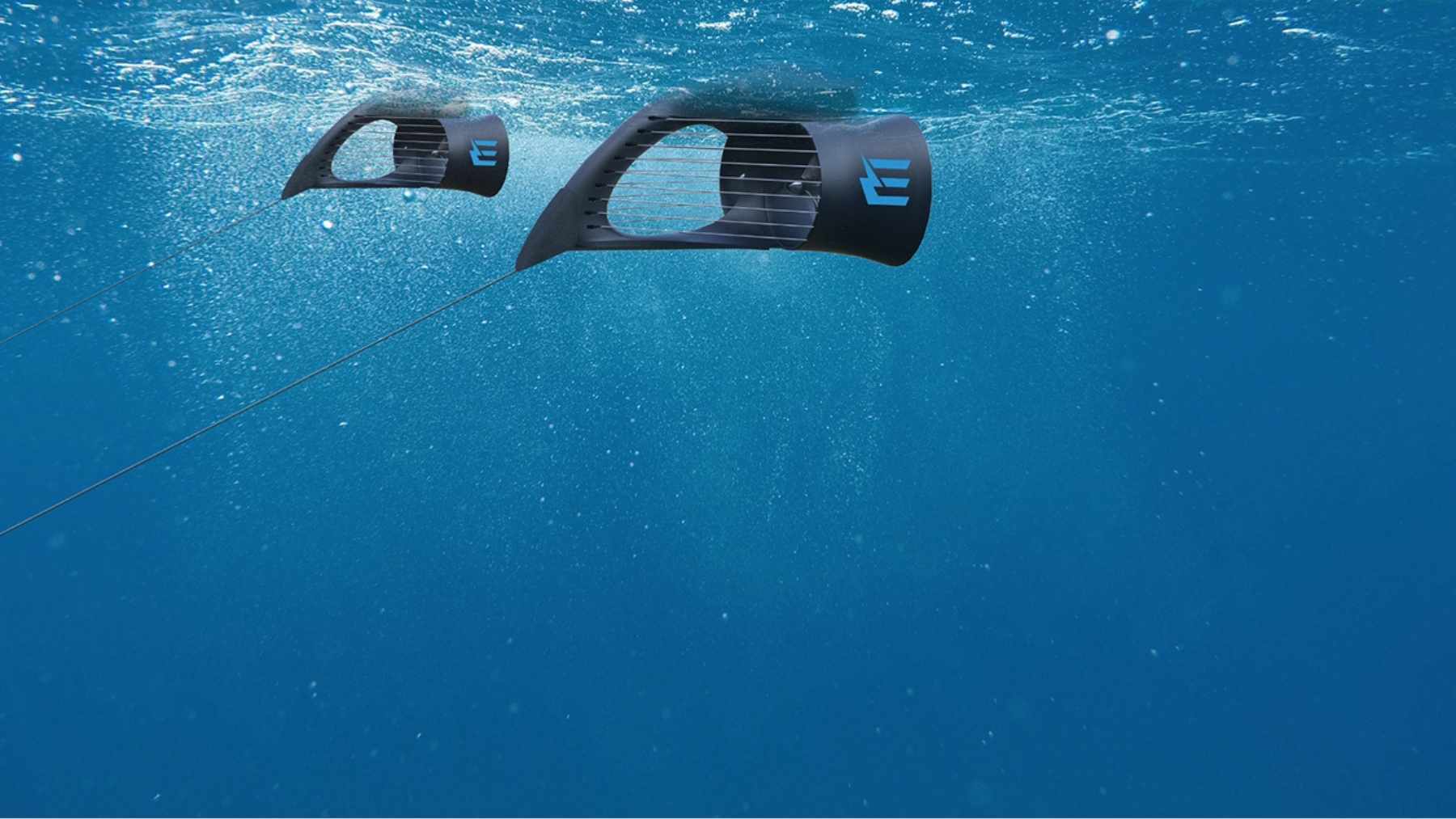 https://www.autonocion.com/us/germany-turbines-rhine-sun-wind/Open linkView original on feddit.org
50 replies
Three. They switched on three.
I am going to leap to the conclusion that you have never been a part of commissioning a major infrastructure project
The headline says 124. Commissioning aside, that's misleading.
They're all being tested
The "turning on" bit is only one aspect
Soft-handed people like you choose to pick it apart to feel clever while there are people doing real work.
He's not criticizing the project; he's criticizing the headline.
You're correct in that assumption, but no matter how complex an undertaking it is, I don't think that really justifies putting false information in the title. They simply haven't switched on 124 turbines.
deleted by deleted
Delete that!
Next post just below this one: Rhine river near Cologne at record low.
Will there be enough water for ships on the Rhine once they activate all 124 turbines?
/s
Those poor whales -trump
There's little use for these in summer anyway
So, like very hydro power plants, just with a lot less power and geographical impact.
Also, a lot cheaper because you don't need literally thousands of tons of steel reinforced concrete.
Which also cuts down on the carbon footprint of the energy generated.
Also probably not useful in a decade because Europe is drying out. We're seeing droughts hitherto unfathomable.
We're gonna get more rain in the winter and less in the summer according to a climate scientist that I follow on bsky. This is a good project even if our summers are getting drier. The sooner we leave fossil fuels behind, the better.
It's not just about the missing summer rain, but about the glaciers vanishing. The Rhine comes from the Swiss alps. We'll get torrential rainfalls and then droughts.
What I mean to say is instead of a nice constant water flow we'll have way too much, then way too little.
Climate change is such a bitch.
Build a dam where the glaciers were? Also doesn't desroy much there, unlike dams further down.
Won't work, not only because what the other dude said. But also because the alps are getting unstable. The permafrost keeping the mountain tops glued together is slowly melting away, making mud slides and other unpleasant sudden destruction events likelier every year.
If you wanna go ski in the alps do it soon, they will change their looks in the next decade(s).
Won't work because the rainfall won't only happen where the glaciers were, so you would need several dams all the way up and down the rivers.
Oh, right.
Also the mountains are thawing, becoming unstable, so no building.
Thou preachest!
They'd still shred some fish, no?
Mostly less impact on important shipping routes.
There is also the Pelamis Wave Power Technology.
The company which developed it was bought by E.ON and shut down. But seems like China has copied it (there are several articles in The Guardian about that), and continues to develop it because it is a superb principle.
So hydroelectric. Yes, we have known about that forever.
Yea but doing it without a dam is pretty cool
Ahh the gap that folks like Trump talk about that isn't significant at all.
The gap is already solved with batteries, chemical and mechanical batteries.
Salt. The condiment basil and thyme never could replace.
They invented water wheels.
more efficient waterwheels
....but yeah, theyre basically waterwheels.
This reads like a marketing release for the startup that makes them. If they work well long term, aren't overly expensive, and don't cause too much environmental damage, great. But maybe link a source that does more than just reprint a sales pitch.
Meanwhile: https://lemmy.zip/post/68927654
Sounds cool. Naive question: you need many of them. Thousands or more. Is that not going to further slow down the river's current, which in consequence will provide less for the turbines further down the stream? And so on... There is no comment about that in the article.
Lets think about that.
So, if what you assume were true, the flow speed would sink. The ingress flow rate would not reduce though, why should it, so the only way to keep the ratio between flow speed and cross section, aka the flow rate constant would be to increase the cross section area. So, the water level would have to rise, no other way to achive that. So the question is: "Will the river in its entire length raise its level when we put these turbines in at any point?" - that would be a great way to get hundres kilometers of deeper shipping lanes for free, but no, of course it won't.
The world is working on another plan to give us deeper shipping lanes and this one will be global!
The mass of earth provides arbitrary acceleration potential but it is per unit of vertical drop, the roughness of the stream determines how much of that is converted into nonsense like hydropower or cool rapids that throw water in every direction.
What limits the density of turbines is a potential energy calculation frameable in terms of the minimum vertical drop between each turbine that still allows enough kinetic energy to be harnessed to make the practical engineering worth it.
Also turbulence in the immediate vicinty to the turbine is always going to increase entropy downstream making any energy extraction process less efficient past a certain density.
Finally remember that rivers are fundamentally histories of the path of least resistance as it changed over time, anything you stick into that context will have to have a preceding artificial structure to draw the whole of the river together or at least a critical mass of it in order to harness the energy otherwise if whatever you construct is too "inefficient" for the water vs. another path than the bulk of the water will take the lower energy path and make your construction irrelevant. This is a basic point but it is easy to miss if you only think with an engineer hat on and only consider the raw stats of the turbine and the raw physical energy in the river.
Has been done before, has failed. But in principle a good idea. If i remember correctly could provide 3% of electricity.
Ah yes, this is how innovation works. Try once and it it fails, stop there.
Pack it up boys.
Thats for sure not what i said, I like the idea and gave some context and additional information. Which is wrong, for some reason...
Okay, sorry.
That looks like a navigation hazard?
Totally. It's Germany and therefore everybody can install stuff in a major waterway without any regulation. The company also installed them in the middle of the river where all ships are going in order to sink them.
They probably ignored navigation when planning and then installing these. It will be a great oopsie
Yeah it's very likely that the first thing that came into some Lemmings' minds was completely overlooked in the extensive planning process that precedes projects like this.
To be fair, completely overlooking obvious faults in the planning process has happened plenty of times.
I mean, yeah, can't argue with that.