Spyke

Posts

history·Historybytesting

The Herzegovinian Muslim Colony in Caesarea, Palestine

The Journal of Palestine Studies presents
an original translation of a 1981 article
by Yugoslav anthropologist Nina Seferović
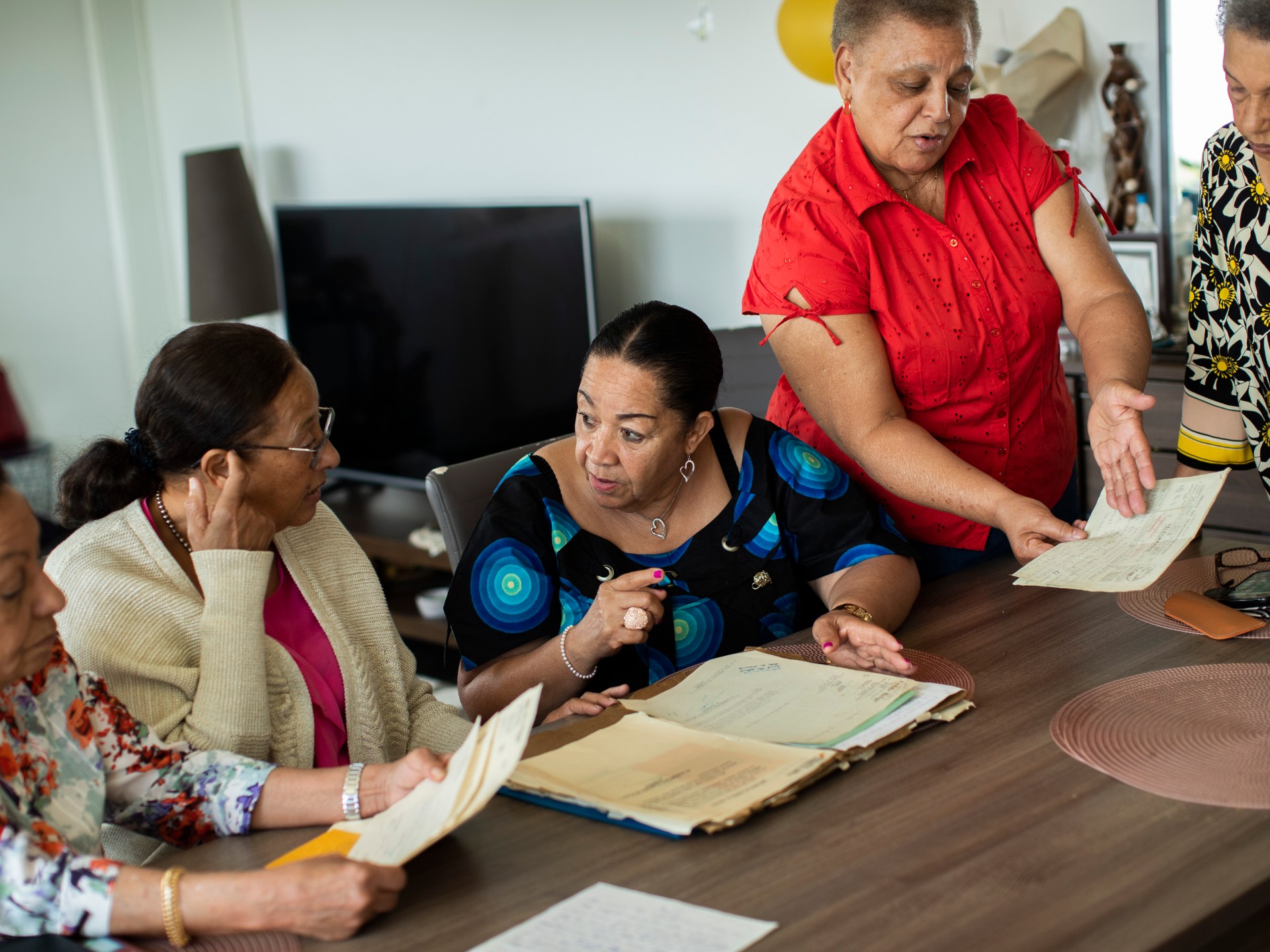
(1947–1991) on “Bushnaqs”–Palestinians whose ancestors hail from the territory of present-day Bosnia-Herzegovina. Seferović describes the circumstances of the Bushnaqs’ departure in the late nineteenth century; the distinct community they founded in the village of Caesarea near Haifa; and their assimilation into the Palestinian nation. This study is a contribution to the social history of Palestine that raises productive questions about the legacies of the Non-Aligned Movement and about the role of race and temporality in framing such categories as settler and native in the broader examination of settler colonialism.

The Herzegovinian Muslim Colony in Caesarea, Palestinehttps://www.palestine-studies.org/en/node/195938Open linkView original on fedia.io

100 Refutations: Day 72 | InTranslation

The Popol Vuh is a collection of mythic, legendary, and historical narratives from the K’iche Maya people, whose current descendants live primarily in Guatemala and the Mexican southwest. It is often referred to as both a historical account and sacred book. It has no single author and may be one of the most important documents to survive colonial cultural eradication efforts. Current copies of the Popol Vuh are taken from the transcription made by Fray Francisco Ximénez and, it has been theorized, an unknown native man who learned the Latin alphabet and then transcribed it from the recitation of an old Maya man.

https://intranslation.brooklynrail.org/spanish/100-refutations-day-72/Open linkView original on fedia.io

100 Refutations: Day 71 | InTranslation

Manuel Saturio Valencia Mena (1867-1907) was a teacher, a poet, a popular leader from the Chocó region, and the very last man officially sentenced to death in Colombia. As a child, he participated in the parochial choir and learned both French and Latin under the tutelage of the Capuchin priests. He was an exceptional student and the first black man accepted to Cauca University’s law program. He earned the rank of captain while fighting in La Guerra De Los Mil Dias. He was a lifelong autodidact and served in many important positions in the region. In 1907, he was framed for arson—for likely political reasons—and, after a six-day trial, he was executed by firing squad.

https://intranslation.brooklynrail.org/spanish/100-refutations-day-71Open linkView original on fedia.io

Launching ‘And Still We Write,’ an Anthology of New Work from and Centering Gaza

In advance of READ PALESTINE WEEK 2024, Publishers for Palestine is releasing a digital chapbook and abbreviated zine version of And Still We Write: Recent Work by Palestinian Poets & Actions You Can Take to Stop Genocide Now.

From the introduction:

“These poems and reflections do not exist separately from their authors, nor from the place and time in which they were composed. They are not here for passive reading. And so, at the end of this collection, we leave you with suggested actions. As poet Rasha Abdulhadi has written:

‘Wherever you are, whatever sand you can throw on the gears of genocide, do it now.’”

With poetry and prose by: Mohamed Al-Zaqzouq, Heba Al-Agha, Nasser Rabah, Samer Abu Hawash, Mahmoud Al-Shaer, Esam Hajjaj, Basman Aldirawi, Doha Kahlout, and more.

Also: On December 1, Publishers for Palestine member Radical Books Collective will host an online discussion of And Still We Write and Isabella Hammad’s Recognizing the Stranger.

Launching ‘And Still We Write,’ an Anthology of New Work from and Centering Gazahttps://publishersforpalestine.org/2024/11/19/launching-and-still-we-write-an-anthology-of-new-work-from-and-centering-gaza/Open linkView original on fedia.io

100 Refutations: Day 69 | InTranslation

María Teresa Ogliastri was born in Los Teques, Venezuela, and lives in Caracas. She is the author of five collections of poetry: Del diario de la señora Mao (From the Diary of Madame Mao, 2011); Polo Sur (South Pole, 2008); Brotes de Alfalfa (Alfalfa Sprouts, 2007); Nosotros los inmortales (We, the Immortals, 1997); and Cola de Plata (Silver Tail, 1994). She has been featured at poetry festivals throughout Latin America, and her poems appear in several anthologies of contemporary Venezuelan poetry. She is a professor of philosophy at the Central University of Venezuela.

https://intranslation.brooklynrail.org/spanish/100-refutations-day-69/Open linkView original on fedia.io

100 Refutations: Day 68 | InTranslation

Briceida Cuevas Cob was born in Tepakán, Campeche, Mexico. From 1992 to 1994, she was part of the Maya poetry workshop in the Casa de Cultura de Caliní run by Walderman Noh Tzec. Her work has been widely published and anthologized. She has also been the recipient of numerous awards and scholarships, and in 2010 she became Artistic Creator in the Sistema Nacional de Creadores de Arte.

https://intranslation.brooklynrail.org/spanish/100-refutations-day-68/Open linkView original on fedia.io

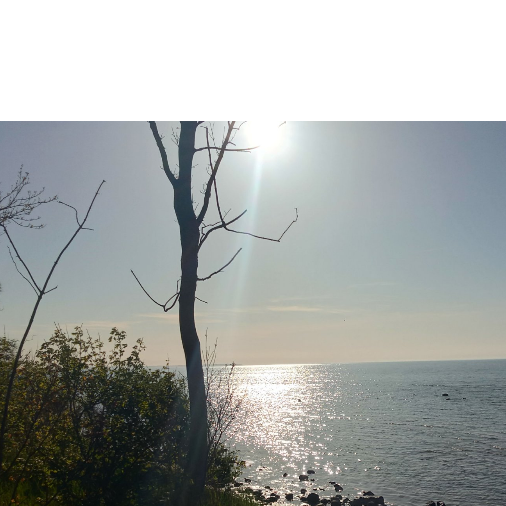
Existence – Fadwa Tuqan

In solitary life, I was a lost question;

In the encompassing darkness,

my answer was concealed.

You were a bright new star radiating light from the darkness of the unknown, revealed by fate.

The other stars rotated around you —once, twice — until it came to me, your unique radiance.

Then the bleak blackness broke And in the matching tremors of our two hands I found my missing answer.

Oh you! Oh you intimate, yet distant! Don’t you remember the coalescence Of your spirit in flames? Of my universe with yours? Of the two poets? Despite our great distance, Existence unites us – Existence!


source: https://www.amust.com.au/2017/11/fadwa-tuqan-the-poet-of-palestine/

translated by Michael R Burch

biobibliographical note: Fadwa Tuqan became the Grand Dame of Palestinian letters, and was also known as ‘The Poet of Palestine.’ She is considered to be one of the very best contemporary Arab poets.

View original on fedia.io

100 Refutations: Day 66 | InTranslation

Márcia Wayna Kambeba is a member of the Omágua/Kambeba indigenous community in the Brazilian Amazon. She has a master’s degree in geography and is a writer, poet, composer, singer, storyteller, photographer, teacher, and lecturer. She is currently working on a project that combines literary and musical compositions to portray the resistance, culture, and identity of indigenous peoples. She lives in Castanhal, Pará in Brazil.

https://intranslation.brooklynrail.org/brazilian-portuguese/100-refutations-day-66/Open linkView original on fedia.io

The Arabic Poem that Jumped the Fence

In 1960, the Syrian Lebanese poet Adonis published his prose poem manifesto and the Lebanese poet Unsi al-Hajj published his collection Lan (Won’t) with its seminal introduction theorising for the possibilities of poetry in prose. These are two theoretical cornerstones that launched the prose poem in Arabic. They are the first instances of using the Arabic term qaṣīdat al-nathr (prose poem) and by that announcing the entrance of the phrase into Arabic as a ‘simple abstraction.’

The Arabic Poem that Jumped the Fencehttp://cordite.org.au/essays/arabic-poem-jumped-fence/Open linkView original on fedia.io

100 Refutations: Day 65 | InTranslation

Adela Zamudio (1854-1928) was a highly intellectual Bolivian writer, feminist, and educator. She wrote verses from her adolescence under the nom de plume “Soledad” and lived her entire life in the city of Cochabamba, dedicated completely to education and literature. She was a formidable debater, using her talents often to defend the rights of women in the official debates of her time. According to her biography in the Antología de la Poesía Hispanoamericana (1965), in 1926 she was officially crowned for the government of her country. She is credited with beginning Bolivia's feminist movement and remains one of its most famous poets.

https://intranslation.brooklynrail.org/spanish/100-refutations-day-65/Open linkView original on fedia.io