Spyke

Posts

Twinnings tea bags penetrable by mold

cross-posted from: https://mander.xyz/post/53972145

I had a box of Twinnings tea bags sitting for ~6 months or so in a very humid room. The room was unoccupied and neglected over winter so windows were not opened (thus zero ventilation, so the room became a mold factory). Every Twinnings tea bag is individually wrapped in plastic-lined paper. It’s annoying because that stuff cannot be recycled.

I thought perhaps it’s fair enough to prioritize health, safety and tea freshness above recycling. But when mold covered most items in that humid room, every single tea bag got moldy on the inside. I’m a bit surprised it could propagate right through apparently well-sealed plastic. These tea bags have 4 wavey heat-sealing grooves around them, implying four points of failure. There was only a small amount of mold visible inside the box, and it just looked like sparse dust on the outside of the packets.

So what’s going on here? Is it shitty plastic that’s so thin it cannot do the job it’s intended to serve? If yes, then what’s the point? Is it just an illusion to fool consumers into thinking they are getting tea packaged for freshness? Is this an example of crappy design, or asshole design?

View original on mander.xyz
publichealth·Public Healthbyplantteacher

Twinnings tea bags penetrable by mold

I had a box of Twinnings tea bags sitting for ~6 months or so in a very humid room. The room was unoccupied and neglected over winter so windows were not opened (thus zero ventilation, so the room became a mold factory). Every Twinnings tea bag is individually wrapped in plastic-lined paper. It’s annoying because that stuff cannot be recycled.

I thought perhaps it’s fair enough to prioritize health, safety and tea freshness above recycling. But when mold covered most items in that humid room, every single tea bag got moldy on the inside. I’m a bit surprised it could propagate right through apparently well-sealed plastic. These tea bags have 4 wavey heat-sealing grooves around them, implying four points of failure. There was only a small amount of mold visible inside the box, and it just looked like sparse dust on the outside of the packets.

So what’s going on here? Is it shitty plastic that’s so thin it cannot do the job it’s intended to serve? If yes, then what’s the point? Is it just an illusion to fool consumers into thinking they are getting tea packaged for freshness? Is this an example of crappy design, or asshole design?

View original on mander.xyz
cooking·Science of Cookingbyplantteacher

miso paste pkg instructions: boil your stuff, add the miso, bring back to a boil. Storage: no mention of refrigeration. These are bad instructions, no?

When working with miso paste, I normally spread the miso paste over my empty bowl. Then I ensure the soup is well below boiling temp when filling the bowl. This ensures that the probiotics are not killed. That’s my own process. I started doing that after reading similar advice: to add the miso to the pot last, after turning off the heat and letting the temp drop a bit.

For storage, I normally refrigerate the paste after opening. I don’t recall why.. whether it was pkg guidance or just intuition. Some random articles concur (ref 1, ref 2). Ref 1 actually says freezing it is sensible, but probably not good for the probiotics.

I bought a new kind of miso paste (imported from Japan), called “AKA MISO -- Maruman Nama Miso pak”. The suggested recipe on the pkg says to bring the pot to a boil, add the miso, return to the boil, then turn off the heat. So I have to wonder: is the supplier unaware of the health benefits¹ probiotics? Or might there something in the paste that’s risky if not dead?

Along the same lines, there is no mention of refrigeration on the pkg. It just says to consume before the date which is about 1 year out. Does that mean it remains shelf-stable after opening? Or is it just stable enough if it’s cooked to death? I suspect the importer botched the label and forgot to add “refrigerate after opening”.

Ingredients: water, 29% soybean, rice, salt, alcohol. I was surprised at alcohol. Would that kill the probiotics?

¹ Certain gut bacteria is essential for health. But I hear that there is no evidence that probiotic food actually has health benefits. I think someone in c/cooking said that. I’m merely speculating that in the absence of research, probiotics are more likely to bring health benefits than notable risks.

View original on mander.xyz

I have no experience w/AI chatbots like chatGPT b/c I boycott the baddies. WTF has happened to universities?

Universities in the 1990s were sovereign and self-sufficient. Nothing notable was outsourced (just food). It was possible to do research without unnecessary dependencies on shitty corps like Microsoft. Students and non-students could walk into a campus library and use UNIX PCs. Email and usenet was hosted in-house. Universities were independent, which served to demonstrate both competence and leadership.

Universities today:

  • Email outsourced to Gmail or MS
  • Library e-books have (US-based) Cloudflare as an exclusive gatekeeper. Conform to Cloudflare Inc’s oversight and access demands or lose access to books.
  • 99.9% of students on Facebook, tiktok, snapchat (they track each others’ realtime location this way), instagram, twitter, etc
  • Facebook officially used by the university, thus excluding the small minority of non-FB students from being informed of campus events/parties, one-off seminars, class schedule changes, info from some departments like foreign exchange, etc
  • MatLAB used instead of GNU Octave, b/c “MATLAB” is the keyword headhunters/recruiters (both robotic and human) want to see on CVs
  • Students collaborate using Google Docs (will not touch anything more sophisticated than WYSIWYG, like emacs, LaTeX, or git)
  • Internal university webpage titled “Free Software” has no FOSS, just proprietary tools that are gratis for students (like MS Office)
  • Campus PC labs no longer exist b/c all students have their own laptops, and the students only run Windows or MacOS (yes, in a college of science & engineering I shit you not)
  • University assumes every student has mobile phone svc & the will to share their number, so the rest are excluded from school resources that require 2FA by SMS
  • Students search the enshitified/paywalled web to do research. Lexis/Nexis subscriptions apparently unheard of -- which in the 90s gave ad-free full-text access to decent/reputable sources coupled with a quite powerful search syntax. Although it must be said that the Lexis Nexis company has become a privacy adversary as they snoop on individuals these days.

Students must choose between education and privacy w/autonomy. Cannot have all human rights at the same time. But apparently they don’t care. Surveys show that ~50 yrs ago ~80+% students prioritized developing a meaningful philosophy of life above making money. College freshmen have been surveyed every year since then. Gradually, those numbers have completely inverted. I see a connection between universities becoming dependent corporate boot lickers and students becoming money-centric.

AI chatbots for research

To get to my subject line, I hear friends talk about all the great use they get out of chatGPT. I won’t touch the fuckin’ thing. Not out of some AI phobia or distrust, but because I simply boycott MACFANG (will not feed the oppressive surveillance advertising tech giants). So I am losing touch and likely developing some ignorance because of my principles.

In my view of how the world should work, I should be able to experience a decent AI chatbot like chatGPT at a university. The university should be technologically independent. They should have their own in-house research tools built by profs and students for profs and students. Research tools should not be dependent on clicked-ads resulting purchases of phones and selfie sticks or whatever stupid shit they need to sell. And without the underlying corporate greed, an edu chatbot would be designed for transparency (thus sources cited).

Universities have become followers. They are no longer ahead of industry. They serve as HR factories to produce workers for corps, as opposed to teaching students what corps are doing wrong and how to do better. Profs choose tools that corps want on CVs instead of the best tool for the job for teaching brand-independent concepts. Students are happy w/this (see ¶3 - they just want a good CV).

We need a “Make Universities Leaders Again” (MULA) movement. Well, shit, that’s pronounced as “moolah”.. not good for PR, but you get the idea.

View original on mander.xyz
publichealth·Public Healthbyplantteacher

💉 Can we get an anti-anesthetic plz? I want to feel the pain of bedbugs stabbing me.

The insideous nature of parasites (mosquitos, bed bugs, wood ticks) is that they have a natural anesthetic that works on humans. So you feel nothing when they poke you, and thus you unwittingly let them carry out their attack against you.

Fuck that. Gimme some pain please. I would like to take a pill before sleeping that, for ~6 hours, will neutralise the anesthetics of bedbugs. That way I can keep an empty vial to incarcerate the vile motherfuckers that leech a blood meal out of me the moment they attack.

Before hiking in the woods, I want a pill that will neutralise tick and mosquito anesthetics for ~2—4 hours. If I can be fussy, I might still want to be able to take Ibuprofin to reduce muscle pain, ideally to bring the pain of being jabbed more to the foreground.

My search for anti-anesthetics came up mostly empty. I found this:

https://pubmed.ncbi.nlm.nih.gov/8850306/

But that’s way to technical for me to make any sense of it.

View original on mander.xyz
crappydesign·CrappyDesignbyplantteacher

🍅⌛ This 560g bottle of hot ketchup only lasts 1 month after opening. Crappy design or asshole design?

cross-posted from: https://mander.xyz/post/45430198

This big bottle of spicy hot ketchup from Spain says it only lasts 1 month in the fridge after opening. Is the label lying?

  • If yes, then an asshole designed the label.
  • If no, then the ketchup is a crappy design because a family must be large and has to eat burgers, fries, and meatloaf every day to get through 560g.

Ketchup on the US market would be loaded with sugar and preservatives. But Europe and maybe the rest of the world is more inclined to have a higher proportion of pronounceable ingredients and fewer of them.

There is sriracha ketchup in the US which is shelf stable even after opening. Hot spicy foods are often that way, so apparently there is enough sriracha in that ketchup to keep it stable without refrigeration. Yet the cayanne pepper spiked ketchup from Spain is said to struggle to hold up even when refrigerated.

View original on mander.xyz
asshole_crappy_design·Asshole Design and Crappy Designbyplantteacher

🍅⌛ This 560g bottle of hot ketchup only lasts 1 month after opening. Crappy design or asshole design?

This big bottle of spicy hot ketchup from Spain says it only lasts 1 month in the fridge after opening. Is the label lying?

  • If yes, then an asshole designed the label.
  • If no, then the ketchup is a crappy design because a family must be large and has to eat burgers, fries, and meatloaf every day to get through 560g.

Ketchup on the US market would be loaded with sugar and preservatives. But Europe and maybe the rest of the world is more inclined to have a higher proportion of pronounceable ingredients and fewer of them.

There is sriracha ketchup in the US which is shelf stable even after opening. Hot spicy foods are often that way, so apparently there is enough sriracha in that ketchup to keep it stable without refrigeration. Yet the cayanne pepper spiked ketchup from Spain is said to struggle to hold up even when refrigerated.

View original on mander.xyz
cooking·Science of Cookingbyplantteacher

washing brown rice → tedious. Am I doing it wrong?

The theoretically best technique (IMO) is to dump the rice in a tub of water and let it sit for 30+ min. That starts the hydration without wasting heat (thus a faster cook). Then I grab a handfuls and rub the grains together to wash mechanically. I know it’s working because the water gets quite cloudy on every cycle. After dumping and repeating 3—4 times, the water is still a dirty color.

How many times does it take?

If you don’t wash brown rice at all, there is a nasty ring of mud around the pot at the level the rice expands to. If you wash ~4 cycles, there is still a faint ring of mud (or so it seems).

I’m way too lazy to do 10 wash cycles, or whatever is needed. I used to put the rice in a strainer and run it under the faucet for a while. But I think that wastes water and you cannot readily see any indication of when the washing is done.

The other problem: people wash their rice not just to get the mud out but also to get the starches out. I want the starches. I’m not afraid of getting fat.

View original on mander.xyz
TacticalUrbanism·Tactical Urbanismbyplantteacher

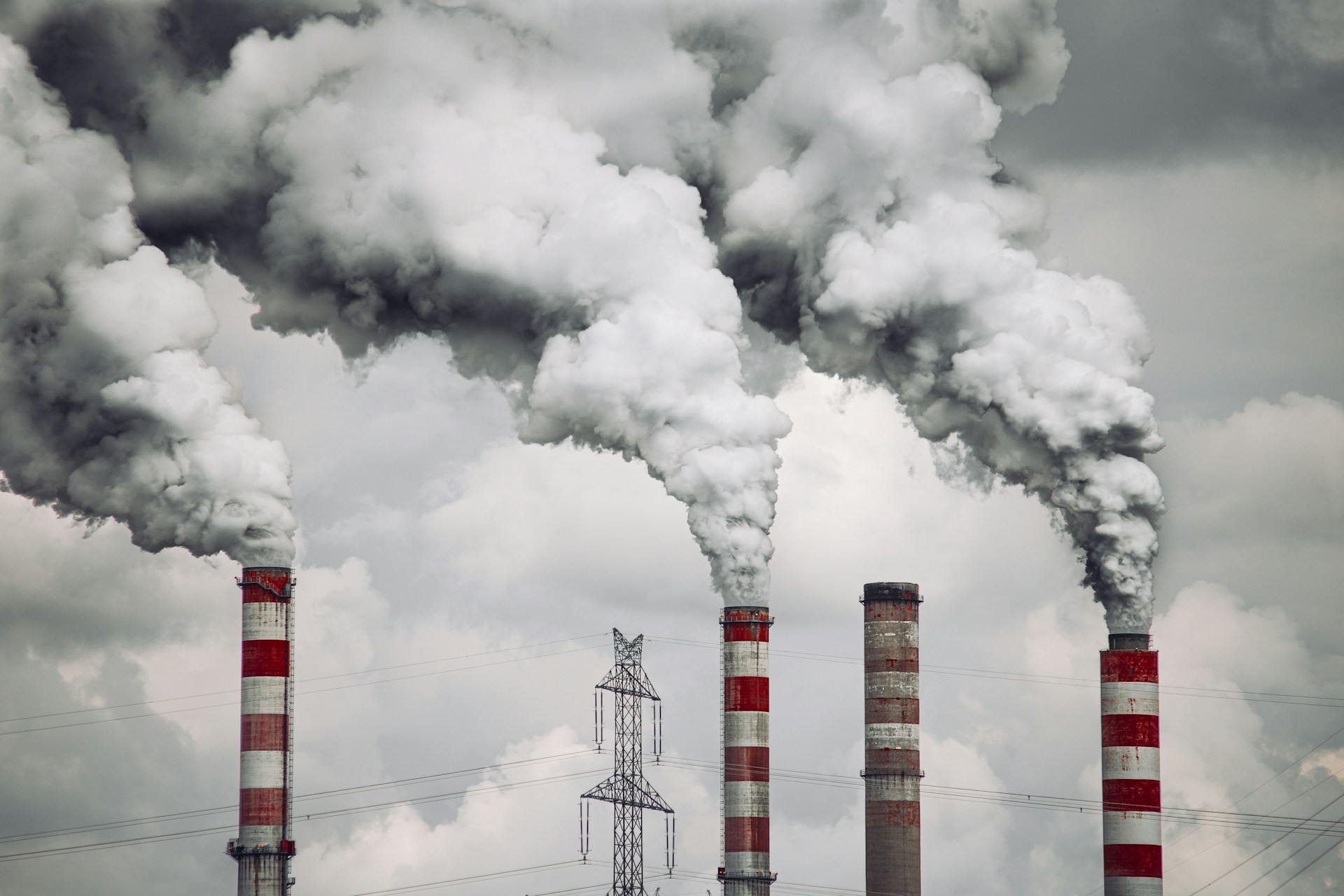
Air pollution accelerates Alzheimer’s disease. -- And in separate studies, urban cyclists are exposed to more air pollution than the car drivers who produce it

cross-posted from: https://mander.xyz/post/41784050

BBC World News is talking about this today. The linked article covers a finding that links air pollution to accelerated Alzheimer’s disease. This article puts science behind the obvious: cyclists absorb more air pollution than car drivers.

Do we need a study that also proves cars cause air pollution? If yes, that’s covered too.

So the question is, will there be a smart reaction to all this?

Should govs supply high-quality respirators to cyclists at no cost? (Ideally funded by car registrations or fuel tax)

Should this drive creation of a cycling infrastructure that completely removes cars from more streets (pedestrianisation), and more cycle paths not next to streets or shrubbery barriers?

Air pollution accelerates Alzheimer’s disease. -- And in separate studies, urban cyclists are exposed to more air pollution than the car drivers who produce ithttps://scienceline.org/2025/11/air-pollution-linked-to-accelerated-alzheimers-disease/Open linkView original on mander.xyz

Air pollution accelerates Alzheimer’s disease. -- And in separate studies, urban cyclists are exposed to more air pollution than the car drivers who produce it

cross-posted from: https://mander.xyz/post/41784050

BBC World News is talking about this today. The linked article covers a finding that links air pollution to accelerated Alzheimer’s disease. This article puts science behind the obvious: cyclists absorb more air pollution than car drivers.

Do we need a study that also proves cars cause air pollution? If yes, that’s covered too.

So the question is, will there be a smart reaction to all this?

Should govs supply high-quality respirators to cyclists at no cost? (Ideally funded by car registrations or fuel tax)

Should this drive creation of a cycling infrastructure that completely removes cars from more streets (pedestrianisation), and more cycle paths not next to streets or shrubbery barriers?

Air pollution accelerates Alzheimer’s disease. -- And in separate studies, urban cyclists are exposed to more air pollution than the car drivers who produce ithttps://scienceline.org/2025/11/air-pollution-linked-to-accelerated-alzheimers-disease/Open linkView original on mander.xyz
publichealth·Public Healthbyplantteacher

Air pollution accelerates Alzheimer’s disease. -- And in separate studies, urban cyclists are exposed to more air pollution than the car drivers who produce it

BBC World News is talking about this today. The linked article covers a finding that links air pollution to accelerated Alzheimer’s disease. This article puts science behind the obvious: cyclists absorb more air pollution than car drivers.

Do we need a study that also proves cars cause air pollution? If yes, that’s covered too.

So the question is, will there be a smart reaction to all this?

Should govs supply high-quality respirators to cyclists at no cost? (Ideally funded by car registrations or fuel tax)

Should this drive creation of a cycling infrastructure that completely removes cars from more streets (pedestrianisation), and more cycle paths not next to streets or shrubbery barriers?

Air pollution accelerates Alzheimer’s disease. -- And in separate studies, urban cyclists are exposed to more air pollution than the car drivers who produce ithttps://scienceline.org/2025/11/air-pollution-linked-to-accelerated-alzheimers-disease/Open linkView original on mander.xyz
cooking·Science of Cookingbyplantteacher

🧇 ~~edible glues~~ binders (e.g. for waffles)

I’m making savory waffles based on corn and very coarse cornmeal. Of course corn kernals and veg (like peppers) make it tricky because batter doesn’t stick well to smooth non-porous surfaces.

The standard combination of milk, eggs, and wheat flour works well enough as a binder, but only if added in a high enough ratio. If I cut back on the flour, the waffles lose their mechanical integrity and fall apart.

I’m looking for ideas for other binders. This is my speculative brainstorm:

  • cheese
  • honey
  • bees wax
  • maple syrup
  • molassas
  • agave?
  • gluten (wheat flour, beer? (wheat beer or any beer?), glutinous rice?)
  • cornstarch, wheat starch, tapioca starch
  • chicken eggs (the whites thereof)
  • vegan “eggs” like VegEgg powder (is that psyllium husk?)
  • Aquafaba (chickpea water)
  • baking soda (if fried?)
  • PVA (polyvinylacetate aka wood glue)

For the gluten intolerant:

  • Psyllium husk
  • Agar-Agar
  • Chia seeds, flax seeds
  • Linseed (Flaxseed)
  • Guar gum
  • Xanthan gum
  • Arrowroot
  • Carrageenan
  • Nonfat milk powder

Chicken eggs seem to be the most common additive that does the heavy lifting for binding -- used in cakes and even hamburgers not for flavor but just as an effective binder. I’m not vegan but I try to gravitate in that direction. I’ve switched to VegEgg -- a pricey powder that replaces animal eggs. I’m not sure VegEgg is as effective as animal eggs. I doubled the VegEgg dosage and it seems good enough but it would be nice to eliminate VegEgg as well just because it’s obscure and pricey compared to eggs. It’s likely a proprietary cocktail of other ingredients in bio shops. Aquafaba is perhaps what I should be considering.

Belgians separate the egg yolks from the whites and beat the whites into a foam for waffles. Is that just to get air into the batter? I don’t want fluffy airy waffles, so I guess I should skip the whipping if I use eggs.

I have no problem with gluten but gluten intolerant people need to use non-wheat flour (like coconut flour or almond flour), so they need to add something else to get the binding effect of gluten. Does anyone add the gluten-free binders to wheat flour just to amplify the binding?

Cheese has a special protein that gives it the sticky melting characteristic. There is an effort underway in the UK to synthesize that so a more convincing vegan cheese can be made (IIRC). But I don’t think we are there yet.

Beer is sometimes used in batter. I’m not sure if that’s for the bubbles, the flavor, or if the gluten in the beer helps as a binder. I have been using almond milk but I am tempted to try a flat beer instead (flat to get dense not airy waffles).

Waffle recipes often include confectioner’s sugar, apparently just as a sweetener. But if I need better binding, should I use honey, syrup, or molassas instead?

Baking soda increases browning, so I wonder if the crispy exteriour helps keep things together.

I mentioned PVA for completeness. Wood glue is strangely used on the heels of some cheeses (WTF?). But I am not seriously considering putting wood glue in my waffles. It might even be toxic in its liquid state.

Was going to title this edible glues but it turns out they exist with a different meaning- as a sugar paste to stick ornaments onto decorated cakes.

View original on mander.xyz
thought_forge·Thought Forgebyplantteacher

There is only ONE kind of tea tree. Plz folks, make more.

cross-posted from: https://mander.xyz/post/40205361

You walk into a tea shops and find countless varieties. All those herbal teas: not really tea. They are made from non-tea plants, most of which taste nothing like real tea. Peu-er is probably as close as it gets.

The remaining (real) tea all comes from the same singular specie. Green and black is just a difference in processing of the same plant. White tea is just taking the tips of the tea leaf. All the flavors are just ways we dress it up with additives, or by smoking it (e.g. Russian Earl Gray).

Why the lack of biodiversity? Because no one has genetically modified a tea tree to give us more choice. There are far more tea drinkers in the world than coffee drinkers. That’s ideal b/c coffee has environmental consequences. It also means there should be a huge market for something like a tea tree that is married to a maple tree to give us maple tasting tea, or GMO tea that tastes like coffee.

View original on mander.xyz
biodiversity·Biodiversitybyplantteacher

There is only ONE kind of tea tree. Plz folks, make more.

You walk into a tea shops and find countless varieties. All those herbal teas: not really tea. They are made from non-tea plants, most of which taste nothing like real tea. Peu-er is probably as close as it gets.

The remaining (real) tea all comes from the same singular specie. Green and black is just a difference in processing of the same plant. White tea is just taking the tips of the tea leaf. All the flavors are just ways we dress it up with additives, or by smoking it (e.g. Russian Earl Gray).

Why the lack of biodiversity? Because no one has genetically modified a tea tree to give us more choice. There are far more tea drinkers in the world than coffee drinkers. That’s ideal b/c coffee has environmental consequences. It also means there should be a huge market for something like a tea tree that is married to a maple tree to give us maple tasting tea, or GMO tea that tastes like coffee.

View original on mander.xyz
icanhazpdf·#ICanHazPDF?byplantteacher

note to mod: might want to expand the sidebar purpose

The sidebar says nothing about this community’s purpose other than this link:

https://en.m.wikipedia.org/wiki/ICanHazPDF

This assumes people are online. I often write posts offline and search a local db for which groups to post to. So in that scope, I had no idea it was for paywalled scientific journals, as I was trying to work out whether this would be a place to request a service manual. Now that I got online to visit the link, only now can I see that this would not be the place for that.

Consider as well that ICanHazPDF will not come up in many searches unless people are searching for that phrase.

View original on mander.xyz
scicomm·Science Communicationbyplantteacher

Why are scientific journals, mags, and newspapers multi-column, while most other mediums are not? Why are they fully justified (left and right both)?

I think everyone would agree that full justification is aesthetically superior. But that’s all it is. It is not more readable. Readability is actually better with a ragged right (left justified) because the variation of line ends facilitate tracking the line you are reading from one line to the next. So the popularity of full-justified typesetting seems unjustified. Why wouldn’t scientists prioritize readability above aesthetics?

Apparently some research has been done on this and the results are counter-intuitive. Unexpectedly, the linked article shows that the fastest reading happens with 2 columns which are fully justified. Unless the reader is a slow reader, then the results flip.

I’m not surprised 2 column is faster than 1, because with 1 wide column it’s easy for the eye to get lost. OTOH, there are fewer interruptions from line breaks. I still write paper letters (because fuck email and the surveillance it brings). I write 1-column letters when it’s monolinguel text, but wonder if I should switch to two column.

Why are scientific journals, mags, and newspapers multi-column, while most other mediums are not?  Why are they fully justified (left and right both)?https://blog.codinghorror.com/text-columns-how-long-is-too-long/Open linkView original on mander.xyz