Spyke

Posts

nottheonion·Not The Onionbymonkic

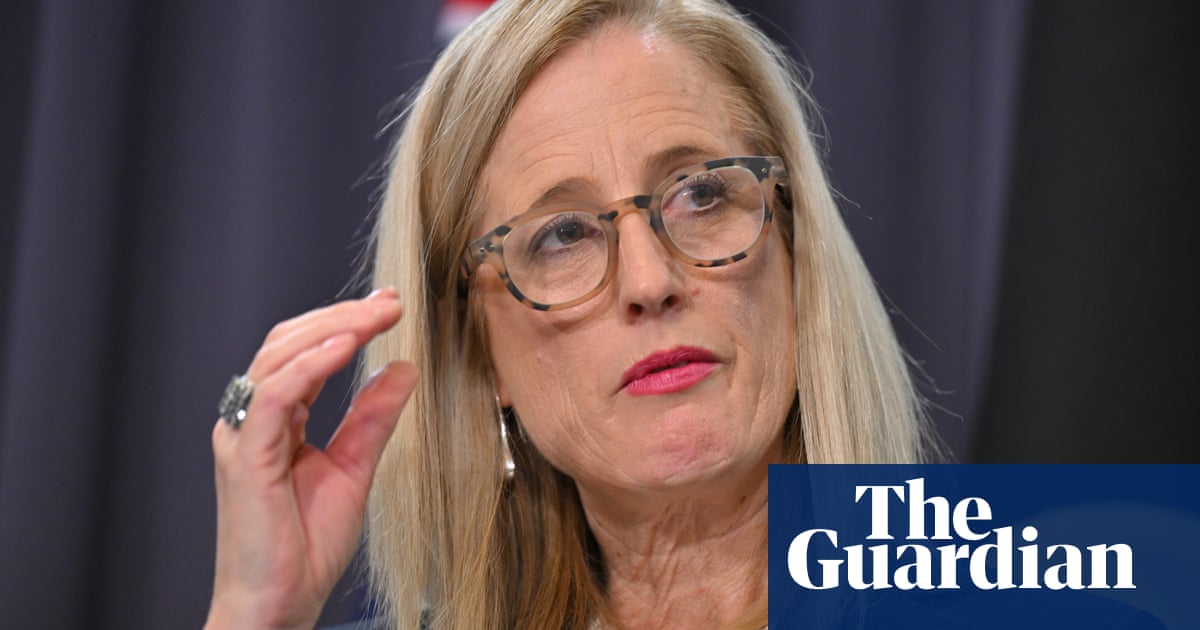
Finance department hires consultant to advise on hiring consultants in move compared to ABC’s Utopia

The finance department has entered into a $32,000 contract with an external consultant to provide advice on how it should engage other external consultants who also provide advice to government, in a move that has been slammed as a “laughable scenario”.

The contract has been compared to an episode of the ABC satire Utopia and as an example of the public service’s reliance on external expertise, even as the federal government tries to save money and do more work in-house.

The finance minister, Katy Gallagher, has confirmed Simon Longstaff, the chief executive of the Ethics Centre, has been hired to help the department decide how to best engage with consultancy firm PwC Australia and its new spin-off company, Scyne.

Finance department hires consultant to advise on hiring consultants in move compared to ABC’s Utopiahttps://www.theguardian.com/australia-news/2023/aug/03/australian-finance-department-hires-consultant-to-advise-on-hiring-consultants-in-move-compared-to-abcs-utopiaOpen linkView original on kbin.social
science·Sciencebymonkic

What can caged lab monkeys tell us about free human beings?

Where biomedicine gets it wrong about primate research.

TW: animal abuse described in quite graphic detail

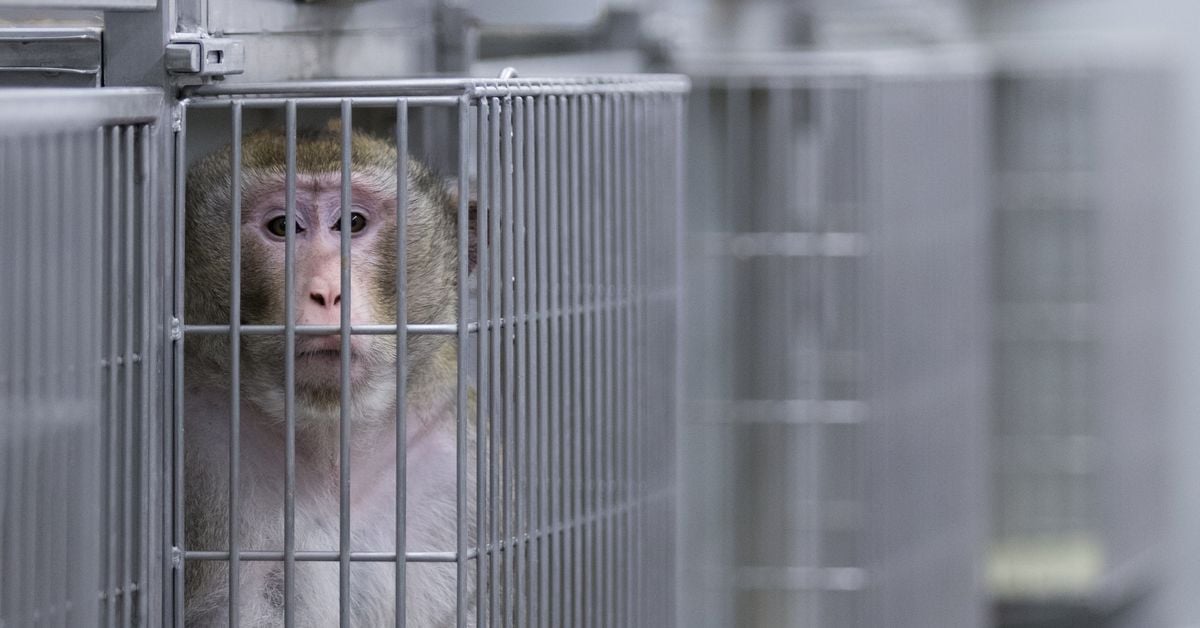
Scientists know that the tight confinement of standard laboratory cages distorts the psychology and physiology of our animal subjects. Yet despite a half-century of evidence, we continue to cage them as if their biology is baked into their genetics. From decades of rodent studies, scientists know that an animal’s brain anatomy and physiology are highly vulnerable to even modest changes in their living environments. Mice housed in standard cages, rather than slightly larger ones furnished with blocks and tunnels for mental stimulation, are more susceptible to drug abuse, genetic modifications, and toxic chemicals. Monkeys, nearly our next of kin, can become so mentally deranged by their cage environments that they no longer resemble healthy humans. They might have more in common with children housed in Romanian orphanages in the 1980s and 1990s, who were so deprived of human contact that they still struggle with lifelong physiological and psychological disabilities.

What can caged lab monkeys tell us about free human beings?https://www.vox.com/future-perfect/23795087/animal-experiments-primates-mental-health-effectiveOpen linkView original on kbin.social
politics·Politicsbymonkic

UN chief says the world is in a new era marked by the highest major power competition in decades

Secretary-General Antonio Guterres says the post-Cold War period is over and the world is moving toward a new multipolar era already marked by the highest level of geopolitical tensions and major power competition in decades

Richard Gowan, U.N. director for the International Crisis Group, said this vision “of an activist, interventionist U.N.” has been its underlying policy for the past three decades. But he said Guterres’ “New Agenda for Peace” stresses that “the driving force for a new multilateralism must be diplomacy.”

In an analysis of the new agenda, Gowan said it focuses on what member nations need to do, and on multilateral cooperation in an increasingly fragmented and unequal world “in which Guterres believes that the U.N. must adapt to facilitating international cooperation, not aim to lead it.”

UN chief says the world is in a new era marked by the highest major power competition in decadeshttps://abcnews.go.com/amp/US/wireStory/chief-world-new-era-marked-highest-major-power-101539957Open linkView original on kbin.social
climate·Climatebymonkic

An inconvenient truth: you can’t sell the green revolution to people who can’t afford it | Gaby Hinsliff

In a cost of living crisis, heat pumps and electric cars are out of reach for most. Britain needs to fund a genuinely fair transition – and fast, says Guardian columnist Gaby Hinsliff

Some of the resistance is undoubtedly down to the Mr Toad tendency, enraged by any attempt to prise their hands off the steering wheel. (Though clean air zones aren’t strictly speaking designed to force motorists on to the bus, by painting driving as a filthy, antisocial habit, they undoubtedly offer a hefty nudge in that direction). But there remains an awkward grain of truth in the argument that – ironically, much like air pollution itself, which is most lethal to the poorest living on busy arterial roads – clean air zones are toughest on people who can least afford to comply. That means delivery drivers buzzing around on cheap mopeds; white van drivers; shift workers dreading the day their knackered old banger fails its final MOT, because it’s the only way to get home safely in the middle of the night; and also small high street businesses struggling to stay afloat, worried this might be the final death knell for customers driving into town.

None of this changes the fact that pollution kills, cities need to wean themselves off cars, and the climate crisis poses an existential threat. But if going green costs money that not everyone has, then ultimately there are only two plausible political responses. The first is utterly unconscionable, since it means reneging on net zero. The second is to find the money for a genuinely fair transition, and fast.

This isn’t just about Ulez. There are some alarmingly big bills looming for millions of households in the name of saving the planet, and however clearly people might see the moral case for getting rid of their gas boiler or their old petrol car at a time when forest fires are ravaging Greece and flash floods are hitting Spain, money is money. If you genuinely can’t afford to switch, few things are more alienating than being made to feel guilty about that by people shocked at how hot it was on the beach in Sicily this year.

While it's UK-centric, I think the points in this article apply generally and globally, and we cannot shirk away from the fact that wealth must be redistributed fairly to allow people to reduce their carbon footprint. Normal people shouldn't be made to choose between their current urgent survival AND their communal/future survival. "Going green" should not be a privilege.

An inconvenient truth: you can’t sell the green revolution to people who can’t afford it | Gaby Hinsliffhttps://www.theguardian.com/commentisfree/2023/jul/20/green-revolution-cost-of-living-crisis-heat-pump-carOpen linkView original on kbin.social
climate·Climatebymonkic

People have received third-degree burns due to the massive heat wave

Extreme heatwaves are sweeping Europe and the United States with some people being treated for third degree burns.

In Phoenix, Arizona, mobile clinics are treating homeless people suffering from third-degree burns and severe dehydration.

The city has already endured 15 days in a row of temperatures exceeding 43.3 degrees Celsius.

In the desert city of Palm Springs, homeless people have been left to deal with the extreme heat themselves, with only 20 beds available in the sole shelter.

Roman Ruiz, the city's homeless services coordinator, told CBS News homeless residents struggle in normal heat to find enough shade.

"I don't know how anyone can do it really," he said.

"I feel so bad, and yet there's not much I can do."

People have received third-degree burns due to the massive heat wavehttps://www.ladbible.com/news/world-news/weather/people-have-third-degree-burns-from-heatwave-830539-20230717Open linkView original on kbin.social
climate·Climatebymonkic

With our food systems on the verge of collapse, it’s the plutocrats v life on Earth | George Monbiot

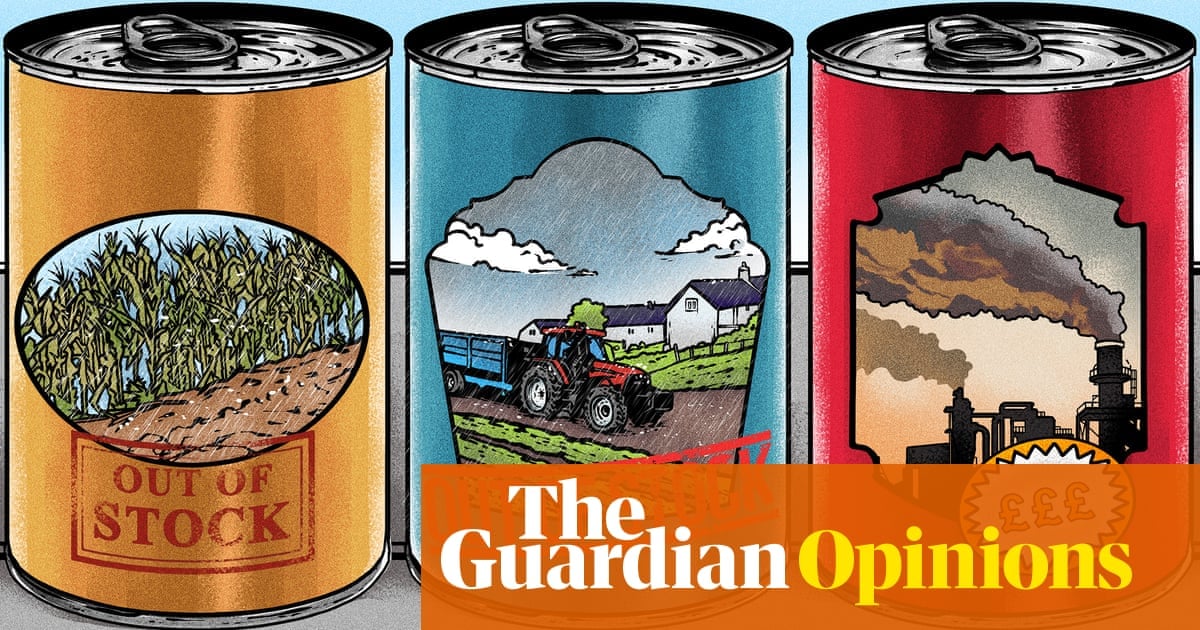
We face an epochal, unthinkable prospect: of perhaps the two greatest existential threats – environmental breakdown and food system failure – converging, as one triggers the other.

There are plenty of signs […] suggesting that the global food system may not be far from its tipping point, for structural reasons similar to those that tanked the financial sector in 2008. As a system approaches a critical threshold, it’s impossible to say which external shock could push it over. Once a system has become fragile, and its resilience is not restored, it’s not a matter of if and how, but when.

[…]

It could scarcely be more screwed up. The effort to protect Earth systems and the human systems that depend on them is led by people working at the margins with tiny resources, while the richest and most powerful use every means at their disposal to stop them. Can you imagine, in decades to come, trying to explain this to your children?

Looking back on previous human calamities, all of which will be dwarfed by this, you find yourself repeatedly asking “why didn’t they … ?” The answer is power: the power of a few to countermand the interests of humanity. The struggle to avert systemic failure is the struggle between democracy and plutocracy. It always has been, but the stakes are now higher than ever.

With our food systems on the verge of collapse, it’s the plutocrats v life on Earth | George Monbiothttps://www.theguardian.com/commentisfree/2023/jul/15/food-systems-collapse-plutocrats-life-on-earth-climate-breakdownOpen linkView original on kbin.social
paddlesports·PaddleSportsbymonkic

An otter in Santa Cruz is hassling surfers — and stealing their boards

Surfers and paddlers in Santa Cruz might want to look out for a highly aggressive otter that’s been bullying people off their boards and kayaks!

An aggressive sea otter in California is hassling locals by riding boards she stole from surfers in the lineup.

Steamer Lane is a legendary point break nestled along the rocky shores of Santa Cruz, home to swaths of experienced surfers, as well as a 5-year-old female sea otter with a growing reputation for repeatedly confronting surfers and kayakers.

https://www.npr.org/2023/07/13/1187295769/otter-santa-cruz-surfboard-surfers-californiaOpen linkView original on kbin.social
climate·Climatebymonkic

“If You Get Too Hot, You Will Die”

What I wanted to really communicate is the immediacy of heat and the immediate dangers and risks of heat. We talk a lot about climate change, and we talk a lot about the different impacts. My previous book was about sea level rise, and that’s a really significant thing that is changing the boundaries of the land and the sea and having massive implications for coastal cities around the world. But no one’s going to stand on the beach and die because a glacier is melting in Antarctica. It’s not going to happen in real time. Heat will. You can go for a walk on a hot day, and if you’re not careful and you don’t know what you’re doing, and if you get stuck in a really hot place or you have any kind of medical conditions or you run out of water—all kinds of things can go wrong—you can die. And people do die all the time.

[…]

Heat is democratic in the sense that all living things have this thermal range that they can deal with. And it doesn’t matter if you have $100 million in the bank or if you have no money. It doesn’t matter if you’re living at the equator or the North Pole. If you get too hot, you will die. And so heat is very democratic in that sense, but it’s also democratic in the sense that it’s not just outdoor workers and things now. If it’s 115 degrees and very humid, you don’t have to spend a lot of time outdoors or be stuck in that kind of environment to die.

A lot of people say, “Oh, well, it’s no big deal. We have air conditioning. We’ll be fine.” Well, you’re not fine, because what happens if the power goes out? Here in Texas, we had a five-day power outage a couple of winters ago. I was here for that. If the same kind of thing happened during a heat wave in a major city, thousands of people will die. It will be what one infrastructure expert in my book described as a “heat Katrina,” referring to Hurricane Katrina that hit New Orleans a few years ago.

https://slate.com/technology/2023/07/heat-deaths-heat-dome-climate-change-suffering.htmlOpen linkView original on kbin.social
climate·Climatebymonkic

Why the media too often ignores the connection between climate change and meat

[…] The tens of billions of chickens, pigs, cows, and other animals we raise and slaughter for food annually account for around 15 percent of global greenhouse gas emissions, primarily from cow burps, animal manure, and the fertilizer used to grow the corn and soy they eat. More than one-third of the Earth’s habitable land is used for animal farming — much of it cleared for cattle grazing and growing all that corn and soy — making animal agriculture the leading cause of deforestation and biodiversity loss globally.

Deforestation causes emissions itself, but it also represents a missed opportunity to sequester carbon. If that land were “rewilded,” or retired as farmland, it would act as a carbon sink, sucking massive amounts of climate-warming carbon out of the atmosphere. But we keep clearing more and more forestland, especially in the Amazon rainforest and elsewhere in the tropics, mostly for beef, pork, and poultry.

The consumer survey findings are bleak, and one major reason for them could be the fault of my own industry: journalism.

https://www.vox.com/future-perfect/23778399/media-ignores-climate-change-beef-meat-dairyOpen linkView original on kbin.social

You reached the end