Spyke

Posts

sciencefr·Science Francophonebyjapps13

Attends donc un peu avant de couper le fromage...

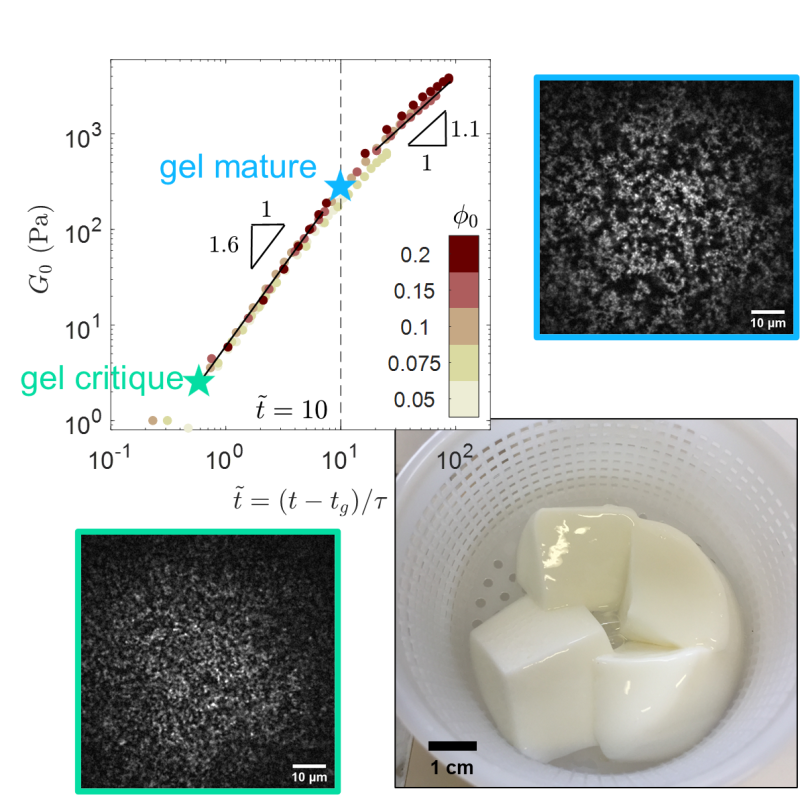
En utilisant une technique de mesure innovante, des chercheurs ont réussi à suivre précisément les étapes caractérisant la transformation du lait en fromage, ce qui pourrait approfondir la compréhension et aider à l’optimisation des mécanismes à l’œuvre dans la fabrication des nombreux fromages qui garnissent heureusement nos assiettes.

Attends donc un peu avant de couper le fromage...https://www.inp.cnrs.fr/fr/cnrsinfo/attends-donc-un-peu-avant-de-couper-le-fromageOpen linkView original on lemmy.physfluids.fr
1
sciencefr·Science Francophonebyjapps13

A Grenoble, des chercheurs décroissants volontaires

A l’Institut Néel, un groupe de physiciens lance une expérience d’un genre nouveau : réussir à faire de la recherche avec plus de sobriété. Et réclame une baisse du budget de fonctionnement corrélée à une réflexion sur l’impact environnemental de leurs pratiques.

A Grenoble, des chercheurs décroissants volontaireshttps://www.lemonde.fr/sciences/article/2024/06/13/a-grenoble-des-chercheurs-decroissants-volontaires_6239600_1650684.htmlOpen linkView original on lemmy.physfluids.fr
4
rust·Rustbyjapps13

pyo3 async runtime

Hello,

I am trying to wrap some Rust code that uses sea-orm compiled with "runtime-tokio-rustls" feature. I am using the new pyo3 "experimental-async" feature, which AFAIK is based on pyo3_async.

So I get that this is supposed to be runtime-agnostic, and not have two event loops, one for python async and one for rust async.

But, how do I tell pyo3 to use tokio runtime specifically? Or, how do I set up Python asyncio eventloop to use tokio somehow?

Indeed, it seems that it does not use tokio runtime, so I get this error when I invoke the rust async function from Python:

pyo3_runtime.PanicException: this functionality requires a Tokio context
View original on lemmy.physfluids.fr
20
rust·Rustbyjapps13

Cargo env file?

Hello,

I have a project for which some machines have only a subset of features set. Currently, I write

cargo run --no-default-features --features "toto,titi" --bin my_bin

This is a bit cumbersome and I sometimes forget the --no-default-features --features part. I was wondering if there is a local config file that I could put in the directory to instruct cargo to use this particular subset of features. I guess this should be in the documentation, but I didn't find it.

View original on lemmy.physfluids.fr
11
rust·Rustbyjapps13

Link against external DLL

Hello,

I am trying to use the SDK provided by the manufacturer of a camera from Rust. I use this in the build.rs :

println!(r"cargo:rustc-link-search=C:\Program Files\Digital Camera Toolbox\Camware4");
println!("cargo:rustc-link-lib=SC2_Cam");

However, it tries to find a .lib file, while the actual file is SC2_Cam.dll. I’ve tried specifying the kind as dylib=SC2_Cam but it makes no difference.

Am I missing something obvious, or is it just not possible? Do I have to manually load the DLL at runtime with things like the libloading crate?

View original on lemmy.physfluids.fr
21
sciencefr·Science Francophonebyjapps13

[Vidéo] Le détroit de Gibraltar en modèle réduit

Et si miniaturiser un espace géographique permettait de mieux l'étudier ? À Grenoble, où nous emmène ce reportage diffusé avec LeMonde.fr, une équipe de scientifiques a réalisé une maquette du détroit de Gibraltar. Grâce à la plateforme tournante Coriolis, ils modélisent vents, marées, rotation de la Terre ou encore échanges d'eau entre Méditerranée et Atlantique afin de collecter de précieuses données sur le détroit.

[Vidéo] Le détroit de Gibraltar en modèle réduithttps://lejournal.cnrs.fr/videos/le-detroit-de-gibraltar-en-modele-reduitOpen linkView original on lemmy.physfluids.fr
1
startrek·Star Trek Social Clubbyjapps13

Reading advice after The Fall and Enigma Tales

Hello,

In the recent years, I have had much less time available to watch new shows (I have a young kid). So I am quite lagging behind: I haven't seen PIC, nor the last season of DIS, nor SNW. I tended to not find the right moment to read books either. I finally started reading e-books and I realise how convenient they are to take advantage of 15 minutes of calm and discretly (and without noise) read a chapter or two. I used to read books on paper exclusively, and to find reading on screen difficult, but it turns out that I am now becoming an e-book reader and they allow me to spend much more time reading.

So, I've started with Robinson's Stitch In Time because I heard a lot of good reviews. And it is indeed GREAT. Beautifully written. I wanted to read more, so I looked up what else Robinson had written, and bought "Prophecy and change Anthology". I read it entirely though I was initially interested only in "The Calling". But I was a bit disappointed as I found "The Calling" too esoteric for my liking. Nevertheless, I was eager to read more about Garak. So I bought and read "Enigma Tales" by Una McCormack, and it is AWESOME! Very well written. I like her writting style.

I am aware that I am not reading in the proper order, but I then decided I wanted more from Una McCormack, so I read "The Fall: Crimson shadow". But I decided to read The Fall in order, so I read Revelation and Dust before. I liked "Revelation and Dust" much much less than Enigma Tales. The writer style is quite heavy, especially when it comes to describing female characters. But it was OK. "Crimson shadow" was AWESOME. I found the description of the transition towards democracy on Cardassia, and the challenge with the facist old guard trying to take back control by various demagogical means very well written. And with a lot of references to real world issues: Starfleet leaving Cardassia somewhat reminiscent of western forces leaving occupied countries in the middle east, the fascist rethoric of Cardassia First reminiscent of some policians IRL. This is SF like I like it: the reader escapes into the Star Trek world, and at the same time is invited to reflect on IRL issues (a bit like Persian letters).

I was less impressed by the rest of the mini-series. The shenanigans on Andor were ok and I finally longed for the characters. But the conspiracy inside the Federation with the moustache-twirling villains that are Velk and Ishan made little sense to me. How could it be that the Federation which has existed for so long has so little counter-powers? How could an unelected person (president pro tempore) be allowed to wield that much power and make decisions without democratic oversight? Why do so many Starfleet personnels obey direct orders if this is illegal to do so? Why not telling him that he isn't authorized to issue them direct orders if that is so?

The shenanigans made sense on Cardassia which was a military dictatorship for at least a century. It made sorta sense on Andor because of what they endured in their recent past and the dangers for their survival (though it was already far fetched that people would be so uninformed after 200 years in the Federation). To top it up, the last book (poisoned chalice) is much too predictable. You know the answer basically after the first few pages, and the story is just lagging. It almost felt like the author is just trying to fill pages (though I was still willing to keep reading until the end). There is also (I don't remember in which books in the mini series) all this discussion about Kira in the wormhole and things she experience there, but it is an unused Chekov gun. There are chapters about her, and then nothing.

So my question is: what to read next? What are good series worth reading? Are there more featuring Garak? Is there a book with Kira coming back from the Wormhole? Do we get to see Crusher under Captain Ro on DS9?

As I stated in introduction, I haven't been able to keep up with the new shows, and I don't want to get spoilt. So, I'd rather not go with books taking place after the events of PIC until I have had to opportunity to watch the shows (unless they don't spoil anyway).

Any advice?

View original on lemmy.physfluids.fr
11
sciencefr·Science Francophonebyjapps13

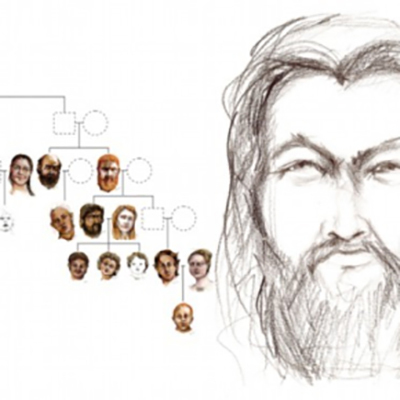
Portrait de famille au Néolithique : des arbres généalogiques aux comportements sociaux

Les analyses paléogénomiques réalisées sur les individus du site funéraire néolithique de Gurgy "les Noisats" (Yonne), dans le Bassin parisien, ont permis de reconstruire les arbres généalogiques de deux familles, d'une ampleur sans précédent. Une équipe impliquant des membres du LGL-TPE a publié dans la revue Nature les résultats de ces analyses qui, combinées aux données archéologiques, anthropologiques et isotopiques, éclairent l'organisation sociale de cette communauté vieille de 6 700 ans.

Portrait de famille au Néolithique : des arbres généalogiques aux comportements sociauxhttps://www.ens-lyon.fr/actualite/recherche/portrait-de-famille-au-neolithique-des-arbres-genealogiques-aux-comportements?from=newsletterOpen linkView original on lemmy.physfluids.fr

4
sciencefr·Science Francophonebyjapps13

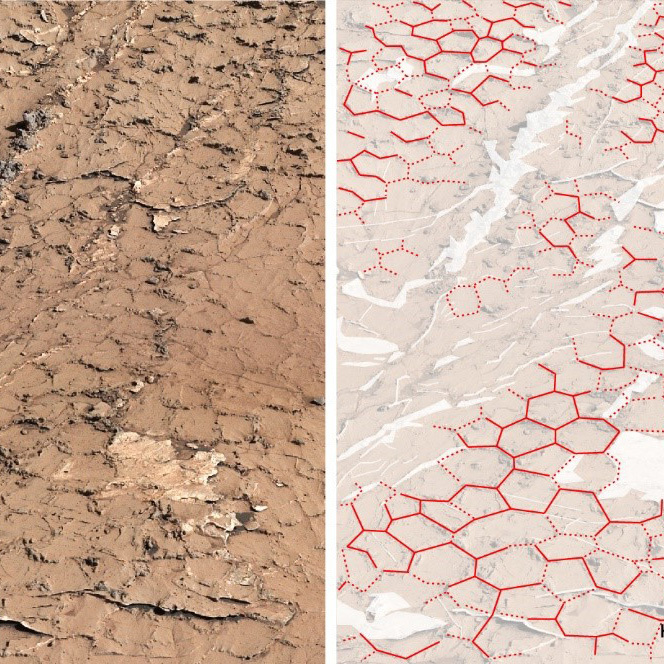
Mars : nouvelles traces d’un environnement propice à l’apparition de la vie

  • Des scientifiques ont découvert sur Mars des témoins fossiles d’un climat cyclique, organisé en saisons sèches et humides comme sur Terre.

  • S’ajoutant à la découverte de molécules organiques simples, cet environnement a pu offrir les conditions idéales à l’apparition de composés organiques complexes.

  • Ces travaux ouvrent de nouvelles perspectives de recherche sur l’origine de la vie, dont les vestiges ont disparu sur Terre.

Mars : nouvelles traces d’un environnement propice à l’apparition de la viehttps://www.cnrs.fr/fr/mars-nouvelles-traces-dun-environnement-propice-lapparition-de-la-vieOpen linkView original on lemmy.physfluids.fr
4
sciencefr·Science Francophonebyjapps13

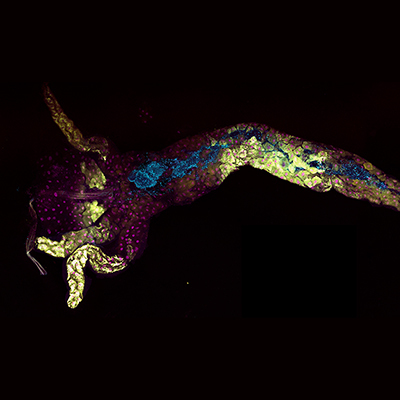
Pour connaître son microbiote, la drosophile écoute ses tripes

Dans la nature, tout est affaire de perception : c’est en connaissant leur environnement que les êtres vivants peuvent y réagir. Nos cellules sont notamment capables de percevoir la présence de bactéries à leur contact. Mais comment ? En utilisant la mouche du vinaigre - la drosophile - comme modèle, une équipe de recherche menée par l’Institut de Génomique Fonctionnelle de Lyon (IGFL, CNRS/ENS de Lyon) décrit un nouveau mécanisme grâce auquel les cellules de l’intestin peuvent "sentir" les bactéries du microbiote et s’y adapter. Cette étude est publiée dans eLife.

Pour connaître son microbiote, la drosophile écoute ses tripeshttps://www.ens-lyon.fr/actualite/recherche/pour-connaitre-son-microbiote-la-drosophile-ecoute-ses-tripes?from=newsletterOpen linkView original on lemmy.physfluids.fr
5

You reached the end