

Posts
Germany plans Europe's first commercial fusion power plant | Good News
Bavaria, energy company RWE, the Max Planck Institute for Plasma Physics, and fusion startup Proxima Fusion agreed in February 2026 to build Europe's first commercial fusion power plant at Gundremmingen. The timeline is ambitious but grounded in solid science: the Wendelstein 7-X experimental reactor set a world record in May 2025.
 https://denkstrom.org/en/goodnews/proxima-fusion-stellaris-europe/Open linkView original on quokk.au
The Glencoe Massacre
Context: The Massacre of Glencoe took place on February 13, 1692, in the Scottish Highlands. Government soldiers led by Captain Robert Campbell slaughtered 38 members and associates of Clan MacDonald after living among them as welcomed guests for nearly two weeks, an act that violated traditional Highland hospitality.
Taiwan Blue falls to UC Irvine in Jones Cup semifinal
Team to face Taiwan White for third place after 96-71 loss | Aug. 23, 2026 11:47
Voting closes in Nigel Farage's by-election battle with Count Binface
In short:
Voting has closed in a by-election in Britain's Clacton constituency after Reform UK leader Nigel Farage resigned amid scrutiny of a $9 million donation from a crypto billionaire.
Mr Farage is widely expected to win the seat, but his main opponent is a comedian wearing a bin on his head named Count Binface.
What's next?
The wait for a result is expected to take several hours, in part because of the complexities of counting votes for a whopping 34 candidates.
 https://www.abc.net.au/news/2026-08-14/farage-clacton-election-night-result-2026/107035574Open linkView original on quokk.au
Luigi Mangione expected to plead guilty over killing of insurance CEO
In short:
Luigi Mangione, the man accused of stalking and killing US health insurance CEO Brian Thompson is expected to plead guilty in a federal court case against him.
The move could lead to double jeopardy in a separate state case arising from the same alleged incident.
What's next?
Mr Mangione is due in court on Friday, local time, for a hastily scheduled hearing in the federal case.
 https://www.abc.net.au/news/2026-08-14/luigi-mangione-expected-to-plead-guilty/107036146Open linkView original on quokk.au
Rumbellion
Context: During Australia’s early colonial period the colony ran on a barter system with rum as the main commodity traded. Governor William Bligh (of Bounty fame) was sent to the colony with instructions to clamp down on the rum trade. This along with other issues led to Australia's only military coup - against the governor by the New South Wales Corps who were becoming rich off the trade.
Truth & Reconciliation
Context: During the late 1980s and early 1990s, as South Africa was transitioning toward democracy, brutal political violence erupted between supporters of the African National Congress (ANC) and the IFP, Inkatha Freedom Party, a Zulu-nationalist political party led historically by Mangosuthu Buthelezi.
When the Truth & Reconciliation Commission (TRC) investigated this violence, it uncovered extensive evidence of what became known as the "Third Force." The commission revealed that the apartheid state's security forces had covertly funded, armed, and trained elements within the IFP to fight the ANC. The regime's goal was to destabilize the liberation movement, show black inability to function without whites at the helm and weaken the push for a democratic transition.
How do you do, fellow kids?
Context: Dutch prime minister Jan-Peter visited Eindhoven and attempted to skate.
We were attacked by
Context: This one is pretty self explanatory I think. The British attacked (and still do) a lot of places, also the Scottish are technically British so they focus on the English aspect.


Vultus Trifrons
Context: The Vultus Trifrons, or Trifacial Trinity, was a bizarre type of Christian iconography that first appeared in the 12th century. It took the Holy Trinity and grotesquely depicted it as a singular figure (typically Jesus) with three faces merged together To symbolize the Father, Son and Holy Spirit in one entity. This depiction would be banned by Urban VIII in 1628, as it was considered heretical, too reminiscent of pagan depiction of gods, and generally disturbing to look at.
A Vultus Trifrons:
Pedro
Context: After Prince Pedro married his wife Constance, he fell in love with Inês and took her as his mistress. Disapproving of his son's adultery, King Afonso IV is said to have banished Inês to Albuquerque (Spain) in 1344. Following Constance's death in 1349, Inês returned to Portugal and lived openly with Pedro. Within the coming years they would have 3 children, all the while King Afonso attempted to arrange a second marriage for his son, but Pedro refused.
Pedro also developed close relationships with Inês's brothers, Fernando Ruiz de Castro and Álvaro Pires de Castro. The brothers became increasingly influential in public affairs, causing intrigue among rival factions at the Portuguese court and threatening Portugal's neutrality in the Castilian Civil War. King Afonso IV grew concerned about the power the Castros wielded over the Infante and ordered Inês's assassination. Afonso's knights, Pêro Coelho, Álvaro Gonçalves, and Diogo Lopes Pacheco, travelled to the Monastery where Inês was residing and decapitated her in front of her small children on 7 January 1355.
Pedro would become king in 1357 and sought out Inês' killers, who had gone into exile in Castile. Pedro managed to capture Coelho and Gonçalves and ordered them to be executed by ripping their hearts out. Around 1361 he admitted to have secretly married Inês in 1353 (this would however turn out to be a lie in 1385 as the pope denied Pedro’s secret request). Pedro commissioned a tomb for Inês, and later one for himself, in the Alcobaça Monastery. Before her entombment, Pedro then ordered the body of his beloved Inês to be placed on a throne, adorned with the diadem and royal robes, and required all the nobility of the kingdom to approach and kiss the hem of her garment, granting her that homage which she had not received in her life.
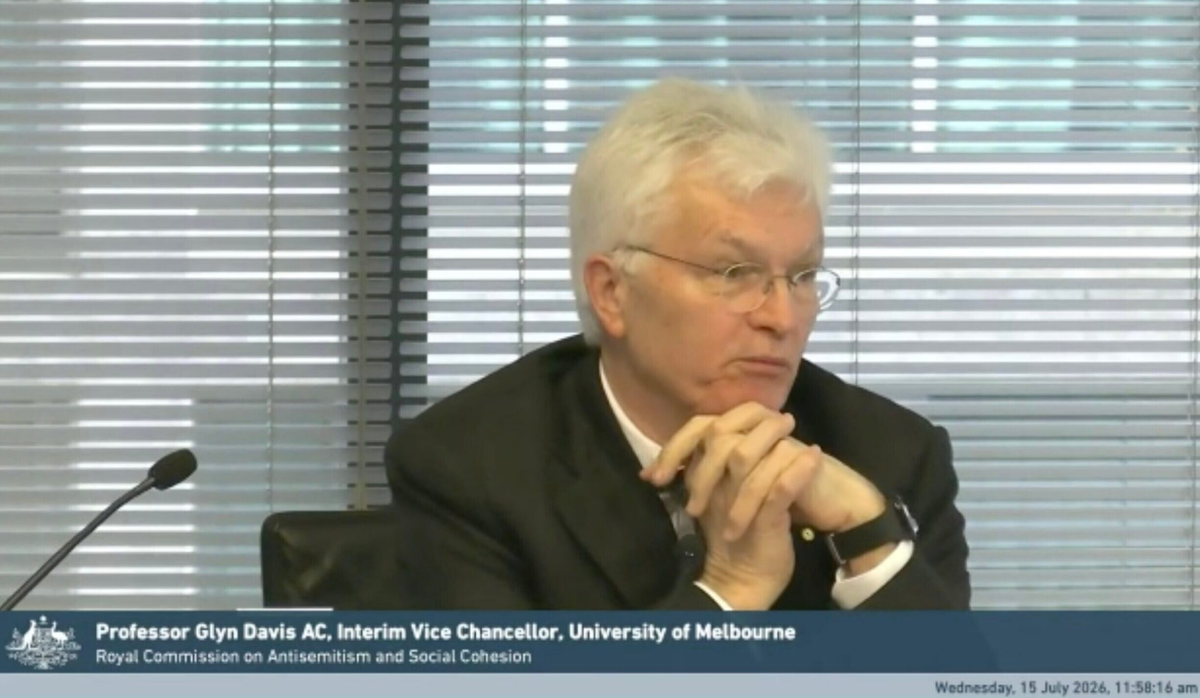
Melbourne vice-chancellor undermines his own attempt to slander the Palestine movement
At the time, May 2024, deputy vice-chancellor Michael Wesley, who was tasked with addressing the media and issuing threats of discipline to the protesters, told Radio National that “there is antisemitism on campus”. He condemned the student occupation of the Arts West building as “intimidating” and said he could “only imagine how our students, particularly our Jewish students, would feel having to make their way to class through that”. University Council member Mark Leibler went further in an Australian article the same month, demanding recognition of a “crisis” of antisemitism on the campus.
Yet on Wednesday, under questioning by Rachel Doyle, counsel for the Australia Palestine Advocacy Network, Davis confirmed that not a single disciplinary process against any student Palestine solidarity activist related to the university’s anti-racism policy. When Davis was asked which university rules protesters had broken, the following exchange took place:
Davis: “They are student behaviour questions and they’re about heckling and harassment and treatment of individuals. They’re not necessarily antisemitic and they’re not claimed to be antisemitic”.
Doyle: “Indeed you point to no instance, wherein either the encampment on the South Lawn or the protest activity and encampment in the Arts West Building was found to have constituted a breach of the university’s racism policy. There’s no such instance is there?”
Davis: (After some waffling) “I’m not aware of any complaint of antisemitism in either event”.
So the biggest issues stemming from the encampment were related to behaviour like “heckling”. This is proof that the accusations of antisemitism levelled at the encampment had no factual basis. They were attempts to smear and marginalise critics of university and government policy, rather than protect students from racism.
 https://redflag.org.au/article/melbourne-vice-chancellor-undermines-his-own-attempt-to-slander-the-palestine-movement/Open linkView original on quokk.au
Rawr XD
Context: On February 1842, during the First Opium War, Prince Yijing, cousin of Emperor Daoguang and the Commander of the offensive against British occupation in eastern Zhejiang, went to a temple in Hangzhou and asked for a fortune stick (kau chim). On the stick it said some riddles about "tigers" (不遇虎头人一唤,全家谁敢保平安).
In Chinese, people use the word "Yang Ren (洋人)" to represent foreigners. The word "洋" (Yang) means something foreign or related to the ocean, but also has the same pronunciation and similar structure of the word "羊" (sheep).
Inspired by the fortune stick and the Tibetan reinforcements that wore tiger hides in battles, Yijing had a genius idea that he can use "Tigers" to eat the "Yang (sheep)" for breakfast. Therefore, he came up with the strategy called "Five tigers ambush the Yang (五虎扑洋之计)".
The battle plan is as follows:
The timing is very important. According to traditional Chinese beliefs, he chose the time to commence the counteroffensive on year 1842 (Year of the tiger), March (Month of the tiger) the 10th (Day of the tiger), at 4 in the morning according to Chinese calendar (Hour of the tiger). For the commander, he hand picked Duan Yongfu, a general who was born in the Year of the tiger. Therefore all five "tigers" are set for the plan. In the opening phase, the Tibetan soldiers who wore tiger hides would be the assault force to eat up the force of "yang" by force of surprise.
Long Term Planting
Context: In the early 18 hundreds the Napoleonic was on going. Denmark was at the time a naval force to be reckoned with. Although not exactly a threat to the British fleet, the British were worried that Denmark would be occupied by the French, which could potentially boost the size of the French fleet. This would in turn give the French a fleet that would allow them to take the British fleet head on. As a preemptive measure the British asked Denmark to hand over the majority of they vessels. However Denmark wanted to remain neutral in the war, and giving a large chunk of ships to one side would definitely have made the French upset. Thus they denied the British request. Following this the British decided to destroy the potential threat. This ended with the 1807 bombardment of Copenhagen. The Danish fought back, but in the end handed over a bunch of ships, after they had also lost a handful.
Oak trees are the common tree for construction of large ships, in the age of sails. Oak trees are however only harvested after around 120 years of growing and maintenance. And the Danes had no were near the amount of forest or trees at hand to rebuild the navy. That's why they planted the trees that a now known as "flåde eg" or "the fleets oak"
Sacre Bleu
Context: Prior to construction, the tower was protested by "Artists against the Eiffel Tower" saying
"We, writers, painters, sculptors, architects and passionate devotees of the hitherto untouched beauty of Paris, protest with all our strength, with all our indignation in the name of slighted French taste, against the erection ... of this useless and monstrous Eiffel Tower ... To bring our arguments home, imagine for a moment a giddy, ridiculous tower dominating Paris like a gigantic black smokestack, crushing under its barbaric bulk Notre Dame, the Tour Saint-Jacques, the Louvre, the Dome of les Invalides, the Arc de Triomphe, all of our humiliated monuments will disappear in this ghastly dream. And for twenty years ... we shall see stretching like a blot of ink the hateful shadow of the hateful column of bolted sheet metal"
It was intended to be a temporary structure taken down after the Exposition Universelle, but after being allowed to stay it eventually became a key point of pride in France.