


A drive to the West on Sol 5045 (more images in comments)
Front HazCam view after the drive. Details of the drive and additional image in the comments
Curiosity Rover Catches Stunning Martian Dawn
The captivating shapes of wind-carved crags called yardangs are revealed in this zoomed-in crop of a broader panorama captured by NASA’s Curiosity Mars rover on Aug. 11, 2026. Scientists are eager to learn more about how the yardang layer formed. Credit: NASA/JPL-Caltech/MSSS
The full press release is on this link
https://www.jpl.nasa.gov/news/nasas-curiosity-rover-catches-stunning-martian-dawn/
Curiosity Blog, Sols 5022-5028: Cashing in at Cache Creek
Written by Lucy Thompson, Senior Research Scientist, University of New Brunswick, Canada
Earth planning date: Friday, Sept. 25, 2026
Before we landed, the area of Gale crater that we planned to explore was divided up into rectangular parcels with designated names. The names were chosen after small towns associated with significant geological features. Our selected targets (mesas, bedrock, soil, boulders, etc.) within those quads were then given unofficial names based on the theme of the quad. See the link here for more details on naming conventions on Mars. Curiosity has long since climbed above the quads that were selected before landing, and before her 14-year, 38-kilometer (24.6-mile) trek, which included more than 1 kilometer (0.6 miles) of elevation gain.
We recently entered the new Cache Creek quad, named after an area of geological diversity in British Columbia, Canada. The area in Canada includes exposures of oceanic crust, marine sediments, volcanic rocks, and glacial deposits, as well as being home to lakes with unusual chemistry that may be analogous to lakes that once existed on Mars. It also lies at the southern end of the 1860s Gold Rush Trail, where miners and prospectors flocked to this part of British Columbia in search of riches. This week we successfully drilled into our 48th rock target in Gale crater (“Basque Lakes”), from the Cache Creek quad. While we may not literally strike gold, we are all eagerly anticipating the outcome of the CheMin X-ray diffraction analysis of our drilled sample that will take place in this weekend plan. What gold mine of minerals will the sample contain? What can they tell us about the depositional and alteration history of this rock exposure — might there be similar minerals present as those associated with some of the lakes in the Cache Creek area of British Columbia?
As an APXS uplink lead and strategic planner this week I helped to plan the triage contact science on the potential Basque Lakes drill target and communicate the results to the rest of the team. We placed APXS in contact with the rock target to measure its chemistry, and the MAHLI camera to within 1 centimeter (about 0.4 inches) to examine in detail the textures. ChemCam also fired its laser at the Basque Lakes drill target to further characterize composition. MAHLI also imaged the target after the engineers checked the stability of the rock with a pre-load test. The results from all these activities helped to determine whether to proceed with drilling.
Despite significant power constraints associated with drilling and the accompanying analyses, as well as an aging rover, we were also able to plan additional activities. Mastcam imaged the surrounding terrain to provide context for our new drill sample. ChemCam was able to analyze the chemistry of another nearby bedrock target, “Peace River,” and use its imaging and passive spectroscopic capabilities to look at the new drill hole and surrounding tailings. ChemCam remote imaging was also used to examine an interesting-looking deposit of jumbled blocks at the base of a nearby butte, “Cordillera.”
We also utilized Navcam and Mastcam imaging in the continued monitoring of environmental and atmospheric conditions in Gale crater.
Analysis of the Basque Lakes drill sample should continue next week with delivery of material to SAM, which will reveal more nuggets of information regarding the history of this particular rock sample. Curiosity will likely be at this location for another week, before we dump the sample and drive away to continue our exploration of Mount Sharp and Gale crater.
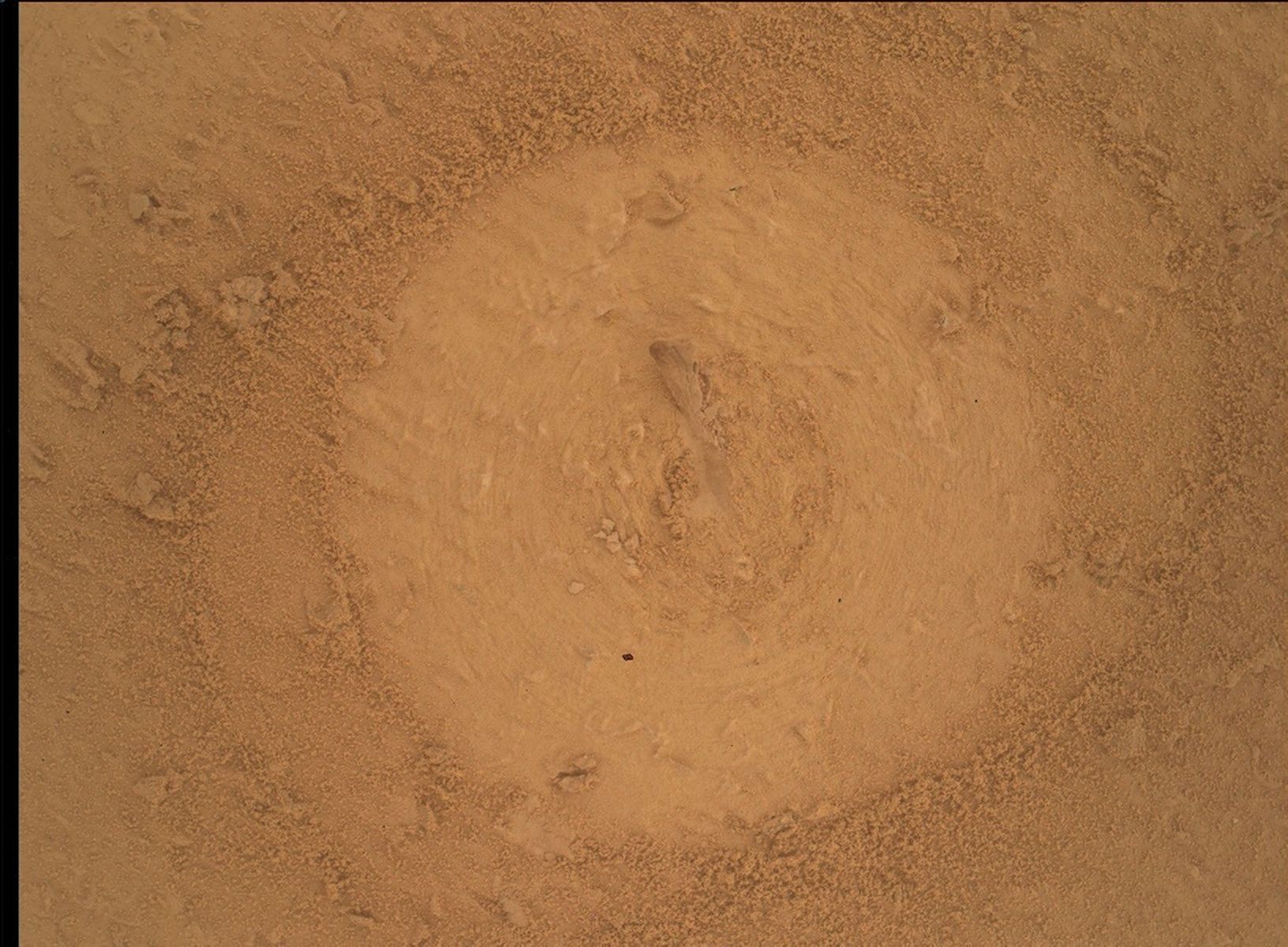 https://science.nasa.gov/blog/curiosity-blog-sols-5022-5028-cashing-in-at-cache-creek/Open linkView original on lemmy.world
Fantastic Minerals and How To Detect Them
Curiosity Blog, Sols 5016–5021: Fantastic Minerals and How To Detect Them
 https://science.nasa.gov/blog/curiosity-blog-sols-5016-5021-fantastic-minerals-and-how-to-detect-them/Open linkView original on lemmy.world
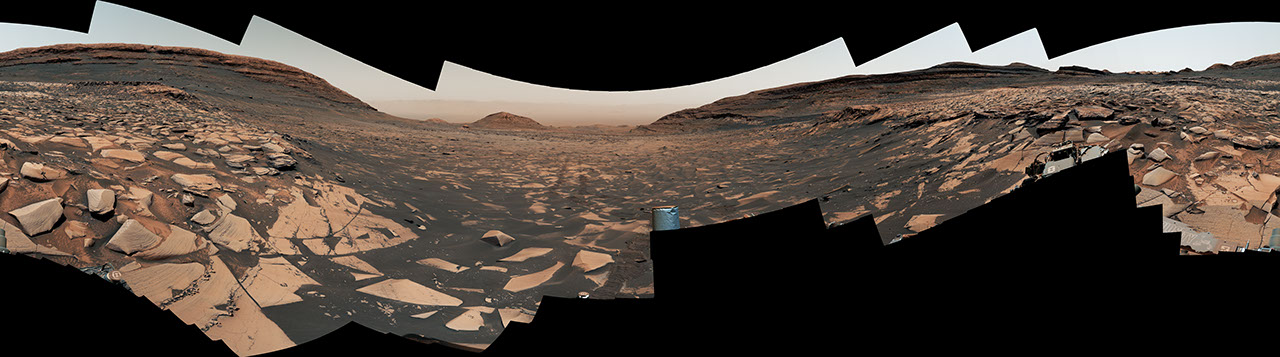
Curiosity has climbed 999.15m up Mount Sharp, the next drive should reach over one kilometer
Here's its new workspace after the drive. This is a mosaic of 15 overlapping mast camera images that were deBayered prior to assembly.


Drive to the South on sol 4989 (August 19, 2026)
End-of-drive Front HazCam image of the new workspace :)
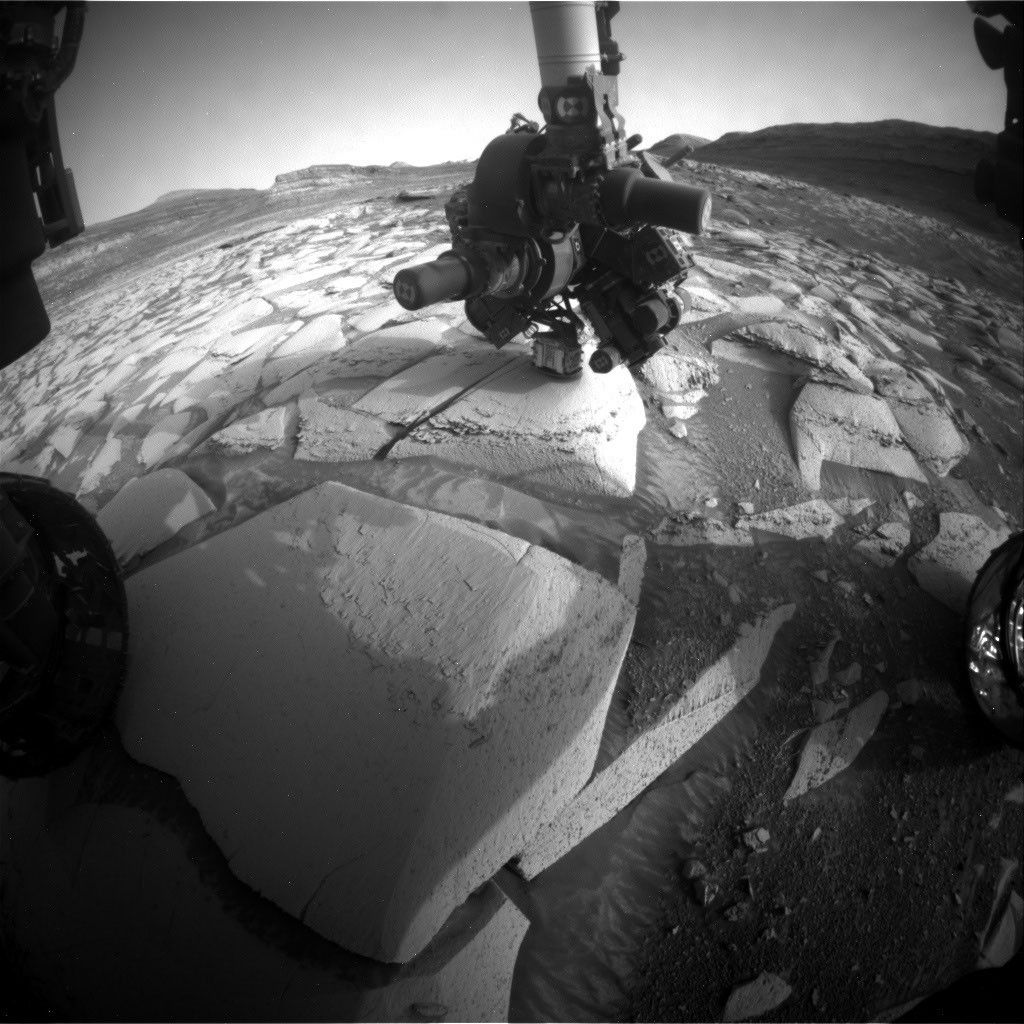
4986 Sols on Mars - Penny for your thoughts :)
This image was taken by the MAHLI camera onboard NASA's Mars rover Curiosity on Sol 4986 (16 August 2026)
Credits: NASA/JPL-Caltech/MSSS