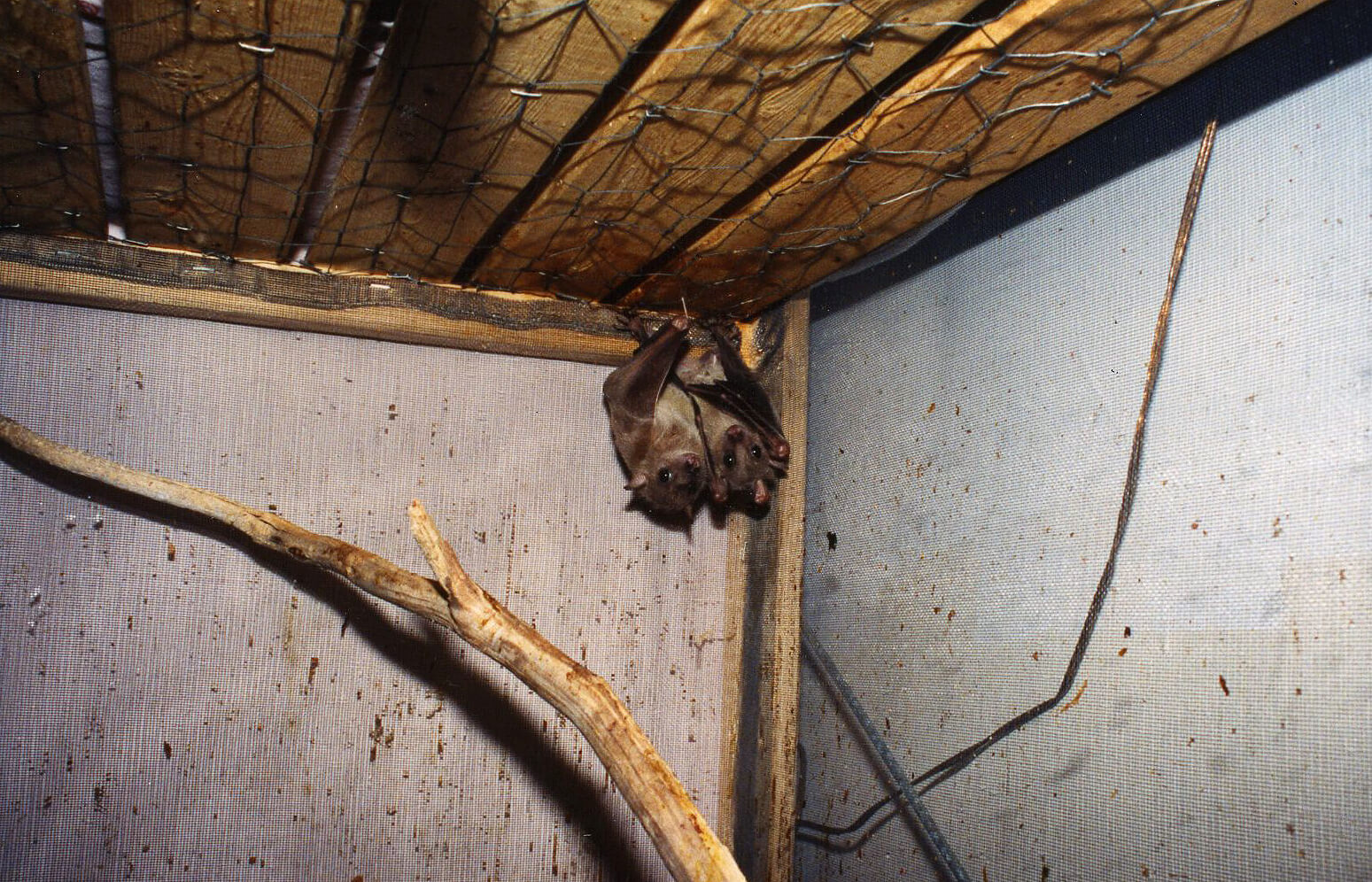
Meet our new community mascot, Baxter. This poor guy lived in a small cage alone for 12 years (bats are not solitary animals and should not be confined to bird cages). Now, his life rocks!
Video of Baxter in his new home
Our certificate of adoption from Bat World Sanctuary:
Baxter's Story
Baxter has overcome a lot of things in his life but he continues to surprise us with his resilience.
Unfortunately, his story starts off like many in the cruel exotic pet trade; he was alone, isolated, and kept in far too small of a cage for 12 long years. Typically, fruit bats kept alone don’t survive more than a year – the fact that he’d been alone for all those years was both heartbreaking and a testament to his spirit. This only strengthened our desire to have him retire at the sanctuary and give him the life he has always deserved.
We were made aware of his plight when contacted by his owner in February of 2020, and we were thrilled to hear that she wanted to surrender him to us. He had been used for educational programs and other events his entire life, and his owner was retiring from the exotic animal business.
While making transport arrangements, Baxter’s owner expressed that she wanted to drive him from Minnesota to Texas when the weather was warmer, which we agreed would be less stressful for him than flying alone on a plane. Unfortunately, Covid-19 travel restrictions pushed back Baxter’s original arrival date, and offers to send a volunteer to pick up Baxter or transfer him to a local bat rehabilitator were declined.
After much back and forth with the owner, she eventually admitted that she was tired of waiting to place him, and she transferred him to a small local zoo to once again be used for programs. We were heartbroken and devastated for Baxter. After some pressing, we discovered that the small zoo was in fact a wolf center and that he was still being kept alone and confined to a small cage.
We quickly reached out to the center and attempted to educate, in great detail, about the needs of captive Egyptian fruit bats in hopes that they would allow us to rescue him… to no avail. As a last resort, we offered to make a donation to the wolf center for the “release” of Baxter, and sadly, that is what it took to gain his freedom. Our volunteer, Jennifer Dantzler, then immediately booked a flight to Minnesota, secured Baxter, rented a car, and drove the two-day trip to bring Baxter home.
We were shocked when Baxter arrived. He was thin and had lost the majority of his teeth, which is highly unusual for an Egyptian fruit bat as they typically have very healthy teeth and rarely have dental issues at all. It is most likely that Baxter was taken away from his mother far too soon and thus deprived of the calcium needed to maintain a healthy mouth.
Baxter was also mentally scarred from his years in isolation, and seeing and hearing the other bats appeared to be overwhelming for him. We decided to introduce him to our “Geriatric Ward” first. The Geriatric Ward is a small enclosure located inside the large fruit bat enclosure and allows the elderly bats that can no longer fly to be part of the action while still having extra padding, hammocks, and snacks close by.
Upon meeting the older bats, Baxter trembled uncontrollably and appeared petrified. Egyptian fruit bats are incredibly social animals and often live in colonies that number into the thousands in the wild. To keep them alone is an inexcusable act, and incredibly damaging to their mental health.
Thankfully by the second day, his instincts had kicked in and he curled up in a hammock with his new friends. He quickly grew very attached to his little group of senior girls, and he spent every second with them. Eventually, his social skills and weight had improved and he was ready to meet the main Egyptian colony. Caregivers marked him with non-toxic temporary paint so that they could monitor him. As he was being taken to meet his forever family he began flapping his wings in an attempt to get there even sooner, as seen in the video below.
Over 80 fellow Egyptians, many of whom came from similar situations, took turns saying hello and giving Baxter a good once over. He welcomed them all with open wings, and within the hour he had wiggled his way into the heart of the colony, where he had always belonged. In the following weeks, Baxter stretched and flapped his wings with the others, building the muscles that had gone so long without being used.
He picked a favorite nighttime spot next to the fruit dishes and near the romaine lettuce so that he could get first dibs. At night, he now waits in his spot for caretakers to hand out treats, and we always save several extra-soft pieces of melon just for him. Baxter’s dental problems may slow down his chewing just a bit, but with a variety of soft fruits always available, he’s gained quite a nice little belly during his time here. He often takes trips over to the Geriatric Ward to say hello to his ladies, and he’s even flying with the others now.
Baxter’s progress has amazed us, and we feel so fortunate to be able to offer him his retirement. He will never have to work another day, or wonder where his colony is. He will never be trapped in a bird cage again, or be transferred to another facility. Baxter will remain with his roost mates at the sanctuary for the rest of his life. We feel incredibly lucky that we get to see his toothless little smile every single night. It is often said that money can’t buy happiness, but in Baxter’s case it truly did.
Source - feel free to adopt Baxter or any other bats for yourself!