

Welcome!
More information is coming. 🧱🔨⚠️ WORK IN PROGRESS
Feel free to ask away already!
More information is coming. 🧱🔨⚠️ WORK IN PROGRESS
Feel free to ask away already!
I got some moldy christmas decorations (saaad) and I'm trying to salvage what I can, so I put the textile stuff (the ones that appeared ok) inside the washing machine.
What temp should I use?
I found something like a report or something that states that the enzymes should work at max 60°C: https://support.nanotempertech.com/hc/en-us/articles/20923823244177-Stability-of-Enzymes-in-Liquid-Laundry-Detergent-protocol
I also found a reddit post that says that they should work at around 40-60°C(?): https://web.archive.org/web/20251216082333/https://old.reddit.com/r/germany/comments/16q8pp2/on_what_degree_do_you_wash_clothes_in_germany/
My detergent says it's been lab tested to remove heavy stains at 40°C: https://lafamilleatable.com/en/products/p-lessive-capsule-ultimate-active-clean-3en1-skip-8710847917493 (I found a french site with info in english)
From what I gather:
PS. I picked the 60°C for now.
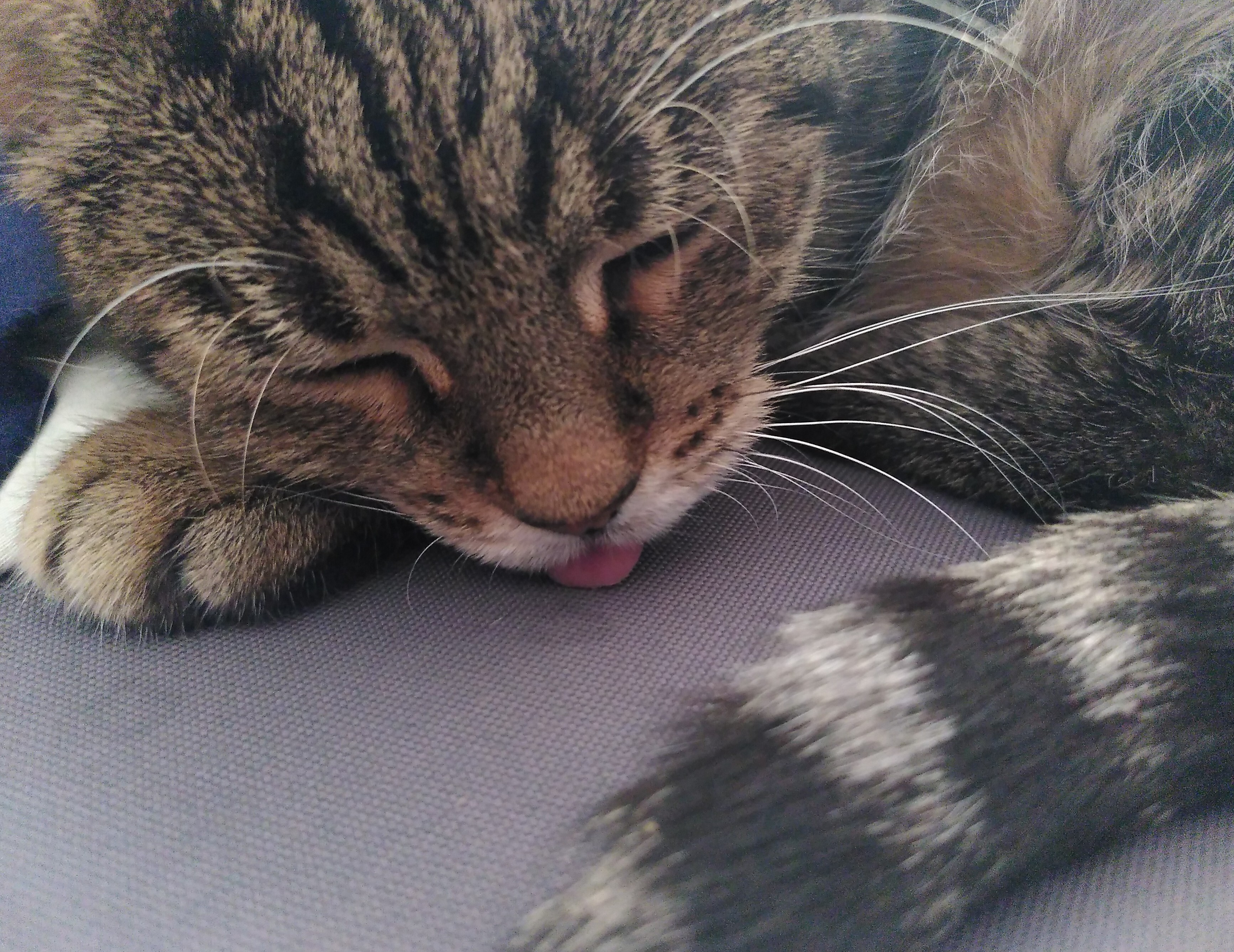
The eggs are a little over 1 mm in diameter. The terrarium is a wet forest biome with isopods, springtails, earthworms, julids, slugs and various assorted critters that hitched a ride when I collected Moss and earth in the forests here in middle Europe.
(And yes I'm working on reducing the amount of water in the false bottom.)

This is more of an evolutionary biology question but I thought I'd ask bc I couldn't fibd anything on it
Specifically what I'm wondering is why the majority of animals seem to have their brain or central nervous system located at a specific end of their body rather than near the center of mass where you think it'd be safest? I thought of this as I watched a centipede have its tail end attacked and noticed that its head and tail end look quite similar, assumedly for the purpose of fooling would be predators, and wondered why it didn't just put its brain in the middle so it wouldn't be vulnerable at the ends.
Moreover, why do we even need heads? Why did almost every animal evolve to have all their sensory organs in one spot instead of spreading them out. Why is my face where my face is basically. Are our bodies really built to be the most durable and efficient for the terrain they evolved in and why are they all so similar?
Recently, I have been reading more and more articles saying that Alaskan lupines (Lupinus nootkatensis) are hindering the growth of trees in Iceland. Unfortunately, however, I could not find any valid reasons why this is so? The story goes that in 1945, the then director of the forest service brought two spoonfuls of seeds from Alaska to amfortify the nutrient-poor Icelandic soil, stop erosion in Iceland and prevent sandstorms. After all I know, lupines draw nitrogen from the air and store it in the soil. So why is that not good for native tree species, such as birch or larch?

There's herbivores, omnivores, and carnivores, but is there any category of animal life that can sustain itself on anything else that isn't related to living organisms?
Is the only known example of this at the moment basically...Plants, give or take the particular species & how one may interpret the question of relation to other life?

From my understanding, (a) the brain has no nerves, which is why you can talk to people while doing brain surgery on them; and (b) headache is caused by blood vessels constricting. Now, I am unsure whether migraines are also caused by blood vessels constricting, but in any case - what is it that is doing the sensing of this pain? Or is it a(nother) case of the brain just making shit up because it hates me?
