
‘Scandalous, irrational and irresponsible’: French beekeepers’ fury at lifting of pesticides ban
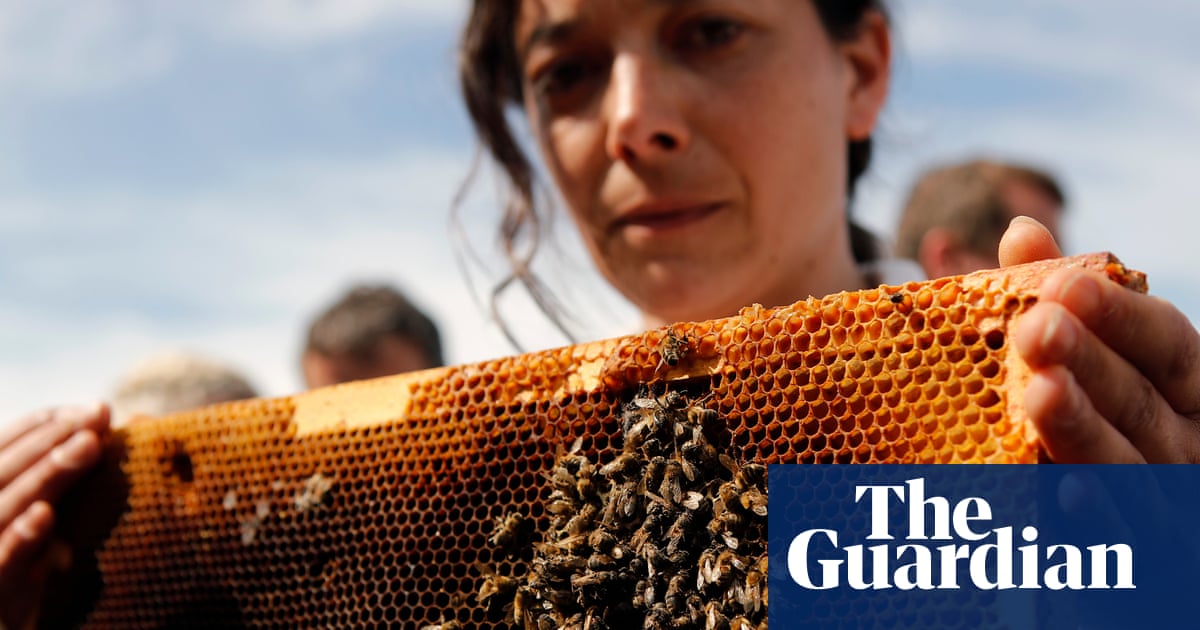 https://www.theguardian.com/world/2026/jul/26/french-beekeepers-fury-lifting-of-pesticides-banOpen linkView original on lemmy.world
Syndicated from the fediverse. Read and engage on the original instance.
View original on lemmy.worldhttps://www.theguardian.com/world/2026/jul/26/french-beekeepers-fury-lifting-of-pesticides-banOpen linkView original on lemmy.world
50 replies
As a Pest Control Technician in the US, it's absolutely wild to consider using Neonicotinoids for agricultural pest control.
A very large part of why Neonicotinoids (Neo-nics) are so dangerous for Bees, is that unlike other forms of pesticides, they are "biocompatible" with plants (they're based on nicotine after all).
Even just getting Neo-nics near plants can allow them to project the full pesticide directly into the nectar, after the root systems pull the Neo-nics in.
Another large reason that Neo-nics are super dangerous to Bees, is called the "transfer effect".
Essentially if a Bee gets any of the Neo-nic on them, they can spread it by just saying "Hello" to the other Bees in the hive.
So you have Neo-nic laden Nectar, getting brought directly back to the hive... It's game over.
This is heartbreaking
Humanity sucks
Why the random caps?
It's how I type.
They're half German :p
Who needs bees anyway, they just sting you, right
Its worse than that, they also buzzz around and thats just bad, imagine how hard it is to say "le buzzz"
It's even worse than that, hippies and brown people use honey as a sugar substitute when they could be subsidizing the glorious corn syrup industry instead!
/s
We really need ro stop thinking of bees as cute bugs and understand that they are livestock.
"Hey, we are lifting the ban on spraying cattle-poison from the air," sounds much more crazy.
Having lived in the US all my life, I think the public reaction to cattle poison spray would be "well, as long as I can't taste it in the meat."
I wish we all had more empathy for the life we share this planet with.
It's not just empathy for the sake of empathy. We are part of a delicate ecosystem that is affected in millions of ways, especially unnatural things. Everything we do to it will splash back on us.
The conservatives I know all have this mindset: "It'll figure itself out. The drive for profit always finds a way." It's a nearly admirable amount of trust, if only it wasn't so horrendously misplaced.
The trouble is negative externalities don't have a part in that thinking. You need enforced legislation to concert the gap, and that's been on the decline for decades (e.g. enabling monopolies, weakened environmental laws, regressive taxation, etc, etc).
Because we treat livestock so well
How long are we going to thumb our noses at the environment. We knew better almost seventy years ago. But yet here we are still massively overusing pesticides and fertilizers.
The native Americans, and probably other slaughtered native people, knew thousands of years ago
Even to this day, all across north and south America, people are still benefitting from the work indigenous people put into the soil and water. Both continents were a garden because the whole of them had been hand-tended for at least a hundred and fifty thousand years.
As this did require the presence of people, it's more like 15000 years.
That 15,000 year figure has long been proven wrong, and other hominids were here even earlier than humans were.
Currently, that's speculation. Furthermore, the early people were hunters and gatherers and didn't cultivate the landscape beside e.g. fires for hunting.
https://en.wikipedia.org/wiki/Peopling_of_the_Americas
"Didn't cultivate the landscape", what complete trash.
The same system that claimed Columbus discovered America, then finally relented that "other Europeans had gotten there first", is also finding it impossible to accept this. Meanwhile there is oral history that can be verifibly dated back to the caps melting at least partway. As well as loads of physical evidence that constantly gets "dismissed" because it "couldn't have possibly been that way".
Indigenous people are little more than a novelty backdrop with which to hang colonial "superiority". Well done proving that at least.
Sure, the native Americans developed agriculture 140,000 years before the people in the fertile crescent.
Typically the use of fertilizers and pesticides for farming just increases the need to use fertilizers and pesticides the next year. Its not a very sustainable application. Make it through this season because you poisoned all the aphids, but you completely destroy the food web they are a part of too and leave nothing but more room for them to spread next time.
I read barkeepers and was confused.
Hard to make mead without honey
Well I mean, who doesn't want to eat fruit sprayed down with poison?! Eat up!
I'm tired of this planet. How do I get off?
I've thought of a way to make neonicotinoids have a built-in limited lifespan.
I know we all love bees and everything, but they likely have little choice.
Neonics are damaging but the damage done by pests in their absence is bigger. Beekeeping isn't a major part of the economy.
Obviously, it would be better to protect crops with something else. Genes offer a great alternative but France is unlikely to agree to anything as innovative as Gene Editing anytime soon. So neonics it is...
You know what would be damaging to the economy? Losing our pollenators.
Mark my word, a couple decades from now when the bees are dead and ecosystems are dying, we'll have bio startups making mutant superbees and tech startups making pollinating microdrone swarms.
The law seems reasonable since the use of the pesticides is limited and only if there is no alternative. Bees can still feed on flowers in people's yards and non-farmland.
Also, how would bees feed on flowers when they're poisoned, disoriented, and dying?
But there is no choice. It's either the farm sector or the bee sector. I think the farm sector is more important since it produces more food.
I assume not all bee hives are located near farms.
The bees pollinate the fields, allowing them to produce fruits, aka food. It's not either or, it's all linked man.
There are other pollinators. Remember, other European countries permit the pesticides.
The farms won't be producing food without pollinators
There are other pollinators besides bees. I'm sure government officials took that into consideration. Remember those pesticides aren't banned in other European countries.
im not so sure they consider the long term impact, cause they rarely if ever do that on ANY other issue
look at the state of the environment! that is not a product of lawmakers taking the long term impact of their policies serious
True but in the short-term French farmers have to compete against farmers from other EU countries, otherwise they might go out of business.
How will you tell the bees where they can feed?
They will probably go to the nearest food source.
They will fly up to 5 km from their hives. Its not just the nearest food source, but also quantity. In many cases, most bees are in rural areas, as are many of the places where these pesticides will be sprayed
France has no choice. From the article:
The use of the pesticides, allowed in the EU but banned in France, will be authorised to combat aphid-borne diseases that can ruin crops of sugar beet, apples, hazelnuts and cherries, which has led producers to claim they can no longer compete with European rivals.
They do have a choice, and the choice they made will kill pollinators.
But if they don't use the pesticides, French farmers would be unable to compete with EU farmers who do.
Soon everyone will be equal, where there will be no more pollinators.
Do you clap with your fingers spread nice and wide?