
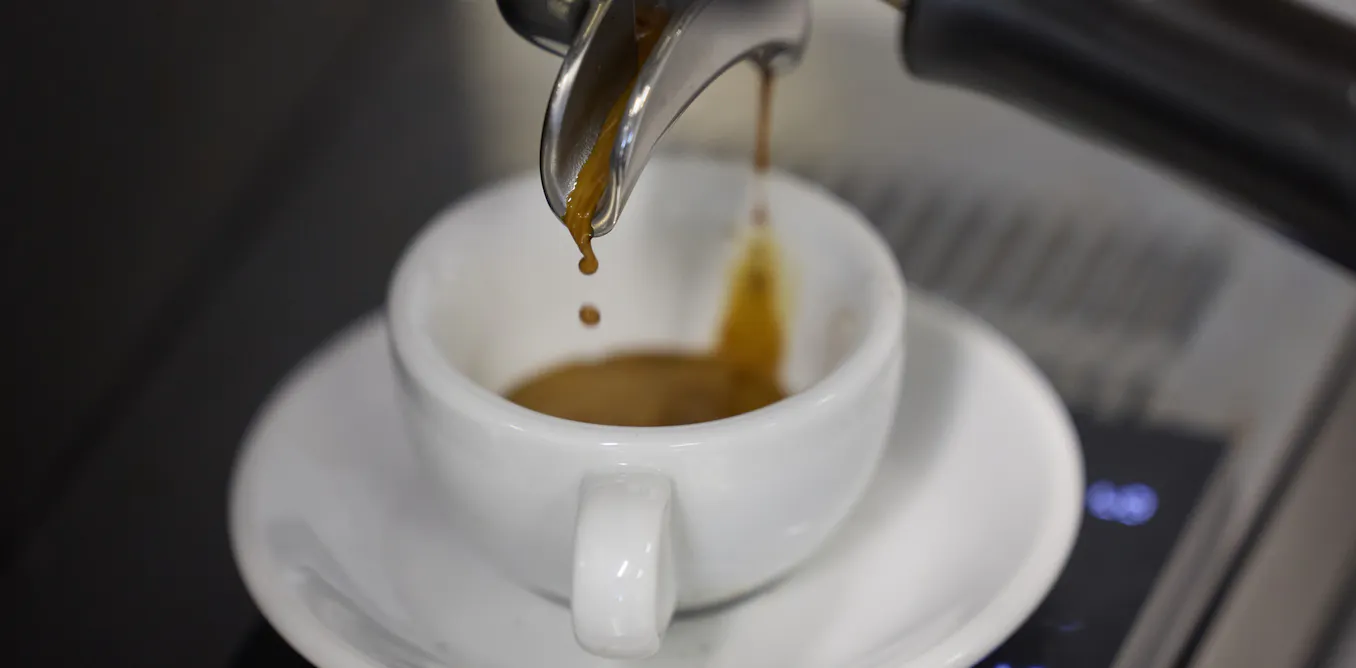
I used sound waves to make espresso. It could cut coffee-brewing energy use by 75%
🍵 😮
 https://theconversation.com/i-used-sound-waves-to-make-espresso-it-could-cut-coffee-brewing-energy-use-by-75-284929Open linkView original on aussie.zone
102
Comments33
Cavitation Wikipedia
That is such a cool use of an observed phenomenon.
Begs the question, can it be used in conjunction with other cooking methods to reduce energy usage?
If I understand it correctly it should be primarily useful in methods attempting to extract flavour from something. Maybe tea, spices like cinnamon, maybe vanilla but thats fairly soft so it mightn't work very well.
Well, usually the heat is being used to actually chemically change the food. Coffee beans are pre-roasted and you're just using hot water to get the coffee into the liquid. It's not like this technique could be used to cook meat or vegetables. Liquefy them, possibly.
Was thinking microwave or reheating things evenly from within, particularly liquids like soup.
It's not actually leaving the coffee hot, though.
Optimal drinking temperature is only about 125 though
Just what we needed, merging of the espresso nerd and audiophile demographics.
Bro.You haven't really had espresso till it's been brewed with a vinyl recording of David Bowie's life on mars.
Imagine what Windowlicker coffee would taste like…
😆
Fascinating. They can make room-temperature coffee in far less time than cold-brew. Could be really great for places that sell a lot of iced coffee.
A few months ago I saw a video of someone who used an ultrasonic cleaner to make extracts, so i tried it. I did 30 - 60 mins for each of orange peel, banana peel, pepper corn, anise, vanilla bean, cinnamon, and coffee. The coffee smelled absolutely disgusting, but this was like an hour rather than 3 mins. I had no idea how much time was appropriate. I also used vodka instead of water. Idk why I thought the coffee would work. The rest seem roughly what I'd expect. I've done traditional extracts previously. It makes sense to try water for coffee. I feel dumb for not trying that obvious combination.
sounds like the thought emporium?
The video that I watched? It was from How to Drink, which iirc he said he decided to try and make his video after watching a video that talked about speeding up extracts via ultrasonic cleaner, but I don't recall what he said what was the video he watched.
Is coffee-brewing energy use even remotely a concern?
Depends what context. For environmental reasons it'd be a negligible impact, but every bit counts. From a business like Masters Coffee Chill probably a nice little boost to productivity by swapping ongoing electricity costs for a one time capital allocation and 25% the ongoing cost for brewing than before.
I suppose for matketing 'green'credentials its technically useful as well, but you'd not design a whole campaign around it otherwise you'd leave yourself open to credible allegations of greenwashing.
The cost of brewing includes the machine cost over its lifetime. The electricity cost is near zero.
Apparently yes because of all the different products made from brewed coffee. 🙅♀️
Ah yes the most important thing to save energy on: the 1500 watt appliance that's on for 15 minutes daily.
I don't think the "companies making ready-to-drink coffee products at industrial scale" that article is talking about this being designed for are running a 1500 watt appliance for 15 minutes a day.
They're thinking more that factories won't need to use traditional extractors which generally need to heat stuff to high temperatures to make coffee milk drinks and soluble instant coffee, etc.
They better have used The Hottest 100....
lol imagine you got different versions, turn on the coffee machine, start hearing a little ac/dc playing from inside it 🤣
I wonder if an AccaDacca brew tastes different to Air Supply brew lol
The first thing I thought of: The Hardcore Coffee Machine https://www.youtube.com/watch?v=i5OYQOyceoM
Second thing was:
https://www.pv-magazine.com/2026/04/23/thermoacoustic-heat-pumps-on-the-verge-of-commercial-breakthrough/
But back to the original article:
I was going to say that my coffee machine runs off solar/battery so no use here but I'm certain a good majority of coffee shops are not running on solar or solar battery and this would be amazing
Here's hoping they can commercialise it
That heat pump is an interesting read. Thank you for the link.
I wonder how well it would work for tea
They recently started doing this with whisky first and i thats when i wanted to go down the path of trying it on all of types of liquids but never had the time or money to do it.
The essence of convection "without" heat?
This sounds like a great way to torture your family pet. They can hear ultrasound, and the brew time for this is 2 1/2 to 3 minutes.
Proof concepts can be refined to dampen sound beyond the unit. Its cool to save energy.
It's a neat idea, I just hope they take the unintended consequences into account. Imagine this product being used at an industrial scale near wildlife.
On the other hand, it may have the unintended effect of keeping rats and mice away from brewing sites.