

Dutch firm Meatable can turn pig stem cells into sausages 60 times faster than farmers can rear pigs.
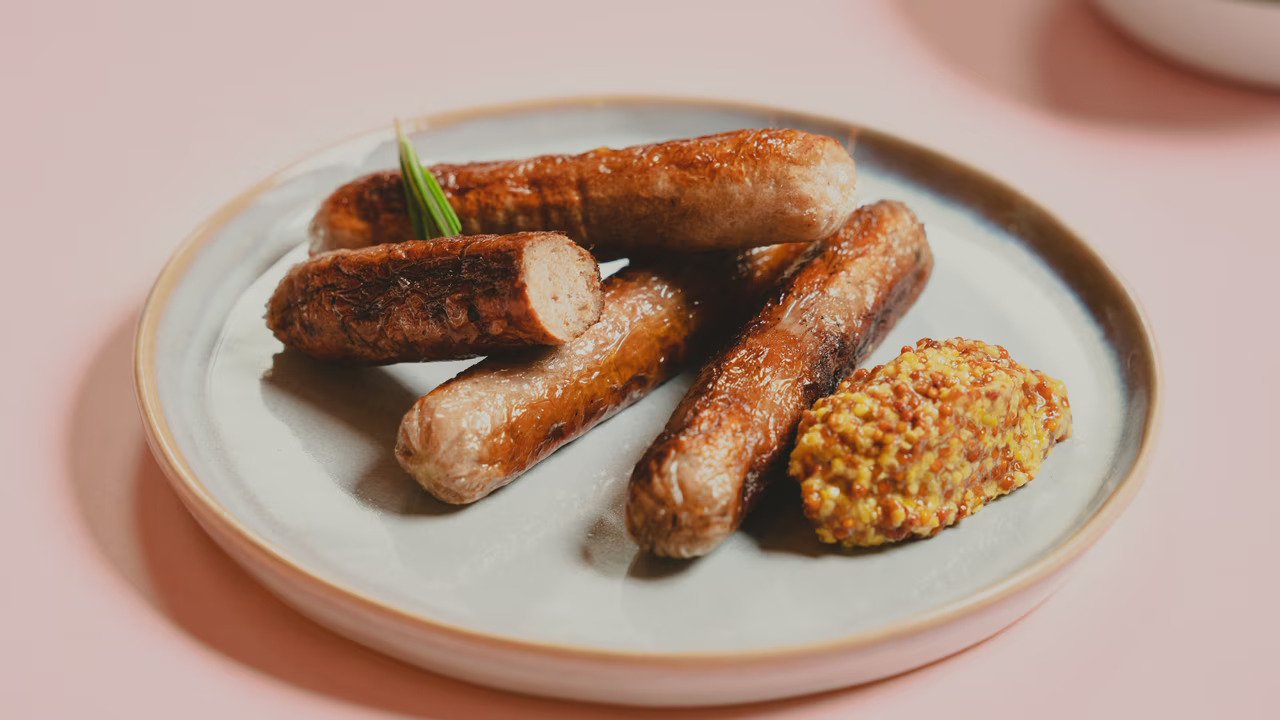 https://tech.eu/2024/03/22/meatable-can-now-transform-cultivated-cells-into-sausages-in-a-record-four-days/Open linkView original on futurology.today
212 replies
Good news for pigs. I'll be delighted to see factory farming disappear and be replaced by tech like this.
Except for the pigs raised for stem cells? Which I think somehow is an even more distopian concept.... Maybe just a different flavour.
Note: I am actually in the comments looking for the answer to my question "how many stem cells?". Like per lb or whatever... What's the ratio?
The article answers your question
It involves nothing more than pulling a single cell once from a pig without causing harm.
Thank you. I read the article, I swear, before posting. (Literally stopped what I was typing after I read my own statement "looking in the comments") Not sure how I missed that.
The whole "stem cells from a fetus" thing certain groups try to spread is false. Technically stems cells can come from a fetus, but they generally don't. We even have methods to turn regular cells into stem cells I'm pretty sure. This doesn't do anything more than taking cell(s) from a pig one time and they can be grown on their own potentially forever. No other pig needs to be involved.
Yeah but what are we gonna do with all these pigs then? Uplift them and invite them into our society?
Slaughter them for one last time and spare their future generations by removing their lineage from existence. Nbd
That's straight ignorance. You don't abandon a curated breed of livestock based on some short term innovation. Humanity's dependence on these types animals is older than recorded history. You would doom us all if the technology fails and we can not go back to traditional methods.
Oh, poor little humans, imagine having to live by *checks notes* eating vegetables.
Oh, the humanity!
And meat is by far not the only thing we cultivate pigs for.
Sorry chief, I'm unable to fathom the logic underlying this comment.
Do you think that the day the first stem cell sausage hits the supermarket shelves pigs will be deleted from this reality?
You'll still be able to buy sausages made with real flesh in 50 years, just that between now and then alternatives will emerge that are tastier, healthier, and cheaper.
Steam trains still exist but you don't drive one to work every day because they're shit.
I was responding to a post advocating for letting the breed die out. Just. Look. Up. I geuss?
That's not what that comment says.
We could let the pigs run the farm, then document what happens.
They did already heress the document
I had heard of this story many times before, but had never actually read it. Thanks.
Eat the last generation and put a couple in zoos, like we did with all species once they are no longer useful...
We can keep them as cute animals :3
Someone has been reading Revelation Space.
I thought they were talking about Animal Farm
They still need the pigs to cultivate the cells to make the sausage.
No.
They need one cell, once.
They can than grow that one cell into an infinite number of cells.
Animal reservoir? Instead of millions of pigs sent to the slaughter, thousands in free range zones where they can have their stem cells harvested without suffering. And "train" the rest to live on their original place.
Yeah, not a good idea. There are wild hogs, but our farm pigs are not good for the wild. They go feral and become giant and dangerous and do a lot of damage, and they also breed like crazy. It's actually a really big issue. These animals are meant for the farm and nothing more.
Their original place is farms.
Technically kosher because there's no cloven hooves?
As a technical Jew I can say that yes, this is technically kosher ^disclaimer: I have no knowledge at all of Jewish custom or scripture^
What
Their mother was Jewish but they haven't been taught the religion, making them technically Jewish but without any knowledge of Judaism.
He’s a Jew but not Jewish.
Like me.
One is an ethnicity. The other is a religion. It’s easy to get them confused.
He’s Jew-ish
So is everybody here a technical Jew? Like, that's three of us, and this isn't a huge community.
I'm Brian, and so is my wife.
Brian is an interesting name for a woman. Then again, my brother Steven married a man named Stephen.
I'm reasonably certain I wouldn't count. As far as I know there were no Jews (by ethnicity) in my family for the last couple hundred years.
I do, however, count as a Native American, specifically I'm ¹/16th Lakota.
Ahhhhh this makes more sense, thanks for clarifying!
Bingo 👍👌
They're a theoretical Jew like Einstein was a theoretical physicist.
New judaism lore dropped
But is it considered cannon?
They’re not technically kosher. Nor halal.
NOT YET
It hasn’t officially been ruled upon by either kosher or halal certification boards yet (although many Jewish and Islamic leaders have expressed differing opinions on the matter), but most lab meat growers very much hope it will be ruled as what is known as “parvere” — or not meat. That is to say, since it didn’t actually come from an animal, it’s not technically meat, it has no blood, wasn’t slaughtered, etc., and, as such is considered more in line with a vegetable or other foodstuff that isn’t milk or meat.
If lab meat is considered in this way, it could clear the way for Kosher and Halal certification as well as for Hindus who do not eat beef, and many others with objections to eating meat for various reasons.
That's fucking wild.
We live in a brave New World, adjudicated by a very old and blind one
Imagine if the next big Abrahamic schism comes over wether or not lab grown meat is halal/kosher or not.
While the Christians cry over whether it’s “woke”.
The mere mention of stem cells will rustle all the Christian Jimmies.
I culture cells for a living. Not that these are the only ways, but the most common and effective ways to grow cells in the lab is to add either FBS (fetal bovine serum) or BSA (bovine serum albumin) to the culture media. Currently we don't mass produce BSA in an animal free manner and FBS is by nature an animal product. Granted, that the products of one animal may in fact allow manufacturers produce more than enough 'animal-free meat' to overcome this but I haven't seen any numbers. I'm interested in hearing more about these techniques going forward and in determining if animal-free products can really be produced animal free.
That's what they say.
Where did you read this? Could you link a source please?
https://meatable.com/faq/
Bottom of the page
A man of culture I see
Relatable.
What if it requires 1/1000th the number of animals … but each one suffers a hundred times more?
Would it be worth it?
How do you quantify suffering?
If you don’t have a way of quantifying suffering, perhaps all utilitarian calculus is bunk?
Unfortunately, I don't really understand your response.
You talked about one hundred times the suffering. What does that mean? To me, the way animals are held in mass production is completely unethical and there is no way to make it worse... So how do you make the animals suffer even more?
stem cells can suffer? this isn't cloning an animal, it's cloning certain tissues.
Hence the word “if” here. A hypothetical scenario.
From a utilitarian perspective, you're still reducing overall suffering by an order of magnitude, so your scenario is still a greater good.
This assumes a linear value function of course
Sorry, this is all my addled GenX brain could think of when I read that.
https://youtu.be/GIuZSaqse-A
😁
Asking the real questions!
Yes, very Kosher.
source: porky the pig
Sausage seems like the perfect entry point for this technology. People don't really care what goes in them as long as it tastes good. It's also a lot more forgiving from a texture perspective. It would even be feasible to expand to more exotic sausages like pheasant or alligator.
I know i'm in a significant minority, but I care a great deal what goes in processed pork products (or rather, my gut cares). I've yet to pin down which "preservative" commonly used in pork/pork-like products I'm allergic to, but I have a serious problem with even Kosher Hot dogs.
Basically, if its not fresh homemade bratwurst or sausage, I just can't eat it.
I'm sure that, if these methods continue to become more viable than their livestock counterparts, then the need to use at least some preservatives will decrease... hopefully.
Man, that's gotta suck. Not knowing exactly what's causing the problem can mean it being a problem unexpectedly with other things.
Its not awesome, but for theost part, that specific reaction is limited to just that. I'm pretty adventurous when it comes to food, so i'm sure that whatever chemical causes it is limited in use outside of that market.
Maybe is not one specific product but the mix in those sausages.
One problem I've noticed with currently available meat alternatives is that they are even more processed than real meat.
Yes. I'm not sure how much of the non-meat chemicals are for the preservation / shelf life as opposed to the ones necessary to the creation(?) process.
I suspect that at first the meat will still require the more aggressive preservation methods because the distance in both time and geography from the lab will be similar to that of the slaughter locations.
But without needing to work around breeding seasons and just general herd growth variations throughout the year, the creation of the meat could be much closer to the demand. Storage costs for temperature sensitive products that are also time sensitive has got to be a huge industry cost, so there is more economic reasons than just "use less chemicals" for it to start to trend that way. (Also, I'm sure the chemicals used are absurdly cheap and hardly a factor)
Some ideas you've probably already considered:
Nitrates and nitrites: in pretty much every commercial sausage. May be listed in the ingredients as curing salt or Prague powder.
Onion or garlic powder
Breadcrumbs
Emulsifiers: in any kind of hotdog or Weiner where it's all blended and looks smooth, as opposed to a sausage where you can actually see little pieces of fat and meat. Listed in the ingredients as some kind of gum or some kind of glyceride.
Those first three I don't think are exclusive to pork products, and I'm sure its not Onion/Garlic powders or breadcrumbs. I use them frequently when cooking without getting sick.
But emulsifiers.... would sausage/bratwurst of a lesser quality also have them? And are they exlclusive to tubular pork? Because they sound they may be the same thing that's in most sugar-free gums, and glyceride by itself is everywhere, unless it's a specific kind.
I appreciate the help, but like I said I have narrowed it down to something that's pretty exclusively used to preserve pork for really any duration of shelf life of a grocery store. I don't get sick when I eat fresh pork of any kind, well I guess so long as it's cooked, and I don't get sick when I eat other animal products with preservatives in it, or at least not consistently at all.
I'm good with just leading this pseudo-jewish life for the time being. Honestly unless it's like quality fresh brought worse at Oktoberfest, then I don't really feel like I'm missing out anyways.
I don't know of any preservatives that are exclusively used for pork. I'm a butcher so I have pretty good knowledge of that stuff. I didn't really expect it would help you but I thought I'd take a shot in the dark.
Grocery store sausages, definitely not.
Good to know.
I’m thinking of going the other way with it. I want sausages made of my own stem lines. Delicious.
Every man dreams about gobbling their own sausage at some point in their life.
Imagine people selling the rights to make sausage out of their DNA. Which famous person would you like to eat?
This is also why I see milk and eggs being easier to develop. Non-animal dairy actually already exists (see: Perfect Day Foods), though I've only seen it in a few products.
We have here "Not Milk" from oat which you can use for baking too. But eggs...
You have to compete with plant based sausages though which, unless some big breakthrough happens, will be much cheaper. They'll also probably taste pretty similar cause this is only generating cells, they'll have to add in a bunch of other artificial stuff like heme to make it taste like a sausage at which point I'm not sure if people could taste the difference between animal cells and plant cells as the base.
As someone who really enjoys meat but tries to eat vegetarian (and does so 99% of the time), I can't say that I've ever been impressed by the taste of a non-meat sausage. Every single one I've had has left me wishing I'd just had falafel instead. Fortunately falafel is delicious and cheap
Notably, though, vegetarian haggis - which is essentially just a large sausage - is usually pretty damn good. I have no idea why it seems to end up differently. Maybe because haggis depends less on the meat flavour in the first place?
I had a vegetarian sausage that had a close-ish flavor recently. It might have been Beyond? The texture was surprisingly awful though. Far from inedible, but I'd expect all parts of the texture to be closer, especially the casing.
The big difference will be if they can generate fat cells too.
American, I presume?
Bingo!
I'm skeptical. It's been really picking hard to get those things to grow in a vat. This would be a huge breakthrough, and popsci has a way of leaving out critical, fatal details.
Such as “a claim proven by the hundred pounds of pseudo pork they shipped us overnight”?
I didn’t read the article. I assume this journalist made zero primary observations?
I mean, even shipping it wouldn't say anything about what it's production cost is. Only that they paid it.
It literally quotes the company spokesperson as the main source on all this, and then comments on the brand having done a taste-test in Singapore.
Sustainable sources of real meat without killing animals are very welcome! Good luck to them because killing things to eat meat is the worst.
My hope is that these alternative meat industries also factor in job creation opportunities for people who are working in conventional meat production right now—if there’s populist pressure towards moving for more lucrative and safer jobs in lab-manufactured meats, that would be help reduce pressure from farm industry lobbyists, I think.
But the above is a secondary goal (and maybe the responsibility of another party), and shouldn’t distract from the primary goal of researching methods to create sustainable, cruelty-free lab-manufactured meats!
The industry is ripe with conditions that at least approximate human trafficking and anything lab-grown sounds like basically completely automated, and where it isn't you need highly skilled professionals. Not of the "is dexterous and can learn to make a clean cut fast" kind, but of the "degree in cell biology" kind.
Jobs for people without advanced education are getting rarer and rarer, that isn't going to change, and don't look to industry to change that they have the exact opposite incentive. If, OTOH, you introduce something like an UBI soon you'll have a gazillion people getting into pottery or knife or furniture making or whatnot, again doing actual crafts because it's economically feasible because you don't have to sell your stuff for prices only rich people can afford just to make a living.
Honestly you will not need a college degree to run a bioreactor. It won't be automated because it'll consist of cleaning, taking out the outputs and refilling the inputs. You do for inventing the reactor, but not for running it.
Whoever's overseeing many of them will need a degree, but labor will mostly still be labor.
This is correct. Once it's developed, it's just following instructions.
Fair point. If I’d had the time for it, I’d be encouraging or supporting my local representatives for working on this.
Real basic question first: where are they getting all those stem cells?
Here’s what they say on their site: https://meatable.com/
I couldn’t find the exact procedure details.
Than you have to wait a bit. At this juncture in time, vegan alternatives have yet to gain popularity, and those are mashed plants. This is quite a step up. If you feel like making a difference don't wait for this and reduce the .eat consumption altogether regardless of its origin.
This sounds like good news but what I don't want is one big corporation replacing hundreds/thousands of worldwide farmers and having total control over the cost of selling this to consumers.
We need local individual owned stem cell meat farms.
It'd really become an art if it became accessible enough to do locally. Getting the right texture, marbling, tenderness, etc.
Like a craft brewery model for cultured meat? Sounds cool.
Exactly!
But it doesn't work if it costs billions of dollars to start it up.
Bladerunner
Besides, there's nothing that tastes quite like real grass-fed free range stem cells.
Most of the production in the us already comes from 2-3 giant corporate farms. It is simply more effeciant.
Those farms receive immense subsidies as well. No, it's not efficient, it's just what the US economic system produces.
Good news, these farmers can start growing stuff to feed humans instead!
Regardless, we really shouldn't be preventing progress for the sake of protecting jobs. Especially when the status quo is so wantonly destructive. And even as this would replace some jobs, it would create new ones.
All that said, I'm very skeptical of this tech.
It needs to be done at small to moderate scale with properly strong regulations.
The industrialized meat industry in Europe has very little to do with farming. An industrial stable with tens of thousands of pigs who never see daylight or breath fresh air is a factory, where bought animal feed is input, and manure and pigs are output.
sounds like the US system, without the child labor.
The fields used to feed livestock would be used to grow stuff to feed humans
The buildings... Should we really stop progress to save some buildings used to raise animals in order to kill them?
There's a labor crisis in the farming industry already (and in general really) so it's not as if they had no option in front of them
You do realize that not all farmland is suitable for growing onions or melons. A pretty good chunk of it is pretty much suitable for grass only. Where I live, half of all the farmland is growing grasses for grazing and hay, (no, its not alfalfa). What are those farmers supposed to switch to make a living? The rest is used for wheat, rye, and barley and some green chop corn silage. And yields can be quite limited depending on the year.
Unless you are fine with massively more use of fertilizers and pumping ground water to irrigate those food crops on marginal land. And even then the growing season overrides all.
Then you stop using that land to grow feed and let nature do its thing and the people working that land can just go work somewhere where there's demand.
Should we have stopped telecommunication progress to keep the switchboard operators working?
"the people working that land can just go work somewhere where there’s demand."
So easy to say when it's not your job isn't it.
Now, I don't know what you do to make a living, but with AI, your job as a programmer should just go away and you should find a different job where there is demand - maybe you could be a servant or stock shelves. It's so easy to do so, just go somewhere else.
Again, should we stop all progress so as not to eliminate jobs that would otherwise become unnecessary?
Perhaps they were referring to pivoting from animal feed to human crops
Yes we definitely don’t want one corp owning this entire type of tech.
I think some kind of cultured meat is “obvious” at this point in history.
I don’t think this company would be able to maintain its monopoly as other companies develop their own processes. Maybe some vegans will open source the basics or something.
I doubt the legal system would allow one company to control this market, and tech being the barrier won’t do it either, so I don’t predict a monopoly for long on this kind of thing.
Yeah, it will be like two-three, owned by the same shareholders on the stock market.
Or as many choose to enter the market, unless you think there will be some artificial constraint placed on entry?
And since all shares are actually owned by the DTCC, they are the actual masters manipulating the stock as needed to enrich themselves. We'll get cultured meat at their grace when it's profitable for them.
We do have a number of excellent meat alternatives now, which use relatively simple processing steps and legumes, wheat etc. as base material.
As such, I imagine, they will remain cheaper than lab-grown meat and if we can get past people's reservations with them, I feel like they would offer a much more direct path for farmers to get paid, as well as the opportunity for various smaller companies to compete in doing that processing.
I've been waiting for that for so long. Just hope governments and people give it a fair chance instead of jumping rashly negative conclusions just because it is lab grown. So is beer, and cheese, and most other things we consume.
I mean, with modern sausages, it's mostly trash or overpriced. They taste like they have 5% meat, 95% sawdust.
No idea where you get your sausages but look elsewhere
Italy's politicians in a fantastically backward and utterly brain farted move has made "synthetic meat" outlaw, for study, production, sale and consume, like already some months ago, just to please the local (read: national) farmers lobby. Or at least they adverised as they did... forgive me I kinda lost hope and interst as well.
Gotta love the totally-not-neofascist Meloni government :(
OK, but how does it taste?
Sausage is smart since you can get away with a lot of textural sins, and it's already expected to be packed with sodium.
Follow-up questions will also include price.
I mean it also heavily depends on the exact version of sausage. We already have fake Mortadella made from peas (I think) which I can not (or barely) tell apart from the real thing. And at the other end of the sausage spectrum, Chorizo or Sujuk have enough spices, paprika and/or garlic and cumin in it so you can probably hide a lot of stuff instead of pork in it. Though I haven't yet found a fake version of those which I liked. And sometimes my German nature gets in the way. I've had sausage abroad. And some people put actual ground-up pigs in there and the product still doesn't taste of anything I'd call sausage. I also had those british-style breakfast sausages with a really weird consistency. It's really quite some variety with sausage, already. And I still need a good plant based alternative to Salami and pepperoni on pizza.
It says they sampled it. It doesn't say how it tasted. Hmmmm...
Yeah, that's a little suspicious.
I like the idea, and I hope it scales to be significantly cheaper than murder sausage
Is that what you call your penis now?
hot
give me vegan-friendly bacon and I'm in. Sausage is easy.
Properly mixing up fat and meat to make something like pork bellies is really really had.
Fantastic. I can't wait to have cruelty free meat products
Where do the stem cells come from in a cruelty-free scenario?
You know you can Google that, right?
"The most common method for obtaining cells is to take a small, harmless muscle biopsy or skin sample from a healthy living animal"
animals
Where in the animals? How are they obtained?
I'm not exactly what you would call concerned about meat as a food source. I'm fine with it. But anything that can break the need for industrial farming is a damn good thing imo.
I'm eager for a good product to come to market so I can at least try it. So far, there hasn't been one that's available that's priced well enough to be a viable choice, nor that matches expectations of taste. Textures have gotten good though.
But I think a sausage format is a great place for cultured meats to break into because there's a wide range of ingredients with different flavors already. We're used to sausages being fairly varied in taste and texture, so adding a new type is less of a "new food" barrier. Tbh though, it's gotta be better than veggie sausages, those are pretty meh at best.
Ok can it be translated to meat on the table with costs and impact being less than actual pig slaughtering? I wouldn't even mind the taste being a little different
Ok but how long does it take to get the stemcells
Very relevant question that the article doesn’t answer unfortunately.
Just copying my answer from above. Not to say that this is what they're doing for sure, but generally stem cell cultures these days are sourced once then replicated forever.
or does the pig, that takes 60 times longer to grow give you 10000x the meat?
60 times longer
Still won't stop the "alpha male" types from hating it because they base their entire personality around doing what they think wi make other people mad.
This won't stop douchebags from being douchebags?
What the fuck does this have to do with the article?
the entire concept implies a way to eat meat without having to slaughter animals.
Wait until pig cancer cells turn into sausages 90 times faster
You've read much Margaret Atwood, then?
Cool. Maybe, soon, they can turn me into a sausage?
I was going to post a meme of Sosei Aizen from bleach as a Sausage Aizen but I can't find it so you'll have to settle for Bologna Invader Zim.
Lab-grown meat is the way we're going to add long pork to our diets.
That's already possible! You just need a good butcher
Or soylent green.
Does this mean no more plastic fed to pigs?
Uhh. That's meaningless? What's the energy/resource usage comparison.
Every one of these claims so far has been 100% Elon Musk style “FSD is ready to ship right now in 2017” kinds of claims.
There was a great article in the New Yorker (or one of those style mags) a month or so ago that just ripped the industry apart about the billions of dollars spent on products that were overhyped and never shipped. I know that we’re feeling the pain of contraction right now, but we were dumping buckets of money into ideas that were not vetted - it was like the late 90s.
So, like with autopilot for cars, I will believe it when I see it.
I’d try to use money to calculate that. For farming, there’s probably tons of data. But for growing meat, there won’t be as good a model of what this thing’s inputs are. Like say it takes a dropperful of iodine at one point in the process. What’s the energy content of that iodine?
Money would be a good approximation of this: what’s the cost of producing that pork versus rearing a pig?
That's the claim
Eh it's not great but if they can create true pork competitive product quickly, that can be profitable in a chaotic market, allowing them to scale production to meet more unforseen/fast moving demand.
So when can we realistically expect this to be a thing?
This stuff was basically ready to go minus scaling up two decades ago. They were still working on adding marbling and texture into steaks that could fool you in a blind test, but amazed it’s taken this long to get to sausages.
I think you got your timing wrong. The first prototype of cultured meat was presented 2013 and costed about 250.000 € back then. "Minus scaling up" was and is a pretty big issue.
https://en.m.wikipedia.org/wiki/Cultured_meat
https://www.theguardian.com/science/2013/aug/05/world-first-synthetic-hamburger-mouth-feel
If they used human stem cells, cannibalism? Maybe. Tasty? Probably.
https://en.wikipedia.org/wiki/Human_placentophagy
https://en.m.wikipedia.org/wiki/The_Food_of_the_Gods_(short_story)
okay, but what's the resource consumption like? that's the major issue with meat farming - it takes all the resources necessary to grow food for the animals, and also all the resources necessary to keep and grow the animals themselves. If you need more meat in the same timeframe you can always just raise more pigs.
Whatever that is right now, I'd say it's at least more animal friendly, and you can control waste and pollution better, making it cleaner.
Over time, efficiency can be improved as well
I'd say it's a very good step
Quick search shows that it is better from a resource standpoint for pretty much all resources:
https://scienceline.org/2019/01/the-truth-about-lab-grown-meat/
And this was from a decade ago. I imagine they've improved the resource need quite a bit since then.
I mean, theoretically this makes only the parts we want to eat and makes it directly instead of an offshoot of all the other biological processes like growing to the right age and ratio and growing the parts needed to keep it alive all that time. So my ass pull non educated thought process would assume the end result should require faaaaarrr less energy assumption for the same amount of meat?
I mean what don't we eat/ use? I hate to imagine a world with only boneless wings. or not having a ham bone to make soup with after easter. my dogs would miss their dehydrated chicken feet. my stock would miss the chicken backs and necks and etc. shame we can't just raise headless animals.
I mean, if we can grow one organ we can grow them all
I see the sustainability argument, but it doesn't address my main concern, which is that it sounds yucky. Still, I'll eat lab sausage before I eat cockroach patties so 🤷
Why does this sound more yucky than the current way of obtaining meat?
In a lot of ways, it is just as gross as alcohol. It's made in large batches in a vat using tiny little organisms that assemble the final product. With alcohol the organisms typically being yeast, and meat being the actual cells.
Meat lab:
Brewery:
Granted it is a hell of a lot more complicated with meat production, but aesthetically it is pretty much the same thing.
Sorry but this looks way more pleasant than a typical factory farm to me
Agreed
That's what breathing and walking animals/meat are.
What are your thoughts on yoghurt, bread and sauerkraut? Since you don't like alcohol because it gets made by fermentation, I wonder what you think about those.
You misunderstand. I like alcohol, but I was merely making a comparison between something commonly accepted as being hygienic enough (alcohol) with something less accepted (lab meat).
They're both equally "gross", which is to say not really gross at all. But to answer your question, not a big fan of yogurt, but I like bread and sauerkraut.
"yucky"? Have you ever been in a slaughterhouse?
I have not, I understand it's pretty yucky in there though. Lab slime just doesn't sound appealing to me.
it's only a lab and science because they are taking notes. after the process is finalized it will be more like a kitchen/factory making yogurt.
Let me guess, the stem cells are harvested from pigs?
Presumably they culture more, but obviously the first cells would have had to. Some of these companies have been very particular about sourcing their starting cells non-lethally from sanctuary animals or whatever, because why not.
If you only have to do it once (or a few times) and can use it repeatedly ad infinitum, you can be just about as discerning as you want.
Exactly.
Generally stem cell cultures these days are sourced once then replicated forever.
That’s pretty incredible, with no noticeable degradation between replications? I know very little about stem cell cultures.
There’d have to be some degradation over time. Unless they’re repairing the DNA using computerized backups or something.
The stem cells themselves are self-repairing and self replicating. Quoting Wikipedia:
Currently all embryonic stem cell research and therapies in the US are conducted using only 486 cultures.
Likely, but stem cell harvesting is not as horrible for pigs and doesn't require thousands of them either. It's certainly a massive improvement.
That's kinda the point‽
Price? With the economy, it'll be cheaper to wait for the pigs to reach our local market instead
What a short sighted opinion my dude.
I have 19/19 sight. Thank you very much
It's expensive and not without issues now, but it's a new technology. But it's also harder to market for the masses, who may indeed prefer the animal to the bioreactors for their own prejudice. I do not expect cultured meat to be cheap and available anytime soon.
ah would you look at that, no mention of quantity.
It's 60 times faster, there should be the volume of an entire pig's worth in like 2 weeks.
There is a magical process that is called "upscaling". More relevant is the cost of things, which likely will be higher here.
"60 times faster" is a scalability claim. A pig can make a pig's worth of meat in about 6 months. That is a rate, that is a quantity over a time. In fact actually doing the math, increasing that rate by 60 times mean the same quantity over 3 days!
Scalability has been the hurdle for all lab grown meat projects. This is claiming to have it beaten, Im asking for the proof. Show me the scale, show me the results, if they stopped at a thin film of meat cells covering a petri dish, they havent scaled up anything yet.
Pigs eat pigs
True but we're not here to discuss your badge bunny mom.