Spyke

Posts

spaceflight·Spaceflightbypigeonberry

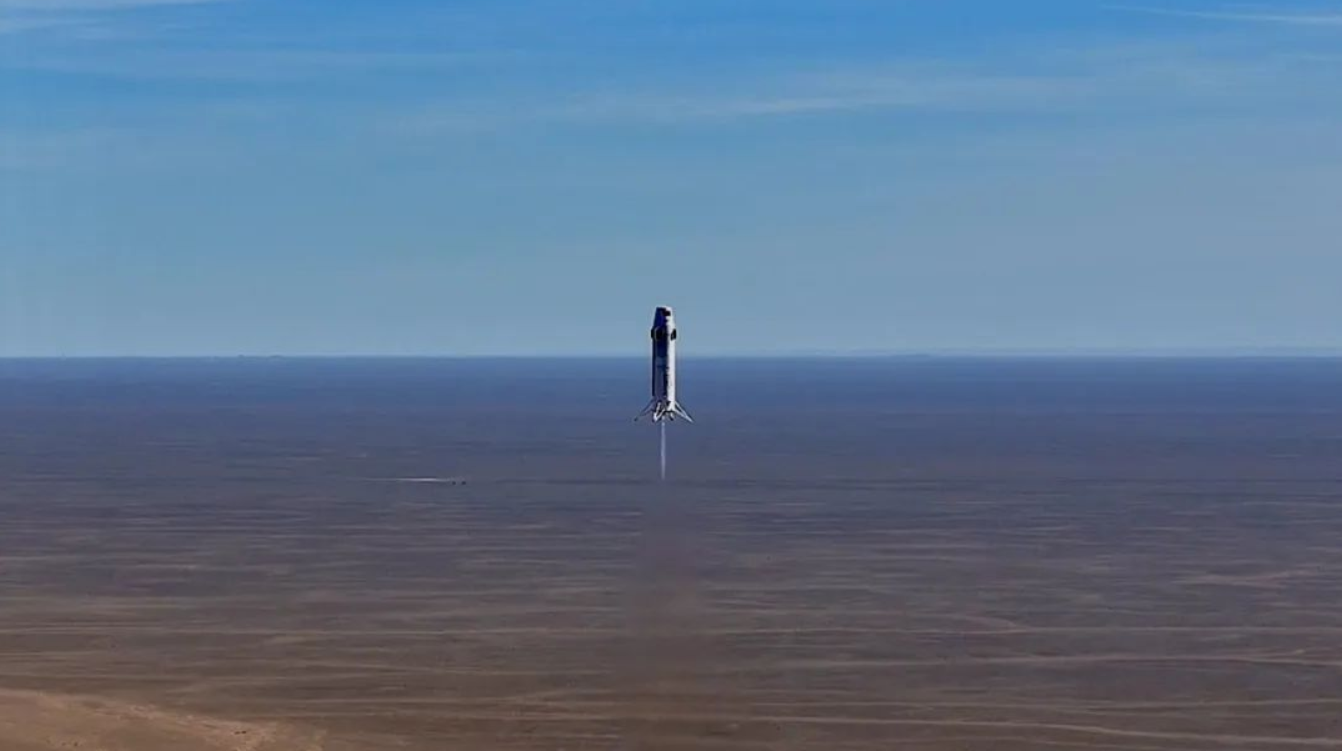
(SpaceNews) China’s iSpace launches and lands rocket test stage

The Hyperbola-2 methane-liquid oxygen reusable verification stage rose to a height of 178 meters during its 51-second flight. It performed a powered descent and soft landing, supported by four landing legs. The 3.35-meter-diameter, 17m-long test stage is powered by a variable thrust Focus-1 engine.

The vertical takeoff, vertical landing test marks progress towards a reusable medium-lift rocket to debut in 2025. It is also the latest marker in Chinese efforts to emulate the success of SpaceX and its Falcon 9 rocket.

(SpaceNews) China’s iSpace launches and lands rocket test stagehttps://spacenews.com/chinas-ispace-launches-and-lands-rocket-test-stage/Open linkView original on lemmy.world
spaceflight·Spaceflightbypigeonberry

(ArsTechnica) CEO of rocket-maker ULA makes a sales pitch—for the whole company

Tory Bruno spoke.

“If I were buying a space business, I’d go look at ULA,” Bruno said. “It’s already had all the hard work done through the transformation. You’re not buying a Victorian with bad plumbing. It’s all been done. You’re coming in at the end of the remodel, so you can focus on your future."

I have some skepticism.

(ArsTechnica) CEO of rocket-maker ULA makes a sales pitch—for the whole companyhttps://arstechnica.com/space/2023/10/ceo-of-rocket-maker-ula-makes-a-sales-pitch-for-the-whole-company/Open linkView original on lemmy.world

(SpaceNews) SpaceX slams FAA report on falling space debris danger

In an Oct. 9 letter to the FAA and Congress seen by SpaceNews, SpaceX principal engineer David Goldstein said the report relied on “deeply flawed analysis” based on assumptions, guesswork, and outdated studies.

The article contains details.

In 2021, the FAA commissioned the Aerospace Corp., a federally funded nonprofit focused on space, to provide a technical assessment of the rise of LEO constellations and the risks posed to aviation and people on the ground by unplanned and controlled reentries of these satellites and the upper stages that launch them.

Someone from Aerospace mentioned the difficulties in such an estimate, and Goldstein's letter points out more problems.

(SpaceNews) SpaceX slams FAA report on falling space debris dangerhttps://spacenews.com/spacex-slams-faa-report-on-falling-space-debris-danger/Open linkView original on lemmy.world
spaceflight·Spaceflightbypigeonberry

Russian Nauka module (MLM) on ISS appears to be leaking

At about 1 p.m. Central,

ISS: In the last few minutes, MCC-Houston asked the ISS crew to go to the cupola and look for any signs of "flakes" toward the aft of station; Jasmin Moghbeli reported "yeah, there's a leak coming from the radiator on MLM;" the MLM is the Russian Nauka multi-purpose lab module

https://nitter.net/cbs_spacenews/status/1711434135078641697Open linkView original on lemmy.world

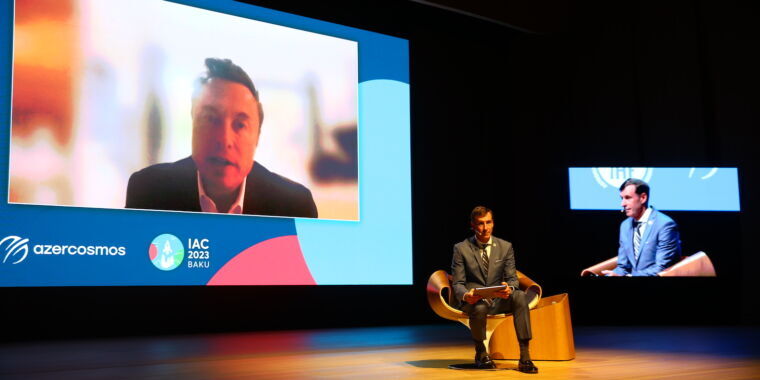
(ArsTechnica) World’s largest space conference succeeds in making a Starship update boring

Good analysis, from all I've heard.

Anyone who keeps track of Elon Musk knows the world's richest man has a penchant for setting aspirational schedules for his companies....So, if you have an opportunity to interview him, why spend time asking Musk to prognosticate when one of his companies will do something years in the future?

and

SpaceX's brilliant engineers certainly have creative ideas and novel plans to get Starship to the Red Planet, so why not ask Musk about them when you have him for a rare hourlong one-on-one conversation? It's the how that is most interesting now, not the when or why, especially for an audience interested enough to tune in at the IAC.

and

But Mowry's questions missed the mark at a time when the Starship program is at a critical point, and he didn't probe with follow-up questions to tease out more insightful answers.

The whole article is worth a read, really.

(ArsTechnica) World’s largest space conference succeeds in making a Starship update boringhttps://arstechnica.com/space/2023/10/worlds-largest-space-conference-succeeds-in-making-a-starship-update-boring/Open linkView original on lemmy.world
spaceflight·Spaceflightbypigeonberry

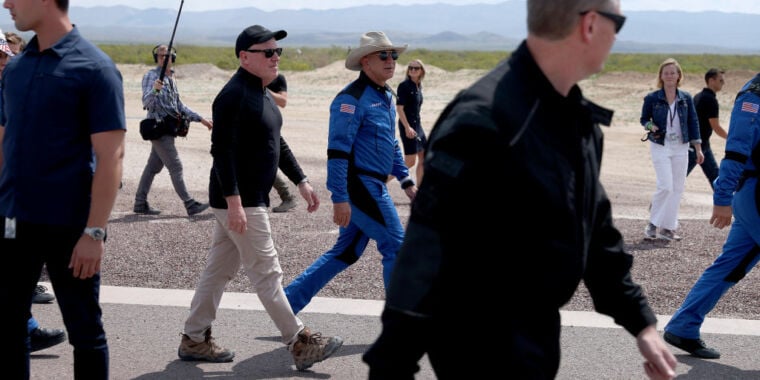
(ArsTechnica, Eric Berger) Jeff Bezos finally got rid of Bob Smith at Blue Origin

Well, that was an unimpressed review from Eric Berger, though Bob Smith has stuff to be unimpressed about. Eric also mentions Glassdoor reviews, an ex-employee group letter, and anonymous citations of current and former employees.

the company's new chief executive will be Dave Limp, who stepped down as Amazon's vice president of devices and services last month.

(ArsTechnica, Eric Berger) Jeff Bezos finally got rid of Bob Smith at Blue Originhttps://arstechnica.com/space/2023/09/bob-smith-is-finally-gone-from-blue-origin-his-replacement-comes-from-amazon/Open linkView original on lemmy.world

Starlink ... connecting 2M+ active customers

Starlink @starlink Sep 23, 2023 · 9:29 PM UTC:

Starlink is available on all 7 continents, in over 60 countries and many more markets, connecting 2M+ active customers and counting with high-speed internet!

Thank you to all of our customers around the world 🛰️🌎❤️ → stories.starlink.com

The significance is as u/Obvious_Parsley3238 pointed out: "250k last march, 1 mil last december, 1.5 mil in may, 2 mil now".

https://nitter.net/Starlink/status/1705695980325323023Open linkView original on lemmy.world
spaceflight·Spaceflightbypigeonberry

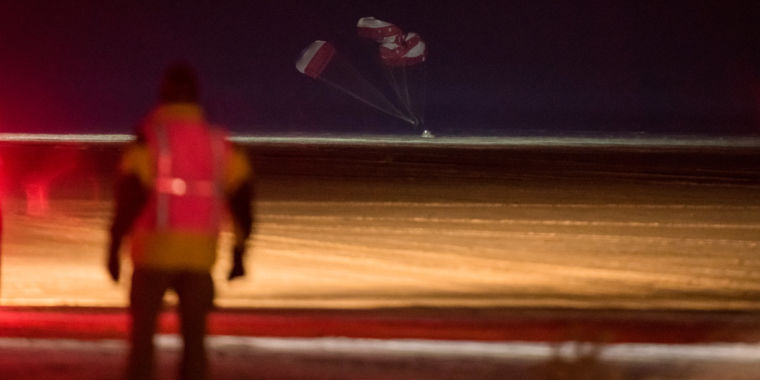
Did you know that the FAA has re-entry licences? Neither did Varda

I'd seen the story about a spacecraft making a drug in microgravity and planning to land it in the US.

However, the recovery of Varda's capsule is on hold after the Federal Aviation Administration and the US Air Force recently declined to give Varda approval to land its spacecraft in a remote part of Utah. TechCrunch first reported the FAA turned down Varda's application for a commercial reentry license.

"Varda Space Industries launched its vehicle into space without a reentry license," an FAA spokesperson told Ars on Wednesday. "The FAA denied the Varda reentry license application on September 6 because the company did not demonstrate compliance with the regulatory requirements."

Did you know that the FAA has re-entry licences? Neither did Vardahttps://arstechnica.com/space/2023/09/permission-denied-for-reentry-of-vardas-orbiting-experiment-capsule/Open linkView original on lemmy.world

FWS considering the water deluge system at Starbase; has up to 135 days to submit the final biological opinion to the FAA

I don't have a transcription to hand and shouldn't take the time to do it myself. The image alone:

https://nitter.net/pic/orig/media%2FF6VfGnVWYAAB5tv.jpg

The FAA asked the Fish and Wildlife Service for "re-initiation of Endangered Species Act consultation" due to the booster bidet. FWS has 135 days to give a final biological opinion.

https://nitter.net/BCCarCounters/status/1703873172997550381Open linkView original on lemmy.world

WRITTEN RE‐EVALUATION OF THE 2022 FINAL PEA ...

I saw this somewhere on Xitter or The Other Place. I hadn't heard that there had been any sort of re-evaluation or more documents. The first document is dated 14 April 2023, so just before the first test, IFT-1:

WRITTEN RE‐EVALUATION OF THE 2022 FINAL PROGRAMMATIC ENVIRONMENTAL ASSESSMENT FOR THE SPACEX STARSHIP/SUPER HEAVY LAUNCH VEHICLE PROGRAM AT THE BOCA CHICA LAUNCH SITE IN CAMERON COUNTY, TEXAS

Starship/Super Heavy Vehicle Ocean Landings and Launch Pad Detonation Suppression System

and following letters and documents are below it, dated as early as October 2022. 122 pages, oy vey, but a lot of repetition. I don't know enough to know whether there was anything significant, unless the FAA saying (paraphrasing) "these are some changes and considerations, but they don't have significant impact". There were changes expanding the landing zones, and more biological details, and lots more math about sound effects.

https://www.faa.gov/media/27271Open linkView original on lemmy.world
austin·Austin Texas Communitybypigeonberry

(KXAN) Central Texas drought ‘top one or two driest’

It's an interview with Brian Fuchs, a climatologist with the National Drought Mitigation Center, which publishes the Drought Monitor map. He talks about the center itself, He talks about how they determine drought, considering lots of different factors and their impacts. There's a distinction between short-term and long-term drought. He compares the current situation with 2011, which was actually the peak of a long drought that lasted until 2015 or so.

https://www.kxan.com/weather-traffic-qas/central-texas-drought-top-one-or-two-driest/Open linkView original on lemmy.world

(ArsTechnica) What would it take to build a self-sustaining astronaut ecosystem on Mars?

Article by Jacek Krywko, 13 September 2023. No intro here, but a much older article says "a science and technology writer based in Warsaw, Poland. He covers space exploration and artificial intelligence research, and he has previously written for Ars about facial-recognition screening, teaching AI-assistants new languages, and AI in space.".

WOW! I have no knowledge of the field, but it looks informative. As articles go, it's fairly long.

It's about efforts to get "bioregenerative life-support systems", living life-support systems as needed for long space journeys and bases over yonder.

The first efforts its lists were plant-based, BIOS (Soviet) and CELSS (US).

BIOS-3 experiments showed how much labor it took to operate this system. Results were bleak. Astronauts basically worked like full-time farmers just to keep it going.... There was very little control over what exactly the biological component was doing.

Then MELiSSA was proposed and implemented. It is bacteria-based. The great advantage is that each bacteria species does about one thing, and responds immediately to conditions, so humans can have much much more control. But it was a huge project:

The project quickly grew into a gargantuan effort backed by 14 countries and over 50 institutes, universities, and companies.

Then

In 2017, NASA founded the Center for Utilization of Biological Engineering in Space (CUBES), a conglomerate of federal agencies, industry, and academia, with the goal of building a demonstration biosystem for a future Mars colony....

While MELiSSA was focused on fine-tuning the hardware and software and left biology intact, CUBES involves engineering all three to make them work seamlessly together.

So bacteria-based, but now with genetic engineering. Also looking at producing more, like plastics or papers or more.

It talks about one drawback of that approach: "The problem is that life, when pushed, sometimes fights back." The changes for more productions of nitrites or fatty acids or whatever are not adaptive for the organism, so it has an incentive to mutate back towards its original if that can breed faster.

There's also discussion of multiple stages with more and more capability.

And also discussion of funding. MELiSSA has continuing funding and is looking for a human prototype. CUBES has had some design work, "with, like, $15 million USD in five years".

Anyway, well worth considering, and the comments are more valuable than in many comment sections. I did see fuzzyfuzzyfungus noting his own lay experience in existing bioreactors (amplifying a point above), specifically "the occasions when very, very unhappy science types announce that we'll be shutting down production because some undesired strain that's a lot less useful but a lot better at survival than the desired strain had snuck in and it was time to bleach out the tanks and sterilize everything to hell and back were just a thing that happened on occasion".

Edit: other items mentioned in the comments:

A City on Mars: Can we settle space, should we settle space, and have we really thought this through?: upcoming book from the Weinersmiths.

Thriving in Space: Ensuring the Future of Biological and Physical Sciences Research: A Decadal Survey for 2023-2032

Curiosity Finds Fairly Benign Radiation Environment on Mars

Covid on Mars: SF essay by Charlie Stross

(ArsTechnica) What would it take to build a self-sustaining astronaut ecosystem on Mars?https://arstechnica.com/science/2023/09/what-would-it-take-to-build-a-self-sustaining-astronaut-ecosystem-on-mars/Open linkView original on lemmy.world
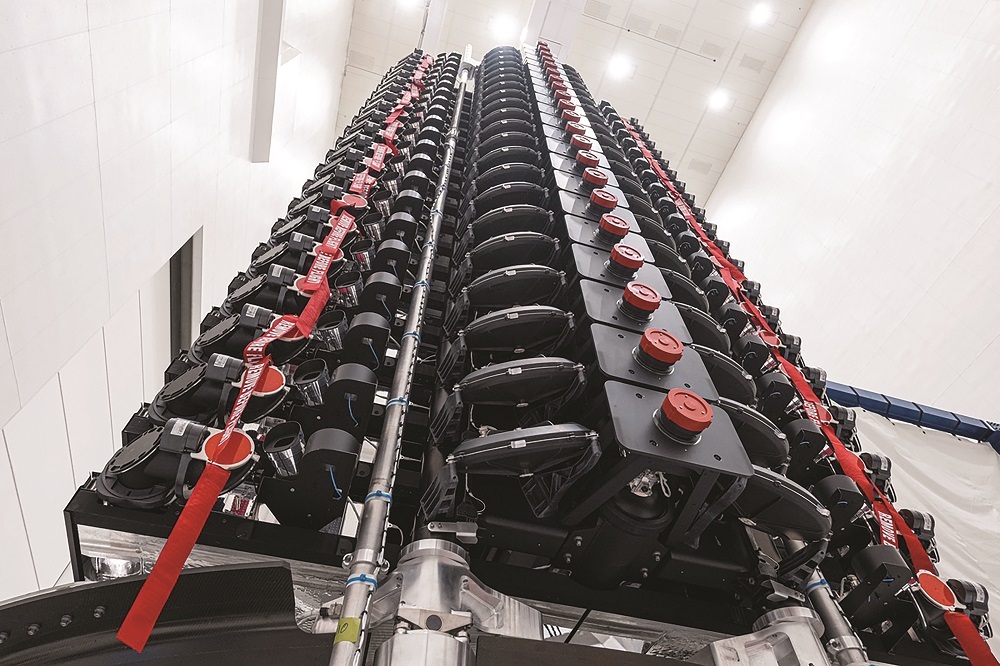
Wall Street Journal article about Starlink, with a little more financial data

This is related to @[email protected]'s post about SpaceX no longer taking losses to produce Starlink satellite antennas. The article below refers to that one.

ArsTechnica, in "SpaceX projected 20 million Starlink users by 2022—it ended up with 1 million".

It's based on a Wall Street Journal article, which seems like a bit of a hit piece. The headline claim is absurd, as some comments pointed out: the projection was in 2015! It also points out that skeptics had always said that Starlink would not do well in cities, which would be a more valid criticism if Musk and Starlink didn't point it out first.

But there was this reported number:

Actual Starlink revenue for 2022 was $1.4 billion, up from $222 million in 2021, according to the report. The documents apparently didn't specify whether Starlink is profitable.

It mentions numbers that Shotwell had previous provided and that may have been reported here. I'll add them to have more data in one place:

SpaceX President and COO Gwynne Shotwell said in February that Starlink is expected to turn a profit this year. While Starlink's specific profit or loss is unknown, the WSJ previously reported that SpaceX overall "eke[d] out a small profit in the first three months of [2023] after two annual losses." SpaceX's Q1 2023 numbers reportedly included a $55 million profit on $1.5 billion in revenue.

The CNBC article had this, partially quoted in this ArsTechnica article,

The company last provided an update on its global Starlink user base in May, when it said it had about 1.5 million customers. Hofeller did not specify what that total is now but said Starlink is "well over" that 1.5 million mark. The figure includes both consumer and enterprise customers around the world ...

View original on lemmy.world

(Reuters) US could advance SpaceX license as soon as October after rocket exploded in April

WASHINGTON, Sept 13 (Reuters) - The acting head of the Federal Aviation Administration said on Wednesday the agency could advance a launch license as early as next month for the SpaceX Starship rocket after a prior one exploded following a test launch in April.

"We're working well with them and have been in good discussions. Teams are working together and I think we're optimistic sometime next month," acting FAA Administrator Polly Trottenberg told reporters on the sidelines of a conference.

SpaceX would still need a separate environmental approval from the U.S. Fish and Wildlife Service before a launch. Trottenberg did not say how long that might take.

It has been noted that the last paragraph doesn't say that Trottenberg said that. It might have been the reporter's inference that it is needed, and Trottenberg may not have addressed it at all. Also, for the PEA, the FAA handled all of it, including interfacing with the U.S. FWS and all other governmental entities.

(Reuters) US could advance SpaceX license as soon as October after rocket exploded in Aprilhttps://www.reuters.com/business/aerospace-defense/faa-could-advance-spacex-starship-license-soon-october-2023-09-13/Open linkView original on lemmy.world