

Posts


Rare Snail Saved From Mining Captured Laying Eggs on Camera
A rare and threatened species of West Coast snail has been captured on camera laying an egg for the first time.
The Powelliphanta augusta snail was being weighed by Department of Conservation (DOC) ranger Lisa Flanagan in when the little egg emerged from its neck.
DOC had been managing a captive population of the snails in chilled containers since 2006, when Solid Energy started mining their habitat on the Mt Augustus ridgeline on the western side of the Stockton Plateau near Westport.
Flanagan said it was a special moment after 12 years looking after the snails.
"It's remarkable that in all the time we've spent caring for the snails, this is the first time we've seen one lay an egg.
 https://www.rnz.co.nz/news/national/560246/rare-snail-saved-from-mining-captured-laying-egg-on-cameraOpen linkView original on lemmy.nz
OpenEvidence Sounds Promising, but is it Reliable?
Excerpt: A new startup, OpenEvidence, believes that AI can solve this problem. They’ve developed an AI tool that can scan medical literature and quickly summarize key themes. For example, let’s say you ask the OpenEvidence AI a question like “How do I diagnose pancreatitis?” The tool would respond by listing out diagnostic criteria and the blood tests, imaging tests, physical evaluations, and patient questions for you to consider.
It’s easy to see that OpenEvidence wants to serve as a “co-pilot” for doctors. The tool has already been used by over 250,000 doctors in the United States and the company recently reached a $1 billion valuation. If you’re thinking about using OpenEvidence (or even if you’ve already used it), you might be wondering whether or not the information it presents is accurate. That’s an important question to ask because AI has been known to generate fake data and then present it as factual (researchers call this phenomenon “AI hallucination”).
So, is OpenEvidence reliable and trustworthy? The answer is: sometimes. When OpenEvidence took the US Medical Licensing Exam recently, it was wrong 9% of the time. While this performance was better than other AI tools (like ChatGPT), it still shows that OpenEvidence can make mistakes. If you rely on OpenEvidence to make clinical decisions, you could be giving patients misinformation which would create legal liability for you and your clinic.
To understand the risks, let’s take a look at a specific example where OpenEvidence recommends a treatment that would actually be harmful to patients. You may have heard about a complex neurological condition called Myalgic Encephalomyelitis (also known as “Chronic Fatigue Syndrome” or “ME/CFS”). This condition most commonly occurs after a viral infection — like mononucleosis or Covid — and the debilitating symptoms can last for years. It is estimated that millions of Americans have ME/CFS.
When you ask OpenEvidence “What is Chronic Fatigue Syndrome?” you get back a response that talks about symptoms, diagnosis, and potential biomarkers. You also get a short paragraph that describes suggested treatments for this condition:
“Treatment for CFS is primarily supportive and symptom-based. Cognitive behavioral therapy (CBT) and graded exercise therapy (GET) have shown moderate efficacy in improving fatigue levels, functional capacity, and quality of life. Pharmacologic treatments have not been consistently effective, and no specific medication is approved for CFS.”
OpenEvidence recommends exercise and therapy for ME/CFS because these treatments were mentioned in a medical guidebook that was published 13 years ago. Unfortunately, these treatments are no longer recommended because the research study supporting them was thoroughly debunked. In fact, the NIH published new guidance (in 2022) to point out the risks associated with these treatments:
“The British National Institute for Health and Care Excellence (NICE) recently published its updated guidelines for myalgic encephalomyelitis/chronic fatigue syndrome (ME/CFS). NICE concluded, after an extensive review of the literature, that graded exercise therapy (GET) is harmful and should not be used, and that cognitive behavioural therapy (CBT) is only an adjunctive and not a curative treatment.”
In other words, telling a patient with ME/CFS to start exercising is like telling a patient with lung disease to start smoking cigarettes. If a doctor followed OpenEvidence’s advice and recommended graded exercise therapy (GET) to a patient with ME/CFS, they would be harming that patient and opening the clinic up to legal liability. For this reason, doctors have to be extremely cautious when using OpenEvidence.
To be fair, this isn’t really the AI’s fault. It’s the company’s fault. The outputs from an AI can only be as good as the inputs. In this scenario, OpenEvidence has built a recommendation engine that is using outdated information. So the AI is doing an excellent job of summarizing the available data, but the underlying information is factually incorrect. If OpenEvidence is going to be successful, they need to make more of an effort to purge outdated sources from their database so that the AI will stop misleading doctors and harming patients.
 https://medium.com/@underwaterchimp/openevidence-sounds-promising-but-is-it-reliable-0b5f49fb8d5cOpen linkView original on lemmy.nz
Photo Friday!
Theme: cooler than expected
Rules: no NSFW and has to be a snap you took yourself.
I think we should make themes optional so if you have a pic you want to post that doesn't fit, you still can, what does everyone else think?
Photo Friday!
Hi everyone, can we do a Photo Friday?
@[email protected] used to post them, but I haven't seen them for ages and @[email protected] said it'd be okay.
Theme: Something you like!
Rules: no NSFW and has to be a snap you took yourself.
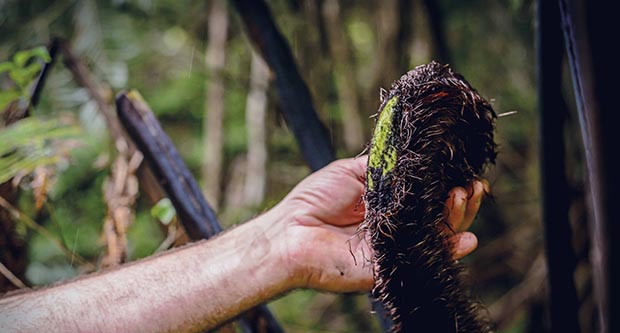
4 plants in the New Zealand bush you can eat in a survival situation
Stumbled on this and thought it was worth a share. I had no idea you can eat gorse!
 https://thisnzlife.co.nz/4-plants-new-zealand-bush-can-eat-survival-situation/Open linkView original on lemmy.nz
Cool short video about unique Archey's Frog
Was just talking about how cool New Zealand's rare frogs are and wanted to share. These frogs evolved to have no ears, so they also have no croaking noises (what's the point if the mates you are trying to attract are deaf) which is unique!
NB: There probably is a bit of "political" content insofar as some of the people are talking about threats to the frog and opposing its habatat destruction but I think this still belongs in general?
View original on lemmy.nz
NZGeo: Batfly
These blind wingless flies are vegetarian and can only travel on a rare species of bat who prefers to walk.
 https://www.nzgeo.com/stories/batfly/Open linkView original on lemmy.nz
New Zealand Geo: Batfly
This is a really good read about one of my favourite weird animal facts!
 https://www.nzgeo.com/stories/batfly/Open linkView original on lemmy.nz


Kahukura red admiral butterfly named NZ's Bug of the Year
The kahukura red admiral butterfly has been named New Zealand's Bug of the Year today, after nearly 17,000 bug lovers voted for their favourite insect.
Twenty bugs were vying to be New Zealand's favourite, with 11 of the 20 nominees listed as at-risk, endangered or declining.
The competition - run by the Entomological Society of New Zealand - was created to give bugs the same kind publicity seen in the popular Bird of the Year race.
The winning insects receive research funding and promotion about their conservation.
 https://www.rnz.co.nz/news/national/509208/kahukura-red-admiral-butterfly-named-nz-s-bug-of-the-yearOpen linkView original on lemmy.nz
Aotearoa Daily Kōrero 31/12/2023
Welcome to today’s daily kōrero!
Anyone can make the thread, first in first served. If you are here on a day and there’s no daily thread, feel free to create it!
Anyway, it’s just a chance to talk about your day, what you have planned, what you have done, etc.
So, how’s it going?

