Spyke

Replies

Comment on

The land of the fee and the home of the bribe 🦅🇺🇸🫡

Reply in thread

Yes, the US is purposely starving the world.

Yep. I doubt you'll care to read the following but I'm putting it here for others to see.

The United States is the world leader in imposing economic sanctions and supports sanctions regimes affecting nearly 200 million people. ... Targeted countries experience economic contractions and, in many cases, are unable to import sufficient essential goods, including essential medicines, medical equipment, infrastructure necessary for clean water and for health care, and food. ... While on paper most sanctions have some humanitarian exemptions for food, necessary medicines and medical supplies, in practice these exemptions are not sufficient to ensure access to these goods within the targeted country. (Center for Economic and Policy Research)

It's well known that sanctions are ineffective for pressuring governments, but very effective at waging siege warfare by starving and killing ordinary citizens by disease and infrastructural failures. Continuing to use sanctions in this way and to this extent, when this is well known, is definitely "purposely starving the world". An independent expert appointed by the Office of the High Commissioner for Human Rights said in 2019 that US sanctions violate human rights and international code of conduct and can lead to starvation. Why does the US continue to be the world leader in imposing sanctions, increasing its use of sanctions by 933% over the last 20 years, when this is well known? It's because they know the effect, and they're doing it on purpose.

We can also look at some US internal memorandums from before it was more politically incorrect to talk about starving people in other countries. In 1960, U.S. officials wrote that creating "disenchantment and disaffection based on economic dissatisfaction and hardship" through denying money and supplies to Cuba would be a method they should pursue in order to "bring about hunger, desperation and overthrow of government" in Cuba.

In other countries, we see a pattern of US officials and US-backed institutions purposely denying aid and loans to governments they don't approve of, and then suddenly approving aid and opening up loans when a coup brings a leader they're happy with into power. When Ghana was requesting aid under an administration that the West's bourgeoisie didn't like, U.S. officials said this: "We and other Western countries (including France) have been helping to set up the situation by ignoring Nkrumah’s pleas for economic aid. The new OCAM (Francophone) group’s refusal to attend any OAU meeting in Accra (because of Nkrumah’s plotting) will further isolate him. All in all, looks good." The "situation" they were helping to set up was a coup they knew was going to happen. After a US-friendly coup took place, suddenly it was time to give the "almost pathetically pro-Western" government a gift of "few thousand tons of surplus wheat or rice", knowing that giving little gifts like this "whets their appetites" for further collaboration with the US. You will find the same song and dance in numerous other countries, Chile being a well-documented example, if you simply look for it.

The US imposes starvation and depravation of other countries on purpose, using it as an economic wrecking ball, then pats itself on the back for giving "aid" to the countries which have been hollowed out by such tactics.

The loans which magically become available to countries that meet the US approval standards are not so pretty either, as a former IMF senior economist said, he may only hope "to wash my hands of what in my mind's eye is the blood of millions of poor and starving peoples", there not being enough soap in the world to wash away what has been done to the global south through the calculated fraud of the IMF, whose tactics are designed to accomplish the same kind of goals as the sanctions are--to prevent the economic rise of any country but the US by wrecking its competitors economically, tearing apart their local manufacturing capacity and transforming them into mere resource extraction projects, redirecting their agricultural industries into exports to make sure they reach a level where they are more reliant on imports to feed themselves, and reliant on foreign aid which is ripped away whenever they do not do what the US approves of or make friends with who the US wants them to.

I refer to #3, why don’t they just do it then?

This is what secondary sanctions and the US's various protection rackets have always been designed to prevent, which has definitely been a powerful tool for them, but it seems with the rise of the new non-aligned movement and de-dollarization its becoming a less successful one and we can see countries "just doing" what they want more and more while the US leadership waves around, as usual, more sanctions and military threats in response.
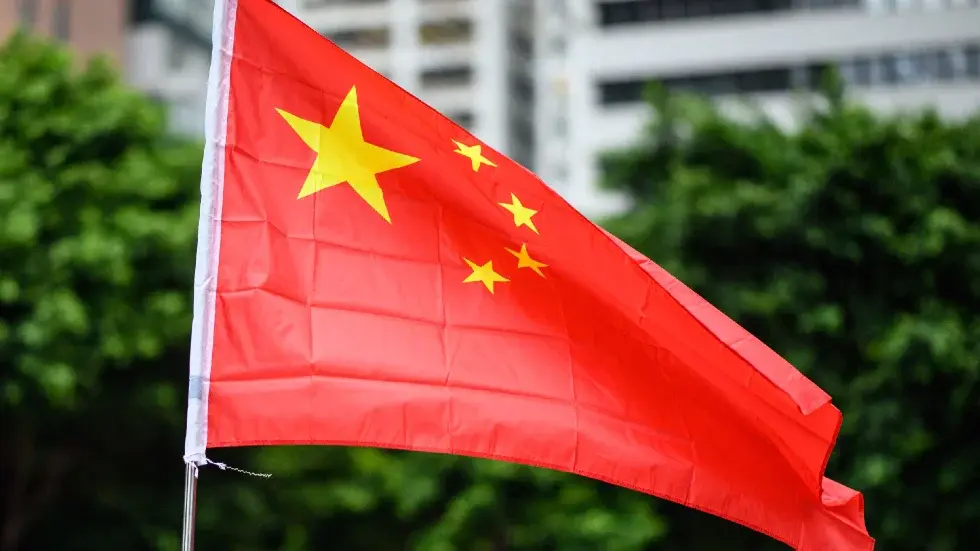
china

Comment on

Trans people in china, laws, advocacy groups and general acceptance

If you have not seen it already, you may be interested in this short 2021 documentary, "A Day of Trans 跨越性别的一天", made by a Chinese director who is transgender, which interviews four trans people in China. There is a woman in her 60s who tells some of her life story, a man in his 30s who talks about a gender identity discrimination lawsuit that he won in 2016 and about general issues trans people face in society, and two younger people (one identifies as genderqueer/nonbinary and the other is agender) who talk about their trans rights advocacy work. Each interviewee also talks about the attitudes in society about trans people over time, their own journey, etc.

Comment on

the world will never be the same

Reply in thread

I don't recall the exact details as I believe it was the usual UN demands about DPRK's missile launches, but basically China went along with a round of security council sanctions adopted in 2017, which meant that petroleum exports become more restricted and thousands of people from DPRK who were working in China had to go home and a bunch of joint ventures were forced to shut down as well. However, in 2022, China and Russia vetoed a new round of US-sponsored UN sanctions on DPRK, and recommended lifting some of the earlier sanctions, as they felt the US had failed to engage in its end of diplomacy with DPRK, and therefore the earlier sanctions should be reduced and no further ones should be imposed.

korea

Comment on

Video: Interview of middle school students in Pyongyang (English)

Reply in thread

Nah they do not look terrified, they look how the average kid their age looks when asked questions in class, on the spot, with a camera pointed at them, in a foreign language.

The cue cards comment is very funny, it's very obvious there are no cue cards in this situation, watch from 6:32. Take a look at the whole video and everyone's demeanor. Kids are smiling, some are laughing, some are bored. Your brain refuses to see normal and calm people existing in DPRK because you are conditioned to see fear in everyone's eyes.

Comment on

the world will never be the same

“We have many interesting projects,” Putin promised, naming as one example the plan to develop Russian railroad connectivity through North Korea. (Source)

Really interested to see if this is pursued.

This is an old article (2018) but it outlines the kinds of projects that have been discussed before concerning Russia-DPRK-ROK:

One such project could be a railway that will be able deliver goods from Russia to South Korea through North Korea. "Once the Trans-Korean Main Line is built, it may be connected to the Trans-Siberian Railway. In this case, it will be possible to deliver goods from South Korea to Europe, which would be economically beneficial not only to South and North Korea but to Russia as well," Moon Jae-in said in an interview with Russian media ahead of his state visit to Moscow.

A gas pipeline coming from Russia to North Korea to be extended to the South is another possibility, he said. "We can also build a gas pipeline via North Korea, so that not only South Korea will receive Russian gas but we will also be able to deliver it to Japan," the South Korean president said.

The project to unite the Korean Peninsula with a gas pipeline has been discussed for a long time, but official talks started in 2011. The negotiations were frozen after relations between Seoul and Pyongyang deteriorated. Last week, Russian energy major Gazprom announced it resumed talks with Seoul over the construction of a gas pipeline connecting Russia with North and South Korea.

The countries could also connect their electricity grids, Moon Jae-in said. "We can also establish a powerline that would allow us to receive electricity from Russia. It could also be delivered not only to South and North Korea but also to Japan.”

Comment on

Today I am 29 years old

Happy birthday, I'm glad you're here. Thank you for always finding and posting interesting information, you do a lot of digging and I like that you provide a lot of quotations when you share information. I'll definitely check that film out.

Feel free to ask me anything

Have you thought about writing articles about any of the topics you've done a lot of looking into?

conlang

Comment on

Is Esperanto worth learning in the modern day?

I learned Esperanto when I was pretty young. Although I wouldn't regard it as the right candidate for the purpose of being the world's second language, I'm definitely glad I learned it. By knowing Esperanto as a kid/teen from the imperial core, I ended up casually chatting with people from China, Iran, and central Africa (mainly Burundi, Republic of the Congo and Democratic Republic of the Congo), regularly listening to radio programs from Cuba, China, and Poland, and seeing lots of Esperanto art and culture that had been made in the Soviet Union. It really did introduce me to a lot of different perspectives that, at the time, I didn't realize were basically censored where I came from. And of course in general I met people from many countries. I would say that in any random conversation or community, I mostly met people from Europe, Brazil, and China.

The usual criticisms of it are pretty much valid in my view. However, just taking it as one language among many rather than pushing it as "the" solution for a world auxlang, I think it's worth studying a bit if it intrigues you. I'd say another valuable thing I learned by being in the Esperanto speaking 'sphere' since a young age is that I really saw what kind of things it takes to get people organized to do something, what it takes to popularize an idea, and what kind of stuff absolutely does not work for getting people to believe or do something (there's a lot of that in Esperanto communities lol). It's also interesting to watch the development of the language, because it is a living language that grows and changes on its own at this point, while also having a regulating body, and a ton of highly opinionated idealists arguing constantly about this stuff. In that sense I find it an interesting window into how people manage and conceive of development in things. Finally I think it's an instructive case in observing the growth and development of an auxlang, which could aid future, improved projects in that vein.

Having studied a few different languages, I will say that in my opinion, Esperanto lives up to the claim of being easy to learn. If you speak a Romance language it will be especially smooth sailing. When I have spoken with people who learned it from a completely non-European language background, they said it took a while to learn the vocabulary and that the pronunciation was difficult in some regards, but it was otherwise easy compared to natural European languages, which I would guess is owing to its lack of irregularities in grammar and spelling, its flexibility in grammar, the lack of demand that people have a particular accent, and the lack of strict collocations.

A lot of people dislike it that Esperanto lacks certain cultural things that natural languages have. IMO that kind of comes with the territory of learning a constructed language. Personally, I think it's fun, as it creates kind of a playful/creative atmosphere. Esperanto serves as more of a tool or vehicle for sharing cultural things than as a deep well of culture in and of itself.

Like most things, the Esperanto community is full of liberals. This becomes somewhat balanced by the community itself being focused on trying to meet people from other countries and the community having a general curiosity for the world and wanting to do cultural exchange. But you will find many liberal and some reactionary opinions flying around in Esperanto communities. The idea/original "plan" behind Esperanto was pretty idealist (although I do think conlangs can have very real, useful applications worth exploring), so the community has a bit of that in its veins.

Personally, I am happy I learned it. I don't use it frequently these days, but I do enjoy listening to a few songs, and I'll always be happy about the friends I made, or to randomly run into someone else who speaks it and have a chat. Is it something I highly recommend? No, not really. But if it interests you, I think it's something fun to do, and you'll meet new people, and may find chances to travel or work using the language if you really look (you'd be most likely to find work in Europe or China using Esperanto if you managed to do so).

Final note: You can take a VR tour of an Esperanto museum in China here. I thought it was pretty cool.

china

Comment on

Trans people in china, laws, advocacy groups and general acceptance

You might also be interested in this 2017 study, "Survey Report on the Survival of the Transgender Community in China" published by the Beijing LGBT Center and the Department of Sociology at Peking University: Brief, PDF. It surveys trans people about several things, including their methods of accessing hormones, how they feel out in public, rating different types of workplaces for how trans-friendly or unfriendly they feel, etc.

As well as this one from 2018, "Legal Gender Recognition in China: A Legal and Policy Review" by UNDP and China Women’s University: Info and links to PDFs. This one is mainly a review that goes into detail about several laws that affect trans people and recommending specific improvements legislators, government ministries, businesses, NGOs, etc. can make. It also includes information from key informant interviews. (Article about the review)

Comment on

Can you give me a compilation of sources that describe how U.S sanctions work and affect people's lives in the Global South?

Comment on

A new announcement on making reports 😁

Recently I think I saw a brief message pop up about a report being entered (?), not sure if I accidentally reported something or got reported or what. Not exactly looking for a solution I just want to have mentioned this somewhere in case I did in fact report someone's post accidentally, sorry about that. I didn't fully see what the text box that briefly appeared said😅

Comment on

I just heard that the DPRK is PatSoc. Thoughts?

The "patsoc" ideas which promote patriotism in the imperial core and reject decolonization are much different from the socialist patriotism which is anti-imperialist and decolonial. DPRK does uphold socialist patriotism, which is regarded as part of its internationalist duty of completing the Korean revolution by focusing the majority of its attention on Korea, to make sure their revolution is successfully carried out, and which is specifically against promoting national chauvinism, and rejects racism.

DPRK's emphasis on looking inward for solving its problems and on self-reliance come from Korea's specific conditions. Specifically, Korea has been a battleground for world powers for much of its existence and historically had strong ideological currents of subservience to larger powers influencing its politics, which posed obstacles for progressive/revolutionary movements in Korea since feudal times and into the modern era. After DPRK was formed, it also had to deal with the issue of different influential strains of thought among socialist countries, including its powerful neighbors, Russia and China, during the Sino-Soviet split. The opening of China and the fall of the Soviet Union led to further inner debates. DPRK's emphasis on focusing on its own conditions is a necessity for it to avoid dogmatically following other states' lines and thus committing errors in its own revolution, not a blanket rejection of foreign ideas.

I am still learning about Songun, but from what I have read so far, it seems to have its roots in the Cuban missile crisis where US aggressions were ramping up, and finally came to the fore as policy during the Arduous March, when the US was trying to use the economic upheavals after the fall of the Soviet Union, with the US attempting to end DPRK by intentionally starving its people to death. It was determined that in order for Korea to complete its revolution and defend socialism, it would be necessary to heavily prioritize defense due to DPRK being under constant mortal threat from imperialism. Edit: Also, with DPRK's more recent nuclear developments, I believe the policy of Byungjin (parallel development of military and economy) has returned to the fore, though I may be wrong about that. I'd appreciate being corrected if someone knows.

::: spoiler Kim Il Sung on socialist patriotism, preventing chauvinism, and rejecting isolationism

In educating the working people in socialist patriotism, care should be taken to prevent the growth of tendencies to national chauvinism and restorationism. One may be apt to head for chauvinism on the plea of building an independent national economy by one’s own efforts and promoting national pride. If we steer in the direction of chauvinism as Regent Taewongun pursued a policy of national isolation, we will come to reject international exchange and advanced science and technology from other countries and, accordingly, hinder the development of our country. Likewise, it is wrong for us to dislike reading foreign books and feel disinclined to learn foreign languages on the grounds of building an independent national economy and establishing Juche in science. It does not always follow that one is infected with revisionism because one reads foreign technical books and that one becomes pro-Japanese or pro-American because one learns Japanese or English. When learning foreign languages we must not lay stress on any one of them but study Russian, Chinese, English, French and other languages. The point is to learn them for the good of the people and for contributing to the rapid development of the socialist motherland, without engaging in flunkeyism. Besides inspiring the working people with national pride, we should educate them better in the spirit of internationalism. Thus, we will fight resolutely against the imperialists and Right and “Left” opportunists, in unity with the peoples of the socialist countries, and in close unity with many other peoples of the world.

:::


::: spoiler quote about preventing dogmatism in solving problems in the revolution without mechanically copying others

From the work "Modern Korea" by Kim Byong Sik

For countries such as Korea, where the working class has conquered power and established a dictatorship of the proletariat, it is vital to the success of the revolution to work out correct theoretical propositions concerning the transitional period: How to understand the significance and nature of the transitional period, how to set the various tasks of the transitional period according to its different stages, and how to analyze inter-relationships between the transitional period and the dictatorship of the proletariat.

Despite the importance of these questions to the revolution, there has been insufficient clarification and various deviations have been committed, with the result that immeasurable damage has been done to the practical struggles for socialist and communist construction. This urgent problem -- the task of solving correctly, theoretically, the question of the transitional period and the dictatorship of the proletariat- was accomplished by Kim Il Sung, in detail, on the basis of the revolutionary principles of Marxism-Leninism.

His ideas and theory were developed in his work, Questions of the Transitional Period from Capitalism to Socialism and the Dictatorship of the Proletariat. In this work, he said:

As with all other scientific and theoretical questions, questions of the transitional period should be solved on the basis of the Juche idea of our Party. We should never try to solve these questions dogmatically by becoming slaves to the classical propositions on this question, nor should we be influenced by subservient ideas and follow others in the solution these questions.

In the interpretation of classical propositions it is essential to understand the historical circumstances and the premise on which the classical works were based. Only on this basis is possible to understand the content of classical propositions and to grasp their revolutionary meaning. If the historical circumstances are ignored, it will lead inevitably to a one sided and dogmatic interpretation or to a revisionist interpretation that seriously distorts the revolutionary content.

Specifically, if a classical proposition is applied mechanically to a changed situation, without considering the historical circumstances and theoretical premises related to the proposition, not only will a fundamental error be committed in the theoretical solution of the question but a decisive error in practice will also result. Thus, to solve the problems of the transitional period and the dictatorship of the proletariat, it is necessary to base ourselves firmly on the revolutionary propositions of Marxism-Leninism and, at the same time, to uphold the Juche idea of applying them creatively to suit the constantly changing and developing actual conditions of the revolution.

:::


I recommend this essay on ProleWiki, The Cleanest Farce: How "Experts" Distort the DPRK, and the page about Juche which has sections about Juche's relationship to dialectical materialism and to Marxism-Leninism specifically. Tl;dr is that ML is seen as a correct revolutionary idea but that it, being very old by now and being formulated in the world's first successful socialist revolution, it lacks certain concrete details about socialist construction in the present day and also (naturally) has a different context than Korea's revolution. Therefore it is regarded as a basically correct idea for revolutionaries to follow, but that following it dogmatically is an insufficient application of it, and all countries will need to forge their own path to suit their own conditions as they are confronted with the task of socialist construction and defending the revolution in the present conditions. Juche takes the dialectical materialist view of the world, and it is just dealing more with how people can have a certain attitude and point of view to successfully carry out revolution.

Comment on

What is the percentage of homelessness in Socialist countries compared to capitalists countries?

Reply in thread

United Nations Population Fund's summary of DPRK's 2008 census: "Housing is provided by the government free of charge. It is the responsibility of the state to provide housing to everyone. Hence, there is no homeless population." (p. 4)

Unfortunately, I haven't yet double-checked that particular document's authorship (i.e., is it the UNFPA summary as the uploader's description states? Or is it the summary that DPRK's statistics bureau submitted to UNFPA? Or something else?), so take it with a grain of salt and try to verify it if you're going to be using that quote for something.

::: spoiler More info (although not exactly what you asked for, but maybe some will interest you)

DPRK Socio-Economic, Demographic and Health Survey, 2014: This one is co-written by the DPRK's Central Bureau of Statistics and the United Nations Population Fund. There is no specific mention of homelessness in the report but lots of information about housing.

Article: North Korean defector says no homelessness in Pyongyang: "Kim Ryon-hui, the North Korean defector who had said she was tricked into traveling to South Korea by Seoul’s spies in China, said life is better in the North. [...] Kim said South Koreans know very little about life in North Korea, and that upon her arrival in the South, she was surprised by the sight of numerous homeless people in the Seoul subways. Kim said she had never seen homelessness in Pyongyang, because if someone is lost they are taken to their home by a helpful stranger. 'I was surprised that [homeless South Koreans] don't look for their parents or siblings,' she said, stating she had lived in a socialist country for 42 years." (Oddly, this news outlet appears to have been bought at some point by a company connected with the anti-communist Moon organization) (More about Kim Ryon-hui's attempts to return to DPRK and being held in the south against her will)

:::

Comment on

Serious question: how is it possible that CIA is presented in good light in movies?

https://en.prolewiki.org/wiki/Hollywood

The U.S. Department of Defense has access to the scripts of thousands of Hollywood films and modifies them to make them more favorable to U.S. militarism.[5] The government and military have complete editorial control over many of these films.[3] The government often censors movies that suggest U.S. military incompetence, war crimes, or involvement in torture or coups. Many movies that are critical of U.S. imperialism are never released at all.[5] Pro-imperialist films are allowed to use authentic military equipment and vehicles that the producers would not be able to afford otherwise.[1] Popular U.S. movies that have been influenced by the Pentagon or CIA include Apollo 13, James Bond, Jurassic Park, Godzilla, Transformers, and the Marvel movies. Pentagon contracts usually specify that the government's role in the film must not be disclosed.[5]

Kwame Nkrumah writing about this issue in 1965:

Even the cinema stories of fabulous Hollywood are loaded. One has only to listen to the cheers of an African audience as Hollywood’s heroes slaughter red Indians or Asiatics to understand the effectiveness of this weapon. For, in the developing continents, where the colonialist heritage has left a vast majority still illiterate, even the smallest child gets the message contained in the blood and thunder stories emanating from California. And along with murder and the Wild West goes an incessant barrage of anti-socialist propaganda, in which the trade union man, the revolutionary, or the man of dark skin is generally cast as the villain, while the policeman, the gum-shoe, the Federal agent — in a word, the CIA — type spy is ever the hero. Here, truly, is the ideological under-belly of those political murders which so often use local people as their instruments.

Sorry that I don't have much to add personally aside from these quotes.

Comment on

The Third Reich kidnapped and attempted to forcibly assimilate thousands of Polish children

Reply in thread

Reminds me of this Aime Cesaire quote: 

[C]olonization works to decivilize the colonizer [...] each time a head is cut off or an eye put out in Vietnam and in France they accept the fact, each time a little girl is raped and in France they accept the fact, each time a Madagascan is tortured and in France they accept the fact, civilization acquires another dead weight, a universal regression takes place, a gangrene sets in, a center of infection begins to spread; [...] a poison has been distilled into the veins of Europe and, slowly but surely, the continent proceeds toward savagery.

And then one fine day the bourgeoisie is awakened by a terrific boomerang effect: the gestapos are busy, the prisons fill up, the torturers standing around the racks invent, refine, discuss.

People are surprised, they become indignant. They say: "How strange! But never mind-it's Nazism, it will pass!" And they wait, and they hope; and they hide the truth from themselves, that it is barbarism, the supreme barbarism, the crowning barbarism that sums up all the daily barbarisms; that it is Nazism, yes, but that before they were its victims, they were its accomplices; that they tolerated that Nazism before it was inflicted on them, that they absolved it, shut their eyes to it, legitimized it, because, until then, it had been applied only to non-European peoples; that they have cultivated that Nazism, that they are responsible for it, and that before engulfing the whole edifice of Western, Christian civilization in its reddened waters, it oozes, seeps, and trickles from every crack.

Yes, it would be worthwhile to study clinically, in detail, the steps taken by Hitler and Hitlerism and to reveal to the very distinguished, very humanistic, very Christian bourgeois of the twentieth century that without his being aware of it, he has a Hitler inside him, that Hitler inhabits him, that Hitler is his demon, that if he rails against him, he is being inconsistent and that, at bottom, what he cannot forgive Hitler for is not the crime in itself, the crime against man, it is not the humiliation of man as such, it is the crime against the white man, the humiliation of the white man, and the fact that he applied to Europe colonialist procedures which until then had been reserved exclusively for the Arabs of Algeria, the "c---" of India, and the "n---" of Africa.

[...] [T]hrough the mouths of all those who considered and consider it lawful to apply to non-European peoples "a kind of expropriation for public purposes" for the benefit of nations that were stronger and better equipped, it was already Hitler speaking!

Comment on

have some questions for my Juche comrades

Knowing how the wheel of history spins now has given us the ability to predict it and therefore the power to take our destiny into our own hands and shape history after our desire.

I'm not an expert and still in the process of learning about this, but I would say your understanding of it here more or less lines up with my understanding from what I have read so far.

As I understand, Juche dismisses the idealist world outlook as groundless and also rejects mechanical materialism, and holds that the dialectical materialist view is the scientific view of the world. However, it is considered that merely holding a dialectical materialist view does not automatically cause people to start using it as a tool to change the world to humanity's benefit, which is the question that the Juche idea is mainly concerned with: defining and promoting humanity's role in changing the world, and increasing peoples' consciousness of this role. As I understand it, Juche promotes the concept that humans (as a collective whole) not only can but should center themselves in changing the world to benefit them, within the real scientific limits of the world, i.e. with the knowledge of the laws of nature and society which operate independent of human's will. This is seen as a necessary attitude in humanity's emancipation from oppression, as simply having a dialectical materialist view does not necessarily cause people to start acting on humanity's behalf even if it does give them an accurate scientific view of reality's motion.

Texts about Juche seem to primarily focus on asserting that it is correct for humans to center their own needs in how they shape the world, and also focus on discussing humanity's historical pursuit for independence and methods of preserving that independence when it is achieved through progressive revolutions, with the primary focus now being the struggle to end imperialism and capitalism and to defend and evolve socialism, in order to remove exploitation from society and continue on humanity's path to pursuing independence from all restrictions, both natural and social, overcoming them with a methodical and scientific understanding combined with an attitude of intentionally centering human needs and desires in the way humanity consciously shapes the world.

If someone sees something wrong with my understanding, please let me know. I am still in the process of learning about this.

Comment on

Situation of Queers in Gaza

I don't know much about the subject specifically in Gaza or in Palestine in general, aside from this academic paper which is about the use of pinkwashing as a colonizer tactic. Regarding advocacy groups it mentions the group alQaws. Here is an article by alQaws: Queer Liberation & Palestine. Quote from article in which they warn about the weaponization of LGBTQ issues to further colonial agendas:

Israeli settler colonialism, and tactics such as “pinkwashing” weaponize our queer experiences to place us in opposition to our own society and communities. Pinkwashing is a form of colonial violence. It promotes harmful narratives and policies that alienate queer Palestinians from our own communities. Our answer to pinkwashing is to say that liberation is indivisible, and that there will be a place for all of us at the rendezvous of victory. The Israeli criminal government and Zionist LGBTQ movement manipulate and exploit queer Palestinians’ lived realities to advance a colonial agenda. The standards for solidarity and action cannot be set by the colonizer.

Another article from them: No Queer “Co-Resistance” with Colonizers: Confronting Normalization and Pinkwashing

In alliance with anti-colonial coalitions, alQaws developed and popularized the concept of “pinkwashing” to expose how Israel and its defenders use the language of LGBTQ rights to distract from the oppression of Palestinians. Over the years, Palestinian activists came to recognize that pinkwashing is not simply an outward-facing propaganda machine—it is a direct form of colonial violence, one that pushes Palestinians to view ourselves and our communities through the lens of colonial prejudice.

Pinkwashing relies on exploiting progressive rhetoric about “tolerance” and “gay rights,” to conceal the violent nature of the occupation and settler-colonialism in Palestine. Normalization, similarly, draws on liberal ideals of “dialogue” and “partnership.”

5 Way to Support Palestinian Queers

Perpetuating tiresome tropes of presenting Palestinians as inherently oppressive and Israel as a liberal state that protects LGBTQ rights is counter-productive and factually baseless. Israel is a settler-colonial state that offers no rights to Palestinians, queer or otherwise. Our struggle as queer Palestinians is against Israeli colonialism as much as it is against homophobia and patriarchy in Palestine. Israel uses pinkwashing tactics to lie about “saving” LGBTQ Palestinians from their society. We ask that you steer away from these lies that are intentionally used to justify their colonization of Palestine. alQaws and our allies in Palestine will continue to amplify our message as well as provide protection and a political home for LGBTQ Palestinians. Israeli LGBTQ groups do not have a say in the work that should be done to fight patriarchy and homophobia in Palestine, including the incitements led by the Palestinian police.

As I said, I don't know much about it beyond the above, which I have not looked deeply into, so take this information with a grain of salt.