Spyke

Posts

energy·Green EnergybySteve

Solar Energy Becomes a Larger Power Source Than Coal in the U.S. for the First Time

For the first time on record, solar power has generated more electricity than coal in the United States, marking a structural shift in the country’s electricity mix and the accelerating role of renewables in the grid. In May 2026, solar accounted for approximately 12.8% of U.S. electricity generation, while coal accounted for about 12.2%. This marks the first monthly period in which solar surpassed coal in electricity output.

Solar Energy Becomes a Larger Power Source Than Coal in the U.S. for the First Timehttps://mymodernmet.com/solar-energy-us-coal-electricity/Open linkView original on slrpnk.net
energy·Green EnergybySteve

Global Solar Council and Global Mayors organisation unite to scale rooftop solar in cities worldwide

he Global Solar Council (GSC) and the Global Covenant of Mayors for Climate & Energy (GCoM) have announced a new global partnership to help city leaders rapidly scale rooftop solar and battery storage, unlocking cheaper, cleaner and more reliable power for communities worldwide.

The partnership, announced at GCoM’s 10th anniversary celebration at Guildhall, London, will connect city leaders with solar industry expertise, practical tools and global networks to help scale distributed clean energy where it matters most: in homes, schools, businesses and community facilities.

Global Solar Council and Global Mayors organisation unite to scale rooftop solar in cities worldwidehttps://www.globalsolarcouncil.org/news/global-solar-council-and-global-mayors-organisation-unite-to-scale-rooftop-solar-in-cities-worldwide/Open linkView original on slrpnk.net
landback·Land BackbySteve

AMERICA 250: A Step-By-Step Guide to Indigenous Erasure - Underscore Native News

As America prepares to honor the 250th anniversary of its founding, historians and Indigenous people are working to remind this nation of its dealings with Native people and of the contributions that Native people have made to this country’s establishment.

Perhaps one of the most important contributions Native people have made to America is providing a framework for this country’s governmental structure.

“They say ‘Greek and Roman’ and talk about all the influences, but the Founding Fathers had never seen a working confederacy of nations ever, ever, ever. They had dreamt about it. They had heard about it,” said Suzan Shown Harjo, Cheyenne and Hodulgee Muscogee. “Nothing had been like that in Europe. It had never happened, and the first confederacy of Native nations they met and experienced they did in this country, and in our country, in our territories, and that was everyone from the Haudenosaunee, the Six Nations, Iroquois Confederacy, to the Anishinaabe Confederacy, the Muskogee Confederacy.”

Harjo holds her own place in American history, having spent a lifetime as both a teller of Native stories and an activist who has worked to empower Native voices, most notably leading the effort to get the Washington professional football team to change its offensive Native nickname. She has both made and explained history and said while life for Native people has improved over the past 250 years – a period marked by epidemics, warfare, broken treaties, stolen land, stolen children, and erasure – America still has much work to do to address its sordid history.

AMERICA 250: A Step-By-Step Guide to Indigenous Erasure - Underscore Native Newshttps://www.underscore.news/culture/histories/america-250-a-step-by-step-guide-to-indigenous-erasure/Open linkView original on slrpnk.net
energy·Green EnergybySteve

Scottish homes net zero tech boom: solar panels and heat pumps surge…

The number of Scottish homes with solar panels has almost doubled since before the last gas price crisis started following Russia’s invasion of Ukraine and electric heat pumps have been installed at about twice the rate of homes in England. In Aberdeenshire and Stirling, one in ten homes now have solar panels.

New analysis of Microgeneration Certification Scheme data by the Energy and Climate Intelligence Unit (ECIU) has found Scottish homes pulling ahead of England for the first time in recent years in installing solar panels [1]. There are now 20% more solar PV systems on Scottish homes compared to England (52 per 1,000 Scottish households cumulatively vs 44 in England), and this figure has almost doubled since 2019 (23 per 1,000 Scottish households).

Solar is not the only net zero technology that has experienced strong growth. Scotland has installed heat pumps at twice that rate of England (over 17 air source heat pumps per 1,000 households cumulatively in Scotland, around 9 per 1,000 households in England). Deployment in Scotland has accelerated sharply in recent years, rising by more than threefold since 2019, highlighting how quickly net zero heating has increased in popularity in Scottish homes. This prevalence of heat pumps likely reflects the higher number of off-gas grid homes in Scotland, where heat pumps replace oil or biomass systems.

Upticks in solar and heat pumps installations come largely after 2021, coinciding with a spike in public interest during the last energy crisis and support for net zero technologies like the introduction of the Boiler Upgrade Scheme.

Scottish homes net zero tech boom: solar panels and heat pumps surge…https://eciu.net/media/press-releases/scottish-homes-net-zero-tech-boom-solar-panels-and-heat-pumps-surge-ahead-of-englandOpen linkView original on slrpnk.net
criterion·The Criterion CollectionbySteve

The Complete Kubrick

A titan of cinema whose influence extends across visual art, philosophy, politics, technology, fashion, and beyond, Stanley Kubrick created an unprecedented string of masterpieces, from Paths of Glory to Dr. Strangelove to 2001: A Space Odyssey, A Clockwork Orange, The Shining, and Eyes Wide Shut. Bending disparate genres to his will, he imbued his creations with a cuttingly ironic worldview and an iconographic, mesmerizingly precise visual style, probing the anxieties, enigmas, and horrors of the twentieth century with a coolly devastating eye. Tracing his evolution from independent maverick to Hollywood rebel to visionary transnational auteur whose every film from the mid-1960s on became a manifesto of a radically new sensibility, The Complete Kubrick brings together the entirety of a body of work that opened popular cinema up to new realms of moral profundity and metaphysical mystery.

Collected here for the first time are Kubrick’s thirteen features and three shorts, all restored in 4K, with their original soundtracks alongside the 5.1 mixes, restored and remastered; over twenty-five hours of interviews, documentaries, and behind-the-scenes materials; and deluxe packaging illustrated with rare photographs, artwork, and documents annotated by Kubrick himself, all housed in a singular box inspired by the director’s legendary archive.

The Complete Kubrickhttps://www.criterion.com/boxsets/9000-the-complete-kubrickOpen linkView original on slrpnk.net
energy·Green EnergybySteve

Solar farms can help to regenerate land while generating energy, new study finds

A new study has demonstrated the regenerative effect that solar farms can have on degraded and depleted land, by sheltering it from harsh winds, pushing down surface and soil temperatures, and boosting soil moisture.

The study, published in the journal Geography and Sustainability, synthesises 147 individual studies on a range of different land types and across a range of climate variables, to see how solar farms interact with their immediate environment.

“Unlike the pollutant-dominant environmental impacts of fossil fuels, solar power exerts climate- and ecology-dominant influences on the entire environment,” the study finds.

“By changing land surface radiative properties, solar photovoltaic (PV) systems create new energy interaction interfaces with original ecosystems, thereby modifying land surface processes and associated climate variables.”

Across the 147 total studies analysed in the report’s meta-analysis, 609 solar farms were examined, the vast majority of which were located in the Northern Hemisphere, with the largest number in China (316), the United States (104), and India (44). This is consistent with their global rankings as the top three countries in terms of installed solar PV capacity.

Solar farms can help to regenerate land while generating energy, new study findshttps://reneweconomy.com.au/solar-farms-can-help-to-regenerate-land-while-generating-energy-new-study-finds/Open linkView original on slrpnk.net
energy·Green EnergybySteve

“Cannot be explained” – New ultra stainless steel stuns researchers

A stainless steel breakthrough from the University of Hong Kong (HKU) could help solve one of the biggest problems facing green hydrogen: how to build electrolyzers that are tough enough for seawater, yet cheap enough for large scale clean energy.

Led by Professor Mingxin Huang in HKU's Department of Mechanical Engineering, the team developed a special stainless steel for hydrogen production (SS-H2). The material resists corrosion under conditions that normally push stainless steel past its limits, making it a promising candidate for producing hydrogen from seawater and other harsh electrolyzer environments.

The discovery, reported in Materials Today in the study "A sequential dual-passivation strategy for designing stainless steel used above water oxidation," builds on Huang's long running "Super Steel" Project. The same research program previously produced anti-COVID-19 stainless steel in 2021, along with ultra strong and ultra tough Super Steel in 2017 and 2020.

“Cannot be explained” – New ultra stainless steel stuns researchershttps://www.sciencedaily.com/releases/2026/05/260510030950.htmOpen linkView original on slrpnk.net
energy·Green EnergybySteve

Scientists Make Water-Based Battery That Could Last 300 Years Using Tofu Brine Ingredients

A battery usually hides its nastiest chemistry from view. Inside many rechargeable systems, useful energy moves through liquids that are strongly acidic, alkaline, flammable, corrosive, or difficult to discard. The battery works, until the same chemistry that made it powerful begins to eat away at its parts.

A team in China and Hong Kong has now built a very different kind of battery. Its electrolyte is a neutral water-based solution of magnesium and calcium salts, chemically close to the brines used to coagulate tofu. In tests, the device ran for 120,000 charge cycles, used nonflammable ingredients, and met several disposal safety standards, the researchers in China report.

It is not ready to replace the battery in your phone. But it points toward a cleaner kind of battery for the place where longevity matters most: the electric grid.

Scientists Make Water-Based Battery That Could Last 300 Years Using Tofu Brine Ingredientshttps://www.zmescience.com/science/news-science/water-tofu-battery/Open linkView original on slrpnk.net
landback·Land BackbySteve

Nine Native American tribes sue US Forest Service over approval of drilling at sacred site

Nine Native American tribes have filed a lawsuit against the US Forest Service over its approval of a graphite drilling project near Pe’ Sla, a site in the Black Hills that holds cultural and spiritual significance for Native Americans.

The Oglala Sioux Tribe, Cheyenne River Sioux Tribe, Crow Creek Sioux Tribe, Lower Brule Sioux Tribe, Santee Sioux Tribe, Sisseton-Whapeton Oyate, Spirit Lake Sioux Tribe, Standing Rock Sioux Tribe and Yankton Sioux Tribe — also known as the Oceti Sakowin, or Seven Council Fires of the Great Sioux Nation — are all plaintiffs in the lawsuit.

The lawsuit challenges the decision to allow Rapid City-based Pete Lien and Sons to allow exploratory drilling for a potential graphite mine. Graphite is used in electric vehicle batteries, lubricants, pencils and other products.

The drilling is planned near Pe’ Sla, also known as Reynolds Prairie, which is owned and used by the tribes for prayer, ceremony and cultural activities.

The lawsuit says the US Forest Service improperly used a process known as a “categorical exclusion” to bypass environmental and cultural reviews. The tribes never ceded the land in the Black Hills to the United States, Oglala Sioux Tribe President Frank Star Comes Out said in a press release.

“The Black Hills remain the spiritual center of the Great Sioux Nation, and they are not for sale, lease, or exploitation by energy companies,” Star Comes Out said. “This lawsuit represents a united tribal response to protect a sacred site from those who continue to desecrate our ancestral lands.”

The tribes argue the drilling activities “will harm the land and natural and cultural resources in the Black Hills,” and will especially harm Pe’ Sla by “disrupting and interfering with sacred ceremonies and practice there,” according to the press release.

The lawsuit alleges a categorical exclusion was improper because the project includes drilling, road work and other activity near Pe’ Sla, which goes beyond what a categorical exclusion allows. The plaintiffs also argue that Pe’ Sla’s religious and cultural importance should have triggered a fuller review, rather than the abbreviated process.

https://www.newsfromthestates.com/article/nine-native-american-tribes-sue-us-forest-service-over-approval-drilling-sacred-siteOpen linkView original on slrpnk.net

lunar_punk·LunarpunkbySteve

Could glow-in-the-dark plants replace street lamps?

Chinese biotech startup Magicpen Bio has created plants that glow in the dark, per EuroNews.

By splicing genes from fireflies and bioluminescent mushrooms, they genetically engineered some 20 plant species, including lilies, orchids, and roses, to emit visible light, a technical feat that reportedly took ~532 rounds of iterations to achieve.

Amid climate change and rising demand for energy, Magicpen founder Li Renhan says glowing plants could one day provide an electricity-free, cost-efficient way to illuminate cities around the world.

Could glow-in-the-dark plants replace street lamps?https://thehustle.co/news/could-glow-in-the-dark-plants-replace-street-lampsOpen linkView original on slrpnk.net
fiction·FictionbySteve

Superman, Dreams and Solarpunk

There is a line from Action Comics #775, spoken by Superman after being told he is living in a dream world, that I think about more than any piece of dialogue has a right to occupy my mind. He responds: “Good. Dreams save us. Dreams lift us up and transform us into something better. And on my soul, I swear that until my dream of a world where dignity, honour and justice are the reality we all share, I’ll never stop fighting. Ever.”

Superman matters because he chooses to be good when he could just as easily not. He is not interesting because he can punch through walls, fly and shoot lasers. He is interesting because he could rule the world and instead decides to help. That is not a childish fantasy. It is a moral proposition, and one that gets more radical the darker things get.

He is also, and this gets overlooked, a character defined by loss. His entire planet is gone. His birth parents are dead. He is, in the most literal sense, an orphan of a destroyed world. His response to that is not bitterness or withdrawal. It is showing up, every day, for a world that does not always return the favour.

Responding to loss with love rather than retreat is the hardest thing a person can do. I know that now.

Superman would be a solarpunk. A man powered literally by the sun, who uses that power for others, who believes that the world can be better and acts on it. Solarpunk and Superman share the same conviction. Hope is not passive. It is a choice and a discipline, and it asks more of you than despair ever does.

Superman does not protect himself from disappointment. He puts on the cape knowing he will be mocked, knowing the world will let him down, knowing that the dream of dignity, honour and justice is perpetually unfinished. He does it anyway, because giving up is worse.

The future is not guaranteed. But it is worth the fight. And the people who imagine something better, who refuse to let cynicism close the book, will be the ones who build it.

Dreams save us. I believe that. Not because I have not been paying attention. But because I have.

Superman, Dreams and Solarpunkhttps://substack.com/@gabrieltherizzo/p-192346390Open linkView original on slrpnk.net
energy·Green EnergybySteve

$1.4B saved: Massachusetts locks in cheaper offshore wind power

Massachusetts has activated long-term contracts for Vineyard Wind, the state’s first utility-scale offshore wind project. Officials say the move will stabilize prices for 20 years and cut a projected $1.4 billion from customer electricity bills over that period.

The contracts, signed by utilities on behalf of customers, are expected to deliver average direct savings of about 1.4 cents per kilowatt-hour. That’s less than half the peak power prices New England saw during a cold snap this past winter.

The timing matters. During that winter, Vineyard Wind was already feeding electricity into the grid and competing in wholesale markets, and, according to the state, it consistently undercut other sources on price.

Now that the contracts are in effect, those lower prices are locked in.

Vineyard Wind is an 806-megawatt (MW) offshore wind farm that’s about 14 miles off the Massachusetts coast. It started producing electricity in January 2024, after construction began in late 2022. The project reached mechanical completion in Q1 2026.

In 2025 alone, Vineyard Wind installed 624 MW of capacity, helping drive a 261% jump in total US offshore wind capacity that year.

State officials say the project has created nearly 4,000 jobs and generated $1.94 billion in economic output so far.

It’s also expected to cut more than 1.6 million metric tons of carbon emissions annually, roughly equivalent to taking 325,000 gas cars off the road or burning more than 3.7 million barrels of oil.

$1.4B saved: Massachusetts locks in cheaper offshore wind powerhttps://electrek.co/2026/05/01/1-4b-saved-massachusetts-locks-in-cheaper-offshore-wind-power/Open linkView original on slrpnk.net
energy·Green EnergybySteve

Solar ranch in Tennessee aims to prove grazing cattle under the panels is a farmland win-win

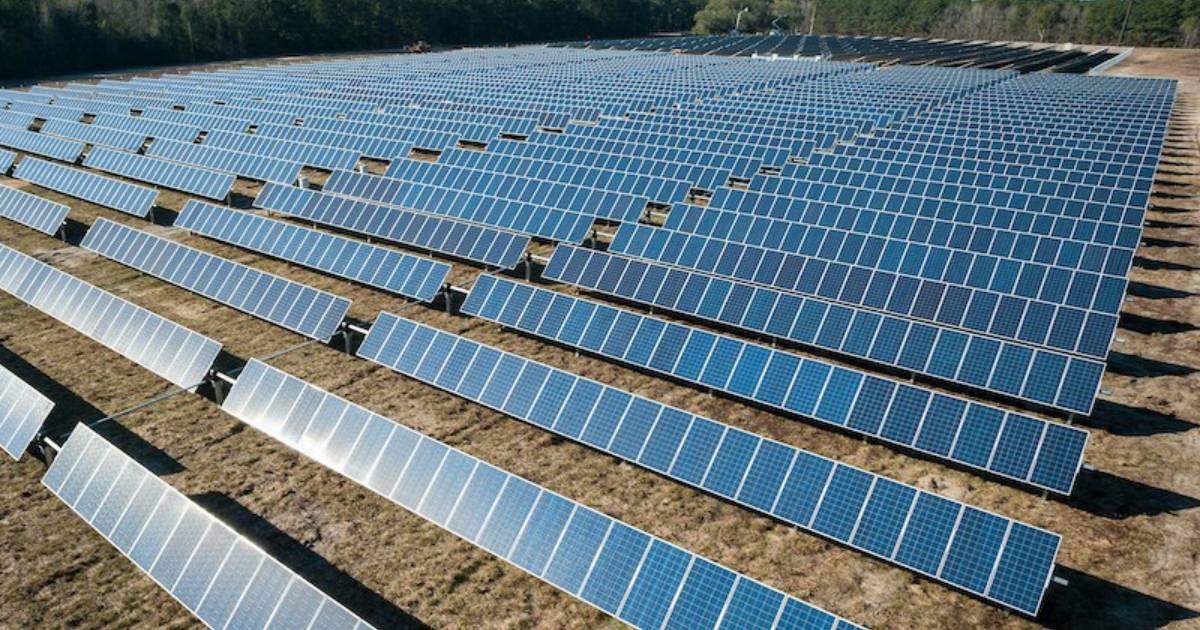
CHRISTIANA, Tenn. (AP) — From a distance, the small solar farm in central Tennessee looks like others that now dot rural America, with row upon row of black panels absorbing the sun’s rays to generate electricity.

But beneath these panels is lush pasture instead of gravel, enjoyed by a small herd of cattle that spends its days munching grass and resting in the shade.

Silicon Ranch, which owns the 40-acre farm in Christiana, outside of Nashville, believes cattle-grazing is the next frontier in so-called agrivoltaics, which mostly has involved growing crops or grazing sheep beneath the panels.

The solar company debuted the project this week and will spend the next year working to demonstrate to farmers that much larger cattle also can thrive at solar sites. If successful, advocates say, that could jump-start new projects to meet the soaring electricity demand driven by rapidly expanding data centers — without contributing climate-warming carbon emissions — and help cattle producers hold onto their land and livelihoods.

“Solar is one of the most powerful tools we have for cutting emissions and ... is cost-competitive with fossil fuels,” said Taylor Bacon, a doctoral student at Colorado State University who has studied ecological outcomes at solar grazing sites. “I think we’re starting to see enough research that, when you do it well, the land use can be more of an opportunity than a downside.”

Solar ranch in Tennessee aims to prove grazing cattle under the panels is a farmland win-winhttps://apnews.com/article/solar-cattle-grazing-silicon-ranch-tennessee-67e0ab41c0c3f55230401dfd228a924fOpen linkView original on slrpnk.net
energy·Green EnergybySteve

Trust and turbines: how conspiratorial thinking and wind farm opposition fuel each other

A generalized tendency to believe in secret plots can predict whether someone will oppose the construction of a local wind farm months later. Likewise, coming to oppose that local wind farm can deepen a person’s general conspiratorial worldview over time. These mutually reinforcing perspectives can potentially stall the transition to renewable energy sources if community concerns go unaddressed. The research was recently published in the Journal of Environmental Psychology.

Trust and turbines: how conspiratorial thinking and wind farm opposition fuel each otherhttps://www.psypost.org/trust-and-turbines-how-conspiratorial-thinking-and-wind-farm-opposition-fuel-eac/Open linkView original on slrpnk.net
energy·Green EnergybySteve

Solar power without sunlight: Engineered wood can store energy for use

Solar energy has a simple but annoying weakness. It disappears when the sun does. Even the most efficient systems struggle with this basic reality—no sunlight means no power. Scientists have long tried to fix this by storing solar energy as heat, but doing it efficiently has proven tricky.

Most designs rely on stacking different materials together—one to absorb sunlight, another to store heat, and then another to protect the system. These layers don’t work seamlessly, wasting energy at every boundary.

Now, researchers have taken a very different approach to overcome this problem. Instead of assembling multiple parts, they’ve turned wood into an all-in-one solar energy system.

By redesigning its internal structure at the nanoscale, they’ve created a material that can absorb sunlight, store it as heat, and keep generating electricity even after the light is gone.

Solar power without sunlight: Engineered wood can store energy for usehttps://interestingengineering.com/energy/wood-converts-sunlight-into-heatOpen linkView original on slrpnk.net
energy·Green EnergybySteve

European-made solar arrays to power first crewed mission to the Moon since 1972

The Artemis II mission, scheduled to lift off from the Kennedy Space Center in Florida this evening, will take a crew of four around the Moon and back, testing new life support and other technologies for future deep-space exploration.

Central to NASA’s Artemis II Orion spacecraft is the European-built solar array that will provide its power once in space.

The array features four seven-metre-long solar wings attached to the European Space Module (ESM) built by Airbus for the European Space Agency (ESA). Airbus described the ESM as the “powerhouse” of the spacecraft, providing the propulsion, power, thermal control and the air and water needed for the crew.

European-made solar arrays to power first crewed mission to the Moon since 1972https://www.pv-tech.org/european-made-solar-arrays-power-first-crewed-mission-moon-since-1972/Open linkView original on slrpnk.net
lunar_punk·LunarpunkbySteve

🌓On lunarpunk living: making my own clothes

I love textiles. I love fabric.

The way organza flutters through my hands and catches light, even in a dark room. Satin ripples, slow like a whale’s call. Velour fabric glints brightly as fresh snow.

When I lived in London I’d spend many weekends mooching round fabric shops, going straight to the bins of discounted off cuts. A quirk of mine involves feeling sad to behold rejected or discarded objects, and I’d take home random bits of impractical fabric, relieved it had been saved, and try to work out what on earth I’d do with them. And thus I began to sew.

In Berlin (but also before) I’ve made quite a few pieces that now reside in my wardrobe. They’re not immaculately hemmed or from an avant-garde pattern. To be honest, most of them have mistakes. But I love seeing process in a piece of art. Or maybe that’s a bit disingenuous, and the truth is that I’ve always been a bit impatient. Sewing, I’ve learned, is all about patience. And I think, I hope, it has made me more patient. After a few years and tantrums, when I couldn't figure out why my dear tiny sewing machine is all bunged up.

Lunarpunk living says fast fashion is dull. While individualism has been warped into a vast moneymaking exercise, my homemade experiments not only lets my soul sit on the outside of my body, but also encourages me to make what’s in my heart, and not on the Pinterest trends for the coming year. In an age of cultural homogenization through algorithmic manipulation, unpredictable fashion is even more important.

🌓On lunarpunk living: making my own clotheshttps://thelunarverse.substack.com/p/on-lunarpunk-living-making-my-ownOpen linkView original on slrpnk.net
energy·Green EnergybySteve

‘Suddenly energy independence feels practical’: Europeans are building mini solar farms at home

Installing solar panels on your home or business is common in many European countries. But they really come into their own during energy crises.

“If you’ve got a solar roof on your home and you’ve got a battery then, depending on how much energy you can generate, you are substantially insulated from importing electricity,” explains Matthew Clayton, CEO of UK-based Thrive Renewables.

Dynamic tariffs are becoming more common in Europe. This is where the price of electricity varies throughout the day and night, with costs going up during peak periods, like dinner time, when households are using more.

This means that if you store up solar power during daylight hours, when the sun is at its strongest, then you can use that energy, rather than drawing it from the electricity grid, during the most expensive periods. “Your relationship with the grid is totally changed,” says Clayton.

‘Suddenly energy independence feels practical’: Europeans are building mini solar farms at homehttps://www.euronews.com/2026/03/26/suddenly-energy-independence-feels-practical-europeans-are-building-mini-solar-farms-at-hoOpen linkView original on slrpnk.net
energy·Green EnergybySteve

The Feds Pulled $1.5B From Tribal Clean Energy. Tribes Are Finding Another Way. - WhoWhatWhy

Across tribal nations, hosting a convening with dinner and a tour of an ambitious new project is a familiar scene. But for David Harper, a member of the Colorado River Indian Tribes and CEO of the newly created tribal energy financing organization Huurav, a recent gathering felt different. Last week, at the Bluewater Resort and Casino on the Colorado River Indian Tribes reservation in western Arizona, Huurav met with tribal leaders, investors, and farmers to kick off the tribe’s first agrivoltaics project: a practice that allows for growing crops beneath solar panels.

The project marks a significant breakthrough for the tribe and the broader tribal clean energy landscape, arriving on the heels of a devastating blow to federal support. In October of last year, the passage of President Donald Trump’s tax bill, colloquially known as the “One Big Beautiful Bill Act,” stripped roughly $1.5 billion in federal funding earmarked for tribal renewable energy and climate resilience projects.

“Were we surprised by the claw back? No, they’ve done it before,” said Huurav’s Harper. “Have they reneged on their promise of our treaties? Yes, of course. So does that immobilize us and not be able to survive? No, what it does is it helps us, it makes us create a better pathway for ourselves.”

With nearly 1,600 projects by tribal governments and Native entities losing some or all of their federal funding, tribes have been forced to get creative. To keep clean energy projects alive, tribes are turning to philanthropy, low-interest loans, and nonprofits to bridge the massive financial gap.

The Feds Pulled $1.5B From Tribal Clean Energy. Tribes Are Finding Another Way. - WhoWhatWhyhttps://whowhatwhy.org/science/environment/the-feds-pulled-1-5b-from-tribal-clean-energy-tribes-are-finding-another-way/Open linkView original on slrpnk.net
solarpunk·SolarpunkbySteve

Why Africa needs a green bank to fund climate action and build its own renewable technology

Climate change is a profound challenge to the livelihoods of many people in African countries who have contributed so little to its cause. More frequent extreme weather events (floods, heatwaves and droughts) are making hunger, insecurity and displacement much worse. The continent holds an estimated 30% of the minerals that are essential for the future transition away from fossil fuels. However, Africa mostly exports these raw, leaving companies in other countries to reap the rewards of manufacturing low-carbon technologies and digital infrastructure. Sustainable development economists Michael Adetayo Olabisi and Howard Stein propose a new African “green bank” as a solution.

Why Africa needs a green bank to fund climate action and build its own renewable technologyhttps://theconversation.com/why-africa-needs-a-green-bank-to-fund-climate-action-and-build-its-own-renewable-technology-277347Open linkView original on slrpnk.net