
Logbook, February 2024. Stop by and say hi!
Happy February, ultralighters! Here’s a place to catch up and chat and discuss things that might not warrant their own post.
Happy February, ultralighters! Here’s a place to catch up and chat and discuss things that might not warrant their own post.

Happy New Year, ultralighters! Here’s a place to catch up and chat and discuss things that might not warrant their own post. Did you do anything cool or get any nifty gift this holiday? Did you make any New Year's Resolutions?
Hi everyone! Wishing you all a happy holiday season, whatever it is you celebrate.
For me, it's the solstice. Do you have a holiday in particular? What do you do to celebrate?
Here's a place to catch up and chat and discuss things that might not warrant their own post.
Title. I'm moving into late fall for the Valley weather, and looking down the barrel of winter. What is your coping strategy?
Doggo fell down again. Arthritis sucks.
That is all.
Everyone I know who has gone on travel without a mask (including myself) in the USA is catching COVID. Mask up, y'all.
cross-posted from: https://iusearchlinux.fyi/post/1294232
So we did the trip! Winter gear shakedown in place of a Wind River trip that got weather'd out. We did 8 miles in to Alaska Basin (9500', trailhead at 7100') in the rain/snow on Friday. Stayed up in the basin overnight, temperature dipped to 30 F (at least - maybe was colder overnight, but I moved the thermometer into the tent). Weather was overcast but no precipitation on Saturday for the hike back out.
Lower elevations still have autumn
Beautiful weather
Fresh black bear tracks (I think)
Basin lake
More Alaska Basin
Good morning snow
Some kind of pawed critter (coyote?)
Gorgeous day back out
Things I learned for backpacking in the rain/slush/snow: hell yeah dry bags kept the gear from getting damp from a day's worth of rain and snow. I need a better fleece solution. I also need a better puffy solution and a better camp shoe situation. My boots were waterlogged (which was fine while hiking, they are not waterproof, but no way am I going to wear them around camp) and the Crocs flats I brought did Not provide any protection from cold/wind/snow. My random Columbia Sherpa fleece is way overkill for hiking and doesn't dry quickly. My (non technical) down jacket got soaked in the back when I put it over the fleece. My wool gloves also got wet and became useless. Yikes.
Other things I learned: it was really nice being out there in different weather, in a different season, with no one else (except my husband) around. I loved it. Would do again. Also I am glad we nixed the Winds trip, the weather would have been worse and we would have had a much harder time of it. Getting this experience was good, before we got hit with it on the trail unexpectedly.
So we did the trip! Winter gear shakedown in place of a Wind River trip that got weather'd out. We did 8 miles in to Alaska Basin (9500', trailhead at 7100') in the rain/snow on Friday. Stayed up in the basin overnight, temperature dipped to 30 F (at least - maybe was colder overnight, but I moved the thermometer into the tent). Weather was overcast but no precipitation on Saturday for the hike back out.
Lower elevations still have autumn
Beautiful weather
Fresh black bear tracks (I think)
Basin lake
More Alaska Basin
Good morning snow
Some kind of pawed critter (coyote?)
Gorgeous day back out
Things I learned for backpacking in the rain/slush/snow: hell yeah dry bags kept the gear from getting damp from a day's worth of rain and snow. I need a better fleece solution. I also need a better puffy solution and a better camp shoe situation. My boots were waterlogged (which was fine while hiking, they are not waterproof, but no way am I going to wear them around camp) and the Crocs flats I brought did Not provide any protection from cold/wind/snow. My random Columbia Sherpa fleece is way overkill for hiking and doesn't dry quickly. My (non technical) down jacket got soaked in the back when I put it over the fleece. My wool gloves also got wet and became useless. Yikes.
Other things I learned: it was really nice being out there in different weather, in a different season, with no one else (except my husband) around. I loved it. Would do again. Also I am glad we nixed the Winds trip, the weather would have been worse and we would have had a much harder time of it. Getting this experience was good, before we got hit with it on the trail unexpectedly.
Welp, this is an interesting forecast for the 2023-2024 winter in the USA. Hiking season may start earlier in the Northern Rockies, later in the SoCal region. All a probability forecast though, so we shall have to see.
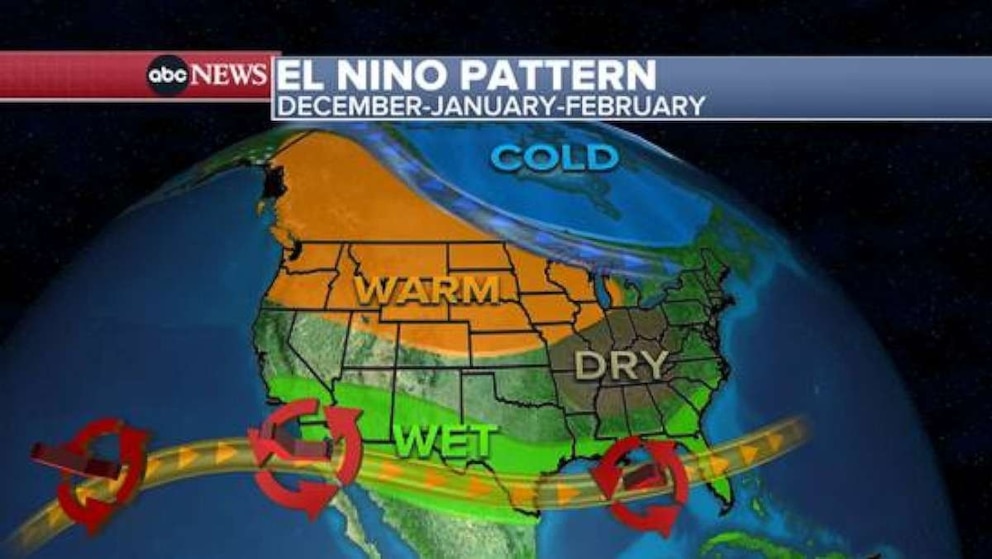 https://abcnews.go.com/US/el-nino-affect-us-winter/story?id=103466319Open linkView original on iusearchlinux.fyi
cross-posted from: https://iusearchlinux.fyi/post/1047974
In late July, I took what was intended to be a four-day, three-night hike in the Sawtooth Wilderness area in Idaho, USA. We intended to take the trip in early July, but the snow over Sand Mountain pass was still quite bad according to the ranger.
The trip was to start from the west Yellow Belly Lake trailhead (7076’), pass by Farley lake (7745’), go up the pass by Edith lake (8720’), past that knot of passes and by Sand Mountain and down the pass (9219’) to Rendezvous lake (8861’) for Day 1, with a total of 8.6 miles and about 2950’ climbing elevation. Day 1 started late, around 2 pm (yay driving) and we hiked in the hottest part of the day; but we did it! Unfortunately we had to tack on 2 more miles hiking because Google was not reliable in getting us to the intended trail access point and sent us to the farther one. Live and learn… Total mileage, 10.6 mi.
Edith lake
Rendezvous lake from the pass
Sand mountain (it's not sand, but it's super eroded and looks like it), with the final knife-edge pass
Day 2 was to be the lake tour! Starting from Rendezvous lake, pass by Edna lake (8404’), Vernon lake (8460’), Ardeth lake (8288’), Spangle lake (8585’), Rock slide lake, Benedict Lake, and finally camp at Everly lake, in the shadow of Mount Everly. This involved a ton of up-and-down bouncing us between about 8050’ and 8700’, and would have entailed 3 full passes and a final climb up to Everly lake over 11.2 miles total. However, my knee was starting to complain about the repetitive stress injury I’d sustained earlier in the season. In the interest of safety, DrBohr and I decided to stop at Spangle Lake and chill out for the day, explore the area, and enjoy the quiet. Total distance: 6.3 mi, 1449’ climbing elevation.
Rendezvous lake at sunrise
Looking down from a pass toward Edna and Vernon lakes
I don't remember which lake this was...
Little Spangle Lake
Day 3 was supposed to be a descent from Everly Lake down to Smith Falls and then back to Rendezvous lake or one of the other nearby lakes on the western side of the pass for a total of 12.5 miles and 2700’ of ascent. However, that didn’t happen due to bailing out early at Spangle lakes. Instead, we retraced our path from Spangle Lake. We intended to stop at Edith Lake or Farley lake that day, leaving us with 6-8 miles to hike out on the last day. That really seemed like it would happen given that my knee started getting pissed off on the descents again.
Big Spangle lake
One of the small lakes at one of the wide, flat passes
However, I decided to try something: ibuprofen and Tylonol together - I’d heard this was a pretty great painkiller combination. Heck yeah it is! It was amazing. My knee pain…disappeared. I think I was getting some nerve involvement along with the inflammation. I thought I would be able to hobble out to Edith or Farley lake, but it turns out… we hiked out the entire rest of the way, 16.3 miles, 2862’ ascent. We were motivated to get home back to our two dogs. Never have I ever been so glad to see the car!
Looking down towards Farley lake (near) and Yellow Belly lake (far), with the White Cloud mountains in the background and remaining snow in the foreground
I was afraid I’d have trashed my knee, but the pain meds and shifting my weight more forward for the descents gave me just general knee fatigue the next day. Success!
In late July, I took what was intended to be a four-day, three-night hike in the Sawtooth Wilderness area in Idaho, USA. We intended to take the trip in early July, but the snow over Sand Mountain pass was still quite bad according to the ranger.
The trip was to start from the west Yellow Belly Lake trailhead (7076’), pass by Farley lake (7745’), go up the pass by Edith lake (8720’), past that knot of passes and by Sand Mountain and down the pass (9219’) to Rendezvous lake (8861’) for Day 1, with a total of 8.6 miles and about 2950’ climbing elevation. Day 1 started late, around 2 pm (yay driving) and we hiked in the hottest part of the day; but we did it! Unfortunately we had to tack on 2 more miles hiking because Google was not reliable in getting us to the intended trail access point and sent us to the farther one. Live and learn… Total mileage, 10.6 mi.
Edith lake
Rendezvous lake from the pass
Sand mountain (it's not sand, but it's super eroded and looks like it), with the final knife-edge pass
Day 2 was to be the lake tour! Starting from Rendezvous lake, pass by Edna lake (8404’), Vernon lake (8460’), Ardeth lake (8288’), Spangle lake (8585’), Rock slide lake, Benedict Lake, and finally camp at Everly lake, in the shadow of Mount Everly. This involved a ton of up-and-down bouncing us between about 8050’ and 8700’, and would have entailed 3 full passes and a final climb up to Everly lake over 11.2 miles total. However, my knee was starting to complain about the repetitive stress injury I’d sustained earlier in the season. In the interest of safety, DrBohr and I decided to stop at Spangle Lake and chill out for the day, explore the area, and enjoy the quiet. Total distance: 6.3 mi, 1449’ climbing elevation.
Rendezvous lake at sunrise
Looking down from a pass toward Edna and Vernon lakes
I don't remember which lake this was...
Little Spangle Lake
Day 3 was supposed to be a descent from Everly Lake down to Smith Falls and then back to Rendezvous lake or one of the other nearby lakes on the western side of the pass for a total of 12.5 miles and 2700’ of ascent. However, that didn’t happen due to bailing out early at Spangle lakes. Instead, we retraced our path from Spangle Lake. We intended to stop at Edith Lake or Farley lake that day, leaving us with 6-8 miles to hike out on the last day. That really seemed like it would happen given that my knee started getting pissed off on the descents again.
Big Spangle lake
One of the small lakes at one of the wide, flat passes
However, I decided to try something: ibuprofen and Tylonol together - I’d heard this was a pretty great painkiller combination. Heck yeah it is! It was amazing. My knee pain…disappeared. I think I was getting some nerve involvement along with the inflammation. I thought I would be able to hobble out to Edith or Farley lake, but it turns out… we hiked out the entire rest of the way, 16.3 miles, 2862’ ascent. We were motivated to get home back to our two dogs. Never have I ever been so glad to see the car!
Looking down towards Farley lake (near) and Yellow Belly lake (far), with the White Cloud mountains in the background and remaining snow in the foreground
I was afraid I’d have trashed my knee, but the pain meds and shifting my weight more forward for the descents gave me just general knee fatigue the next day. Success!
In the context of building a trailer, there are two major controlling aspects:
In many ways, trailer lightweighting strategies borrow from the ultralight hiking community:
What do most trailers do? Well, most RVs are equipped to handle a family and provide a lot of creature comforts, a “home away from home”, as base camps. This makes them big, heavy, and not very mobile. Teardrop trailers are minimal little rigs that are nice for touring while you camp at established campsites with bathroom facilities and water. This makes them extremely limited in features. Campervans are designed to be minimal but self-sufficient movable homes that can access remote locations.
In my case, the target activity is: A trailer that can extend our hiking range by giving us a place to stay at remote trailheads and/or on the way back home. Thus, the trailer needs to be a self-sufficient, but minimal, home that is able to handle two to three nights of use without a resupply. It doesn’t need to handle a week; and it doesn’t need to be a home-away-from-home. In addition to being lightweight because we don’t want to sell either of our cars, light weight is also good for accessing remote locations. The trailer will be used primarily in summer, but could extend into shoulder seasons.
Minimum basis set of features: Start with a clean slate, and start adding in features that are needed, rather than taking a full RV (or other example) and reducing features you don’t need. In our case, we need a space tall enough to stand up in, that we can take a “Navy” shower in, that has a toilet, a bed, a table to dine at, a sink, and a burner to boil water on. It needs to be weatherproof and adequately ventilated. So what does that mean? Plumbing - water tanks (clean, gray, and maybe black), water pumping; propane fuel; a waterproof area.
Then what? Do we need a fridge? (Maybe… cold beers are nice after a hike.) A TV? (Nope!) An oven or microwave? (Nope and nope!) A furnace? (Maybe, shoulder seasons could get chilly at altitude.) A water heater? (Yes please.) Electricity? (Maybe, if we put in electrical items…) Lights? (Oh - yeah. Duh. So electricity is a must.) A separate dining area versus the bed? (Nope, convertible spaces are cool.) Does that toilet need to flush? (No, it can be a dry toilet - bye bye, black water tanks!) Will there be air conditioning? (No - way too resource intensive.) Will there be space for dogs? (Well, they can sleep in the trailer when we sleep, but they can’t stay in there when we’re gone.)
Construction techniques are probably the biggest place that people build their fears. This trailer will be moving down the highway at 60+ mph, going over bumpy roads… so the initial thought is to build it like a house+tank. Three-quarter inch plywood floor! Wood 2x4 framing! Screws everywhere!
Well… sure, you could do that… but it’s going to be H.E.A.V.Y.
Cue a piece of wisdom from a teardrop trailer forum. A wise person said, a trailer is more like a plane or a boat, not a moving house. Enter… marine and aerospace wisdom!
Guess what construction method is often used in these cases - not plywood with framing, but composites. Lots and lots of composites. Sandwich panels and fiberglass abound. Bonding happens with adhesives instead of screws.
What is a sandwich panel, you ask? A sandwich panel is a multilayer building panel that consists of a relatively thick layer of foam panel bonded on both surfaces to a thin layer of rigid, solid material such as plywood. The thicker the foam layer, the stronger the panel. The high strength-to-weight ratio comes from increasing the stiffness of the panel (by making it thicker) while minimally increasing its weight.
What about fiberglass? Fiberglass is a composite material consisting of glass fibers embedded in a polymer matrix. Strength is provided by the glass fiber, while rigidity is provided by the polymer (typically epoxy or polyester - more on that later). The glass can come in a woven sheet or a chopped strand mat (unwoven). Woven sheet is strong, while chopped strand mat is weaker but more formable. Fiberglass can be used to provide strength or simply to provide waterproofing. The more glass there is, the stronger and heavier.
DrBohr and I decided to go with a sandwich panel construction (edit: foam and plywood) with two layers of exterior fiberglass for waterproofing and structural integrity.
In the next post, I will talk about materials and component selection for our trailer.
In Part I of this series of posts, I explained the motivation for building a custom ultralight trailer and its basic requirements. As a reminder, it needs to be 1500 lbs (or preferably less), with an interior bed/dinette conversion, shower, toilet, and (very) basic kitchen, and tall enough to stand up in. It should be able to handle about three days without resupply.
In this post, I will talk about understanding what’s already been done by people already, because reinventing the wheel is dumb.
We (my husband, DrBohr, and I, CherenkovBlue) initially had no real idea of how we wanted to execute this trailer, only a vision of what we wanted to achieve. So we started by educating ourselves voraciously on what people had already done. There are several good resources, including the Teardrops and Tiny Trailers subreddit, the www.tnttt.com forum, and books on the topic. These forums are incredibly helpful for finding information about construction techniques from DIYers. Many people there are building teardrop or squaredrop trailers, in which the trailer consists of a living space with a bed inside (and really, only a bed and some cabinets), and a fairly extensive kitchen that opens to the outside world on the backside of the trailer.
Teardrop trailers are quite light, but not what DrBohr and I are exactly interested in (rats, we can’t just adopt a blueprint…). What we’re after is a place to sleep and shower in at the trailhead, with the ability to boil water for coffee and rehydrated meals. Teardrop trailers typically do not contain toilets or showers and are not tall enough to stand up in. They are often constructed out of 4’x8’ sheets of material, with one sheet per side wall, to give a sense of the size. The kitchens also tend to be overkill for the purposes of DrBohr and I, and their back hatch tends to be a source of water ingress when it rains.
There are multiple vendors of teardrop and tiny trailers, including TAG and Scamp (and many others). TAG trailers are very similar to what DrBohr and I would like to build, so their layouts and interior solutions are a very useful point of reference. Many people also mod their TAG trailers, providing some great hacks for personalizing the living space and improving utility. Scamp manufactures fiberglass trailers and almost hit our weight limit for their smallest trailer, but not quite. These trailers are tall enough to stand up in and do include showers, toilets, beds, and kitchens. However, they tend to be slightly (or more than slightly) over-featured, such as including televisions and microwaves, that DrBohr and I are not interested in, which also increases the weight.
Campervan conversions are a rich source of information and work with many of the same limitations that this trailer will have. Being a full living space in a regular vehicle rather than a large-engine, tow-specialized vehicle, weight and dimensions are a key concern. Because campervan conversions frequently include showers and electrical systems, many online resources are available discussing plumbing and wiring. They also include interior kitchens and bed-to-dining area conversions to maximize utilization of interior space, which is in line with our trailer needs as well.
In Part III of this series, I will discuss Lightweighting Strategies, or Challenging Your Assumptions.
It's been maybe a month since I posted my original photos of my Fourth of July tomatoes and forsythia plant. Here they are now! Still surviving despite several weeks of 90+ F weather and some weekends away, neglecting to water them.
Serious growth has occured after two applications of Miracle-Gro
Got some wilting from lack of water :( But most of it has recovered, amazingly! (The forsythia is bomb, btw. It's a tank, it's taken the lack of water like a champ)
Money shot
cross-posted from: https://iusearchlinux.fyi/post/417724
I day-hiked in to the Bighorn Crags area a couple of weeks ago. The Bighorn Crags are named for their bighorn sheep and really cool craggy granite mountains. They are quite old and eroded, with lots of cirques, crags, and towers. I would recommend getting to the trailhead and camping, then backpacking in for a few days.
Getting to the trailhead is a 2.5 hour drive from Salmon, Idaho through forest service roads. The first 1.5 hours are fine - well maintained dirt roads with easy grades. The last 18 miles takes an hour on a really crappy road deep into the mountains. Tire popper rocks abound, so be careful and be prepared! There is a campground at the trailhead.
The trail system is such that you hike along a ridge line for about six miles until you reach the major crags.
From the trailhead you almost immediately hit the Frank Church Wilderness boundary. You will pass some trails to go to a couple of lakes but they are some distance away and a hike down from the ridge line. The ridge line is dry, so bring water.
The first lakes you reach in the crags are Wilson Lake and Harbor Lake at about mile 7.1.
The trail bounces around between about 8500' and 9200' elevation. However, one way is about 1700' of ascent, meaning we had 3400' ascent and 3400' descent in 14 miles round trip.
I day-hiked in to the Bighorn Crags area a couple of weeks ago. The Bighorn Crags are named for their bighorn sheep and really cool craggy granite mountains. They are quite old and eroded, with lots of cirques, crags, and towers. I would recommend getting to the trailhead and camping, then backpacking in for a few days.
Getting to the trailhead is a 2.5 hour drive from Salmon, Idaho through forest service roads. The first 1.5 hours are fine - well maintained dirt roads with easy grades. The last 18 miles takes an hour on a really crappy road deep into the mountains. Tire popper rocks abound, so be careful and be prepared! There is a campground at the trailhead.
The trail system is such that you hike along a ridge line for about six miles until you reach the major crags.
From the trailhead you almost immediately hit the Frank Church Wilderness boundary. You will pass some trails to go to a couple of lakes but they are some distance away and a hike down from the ridge line. The ridge line is dry, so bring water.
The first lakes you reach in the crags are Wilson Lake and Harbor Lake at about mile 7.1.
The trail bounces around between about 8500' and 9200' elevation. However, one way is about 1700' of ascent, meaning we had 3400' ascent and 3400' descent in 14 miles round trip.
cross-posted from: https://iusearchlinux.fyi/post/277201
I took this out-and-back hike in August 2022. It was a 9.3 mile hike one way. You start in relatively populated national forest land and then as you rise through the mountains, reach the Wilderness area. The trail climbs through Bear Basin, switch backing up the bowl of the basin to the first pass, which is stunning. The descent down the pass is rough with lots of steep gravel. The trail splits and you take the high trail to the east, over the next pass to Summit Lake, which is nestled between two mountains, then over the lass tiny pass and down into the last, big basin. Hike along the meadow until you reach Thompson Lake at the foot of Gallatin peak. You can summit the peak, but I didn't. I surely didn't see a reasonable trail up it!
Looking into Bear Basin
Wildflowers
Looking down into Bear Basin from the pass
Summit Lake
Towards Thompson Lake
Thompson Lake
Sunrise at Thompson Lake
cross-posted from: https://iusearchlinux.fyi/post/66105
As promised, here is a trip report!
Trailhead: Palisades campground Path: hike past Lower Palisades lake (4 mi), Upper Palisades lake (7 mi) and into Waterfall Canyon (end at 11 miles).
The snow has melted and the Palisades are in full growth mode! Tons of flowers are blooming or preparing to bloom in the next couple of weeks. Patches of snow still exist in Waterfall Canyon starting at about 7400 ft elevation. There were two waterfalls flowing at the end of the canyon. We camped in some nice established campsites to the west of the trail by one of the lakes at the end of the canyon. It was a quiet day with no other people out past Upper Lake.
(Palisades creek is super fast this year!)
(Upper Palisades Lake is beautiful)
(The main waterfall)
(The other waterfall)
(Lake we camped by)