
Everything that makes this dinner spot in Spain charming is illegal in most of the US
cross-posted from: https://sopuli.xyz/post/52020995
No parking
Single-stair buildings
A street width most fire departments wouldn’t allow


cross-posted from: https://piefed.social/c/[email protected]/p/2204459/free-to-dispose-of-if-sorted-paid-if-not-norways-recycling-model
I visited a landfill in Norway today. Almost everything is sorted, and properly sorted waste can be disposed of free of charge. Unsorted residual waste costs money to throw away.
I think it’s an effective incentive system. Does your country or municipality do something similar?



Accessible public transportation is legally required under the Americans with Disabilities Act (ADA), but many systems still fall short. Issues such as broken ramps, inaccessible sidewalks, and poorly maintained infrastructure often prevent disabled riders from safely reaching or using public transit services. Jurisdictional divides between transit agencies and local governments further complicate efforts to maintain access.
Legal compliance does not always guarantee meaningful access. Riders face additional barriers like malfunctioning equipment, untrained staff, and exclusionary service design. In response, some agencies are expanding their accessibility efforts with better signage, verbal announcements, and staff protocols to better serve riders with cognitive and visual disabilities.
Advocates argue that accessibility should go beyond infrastructure to include affordability, reliability, and respect. What do you think? Should local governments and transit agencies invest more into making public transportation truly accessible? What is your definition of equity when it comes to providing transportation for all riders?
 https://ace-usa.org/blog/research/research-housing-policy/understanding-accessibility-in-public-transportation-for-riders-with-disabilities/Open linkView original on lemmy.world
Accessible public transportation is legally required under the Americans with Disabilities Act (ADA), but many systems still fall short. Issues such as broken ramps, inaccessible sidewalks, and poorly maintained infrastructure often prevent disabled riders from safely reaching or using public transit services. Jurisdictional divides between transit agencies and local governments further complicate efforts to maintain access.
Legal compliance does not always guarantee meaningful access. Riders face additional barriers like malfunctioning equipment, untrained staff, and exclusionary service design. In response, some agencies are expanding their accessibility efforts with better signage, verbal announcements, and staff protocols to better serve riders with cognitive and visual disabilities.
Advocates argue that accessibility should go beyond infrastructure to include affordability, reliability, and respect. What do you think? Should local governments and transit agencies invest more into making public transportation truly accessible? What is your definition of equity when it comes to providing transportation for all riders?
 https://ace-usa.org/blog/research/research-housing-policy/understanding-accessibility-in-public-transportation-for-riders-with-disabilities/Open linkView original on lemmy.world
Interesting article about living in Tokyo. In particular it contains this banger of a passage:
How a compact metro area of 37 million people manages to feel this relaxed isn’t really a mystery: the city declared war on cars, and then won that war. Citywide, there are 0.32 cars per household, half the level in New York or London. Nothing is designed with the expectation that normal people own a car, because they don’t. Every shop that sells something too big to carry in a bag offers delivery.
The streets are for pedestrians: every office, school, gym, hospital and shop is built on the assumption that you’ll walk there. There’s no on-street parking. Aside from main arterial roads, streets have no sidewalks: it’s fine to just walk right down the middle. Normal people don’t drive, road traffic is dominated by delivery vans, taxis and buses.
Tokyo makes it easier, more convenient and cheaper not to own a car, so people don’t. Every service you might need is packed into even higher-density pockets right next to or on top of a train station.
The result is an urban marvel: amazingly convenient, easy to navigate, and pleasant. Living here radicalizes you. Transit-centered hyper-density is just a smarter, more convenient, objectively better way to build a city than the car-choked messes we insist on in North America.
Source is not directly urbanism-related but still highly recommended.
 https://www.persuasion.community/p/10-observations-about-tokyoOpen linkView original on lemmy.world
An excerpt from the article:
If the petit-bourgeois American suburbs embody a sexist hierarchy, they exist in order to enforce a racist one. In the mid-20th century, white northern and western urbanites faced a choice: Stay in the cities where Jim Crow was driving a “Great Migration” of millions of black people, or flee to the new suburban residential developments, complete with racist exclusionary charters. The Federal Housing Administration made the choice easy: Its policy redlined neighborhoods where black people were settling as having low “residential security,” thus making financial services inaccessible. In white-only suburban communities, however, the FHA was pleased to guarantee home mortgages. “There goes the neighborhood,” said millions, and fled.
I've said it before and I'll say it again: pretty much every problem we have in the US is, at its heart, a consequence of bad zoning policy.
 https://www.thenation.com/article/archive/trumpism-its-coming-from-the-suburbs/Open linkView original on lemmy.world
I'm not sure if this sub is close enough. None of the architecture ones I looked at had recent activity.
But man, is brutalism ugly. There's like 2 brutalism buildings I've ever liked
 https://imgur.com/a/EqoyOdnOpen linkView original on lemm.ee
 https://newyorkyimby.com/2024/05/new-renderings-revealed-for-the-coney-casino-master-plan-in-coney-island-brooklyn.htmlOpen linkView original on sh.itjust.works
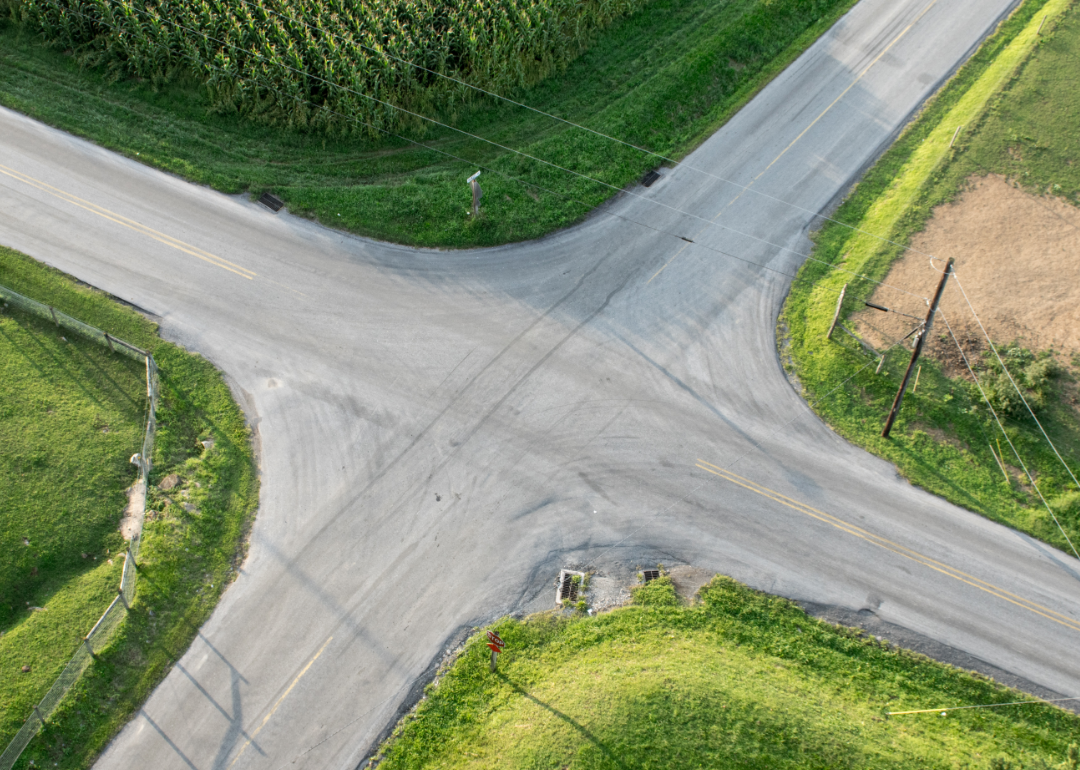 https://stacker.com/news/deadliest-intersections-america-according-national-highway-traffic-safety-administrationOpen linkView original on sh.itjust.works
Proposal Would Link Highway Funding to Zoning
https://www.planetizen.com/news/2024/02/127572-proposal-would-link-highway-funding-zoning


