What's Your Favorite President?
First post of the community! What better way to start it off than a discussion on our favorite presidents? Feel free to elaborate on why you like them!
First post of the community! What better way to start it off than a discussion on our favorite presidents? Feel free to elaborate on why you like them!

"I do not like broccoli. And I haven't liked it since I was a little kid. And my mother made me eat it. Now I'm president of the United States. And I'm not gonna eat any more broccoli!"
H.W's comments on broccoli always amused me, though while looking up these comments online, I was pleasantly surprised to find an entire Wikipedia article dedicated to his comments on Broccoli alone. Many of the points mentioned were amusing in my opinion, so I thought I'd share the page with this community in case anybody else is interested in taking a gander!

On February 3 1924, The 28th President of the United States Woodrow Wilson passed away. President Wilson served from 1913 to 1917
“I know the human being and fish can co-exist peacefully.” - George. W. Bush
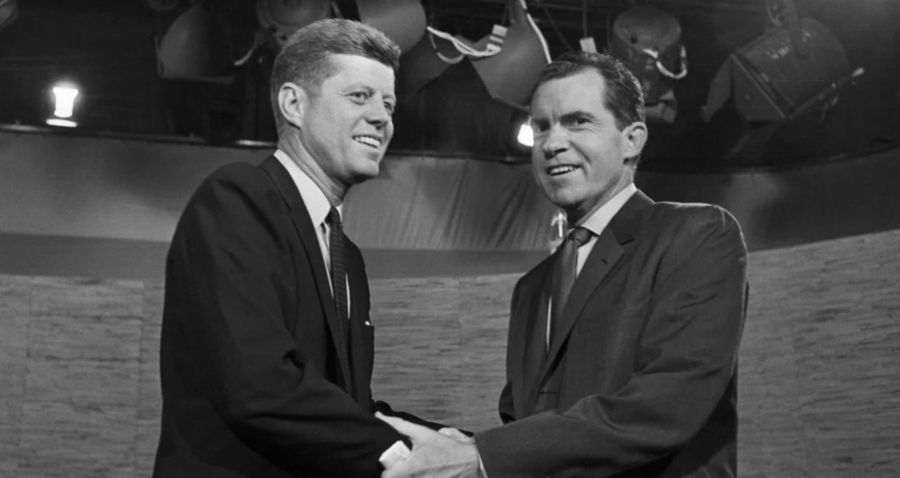
Another presidential history blog post from Sporcle! This one is in regards to the 1960 election: Kennedy vs Nixon. Quite the spectacle, given how close the two candidates were, and how (in)famous both of them would be in American politics to this day.
Sporcle's trivia on presidents has been really insightful and fun to read, and I hope anyone encountering this post will find the trivia just as fun!
 https://www.sporcle.com/blog/2023/04/1960-presidential-election/Open linkView original on lemmy.basedcount.com
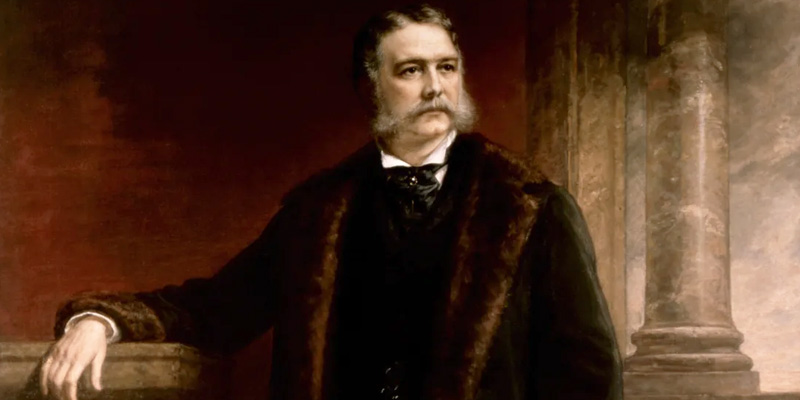
Just an interesting article I stumbled across while doing quizzes on Sporcle. It's an interesting bit of trivia regarding President Chester Arthur that I hadn't previously heard of! A quick read, but worth it.
 https://www.sporcle.com/blog/2019/10/where-was-chester-arthur-born/Open linkView original on lemmy.basedcount.com
On July 24 1862, Eighth President Martin Van Buren died. He died of bronchial asthma and heart failure. President Van Buren served from 1837-1841.
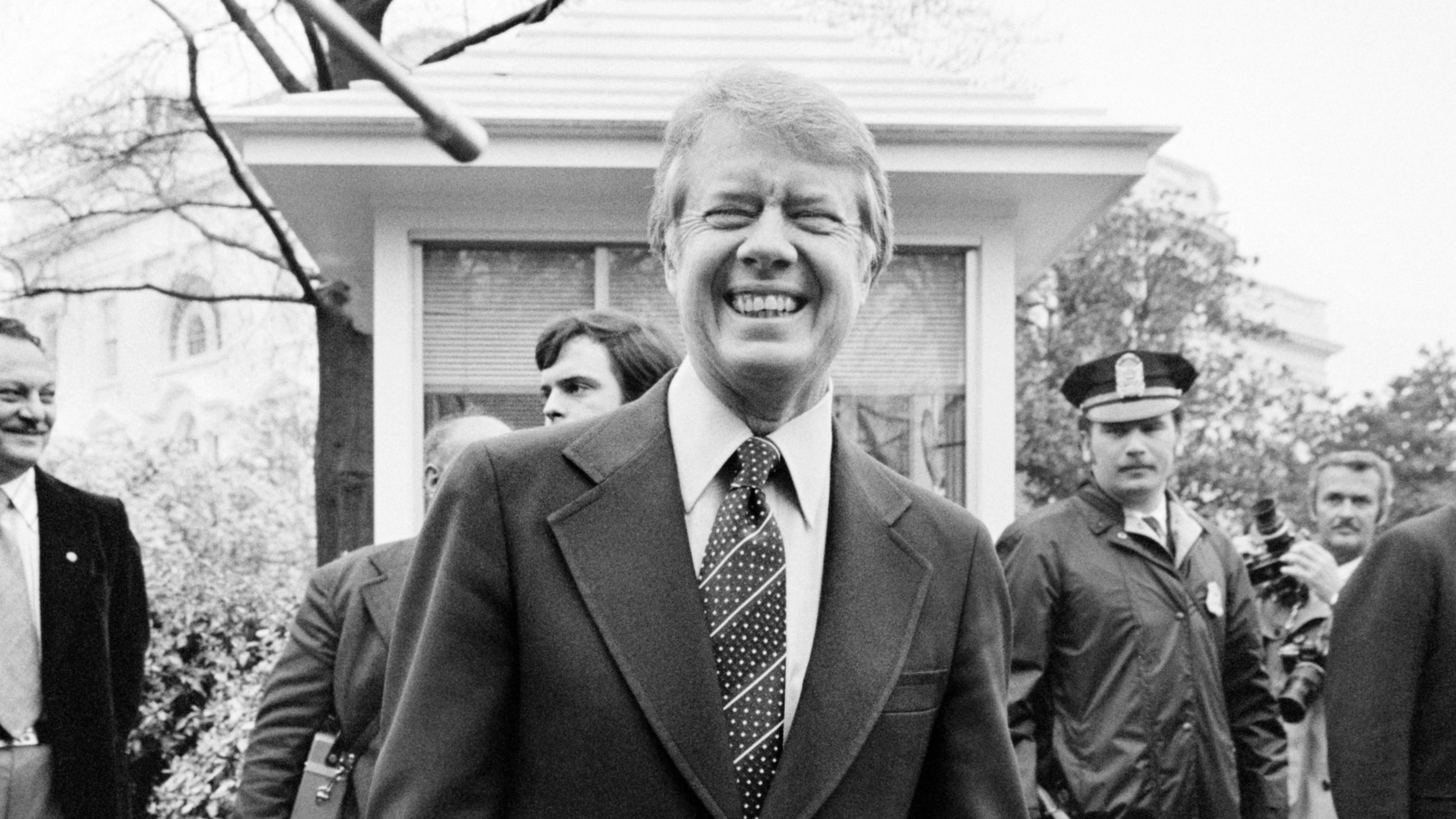
Jimmy Carter, still alive and going strong at 98 years of age, is known for many things. Being the 39th president of the US, having a background as a peanut farmer from rural Georgia, and so on.
But did you know Carter also reported a UFO sighting 3 years prior to running for president?
To quote the History.com article linked with this post:
He described waiting outside for a Lion’s Club Meeting in Leary, Georgia, to begin, at about 7:30 p.m., when he spotted what he called “the darndest thing I’ve ever seen” in the sky. Carter, as well as 10 to 12 other people who witnessed the same event, described the object as “very bright [with] changing colors and about the size of the moon.” Carter reported that “the object hovered about 30 degrees above the horizon and moved in toward the earth and away before disappearing into the distance.” He later told a reporter that, after the experience, he vowed never again to ridicule anyone who claimed to have seen a UFO.
The call Carter made was to the International UFO Bureau (yes, this exists)
On the campaign train, Carter went as far as to promise that should he be elected, he would release all classified government documents pertaining to UFOs. This, understandably, never transpired due to Carter later stating that there would be "defense implications" preventing him from doing so.
Carter remains adamant about his experience. In 2005, when asked, he had this to say:
All of a sudden, one of the men looked up and said, 'Look, over in the west!' And there was a bright light in the sky. We all saw it. And then the light, it got closer and closer to us. And then it stopped, I don't know how far away, but it stopped beyond the pine trees. And all of a sudden it changed color to blue, and then it changed to red, then back to white. And we were trying to figure out what in the world it could be, and then it receded into the distance.
What it was that Jimmy Carter saw exactly, we may never know. Best wishes to Mr. Carter and his family as he remains in hospice care.
 https://www.history.com/this-day-in-history/carter-files-report-on-ufo-sightingOpen linkView original on lemmy.world
Many U.S. Presidents have endured tragic lives, despite their immense success, whether it be passing away while in office, or losing a beloved family member.
However, there are few more tragic than that of Franklin Pierce, 14th President of the United States.
Pierce had 3 children: Franklin Pierce Jr., Frank Robert, and Benjamin. Franklin Pierce Jr. died a few days after he was born, and Frank Robert died at the age of 4, leaving the Pierce family with only one surviving child.
Franklin and Jane Pierce were very doting towards Benjamin, always showing him affection- something they wish they could have also done for his other two siblings.
However, after being elected President of the United States (much to Jane's dismay as she disliked politics and D.C. and saw the presidency as vanity), the Pierces would travel via train, where tragedy would befall them once again. The train derailed, crushing Benjamin Pierce to death, while Franklin and Jane both suffered minimal injury. Unfortunately, both parents saw what remained of their son following the accident, compounding on the psychological damage they already had suffered.
Jane saw this as a punishment from God, and isolated herself in the upstairs rooms of the White House for nearly two years. It certainly took its toll on Franklin as well, as he felt immense guilt knowing that if he had heeded her wife's advice on not running for president, this tragedy wouldn't have occurred. There is no way he could have known, but for anyone that has suffered loss of this kind, the feeling is certainly relatable.
Franklin Pierce was depressed throughout much of his presidency, and fell into alcoholism as a means of coping with the most recent loss of his son.
There's hardly a happy note to end this story on, as Pierce only served 1 term, and a rather unsuccessful one at that.
Though, one quote that stood out to me in my research of this topic comes from Pierce himself during his inauguration speech:
"You have summoned me in my weakness, you must sustain me by your strength."
George Washington is often considered to be one of the best presidents in US History, if not the single best. In addition to setting the standard for future presidents with no role model of his own to follow, Washington's Presidency is usually associated with unity, stability, and trust in the newfound American government. There are very few mistakes that come to mind, and while I could have taken this opportunity to discuss Washington's many achievements, I'll instead take this time to address one of his shortcomings: The Whiskey Rebellion.
To summarize the cause of the rebellion, the American government was suffering financially following the Revolutionary War. In need of money, Secretary of the Treasury Alexander Hamilton proposed enacting a tax on liquor produced within the US, which the government soon enacted. This led to protests across Western Pennsylvania, which the government hadn't expected.
This wasn't as simple as alcohol-lovers being too attached to their drinks. The western half of Pennsylvania was, in part, separated from the east by the Allegheny Mountains. Farmers couldn't feasibly export their grain harvests eastward without rot becoming a factor, so to earn an income, they distilled their grain into liquor which could be easily transported.
It was a difficult situation for farmers, and the taxes raised on their primary export did not help whatsoever.
Washington initially tried condemning the protestors without resorting to force, though the unrest grew into riots, causing a total of 400 rioters to march towards Pittsburgh, leading to the death of a regional tax collection supervisor.
When this failed, Washington instead mobilized a militia of 12,950 men, and had them march to Pittsburgh to disperse the rioters. This succeeded, as the violence abated, and 150 rioters were arrested and tried for treason. Due to a lack of eyewitness testimony, most weren't charged, though two that were, John Mitchell and Philip Weigel, were pardoned by Washington.
In 1802, President Jefferson repealed the whiskey tax, putting a cork (pun very much intended) in this whole affair.
Given the handling of the rebellion after violence broke out, this was handled pretty well by Washington, even if enacting the tax itself could be considered a lack of foresight. If you have any thoughts on the rebellion, or Washington's presidency in general, feel free to discuss!
Happy Independence Day to my fellow Americans. And for all non-Americans, I hope you're having a swell summer day too!
July 4th is often associated with American independence: The day that the 13 colonies adopted the Declaration of Independence, asserting the U.S's independence from Great Britain. It's a joyful occasion, often marked with fireworks, stars and stripes, and copious celebration.
But the day isn't without it's fair share of saddening and bittersweet connotations either. It was on this day, in 1826, that Presidents John Adams and Thomas Jefferson would pass away.
Normally, I would paraphrase the source material that I cite, but I could not have said this any more succinctly:
On July 4, 1826, at the age of 90, Adams lay on his deathbed while the country celebrated Independence Day. His last words were, "Thomas Jefferson still survives." He was mistaken: Jefferson had died five hours earlier at Monticello at the age of 83.
The Whig Party of the US is one that often goes unnamed, due to its short lifespan and lack of prominence today, when compared to the Democratic and Republican parties. To imagine a president being elected today who doesn't have an (R) or (D) next to their name would seem absurd, but back in the 1800s, America would see 4 presidents assume office belonging to the Whigs. These would be:
9th President: William Henry Harrison
10th President: John Tyler
12th President: Zachary Taylor
13th President: Millard Fillmore
The Whig Party was founded and led initially by Henry Clay, who ran for president three times, but never won. The name "Whig" originates from the Whig Party in Great Britain, which was anti-monarchistic. The Whig Party of America perceived Andrew Jackson to be a king, which is to say, they believed he was a leader who employed too much executive power, unbefitting a president of the US.
The Whig Party notably stood against the idea of Manifest Destiny, opposing the Democratic Party's calls to expand westward and instead promoting the development of the land the US already possessed.
While managing to win two elections, through cruel twists of fate, the Whigs suffered setbacks that they would never truly recover from. William Henry Harrison died two weeks into office, from what is now believed to be contaminated drinking water. It is a popular theory that he died from pneumonia after not wearing a coat during his inaugural address, but it is widely disputed.
John Tyler, who was selected as WHH's Vice President, assumed office, but since the precedence of a VP assuming office hadn't yet been established, there were calls for Tyler to continue remaining a VP, or merely an acting president with limited authority. Henry Clay wanted to control the presidency from behind the scenes, back when WHH was alive, and intended to do the same with Tyler. Such internal struggles for power would lead to a very disorganized cabinet and presidency. Tyler was even unaffiliated from the Whig party during the latter half of his tenure.
The next time the Whigs assumed power, it was Zachary Taylor who assumed the presidency. However, one year later, Taylor would die from food poisoning while at a party. Millard Fillmore assumed office, but during his time, he signed off on controversial bills such as the Fugitive Slave Act, which forced the North to return any runaway slaves to the South if caught.
Internal struggle among the Whigs regarding slavery would quickly lead to disarray and the dissolution of the party as a whole. Being unable to agree on a stance regarding slavery meant having no consistent platform to present to the public with one of its most prominent issues.
Former Presidents such as Abraham Lincoln, Rutherford B. Hayes, Chester A. Arthur, and Benjamin Harrison were once members of the Whig Party, but moved onto the Republican Party after this. So while the Whig Party may have come to a close in name, it's spirit continued to live on and set the stage for the America we know today.
On July 1st 2015 U.S. President Barack Obama announced the formal restoration of diplomatic relations between the United States and Cuba.
Below is a picture of President Obama and Cuban President Raul Castro shaking hands at the Summit of the Americas in April 2015
Despite being presidents nearly three decades apart, there was a time when Bill Clinton and JFK shook hands, as captured by the photograph above.
Still a student in high school, the Arkansas government selected Clinton as one of two delegates to the Boys' Nation- a program that has been running since 1946 and brings students to Washington D.C. to participate in a week-long seminar.
James Buchanan is widely regarded as one of the worst presidents in the history of the US, and in my opinion, is the single worst among them.
This disdain largely stems from complacency and negligence in handling the secession of states from the Union. Some go as far as to claim Buchanan single-handedly caused the Civil War to occur, while others (such as myself) view it as a lack of action and decisiveness that allowed the division within the US to fester and culminate into the Civil War.
But what were Buchanan's personal views on secession, and the ultimate divide that caused it to happen?
I believe no source illustrates this better than Buchanan's fourth State of the Union Address. The full script is linked to this post, but to highlight some of the key takeaways from it:
The long-continued and intemperate interference of the Northern people with the question of slavery in the Southern States has at length produced its natural effects.
I have long foreseen and often forewarned my countrymen of the now impending danger.
All or any of these evils might have been endured by the South without danger to the Union (as others have been) in the hope that time and reflection might apply the remedy.
The immediate peril arises not so much from these causes as from the fact that the incessant and violent agitation of the slavery question throughout the North for the last quarter of a century has at length produced its malign influence on the slaves and inspired them with vague notions of freedom.
I believe that last excerpt is the nail in the coffin for Buchanan's mishandling of US tensions. Rather than pinning the blame on the south for continuing the barbaric practice of slavery, he instead pins the blame on the north for making slavery an issue, even going as far as to claim the north is at fault for allowing slaves to even consider freedom.
The Southern States, standing on the basis of the Constitution, have right to demand this act of justice from the States of the North. Should it be refused, then the Constitution, to which all the States are parties, will have been willfully violated by one portion of them in a provision essential to the domestic security and happiness of the remainder.
In later parts of the address, Buchanan continues to appease the South. He argues that it is the north's obligation to cater to the demands of the South, and should they be rejected, the North is to blame for the resulting aftermath.
Looking back from a more modern perspective, we can see the war this would result in, and understand how perverse Buchanan's views on civil rights were.
Perhaps my take on Buchanan is too harsh. If you disagree or want to elaborate, please feel free to discuss!
“I am not fit for this office and never should have been here.” -Warren G. Harding, 29th President of the United States