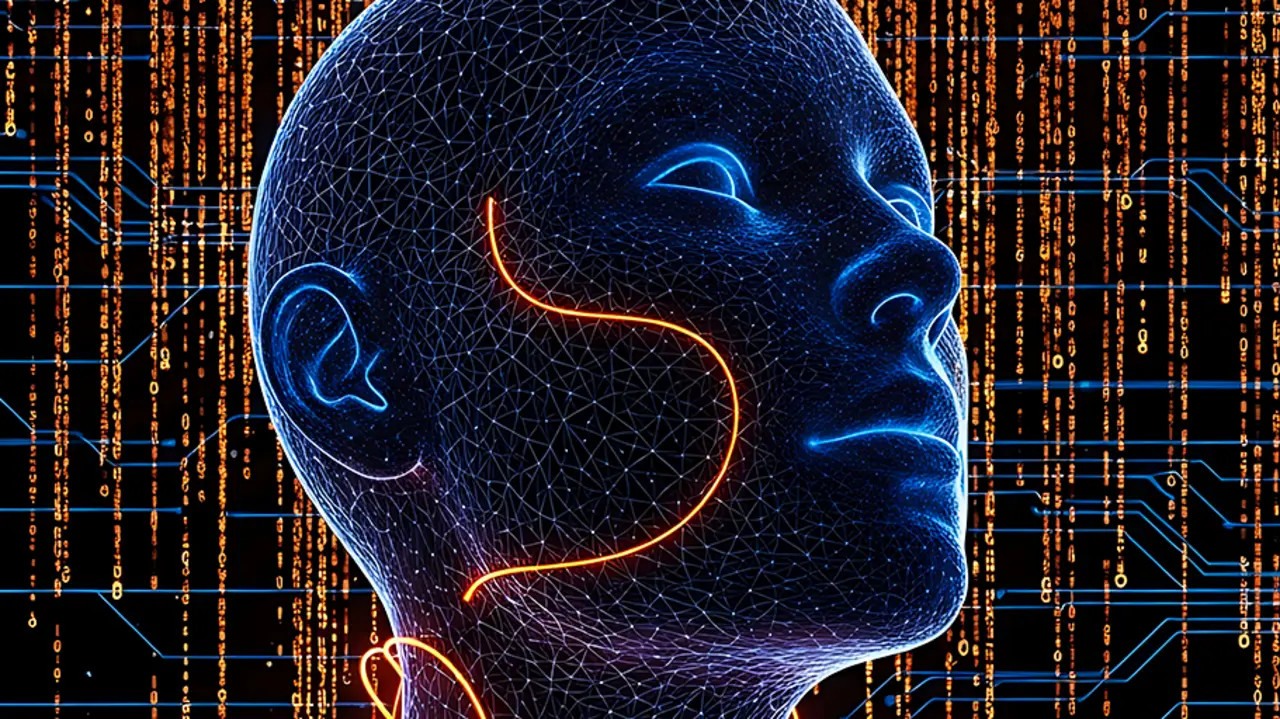
Spyke

Printed artificial neurons learned to “talk” to living brain cells

One of the hardest problems in neurotechnology is not simply connecting electronics to the brain. It is making the brain understand the signal.

Northwestern engineers have taken an important step in that direction by creating printed artificial neurons: flexible electronic devices that imitate part of how real neurons behave. They are not living cells, but they can produce spike-like electrical patterns similar to the ones neurons use to communicate.

That distinction matters. The brain does not respond to just “electricity” in general. Neurons communicate through signals with specific shapes, durations and rhythms. These printed devices were able to generate single spikes, repeated firing and bursting patterns. When researchers tested those signals on slices of mouse brain tissue, living neurons responded. In other words, the artificial signal was close enough to a real one for living neural circuits to recognize it.

The most obvious use case is medicine. If electronics can communicate with nervous tissue in a more natural electrical language, brain-machine interfaces and neuroprosthetics could become more precise. The researchers specifically mention possible implants for hearing, vision and movement.

The second direction is computing. Modern AI is becoming larger and more energy-hungry, while the brain remains far more efficient than digital computers. Northwestern frames this work as a step toward brain-like hardware that could process complex information with much lower power use.

This approach also offers significant environmental benefits. Beyond gains in energy efficiency, the fabrication process is both simple and cost-effective. Ultimately, the potential applications for these artificial neurons clearly extend far beyond just these two fields.

View original on lemmy.world

Mapping the changes Psilocybin triggers in the brain by mapping it using Rabies

What does Psilocybin rewiring the brain have to do with minduploading?
In their endeavor to find out how the brain exactly gets rewired by Psilocybin, these researchers developed a new tool to map the brain.
https://www.cell.com/cell/fulltext/S0092-8674(25)01305-4

More focused on this tool: https://www.youtube.com/watch?v=lZ3_GUilpnk
They reprogrammed rabies.

View original on lemmy.world

Artificial Neuron That 'Whispers' to Real Brain Cells Created in Amazing First

A team of engineers at the University of Massachusetts Amherst has announced the creation of an artificial neuron with electrical functions that closely mirror those of biological ones. Building on their previous groundbreaking work using protein nanowires synthesized from electricity-generating bacteria, the team’s discovery means that we could see immensely efficient computers built on biological principles which could interface directly with living cells.

Our brain processes an enormous amount of data,” says Shuai Fu, a graduate student in electrical and computer engineering at UMass Amherst and lead author of the study published in Nature Communications. “But its power usage is very, very low, especially compared to the amount of electricity it takes to run a Large Language Model, like ChatGPT.

Artificial Neuron That 'Whispers' to Real Brain Cells Created in Amazing Firsthttps://www.umass.edu/news/article/umass-engineers-create-first-artificial-neurons-could-directly-communicate-livingOpen linkView original on lemmy.world

New optical technique sees light through entire human head—what does this mean for brain imaging?

Researchers at the University of Glasgow have, for the first time, detected photons traveling entirely through an adult human head—from one side to the other—using powerful lasers and ultra-sensitive detectors.

Until now, non-invasive optical imaging methods like fNIRS could only penetrate about 4 cm into brain tissue. This new work suggests that, under very controlled conditions, light can traverse deep brain structures.

Key points:

  • Requires 30 minutes of data collection, no hair, and fair skin to get a signal.
  • Computer simulations show that certain brain regions—such as cerebrospinal fluid spaces—guide light along preferred paths.
  • Still a proof-of-concept, but it pushes the boundaries of what we thought possible for optical imaging depth.

Takeaway: This is a milestone in optical brain imaging. It doesn’t give us detailed maps of neurons or memories, but it shows there’s more room for improvement in non-invasive brain scanning than previously believed. Incremental advances like this could enable new research tools and diagnostics long before we ever tackle speculative technologies like mind emulation.

Could this eventually lead to more practical, deep-brain scanning methods—perhaps even portable ones?

More information: Jack Radford et al, Photon transport through the entire adult human head, Neurophotonics (2025). DOI: 10.1117/1.NPh.12.2.025014

New optical technique sees light through entire human head—what does this mean for brain imaging?https://medicalxpress.com/news/2025-06-scientists-entire-human-doors-brain.htmlOpen linkView original on lemmy.world

Journey of the Human Cortical Connectome: 2021 → 2024 → What’s Next?

2021 Preprint Highlights

  • Massive data feat: Took a 1 mm³ piece of human temporal cortex, sliced into ~5,000 ultrathin sections, imaged it via multi-beam EM and flooded the 3D volume—yielding ~57,000 cells and ~134 million synapses reconstructed from ~1.4 PB of data.

  • Rare neuronal structures: Discovered unusual axon “whorls” forming inhibitory synapses on cell bodies—biological oddities that might be pathology-related or simply understudied normal variants.

Source: biorxiv.org, researchgate.net, scispace.com, thetimes.com


2024 Science Paper Progress

  • Full peer-reviewed upgrade: Published in Science, same team produced the first petavoxel (~1.4 PB) human cortex reconstruction—labeling 57k+ cells and 150M synapses.

  • Deeper insights: Classified not just cells, but vessels and synapses; flagged rare yet potent axonal patterns (up to ~50 synapses on a single axon), and made datasets freely accessible online.

Source: smithsonianmag.com, apnews.com, science.org, technologynetworks.com


What’s Next?

  • Scaling to mouse hippocampus: Team is already applying their EM + AI pipeline to a region ~10–15× larger than the H01 volume—from plans reported by Technology Networks and Science News

  • Goals for future human data: More human cortical regions are reportedly in the pipeline—stepwise toward a multimodal, multi-sample atlas

Source: research.google, blog.google


Prediction:
In the next year we’ll probably see:

  • A massive mouse hippocampal connectome (10s of PB), revealing memory-related network motifs.
  • Follow-up human cortex volumes—likely with richer metadata (e.g. neuron types, synapse physiology).
  • Open-access tools—so that the community can explore 3D nanoscale human brain wiring.

Bottom Line:
From pioneering 1 mm³ human cortex reconstructions, the team is now gearing up to build even bolder connectomic resources—mouse hippocampus next, then more human datasets. For mind-upload aficionados, that’s progress toward increasingly detailed, brain-scale wiring maps—early tools for understanding and perhaps emulating human thought.

View original on lemmy.world

X-ray Microscopy at 4 nm: Is This the Missing Link for Brain Scanning?

X-ray Microscopy at 4 nm: Is This the Missing Link for Brain Scanning?

In 2024, researchers from the Paul Scherrer Institute (PSI) and collaborators published a breakthrough in X-ray nanotomography:
➡️ Phys.org: New X-ray world record — Looking inside a microchip with 4 nanometer precision
➡️ Original paper on Nature (free pdf)

Using a method called ptychographic X-ray computed tomography, they achieved non-destructive 3D imaging at 4 nm resolution—a milestone previously thought exclusive to techniques like electron microscopy (which require slicing and destroy the sample). This was initially demonstrated on a commercial microchip, but the implications go much deeper.


What happened after that 2024 breakthrough?

Since that paper, the same team has pushed the method even further:

🔹 They introduced “burst ptychography”, which dramatically increases scanning speed while preserving nanoscale resolution.
🔹 Presented results at PASC 2025, revealing ~14,000 voxels/sec — a ~170× speedup over prior methods.
🔹 PSI Newsletter Source
🔹 PASC 2025 Abstract by Tomas Aidukas

This combo — high resolution and practical throughput — means we're now looking at a serious contender for 3D scanning of biological tissues.


So... could this scan a brain?

Let’s ask the obvious: Is this usable for mapping or uploading a brain?

Here’s how it stacks up, especially for dead brain tissue:

✅ Pros

  • Non-destructive: Unlike electron microscopy, the tissue isn't sliced up or coated in metal. You can re‑scan or apply other imaging later.
  • Sub-synaptic resolution: At 4 nm, you can see synapses, axon terminals, dendritic spines, mitochondria, and vesicles.
  • True 3D: Isotropic resolution avoids the axial (z-axis) blurring of ssTEM.
  • Sample preparation is easier: Chemically fixed or cryo-preserved samples are sufficient — no microtomy or ultrathin slicing.
  • Good for light elements: X-ray phase contrast is sensitive to soft biological tissue (C, H, N, O).

🚫 Cons

  • Can’t scan living brains: Radiation dose and scan time make it lethal for live tissue (for now).
  • Limited scan volume: Scanning an entire mouse brain would still take weeks/months. Full human connectomes? Out of reach unless infrastructure scales dramatically.
  • Computationally intense: Teravoxel reconstructions require major GPU resources and careful phase processing.
  • No molecular tagging: It shows structure, not specific proteins or genes.

How does it compare to existing brain-mapping methods?

FeatureFIB-SEMssTEMX-ray Ptychography
Resolution5–8 nm2 nm (xy), 40 nm (z)4 nm isotropic
Destructive✅ Yes✅ Yes❌ No
ThroughputSlowExtremely slowImproving fast
ReusabilityNoNoYes
Tissue typesResin-embeddedHeavy metal-stainedFixed or frozen, easier prep

This puts ptychographic X-ray scanning in a unique sweet spot between speed, resolution, and sample integrity.


So, what could this mean for mind uploading?

If you want to:

  • Digitally reconstruct neuronal circuits
  • Map cortical microcolumns
  • Study synaptic connectivity in 3D

...then this method is almost ideal — for dead, preserved brain tissue.

It won’t scan a live brain, but it could enable non-destructive connectome reconstruction on post-mortem samples, cortical slabs, or even human surgical discards.

With the right segmentation AI and enough compute, we might eventually push this toward reconstructing functionally relevant neural networks in biologically accurate detail.


Sources / Further Reading


If we had full-volume X-ray brain imaging at this resolution — and the AI to segment it — what parts of "mind uploading" become viable? And what challenges remain?

View original on lemmy.world

What happened after this stunning 2024 hippocampus neuron mapping paper?

In early 2024, Science published a major neuroscience milestone:
Whole-brain spatial organization of hippocampal single-neuron projectomes

Researchers mapped over 10,000 single neurons in the mouse hippocampus, identifying 43 distinct projection patterns—a massive jump in our ability to understand how memory and cognition connect to physical neural architecture.

MedicalXpress summarized it as a leap toward decoding how individual neurons link to behavior and disease.
Even Nature’s research digest featured it as a major mesoscopic connectomics advance.

But… it got oddly quiet afterward. So what happened next?

#Follow-up 1: “Axonal BARseq” – Massively Multiplexed Brain Mapping
Nature Communications, Sep 2024
This technique built on the original study, enabling spatially resolved projection mapping of 8,000 neurons in a single mouse using barcoded RNA sequencing. It’s a powerful method to scale up what the hippocampal team started—faster and with more detail.

#Follow-up 2: Protocols Formalized
Bio‑Protocol, May 2025
The original authors published a full lab protocol, making their approach reproducible. It walks researchers through dissection, imaging, segmentation, and registration of projectome datasets—perfect for labs trying to replicate or scale this approach.

#Follow-up 3: Data Publicly Released
Dryad dataset
The projectomes and analysis code are online for use by researchers worldwide—yet this got very little media attention.

TL;DR:
The 2024 hippocampal neuron-mapping paper sparked huge potential, but the mainstream media dropped off after initial buzz.
Academic work did continue, with BARseq pushing the technique forward, protocols published, and data open-sourced. But it’s quiet out there. Too quiet?

Have you seen any real-world applications, new discoveries, or public tools using this data?

View original on lemmy.world

What’s New with Neuralink’s Brain‑Machine Interface Chip? (2024–2025 Update)

Neuralink, Elon Musk’s brain-computer interface startup, has been making significant strides since launching human clinical trials in 2024. Here's the latest and greatest from PRIME, Telepathy, and their futuristic Blindsight vision system:

#Highlights & Routes Forward

1. Human Trial Expansion & Milestones

  • In early 2024, the first human patient (Noland Arbaugh) received the N1 “Telepathy” implant, enabling control of a cursor via thought. Despite ~85% thread detachment, software updates helped Noland regain substantial functionality
    CTOL Digital Solutions, The Guardian

  • The second patient ("Alex") received the implant in mid‑2024, demonstrated record-setting cursor control, used CAD tools, and played FPS games using mental control—with no thread retraction observed
    teslanorth

  • A fifth patient (RJ, a paralyzed veteran) was implanted in April 2025 at the University of Miami and now controls devices—including TV and smartphone—using Neuralink with remarkable success. New York Post

2. FDA Breakthrough Designations & Funding Windfall

  • Neuralink received Breakthrough Device status from the FDA for both its speech-restoration and vision-restoration (Blindsight) systems—this designation speeds regulatory review and access to patients in need.
  • In June 2025 it secured $650 million in funding, doubling down on its $9 billion valuation and enabling expansion of trials into three countries, targeting powerful therapeutic applications for paralysis, vision, and speech restoration.
    Reuters

3. Blindsight: Vision Restoration & Superhuman Senses

  • Neuralink’s experimental Blindsight implant, tested in monkeys, has successfully stimulated the visual cortex—prompting subjects to respond to nonexistent visual cues about two-thirds of the time.
  • Elon Musk has publicly indicated that support for hearing restoration is next, citing a “clear path” toward helping even congenitally deaf individuals by directly activating sound-processing neurons.
    India Times

4. Technology Upgrades & Robotic Scaling

  • Neuralink's second-generation chip and surgical robot feature more electrodes, higher bandwidth, longer battery life, and improved reliability—with 3D electrode arrays in the works to enhance spatial targeting.
  • The company is collaborating with Tesla to enable robotic hand control via neural implants—users like “Alex” have already operated a Tesla Optimus robot and a robotic arm in demos.

#What to Keep an Eye On Next

  • FDA-cleared human Blindsight trials for vision restoration
  • Neuralink’s speech-restoration system prototyping
  • New peer-reviewed research on safety and long-term usage, especially regarding thread retention
  • Wider trial enrollment expansion in 2025 (targeting 20–30 participants and hundreds by 2026)

Neuralink is evolving from feasibility-studies into real-life applications for severe paralysis, communication impairments, and sensory restoration—with regulatory green lights and increasing technical sophistication accelerating the pace. Thoughts on where neural interfaces go from here?

View original on lemmy.world

Australia’s DeepSouth Neuromorphic Supercomputer: What’s It Been Doing Since Launch? (2024–2025 Recap)

In April 2024, DeepSouth—a neuromorphic supercomputer developed by the International Centre for Neuromorphic Systems (ICNS) in Sydney—was powered on. Designed to model the human brain’s architecture, it can simulate 228 trillion synaptic operations per second, rivaling biological processing while using a fraction of the energy of traditional supercomputers.

So... what's it been up to since?

#Here’s what DeepSouth has done so far:

1. Neurological Modelling

Researchers have been using DeepSouth to simulate spiking neural networks at brain scale. This is opening up new ways to study complex brain diseases like epilepsy, dementia, Alzheimer’s, and more.
sciencefocus.com - DeepSouth as a brain-scale simulator

2. Edge Device Prototyping

It’s also acting as a testing ground for neuromorphic edge computing devices, such as artificial limbs, brain-sensing implants, and environmental sensors that need to process data with ultra-low power.
deepsouth.org.au - Official site overview

3. System Enhancement & Expansion

As of June 2025, there are indications from ICNS social posts that DeepSouth is undergoing hardware scaling or upgrades. That suggests even bigger plans are in motion.

4. Research Dissemination via Conferences

DeepSouth-related work is showing up at academic venues like NEURONICS25 (Tsukuba, Japan), where the latest in neuromorphic computing is discussed.
nanoge.org - Neuronics25 Conference

#What to Expect Next

  • Published research from DeepSouth’s simulations
  • Public prototypes of prosthetics, sensors, or low-power AI chips
  • Possible collaborations with industry (e.g., Intel, Dell, etc.)

If you're following the future of brain-inspired computing, DeepSouth is one to keep an eye on.

What do you think? Will neuromorphic computing be the next frontier in AI and neuroscience?

View original on lemmy.world

Device keeps brain alive, functioning separate from body

In an animal model using anesthesia, the researchers redirected the brain’s blood supply through a pump that maintained or adjusted a range of variables, including blood pressure, volume, temperature, oxygenation, and nutrients. The team found that brain activity and other measurements had minimal to no changes over a five-hour period.

Before you imagine a brain in a jar, it's just a heart-long machine but specifically for the brain.
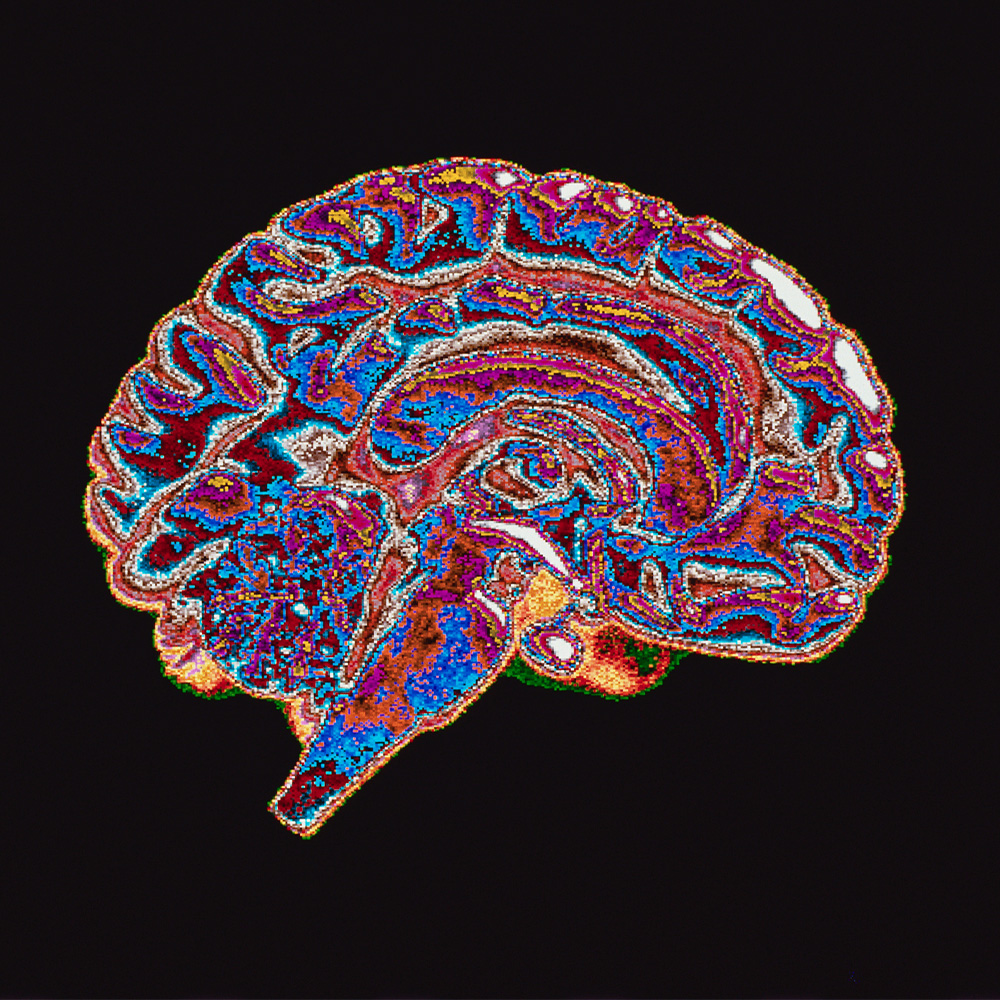
Device keeps brain alive, functioning separate from bodyhttps://www.utsouthwestern.edu/newsroom/articles/year-2023/oct-device-keeps-brain-alive.htmlOpen linkView original on lemmy.world

GPT AI Enables Scientists to Passively Decode Thoughts in Groundbreaking Study

A team of scientists has made a groundbreaking discovery by employing a Generative Pre-trained Transformer (GPT) AI model similar to ChatGPT to reconstruct human thoughts with up to 82% accuracy from functional MRI (fMRI) recordings. This unprecedented level of accuracy in decoding human thoughts from non-invasive signals paves the way for a myriad of scientific opportunities and potential future applications, the researchers say.
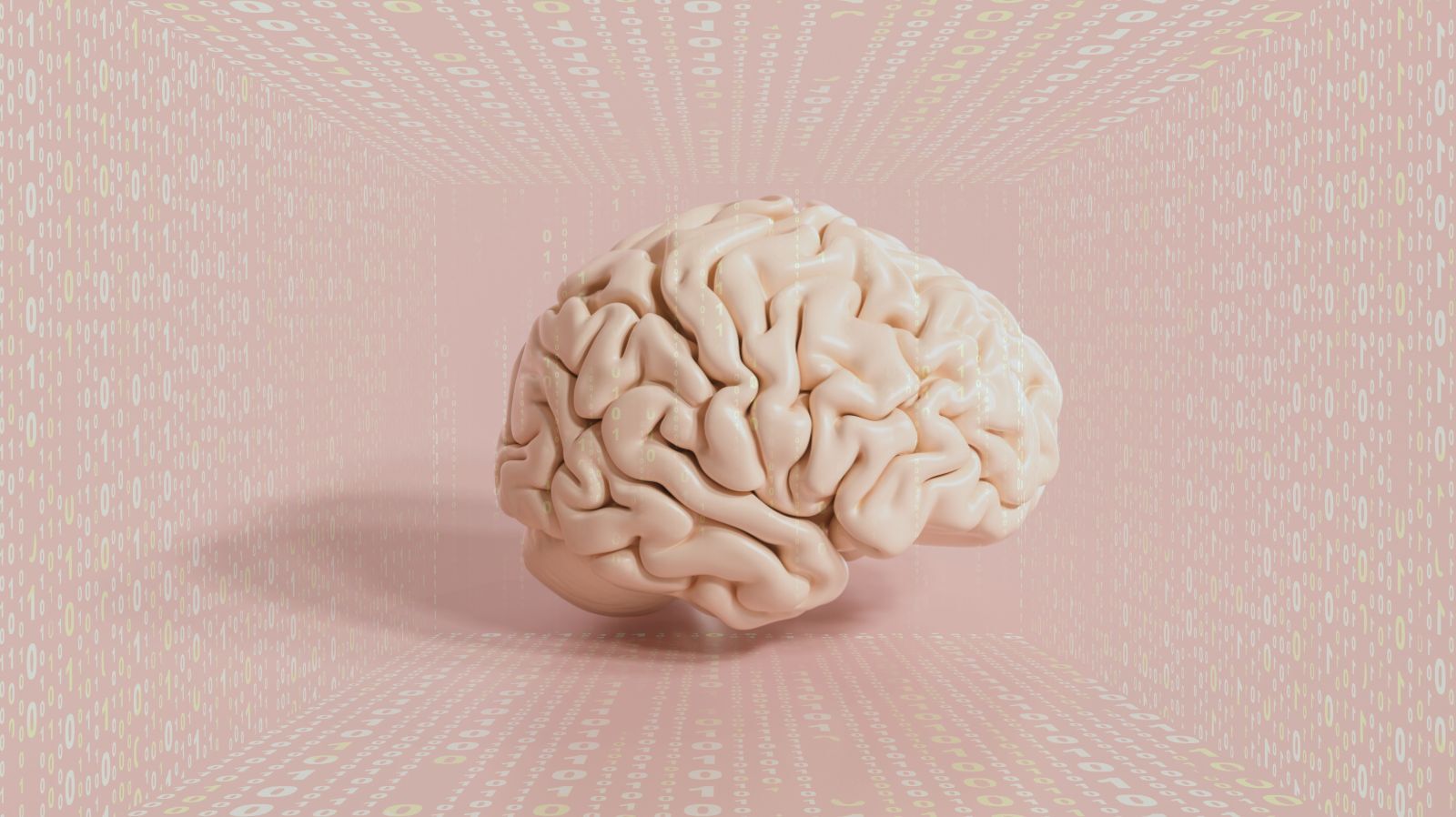
GPT AI Enables Scientists to Passively Decode Thoughts in Groundbreaking Studyhttps://www.artisana.ai/articles/gpt-ai-enables-scientists-to-passively-decode-thoughts-in-groundbreakingOpen linkView original on lemmy.world

Small Mammal BPF Prize Winning Announcement – The Brain Preservation Foundation

The Small Mammal Brain Preservation Prize has officially been won by researchers at 21st Century Medicine. Using a combination of ultrafast chemical fixation and cryogenic storage, it is the first demonstration that near­ perfect, long­-term structural preservation of an intact mammalian brain is achievable. You can view images and videos demonstrating the quality of the preservation method for yourself at the evaluation page. This result directly answers what has been a main scientific criticism against cryonics, and sets the stage for renewed interest, research, and debate within the mainstream scientific and medical communities.

https://www.brainpreservation.org/small-mammal-announcement/Open linkView original on lemmy.world

Carnegie Mellon Joins IARPA Project To Reverse-Engineer Brain Algorithms - News - Carnegie Mellon University

Carnegie Mellon University is embarking on a five-year, $12 million research effort to reverse-engineer the brain, seeking to unlock the secrets of neural circuitry and the brain’s learning methods. Researchers will use these insights to make computers think more like humans.

https://www.cmu.edu/news/stories/archives/2016/february/computers-learn-like-humans.htmlOpen linkView original on lemmy.world

Scientists Have Built an Ultra-Thin Lens That Can Focus on Ridiculously Small Details

Australian researchers have developed a flat lens that's 300 times thinner than a sheet of paper, and it has the ability to provide 3D focus on tiny details that we currently struggle to image. This is known as subwavelength focussing, because it involves viewing objects that are smaller than the wavelength of an individual particle of light.

https://www.sciencealert.com/scientists-have-built-an-ultra-thin-lens-that-can-focus-on-ridiculously-small-detailsOpen linkView original on lemmy.world