Spyke
animationafter30·Animation (and Comics) after 30byfireweed

So What's the Big Deal Anyway? or: why I was inspired to create this community

To all who've stumbled across this new community, welcome! To kick things off I wanted to elaborate a little on why I think there's a need for a community specifically for older fans of animation and comics. It's a long explanation and not required reading to participate here by any means, but for those who might have questions I hope this clears things up a bit.


Here are the four main issues I've encountered as an over-30 fan of animation and comics (especially when it comes to searching for new series to read/watch) that prompted the creation of this community:

1) Age-appropriateness (in reverse): Usually when people talk about whether media is "age-appropriate" they're referring to if it's something too mature for younger audiences. However this is actually a two-way street: sexual content involving younger characters (especially minors) that feels "fine" to watch as a teenager can feel skeevy and uncomfortable to watch when you're significantly older than the characters in question. When I first got into anime as a straight teenage girl, I was quickly desensitized to "fan service" (aka sexualization of female characters, many of whom were minors): the panty shots and bouncing DD-boob close-ups present in so many series were neither titillating nor interesting to me, so I tuned them out. Even as I got older the presence of naked/partially dressed female minors didn't bother me: after all I had seen my own body plenty of times, and the naked bodies of lots of other women young and old in changing rooms, bath houses (I used to live in Japan), etc. However I recognized this blind spot regarding (female) nudity in media after realizing my husband did not feel the same way: there were certain shows that I thought we enjoyed watching together that he would suddenly refuse to continue watching because, to paraphrase: "they keep showing the characters in their underwear; aren't those girls supposed to be 14!? Of course I'm not going to be comfortable watching that." Now it's one thing to feature context-appropriate nudity: I think it's excessively prudish to take offense at the bathing scene in My Neighbor Totoro for instance (the scene is realistic to Japanese culture, plot-relevant, and not the least bit sexual). But the oh-too-common anime trope of the onsen episode where the girls in the women's bath are playfully fondling each other and commenting on each others' chest sizes? That's just gratuitous (and as a frequent onsen-goer I can confirm: straight-up fantasy).

2) Content of interest: People of different ages will of course be interested in different content. Just like I'd expect most 10-year-olds to be bored by both Teletubbies and by The West Wing (albeit for opposing reasons), I'd similarly expect most adults to be bored by the latest shonen action or high school romance series. Many times I've heard on the internet about a series that's a "10/10 awesome, dark, philosophical masterpiece," but when I check it out I'm completely underwhelmed by its I'm-14-and-this-is-deep content and wonder why the heck it came so highly rated... until I realize the person raving about it probably was 14 and did find it deep. A few years back I got a lot of crap for saying I liked The Legend of Korra better than Avatar the Last Airbender, until I explained that while yes, ATLA is objectively a better series, as an adult I wasn't that interested in watching the ATLA cast deal with their pre-teen issues, and found the cast of Korra overall more relatable and the sub-plots more interesting (I still felt like I was watching a kid's show, but at least it was an older kid's show). Similarly there are a lot of great manga and graphic novels that completely fly under the radar because they don't appeal to the average teen/young adult demographic. What 15-year-old wants to read about a 42-year-old office worker who quits his job to take over the family radish farm after his father suddenly passes away? (But I do! Seriously though for a traditionally agrarian society you'd think there would be more agriculture manga out there. Plenty of cooking manga though...)

3) Overexposure to tropes: Many westerners (myself included) got into anime and manga because it was different than what we were used to. Whether it was the art style, the premises or plots, the archetypes or settings, there was appeal in the inherent novelty of the medium. Similarly I've heard from folks in East Asia that they enjoy western media for the same reason: it's different than what they grew up with. While this is perhaps less true nowadays—thanks in part to the exchange of cultures that has created cartoon-like anime, anime-like cartoons, and collaborations like Edgerunners and Scott Pilgrim—the core concept is the same: people find it interesting when a series does something they've never seen before. The reverse is perhaps even more true: generally audiences are going to be bored by media that feels overdone, trite, tropey, been-there-seen-that. "Marvel fatigue" and "isekai fatigue" are recent examples of this phenomenon (for me personally, it's "you'd better swear on the life of your first-born that it's an A+ genre-inverting masterpiece work before I check out yet another 'I woke up as a noble from a novel I read with a vaguely 19th-century fantasy Europe setting' webcomic recommendation). Alas there are only so many stories that can be told, and the older you get and the more media you're exposed to the harder it becomes to find something that feels truly fresh and exciting. More and more as you age new series come out that in theory should be right up your alley... except you've already seen series just like it many times before. "Oh, so it's basically X-Men," "oh, so it's basically Naruto," "oh, so it's basically Harry Potter," "oh, so it's basically Love Hina." Maybe this déjà vu sensation isn't so bad the first few times, but after a certain point the tropes become downright painful. To be clear, this phenomenon of recognizing similarities and repeating patterns in art isn't always a bad thing: the "hero quest" is a well-trodden format for good reason, the montage is a convenient shorthand for a long period of activity condensed into a few moments, and what good is a parody if you're not familiar with the material being lampooned? Genre-subversion too relies heavily on familiarity with an overdone concept: it's the unique twist, the betrayal of expectations that makes the premise novel and interesting. Sometimes this novelty can even overcome the issue raised in point #2 above: "this looks like a series for kids/teens, but it appears that they're exploring something new and different so I'll check it out" (example: Spider-Man: Into the Spider-Verse utilized a jaw-dropping art style, while also exploring a Spider-Man—actually numerous Spider-People!—beyond the standard Peter Parker). Unfortunately genre-subversion only really works the first time it's done; going back to my previous example, "I'm reincarnated in a fantasy romance novel, but as the villain!?!1" has become even more of a trope than being reincarnated as the heroine.

4) Finding common ground across generations: This is a bit of a bonus purpose for creating this community. Maybe you, community visitor, are still young and squarely in the target demographic for most animation and comics, but you want to find series to recommend to older friends/family to either enjoy together or share your love of the medium. However since you're not old and experienced enough to recognize what's fresh and what's overdone, what's relevant to older audiences and what's no longer relatable, or even what's skeevy and age-inappropriate, identifying series that would be good to share is a bit of a crapshoot. I know when I was a teenager and getting into anime and manga I wanted to share my new passion with my family, but the adults almost always seemed bored or put-off by the stuff I showed them. Looking back now I totally get why my mom wasn't interested in that ten-volume middle-school romance-drama manga I gave her to read, or why my dad didn't seem impressed by the cool fight scenes in the hottest new shonen (he'd seen every action movie of the 80s, after all!). Hopefully this community can give younger visitors some hints as to what to share and what to avoid when crossing the generational boundary.

Put these four issues together, and I think there's value in a "for older fans by older fans" animation and comics community on Lemmy. To be clear, this is not intended as an exercise in gatekeeping, hating on younger fans, or disparaging new media as lesser than the classics (let's be real, a lot of what we grew up with was straight garbage). Rather, it's about continuing to find entertainment and enjoyment in drawn and animated media at any age, and connecting with peers who are also part of what is essentially a niche subgroup of the larger fandom.


What do you all think: does this resonate with your experiences as an older fan? Are there other reasons that you think there's value in a 30+ animation/comics community?
View original on lemmy.world
15
animationafter30·Animation (and Comics) after 30byLeft as Center

manhuwa - i reincarnated as a legendary surgeon

A modern surgeon comes back to life as as Hua Tuo, the legendary Chinese physician, during the Eastern Han Dynasty.

What starts out as a lighthearted but interesting surgeon story becomes filled with notes on the yellow turban rebellion, and the war that followed the death of the emperor. It contains nice reference to the records of the three kingdom, a historical book about and from that period and romance of the three kingdoms a 14th century novel based on the history book. Probably over 30 for westerners not knowing about that period of Chinese history, not so much for those already familiar with it.

View original on jlai.lu
2
animationafter30·Animation (and Comics) after 30byfireweed

Education through Entertainment -- Encouragement of Climb

In a similar vein as our last "education through entertainment" title, Laid-Back Camp, is Encouragement of Climb (Yama no Susume), another cute-girls-doing-cute-things series, this time about mountain climbing.

As with Laid-Back Camp, Encouragement of Climb features real-world locations, gear, and conditions as pertaining to hiking (such as keeping fed on the trail, and dealing with altitude sickness). The learning imparted by the series is limited to Japanese geography and information about hiking, however Encouragement of Climb features such accuracy and passion about the topic as to land the series squarely in the "educational" category. A successful manga series, it has been adapted into multiple anime seasons as well.

View original on lemmy.world
3
animationafter30·Animation (and Comics) after 30byfireweed

Education through Entertainment -- Laid-Back Camp (Yuru Camp)

Next up on our tour through educational animation/comics is Laid-Back Camp (also commonly known by its Japanese name, Yuru Camp).

This manga-turned-anime falls squarely under the category of "cute girls doing cute things," which in this case is winter camping. I personally happened to get into camping around the same time as the anime first dropped, and was impressed by the degree of detail in the series, which even included real-world product brands and designs, while the girls visit real sightseeing and camping sites in Japan.

While the "education" provided by this series is markedly less academic and more hobby-oriented, for anyone interested in camping and/or rural Japan, it's a decent primer in both.

View original on lemmy.world
9
animationafter30·Animation (and Comics) after 30byfireweed

Education through Entertainment -- Heaven's Design Team

Next up in my "education through entertainment" series is the family-friendly Heaven's Design Team (Tenchi Souzou Dezain-Bu).

This manga-turned-anime series is another "it's ironic that this is as educational as it is" series, given the premise is that creationism is real and all of Earth's creatures were intentionally designed by a team in heaven in response to (often arbitrary) requests from God. Before the pitchforks come out, rest assured that this premise is presented as fictional and fantastical (the Japanese are not known for being big believers in creationism, after all), and is just a fun setting to explore the various ways that animals' biology helps them overcome issues they might encounter in their environment, or even as a result of their own anatomy.

In an amazing feat (for anime at any rate), the series manages to stay engaging for older audiences while maintaining a PG-ish content rating, making it one of the few anime appropriate and engaging for the whole family. Additionally, unless you're a zoology nerd, the biology facts presented in the series are likely not the kind most adults have encountered before; despite being a nature documentary aficionado, I found myself learning quite a bit about zoology/biology/evolution, and had a lot of fun guessing what animal they were building up to as they struggled with God's latest design assignment.

You can read my full review of the series here.

What were some of your favorite educational animated/comic series as a kid?

View original on lemmy.world
9
animationafter30·Animation (and Comics) after 30byfireweed

Education through Entertainment -- Dagashi Kashi

The last four series I highlighted in my "education through entertainment" series were a bit dour. Let's go way lighter for this entry with Dagashi Kashi.

Surprisingly, this manga-turned-anime may arguably be one of the "most" educational series out there. Much like in Cells at Work, each chapter (or half-episode in the case of the anime) centers around a different example of the premise's topic; in the case of Cells at Work it was parts/functions of the human body, and in Dagashi Kashi, it's the various products available at a Japanese sweets shop/snack store.

As the series explains, the Japanese word "dagashi" doesn't really have an English equivalent, as it can refer to candy, snacks, drinks, and even toys... basically anything small, cheap, and (typically) appealing to children looking to spend their pocket change. Dagashi stores were once plentiful in the Japanese "showa" era (~1920s-1980s), but are much more of a rarity now, having been replaced by convenience stores, 100-yen shops, and online shopping. So while this series takes place in the 21st century, it has anachronistic vibe to it, mixed with a taste of historical fiction, stirred into a gag format, and served with a dollop of fan service.

Personally I find this series engaging because I love Japanese nostalgia fiction (I'm also a sucker for ultra-niche manga/anime, regardless of the topic), thus I've genuinely enjoyed the romp through literally hundreds of Japanese snacks (only some of which I even recognize, despite having spent years in Japan). However because Dagashi Kashi doesn't offer much in terms of overarching plot, action, or character development, I could see where this series may prove dull for most audiences. (Granted trying to appeal to a mainstream audience has undermined many educational and "educational" series, so I see this as a positive trait.)

Is the "education" Dagashi Kashi provides trivia-heavy? Yes. Is the topic superficial? Definitely yes. Will I probably go the rest of my life without ever directly benefiting from having gained the knowledge? Probably also yes. Does the series sometimes feel like one long advertisement/propaganda effort to promote Japanese snack brands? Admittedly yes. But must I admit that I walked away from Dagashi Kashi knowing more about the world than I did before walking in? Undoubtedly yes.

View original on lemmy.world
15
animationafter30·Animation (and Comics) after 30byfireweed

Education through Entertainment -- Wandering Son & That's My Atypical Girl

Next up on our tour through educational animation and comic series is another two-fer, as a follow-up to my previous two-fer post (so a four-fer?): Wandering Son and That's My Atypical Girl.

Wandering Son (Hourou Musuko) is a manga and anime coming-of-age story about gender identity, and That's My Atypical Girl (Asper Kanojo) is a manga about two neurodivergent people struggling through young adulthood.

Same as the previous post, these two series are educational less in terms of facts and more in terms of understanding.

What series have helped you understand marginalized populations? Are there any series that portray a medical condition that you're personally familiar with that made you go, "ah! they get it!" or "oh no, that's not what it's like at all!"?

View original on lemmy.world
4
animationafter30·Animation (and Comics) after 30byfireweed

Education through Entertainment -- Our Dreams at Dusk & IS

Today's entry in the "education through entertainment" series is a two-fer: manga series Our Dreams at Dusk (Shimanami Tasogare) and IS – The Gender that Is Neither Male nor Female (IS – Otoko demo Onna demo Nai Sei).

Our Dreams at Dusk follows a found family of people who feel like outcasts for being gay, trans, or asexual, while IS tells the stories of people born intersex.

"Education" does not just refer to facts and figures, but also to increased understanding, which is precisely where these two series excel. I stumbled across IS some time in the 2000s, back when the acronym for non-heteronormative folks was still just four letters: LGBT; I had never even heard of the term "intersex" prior to reading IS. While the 17 volume (!!) series is a bit light on facts, it focuses on people, specifically the challenges the intersex characters and their family and friends face because they do not fall under the binary of male and female. Similarly Our Dreams at Dusk covers the turmoils and stigmas attached to the rest of the LGBTQIA spectrum (I wrote a comprehensive review of that series here).

These two series provide a more accurate and sympathetic view into gender dysphoria than I've seen almost anywhere else, both in the world of manga and beyond. Given the bigotry that the LGBTQIA+ community continues to face, even in the most "progressive" of places, I believe a better understanding of the non-heteronormative experience is among some of the most important education a person can receive today.

Unfortunately most LGBTQIA "representation" in manga/anime is exploitative (e.g. yaoi, futanari, etc), so I'm always heartened to encounter realistic and sympathetic portrayals of sexual minorities. Have you ever encountered a comic or work of animation that expanded your horizons regarding sexual minorities or other marginalized populations?

View original on lemmy.world
5
animationafter30·Animation (and Comics) after 30byfireweed

Education through Entertainment -- Jaadugar: A Witch in Mongolia

Otherwise known as Tenmaku no Jaaduugar or A Witch's Life in Mongol.

Next up on our tour through educational animation and comics is Jaadugar. This historical drama manga and anime series follows a captured Persian slave girl as she maneuvers through the Mongolian Court during the time of Genghis Khan and his progeny, bearing witness to (and getting herself wrapped up in) court politics while the Mongolian Empire quickly conquers Asia and beyond.

As with all historical fiction, I of course question the historical accuracy of the work (doubly so with any works about cultures other than the creator's). However my impression is that the series is at least somewhat accurate, and given that I walked into the series knowing almost nothing about 13th century Asian history, I'm filing this series in the "educational" category, as I left it knowing much more than I did coming in.

I haven't seen the anime (currently airing), however I can attest to the beautiful aesthetic of the manga, drawn in a manner akin to Ranking of Kings meets Persepolis. Whether you're drawn by the history, the political drama, the tale of revenge, the art, or the fish-out-of-water story, there's a lot going for Jaadugar.

What are some of your favorite historical works in animation and comics? Is historical accuracy important to you? What examples of historical fiction had you walking away feeling more informed than when you went in?

View original on lemmy.world
15
animationafter30·Animation (and Comics) after 30byLeft as Center

What is education for? Why new Korean drama Teach You a Lesson is topping the charts

This article led me to read the webtoon, and it is very enjoyable, while the action is usual the setting and analysis of issues at school is thoughtful and well prepared by the scenarist.

What is education for? Why new Korean drama Teach You a Lesson is topping the chartshttps://theconversation.com/what-is-education-for-why-new-korean-drama-teach-you-a-lesson-is-topping-the-charts-285158Open linkView original on jlai.lu
4
animationafter30·Animation (and Comics) after 30byfireweed

Education through Entertainment -- Dr. Kim of London

Next up on our tour through educational animation and comics is the Korean webcomic, Dr. Kim of London.

While there are a number of medical drama comics out there, Dr. Kim of London presents an educational double-whammy for being both a medical and historical drama, both aspects of which appear (to my admittedly layperson eyes) to be generally well-researched.

In this series, a 21st century South Korean surgeon dying of cancer is reincarnated as a baby to Korean immigrants in Regency Era England. Thanks to his friendship with a wealthy merchant's son, he's able to enroll in London's most prestigious medical school... where he discovers the horrors of pre-germ theory, pre-antibiotic, pre-anaesthesia medicine. He embarks on a mission to educate his colleagues and introduce modern medicine into the past within the confines of available technology, and in the process teaches the webcomic's audience both about medicine of the past and of the present.

What other medical comics/animation have you enjoyed? Have you found them to be factually accurate and educational to the reader, or do these end up taking a back seat to entertainment?

View original on lemmy.world
5
animationafter30·Animation (and Comics) after 30byfireweed

Education through Entertainment -- Cells at Work! (& Code Black)

I love a good educational series! The world of animation and comics can feel a bit superficial after a while, and I've come to really appreciate series that educate while entertaining. Over the next few days, I'll highlight some of my favorites.

First up on the docket is Cells at Work! and its (IMO superior) spin-off, Cells at Work! Code Black. Both series have released in manga and anime form. For the uninitiated, Cells at Work! personifies all the cells in the human body and reimagines the body as a (literally) living, breathing city. The series both follow the (mis)adventures of a rookie red blood cell as they learn the ins and outs of their job delivering oxygen around the body. Code Black takes the premise a step further, and places the cells in a "black" environment (in Japanese, this refers to a toxic, exploitative company with long hours and a stressful atmosphere), where the cells face down the realities of smoking, alcohol abuse, obesity, chronic stress, and more.

Possibly the most admirable quality of Cells at Work! is that the reader's learning is sustained throughout the entire work; unfortunately many "educational" series only pack a punch for the first few chapters/episodes, and then information gives way to plot and character development and turns into just another action/drama series. Not so with Cells at Work!, where every chapter explores a new bodily function and/or medical condition.

What are your favorite educational series? Comment below or make a new post!

View original on lemmy.world
4
animationafter30·Animation (and Comics) after 30byfireweed

Happy Pride! It's time for our annual celebration of all things LGBTQIA+ in animation and comics with a community question. SHOW ME WHAT YOU GOT!

I haven't been able to keep up with recent releases this year, so 2026's question is:

What are the gayest/queerest/transiest(???) titles in animation/comics currently being released?

I'm talking any anime/manga/animation/comics that dropped this side of June 1, 2025 (continuing series are OK). Did 2025-26 have anything that could top (heh) this cover of Gay Comix #12 from 1988?

View original on lemmy.world
14
animationafter30·Animation (and Comics) after 30bypixfox

Animators Server Community

cross-posted from: https://lemmy.world/post/47050142

Hi everyone! Guys, I’m inviting all animators to my Fluxer server. I just set this server up today, and I’ll be slowly tweaking it. Some of you might say there’s Discord, but honestly, it’s full of communities. I decided to create a server specifically on Fluxer (Link🔗: https://fluxer.gg/DBTvODdm )—this link expires in 7 days, so hurry up. Of course, I’m still new to animation, so I’ll be learning from you all—feel free to make suggestions and help improve this server!

View original on lemmy.world
6
animationafter30·Animation (and Comics) after 30byfireweed

Review: Vampire Syndrome

Title: Vampire Syndrome

Type: Webcomic

Year: 2023-2024

Country: South Korea

Genre: Action/supernatural

Status: Completed

Platform: Webtoon (read here)

Appropriate for 30+?: Yes

My rating: 4/5 stars

(Rating scale: 5/5 = masterpiece, 4/5 = quite good, 3/5 = mostly good, 2/5 = bleh, 1/5 = I regret ever being exposed to this series, 0/5 = affront to humanity)


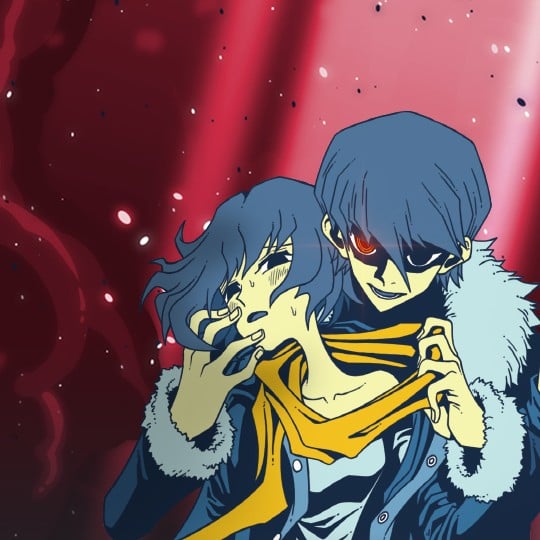
When it comes to webtoons, especially Korean ones, I often find myself making the same criticisms over and over: this is just a new twist on a tired concept, there's no novelty to the art style, the pacing is terrible (and drags on for way too many chapters), and the big one: this series is all plot and no substance (it has no thesis, nothing it "wants to say," it's only goal is to be entertaining).

Then in strides an underrated action/supernatural series, catching me completely by surprise because it's about one of the most tired concepts of the 21st century, vampires, and yet feels like one of the freshest new entries to the webtoon scene in years. The art is super unique, stylish, and flashy (and for once does not completely clash with the 3D-generated backgrounds), the characters are all distinctive and interesting (and relevant through the whole series, no "introduce, use, and dump" here!), the series wrapped up comfortably in an engaging 80 chapters, and the entire premise is an analogy for social issues facing 21st century South Korea (and most of the first world):

::: spoiler spoiler The villains are vampires, specifically the vampires at the top of the food chain who are mostly wealthy old men who became vampires seeking immortality by consuming people younger and less privileged than themselves. Most of the protagonists are in their 20s or 30s, although there is a spread from teens to 60s, and there's a very strong "the older generations should sacrifice themselves to ensure the success of the younger generations, not the other way around" theme throughout. Like any good social analogy there's debate over preserving the status quo vs inciting a chaotic revolution, and what "revolution" would even look like. While the themes are presented from a South Korean perspective, I think most everyone will resonate with the "pass the fucking torch already, Boomer" messaging. :::

The dialogue can be a bit clunky at times, although it's hard to say whether that's a result of a poor translation. The series engages in a lot of time jumps, and although I think they're handled well some people may find them confusing. The series has the emotional subtlety of a teenager's poetry diary and the social analogy thesis is pretty superficial, but it carries a sincerity that, combined with the art style, makes it all just work. The surreal rubber-people art, character-driven plot, and stylized body horror all remind me a bit of the Land of the Lustrous manga.

If you can stomach some (highly stylized fantasy) violence and noir-level brooding, Vampire Syndrome is a series I'd recommend to anyone looking for something different, or at least less superficial, in the action genre.


As with all my reviews, the above is nothing more than my personal opinion. Have you read this series? What did you think? Post in the comments!

Review: Vampire Syndromehttps://www.webtoons.com/en/supernatural/vampire-syndrome/list?title_no=5123Open linkView original on lemmy.world
4
animationafter30·Animation (and Comics) after 30byfireweed

What are you reading/watching this month? [August 2024]

I want to try something different to encourage more engagement on this community.

Let's share what we're reading and watching this month! Whether you're one or one hundred chapters/episodes deep, whether you love it or hate it, whether it's a new series or an old favorite, this is the place to share what comics and/or animation you've been consuming lately.

Friendly reminder that this community is specifically for folks 30-years-old and up; you can still participate in this discussion if you're younger than that, but please mark your comments with "under 30." Thanks!

View original on lemmy.world
8
animationafter30·Animation (and Comics) after 30byfireweed

Review: Hell of a Romance

Title: Hell of a Romance (Original: 불지옥 로맨스, 불地獄)

Type: Webcomic

Year: 2023-2024

Country: South Korea

Genre: Slice of Life/Romance/Fantasy

Status: Completed

Platform: Webtoon (read here)

Appropriate for 30+?: Yes

My rating: 3/5 stars

(Rating scale: 5/5 = masterpiece, 4/5 = quite good, 3/5 = mostly good, 2/5 = bleh, 1/5 = I regret ever being exposed to this series, 0/5 = affront to humanity)


Contrary to what its title suggests, Hell of a Romance is a cute, wholesome slice of life series. Yes there is a romance story in there, but it takes a back seat for 90% of the series to the slice of life elements: at its core this is a story about two failures teaming up in an attempt to create a hit webcomic.

While nothing about this series stood out to me as a must-read, it's a great choice for when you're in need of a lighthearted pick-me-up or a low-stakes read before bed. The art is basic but distinctive, the pacing is decent (I hated the frequent use of cliffhangers, which made no sense given the general lack of action, but I thought overall pacing was fine and the series length was appropriate), the characters are charming enough, and there's just enough plot to keep the series interesting (although maybe not bingeable). I really liked the portrayal of hell, and while a bit of a cliche, I found the use of the angelic demon and demonic angel trope a good fit for the premise. There aren't quite enough jokes to call the series a comedy, but there are a decent number of amusing moments sprinkled in. All the characters appear and act like adults in their 20s-30s, and there's nothing I noted that would be a particular turn-off to older readers.

A relatively short series, Hell of a Romance is a great pick for when you want an easy, comforting read that's a bit more engaging than your standard slice of life, thanks to the supernatural premise.


As with all my reviews, the above is nothing more than my personal opinion. Have you read this series? What did you think? Post in the comments!

Review: Hell of a Romancehttps://www.webtoons.com/en/fantasy/hell-of-a-romance/list?title_no=5470Open linkView original on lemmy.world
3
animationafter30·Animation (and Comics) after 30byfireweed

Review: Lore Olympus (webcomic)

Title: Lore Olympus

Type: Webcomic

Year: 2018-2024

Country: New Zealand

Genre: Drama/romance/fantasy

Status: Completed

Platform: Webtoon (read here)

Appropriate for 30+?: Yes

My rating: 4.5/5 stars

(Rating scale: 5/5 = masterpiece, 4/5 = quite good, 3/5 = mostly good, 2/5 = bleh, 1/5 = I regret ever being exposed to this series, 0/5 = affront to humanity)


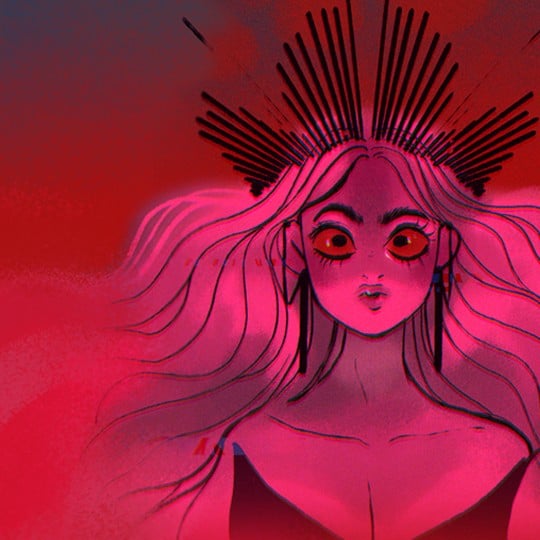
Lore Olympus is one of the best-known and popular Webtoons, and it 100% deserves that distinction. There's so much that's fresh and unique about the series while also having a lot of classic elements. For the uninitiated, Lore Olympus is a retelling of ancient Greek myths in a hybrid 21st century/ancient Greek setting. Webtoons bills it as a romance, however I call it a drama because there is so much going on beyond the romance plot: action, political scheming, revenge, trauma recovery, familial relationships, independence and interdependence...

The art style is bold, stylish, unique, and very aesthetically pleasing. The characters are fresh and interesting, drawing heavily from ancient myth mixed with more contemporary traits and personalities. The overall fusion of ancient and contemporary is fantastic; the entire series is full of little details pulled from old myths, right up to the end. The plot is engaging, and the pacing is mostly consistent. The main cast is huge, the supporting cast even bigger, and they all get fleshed-out personalities and storylines, and most undergo significant character development. Even though much of what happens in Lore Olympus was composed thousands of years ago, I didn't feel like the plot directed the characters, rather the characters drive the plot. For how much happens in this series, it's all surprisingly well organized and balanced. Yet a surreal, dreamy tone persists through the series, beautifully complementing the serious plot elements. This webcomic really utilizes its medium well.

I think Lore Olympus gathered some hate during its third season that I completely chalk up to the weekly release format. Readers complained that the plot wasn't moving as quickly as they wanted, which I attribute to readers' expecting the exciting pace from the previous arc's climax to continue (which would be bad storytelling) as well as frustration from fast-pass readers that they weren't "getting our money's worth" out of each chapter. I binged the series instead of reading it weekly, and thought the pacing perhaps got a tad slower than it should have during season three, but the story was clearly progressing and at a fairly consistent pace and wrapped up well. There are plenty of Webtoons where the story pace grinds to a halt or starts flailing as the author runs out of ideas while their editors push them to artificially extend their golden goose, but Lore Olympus isn't one of them.

I've also seen some hate around how some of the characters and/or relationships are handled, which I think a full read of the series combined with researching the original myths would generally dispel. In my opinion, Lore Olympus does a fantastic job maneuvering around the elements of Greek mythology we'd consider especially tasteless today (such as the incest), and given that the original myth is literally called "the rape of Persephone," I think the author's renditions of myth to better appeal to 21st century tastes is brilliant (from non-consensual encounters to giant age gaps). Mild spoiler: ::: spoiler spoiler Persephone herself grows tremendously as a character, from an example of the immature, "born sexy yesterday" trope to an empowered woman. Her early-season naivete is fully explained by her upbringing and relationship with her mother, who herself has reasonable if somewhat misguided reasons for her parenting style. Season 3 is all about girl power, and I really enjoyed the subversion of typically male-centric mythology. :::

The characters span a wide range of ages, but generally look and act like young adults and middle-aged adults. The characters express both maturity and immaturity, and overall I think this is a series that older readers will greatly enjoy, especially as the older characters are introduced and take more prominence in the plot.

Lore Olympus is a truly unique and well-made series that I would unreservedly recommend any fan of comics at least give a try.


As with all my reviews, the above is nothing more than my personal opinion. Have you read this series? What did you think? Post in the comments!

Review: Lore Olympus (webcomic)https://www.webtoons.com/en/romance/lore-olympus/list?title_no=1320Open linkView original on lemmy.world
6
animationafter30·Animation (and Comics) after 30byfireweed

Review: Train to the End of the World (anime)

Title: Train to the End of the World (English); 終末トレインどこへいく?(Japanese)

Type: Anime

Year: 2024

Country: Japan

Genre: Surreal

Status: Completed

Platform: Crunchyroll (watch here)

Appropriate for 30+?: No, but I (mostly) enjoyed it anyway

My rating: 3.5/5 stars

(Rating scale: 5/5 = masterpiece, 4/5 = quite good, 3/5 = mostly good, 2/5 = bleh, 1/5 = I regret ever being exposed to this series, 0/5 = affront to humanity)


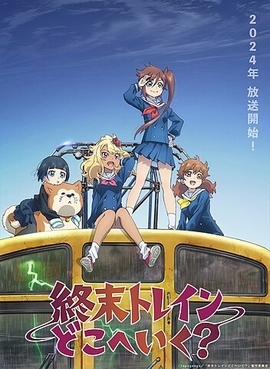
Train to the End of the World (TEW) is perhaps one of the worst "cute girls doing cute things" series I've ever watched, and yet it's probably the series I've enjoyed the most this year so far.

Much like Girls' Last Tour, this is an entry into the "cute girls doing cute things, but in a dystopian setting" sub-sub genre that in theory hinges upon the bizarre juxtaposition of two seemingly incongruent elements. However unlike Girls' Last Tour, (or the currently-airing Dead Dead Demon's Dededede Destruction), TEW probably would have benefited greatly from having literally any other cast of main characters. I thought the girls were really cliche, annoying, and forgettable, with painfully uninspired dialogue, and were regrettably-yet-unsurprisingly subject to a level of sexualization that would probably make most older audiences uncomfortable (nothing extraordinary, just the anime standard treatment of high school girls). Honestly I zoned out during most of the scenes involving the girls chatting amongst themselves, and I doubt I missed much plot at a result.

Despite all this, the premise/setting/world building of TEW makes up for its flaws. Once the girls STFU, the show gets to show off its weird, fun, creepy side. This is a series that makes you go ah, this is what the animated medium is for: surreal nonsense that would require a buttload of fake-ass CGI to even attempt to portray in live action. I really like the tone of the series, which is generally upbeat but with an uneasy aftertaste that puts you on edge while never actually venturing into tragedy (as can happen with surreal/dystopian series, looking at you Kaiba). There's a good balance of exploration and action, with some decent comedy tossed in on occasion.

Maybe I'm biased because my first trip to Japan, I spent a few weeks living at a guest house in Oizumi-Gakuen along the Seibu-Ikebukuro Line featured in this anime, and I'm a complete sucker for series that utilize real places (and TEW has a whole train line of them). Regardless I absolutely loved the premise of riding a train through a vast, unknown land of magic and horror, stopping at each station to learn what became of various previously-sleepy commuter towns in bizarro-Tokyo, intensity growing the closer you get to the city-within-a-city of Ikebukuro. TEW is a bit like Kino's Journey, but with socio-political commentary replaced with the train scene in Spirited Away albeit with more menacing vibes.

In summary, TEW is weird and atmospheric and I am here for it, despite the obnoxious (and occasionally uncomfortably-portrayed) main cast of cliche anime high school girls. Perhaps the creators didn't quite nail what they set out to do, but I couldn't help but really appreciate the attempt.


As with all my reviews, the above is nothing more than my personal opinion. Have you read this series? What did you think? Post in the comments!

Review: Train to the End of the World (anime)https://en.wikipedia.org/wiki/Train_to_the_End_of_the_WorldOpen linkView original on lemmy.world
5
animationafter30·Animation (and Comics) after 30byfireweed

Review: Nonesuch (webcomic)

Title: Nonesuch

Type: Webcomic

Year: 2022-2024

Country: United States (?)

Genre: Thriller

Status: Completed

Platform: Webtoon (read here)

Appropriate for 30+?: Yes

My rating: 3.5/5 stars

(Rating scale: 5/5 = masterpiece, 4/5 = quite good, 3/5 = mostly good, 2/5 = bleh, 1/5 = I regret ever being exposed to this series, 0/5 = affront to humanity)


If you're like me with decades of comic reading under your belt, you're likely on the hunt for series that have something a little different to offer, and Nonesuch delivers. While a bit rough in spots, Nonesuch is a solid series, with good pacing, an engaging plot, and quite a bit of novelty, plus it's short enough that you could complete it in one or two sittings.

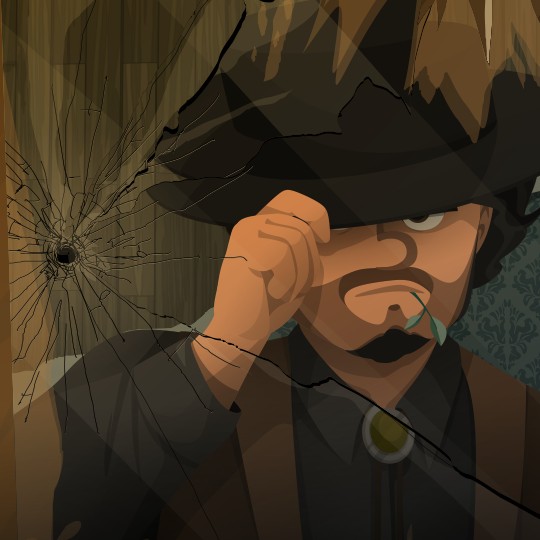
First, the novelty: this series is set in rural Appalachia and that''s not just an aesthetic; the characters are gun-toting, Christ-loving, red-blooded Americans. To each point: I know jack-all about guns, however my impression is that the series portrays them accurately. In the creator notes at the end, the author mentions that her intent was to create a "Christian" series, which I think is quite interesting given that I spent most of the series wondering if the Christian elements were supposed to be dismissive of the religion or not (in other words there's nothing preachy about Nonesuch, and the inclusion of Christianity definitely adds quite a bit of realism to a series set in the Bible Belt). Overall I really felt the setting in this series, which is a huge breath of fresh air not only in the world of comics, but American media overall (which are very California/NYC-centric).

Further bits of novelty: the art style, while not my favorite, is bold and distinctive. The plot/premise share vibes with various horror/thriller/mystery series (strong zombie and X-Files notes), but regarding the specifics I can't think of any examples that are similar. Probably my favorite aspect of the series is that one of the main characters not only has a disability, but it's a rare (yet real) condition that most readers probably haven't heard of, and it's an invisible disability, and it's integral to both the plot and character development. I'm assuming the author has personal experience with the condition, because it's handled with significantly more understanding and gravitas than nearly all depictions of disability/non-lethal health conditions in media.

The rough edges: while distinctive, the art style feels a bit clunky at times, with occasional bad anatomy and a limited range of facial expressions (I get that none of the characters are having a good time, but does "grimace" have to be everyone's default expression?). The series also does the thing where the characters often make reckless decisions that, while perhaps justified by the situation they are in, are nonetheless frustrating for the audience to witness (and indeed, often lead to completely preventable bad things happening). I think one other misstep happens when the characters discover what's causing the supernatural situation they're in (minor spoiler):

::: spoiler spoiler

I found the explanation given for the clones, the mint, and the trapped space unconvincing and unsatisfying. It's a really hard line to walk in series like this, between explaining the supernatural happenings and leaving some things dangling. There's a bit of a midi-chlorian phenomenon going on, where knowing exactly how the magic works kills the suspension of disbelief, especially when you try to use hard science to explain something blatantly supernatural. In the case of Nonesuch, the explanation tried to be highly scientific, but came off as total bullshit (at least to me and my personal level of scientific understanding; maybe a subject matter expert would differ). :::

Of the three main characters, two are in their mid-twenties and the third is middle-aged. Everyone acts their ages, for better or worse (the younger two can be a little grating with their inexperience/immaturity in various things, including their relationship with each other). Other than this, there's nothing in the series that would turn off an older reader.


As with all my reviews, the above is nothing more than my personal opinion. Have you read this series? What did you think? Post in the comments!

Review: Nonesuch (webcomic)https://www.webtoons.com/en/mystery/nonesuch/list?title_no=3606Open linkView original on lemmy.world
4