

In 1952, a group of three 'stars' vanished—astronomers still can't find them
cross-posted from: https://lemmy.sdf.org/post/6593278
On July 19, 1952, Palomar Observatory was undertaking a photographic survey of the night sky. Part of the project was to take multiple images of the same region of sky, to help identify things such as asteroids. At around 8:52 that evening a photographic plate captured the light of three stars clustered together. At a magnitude of 15, they were reasonably bright in the image. At 9:45 pm the same region of sky was captured again, but this time the three stars were nowhere to be seen. In less than an hour they had completely vanished.
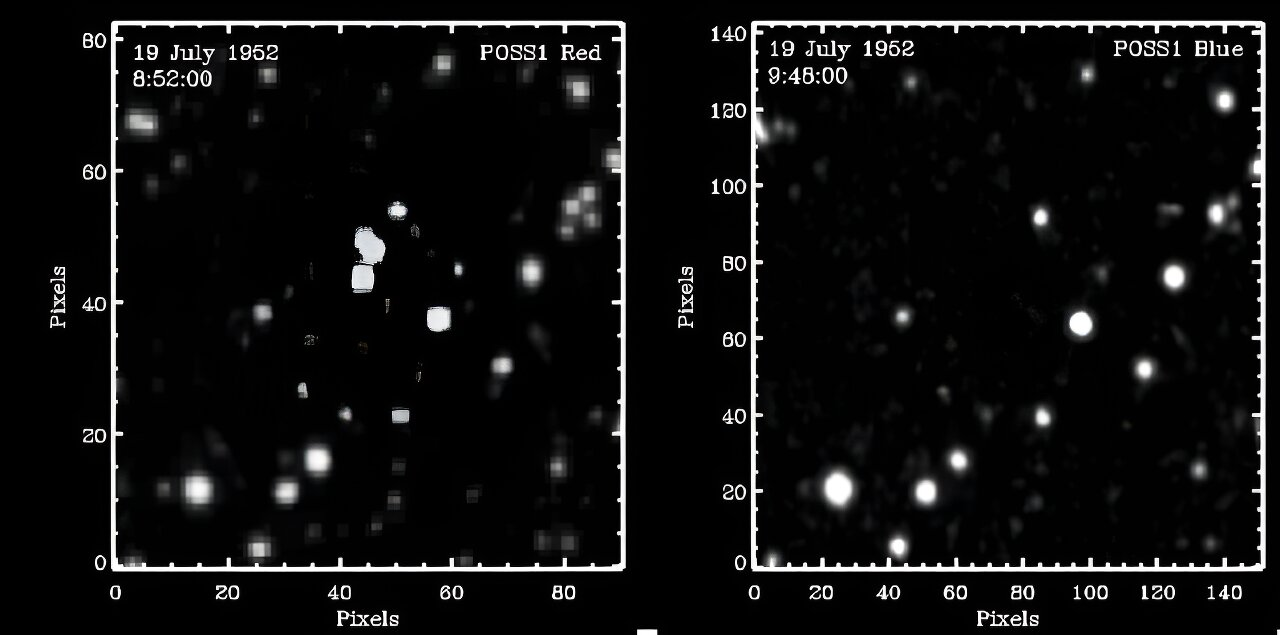 https://phys.org/news/2023-10-group-stars-vanishedastronomers.htmlOpen linkView original on lemmy.sdf.org
8 replies
Link to the story:
https://phys.org/news/2023-10-group-stars-vanishedastronomers.html
From the article: A third idea is that they weren't objects at all. Palomar Observatory isn't too far from the New Mexico deserts where nuclear weapons testing occurred. Radioactive dust from the tests could have contaminated the photographic plates, creating bright spots on some images and not others. Given similar vanishings seen on other photographic plates of the 1950s, this seems quite possible.
The Trisolarans made their dark domain.
Or somebody trapped MorningLightMountain
I immediately thought of those books too
In ALL liklihood,this was something teresstrial in origin. Radioactive dust, even just car headlights getting reflected by a raindrop or something could do it...
The cleaning service came in and wiped the crud off the lens at 9:15
So who's going to post this same article tomorrow?
Sorry. I was hungry.