

James Webb telescope makes 'JuMBO' discovery of planet-like objects in Orion
What's intriguing about the discovery is that these objects appear to be moving in pairs. Astronomers are currently struggling to explain them.
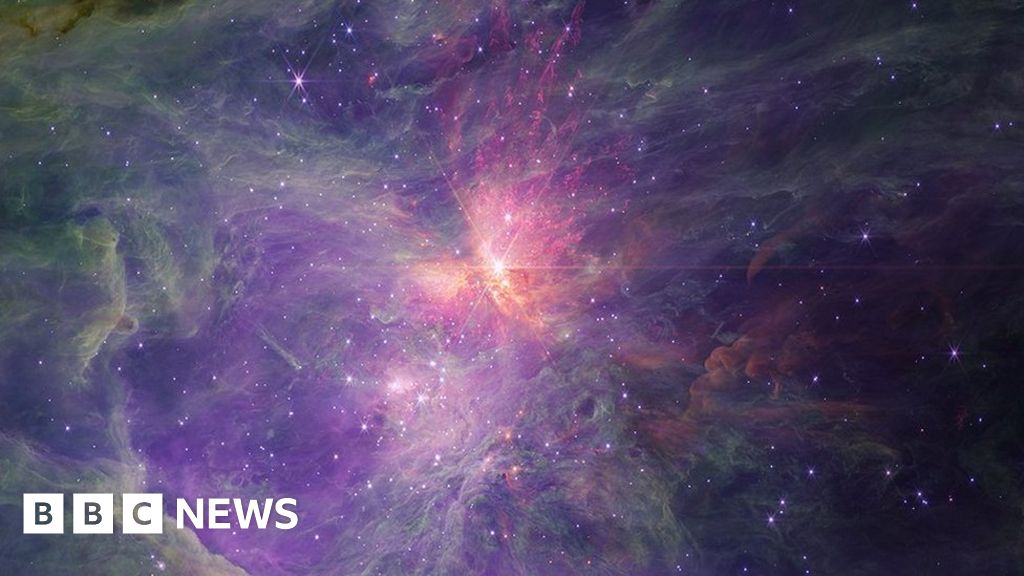
The telescope observed about 20 pairs in a fabulously detailed new survey of the famous Orion Nebula.
They've been nicknamed Jupiter Mass Binary Objects, or "JuMBOs" for short.
One possibility is that these objects grew out of regions in the nebula where the density of material was insufficient to make fully fledged stars.
Another possibility is that they were made around stars and were then kicked out into interstellar space through various interactions.
 https://www.bbc.com/news/science-environment-66974738Open linkView original on sh.itjust.works
3 replies
I always hate when science reporting does this. Astronomers are not struggling to explain them, they just don't have enough data to take a hypothesis to a theorem!
The article even tells us possible explanations:
There's a very cool sort vs long wavelength comparison image of the Orion Nebula in the article.
Bruh those are federation starships 100%.