

Benford's law
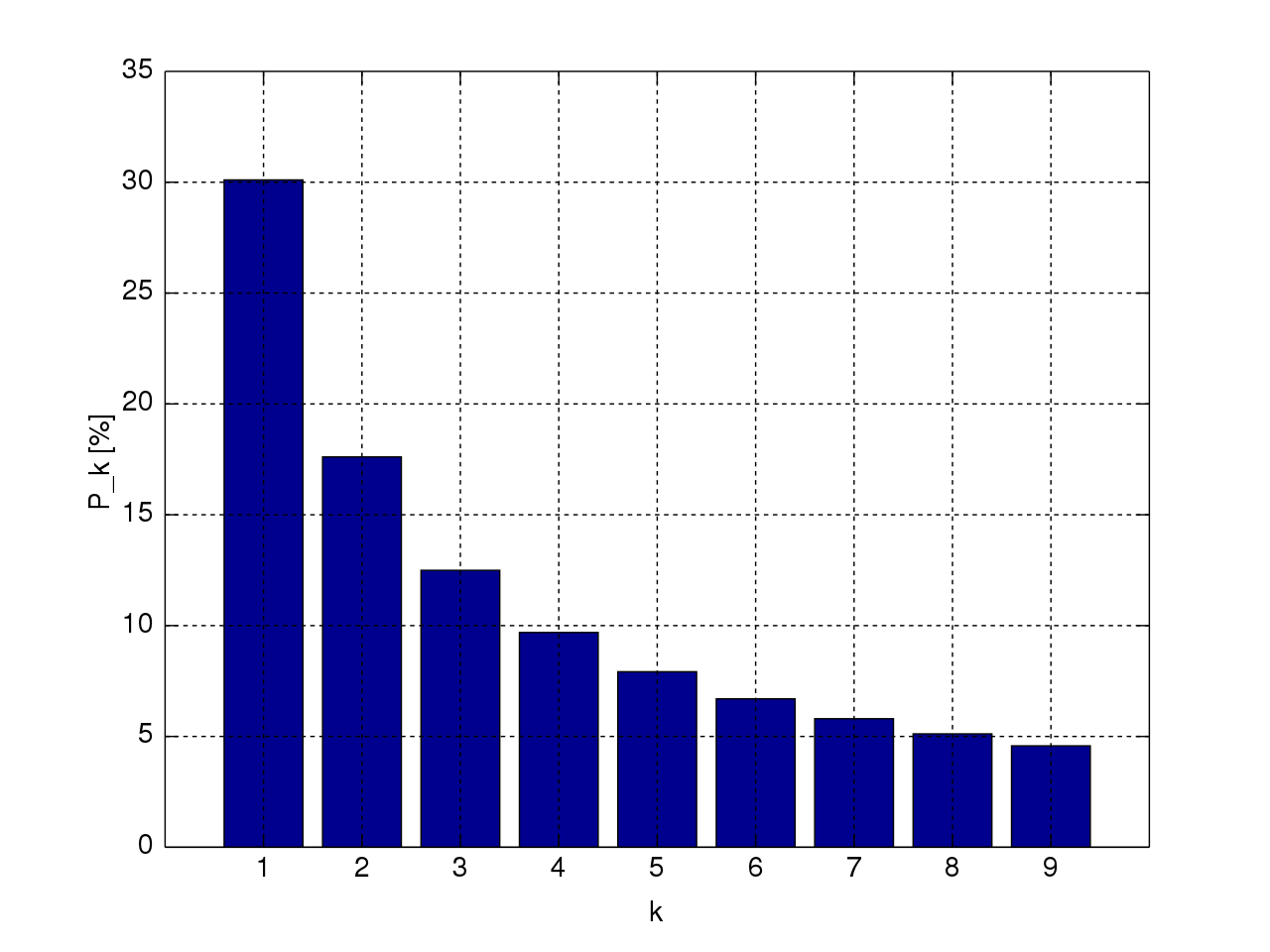
Benford's law, also known as the Newcomb–Benford law, the law of anomalous numbers, or the first-digit law, is an observation that in many real-life sets of numerical data, the leading digit is likely to be small.[1] In sets that obey the law, the number 1 appears as the leading significant digit about 30% of the time, while 9 appears as the leading significant digit less than 5% of the time.
 https://en.wikipedia.org/wiki/Benford%27s_lawOpen linkView original on lemmy.today
2 replies
I remember first hearing about this in the context of detecting tax fraud, years back, and thought that it was fascinating.
This is just a cheap zipf's law